Why Pruning Matters for Eggplant
If you’re looking to boost your garden yields this season, pruning eggplant should be at the top of your to-do list. Eggplant is a rewarding crop, known for its glossy purple fruits and productivity, but many gardeners aren’t aware that a few careful snips can make a big difference.
Pruning isn’t just about keeping plants tidy; it actually improves air circulation around the stems and leaves, which helps ward off diseases like blight that often thrive in damp, crowded foliage. By focusing each plant’s energy on fewer stems and blooms, you’ll encourage it to produce bigger, better-quality eggplants instead of lots of smaller fruits that may not fully mature.
Despite these benefits, there’s a common misconception that pruning eggplant is unnecessary or even detrimental. Some gardeners worry they might harm their plants, but with the right approach, pruning is simple and highly effective.
Whether you’re growing eggplants in pots or in your backyard bed, this straightforward pruning guide will show you how a little strategic trimming now leads to a much more abundant harvest later. Let’s dive into why, when, and exactly how to prune your eggplants for the best results.
When and How Often to Prune Eggplant
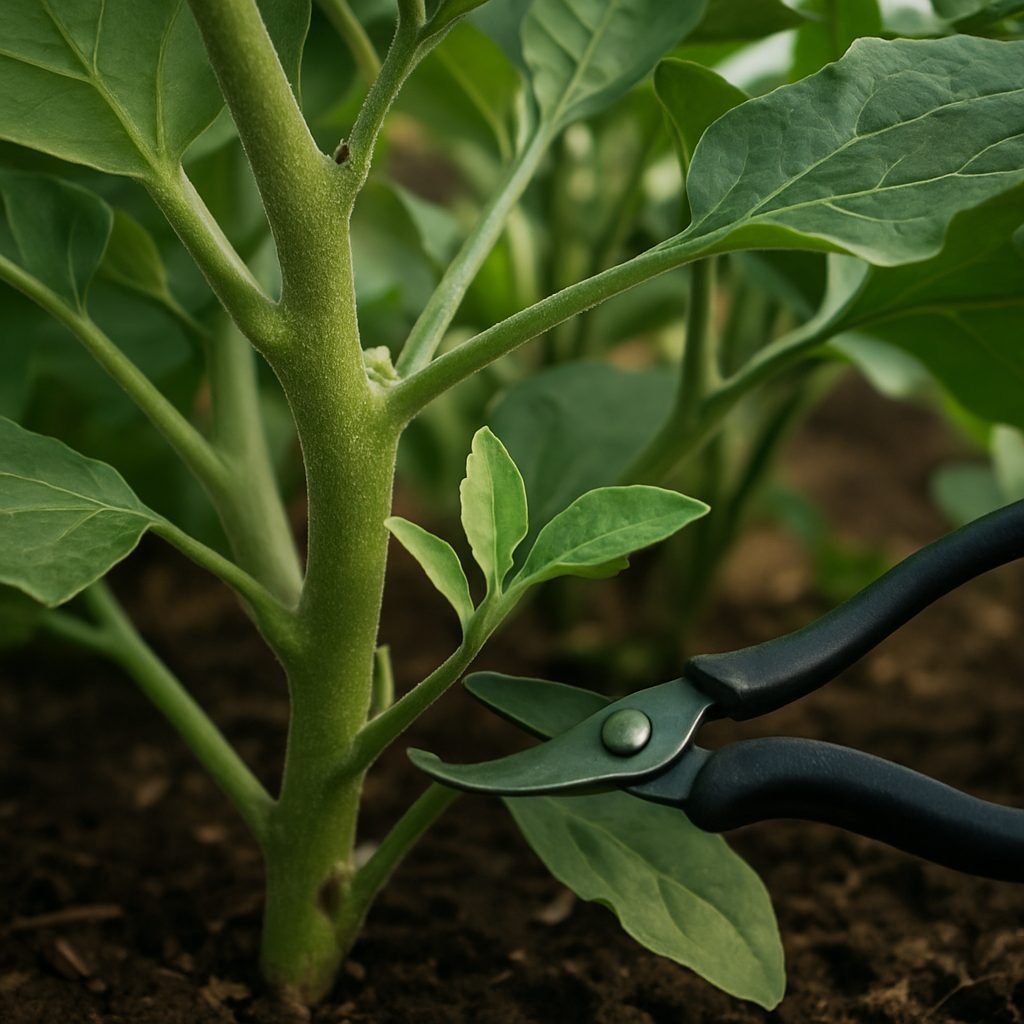
Pruning eggplants at the right time is essential for healthy growth and a bumper harvest. The ideal time to start pruning is just after the seedling stage, once the plant has reached about 8-10 inches tall and developed a strong stem.
At this stage, remove any small side shoots, or “suckers,” that appear below the first cluster of flowers to help the plant focus its energy on fruiting. As the eggplant begins to flower, check the plant weekly for crowded stems and poor air circulation—these are signs that some strategic snipping is in order.
Regular pruning throughout the growing season helps prevent disease and encourages larger, higher-quality fruit. Look for stems that are crisscrossing or growing inward and remove them to open up the center of the plant.
In humid climates, more frequent pruning may be necessary to reduce the risk of fungal issues, while in dry environments, less frequent trimming can suffice. If you’re growing eggplants in containers, monitor them closely, as restricted space often leads to denser growth that needs more consistent pruning to maintain good airflow.
Remember, a little attention every couple of weeks goes a long way in keeping your eggplants thriving.
Step-by-Step: How to Prune Eggplant

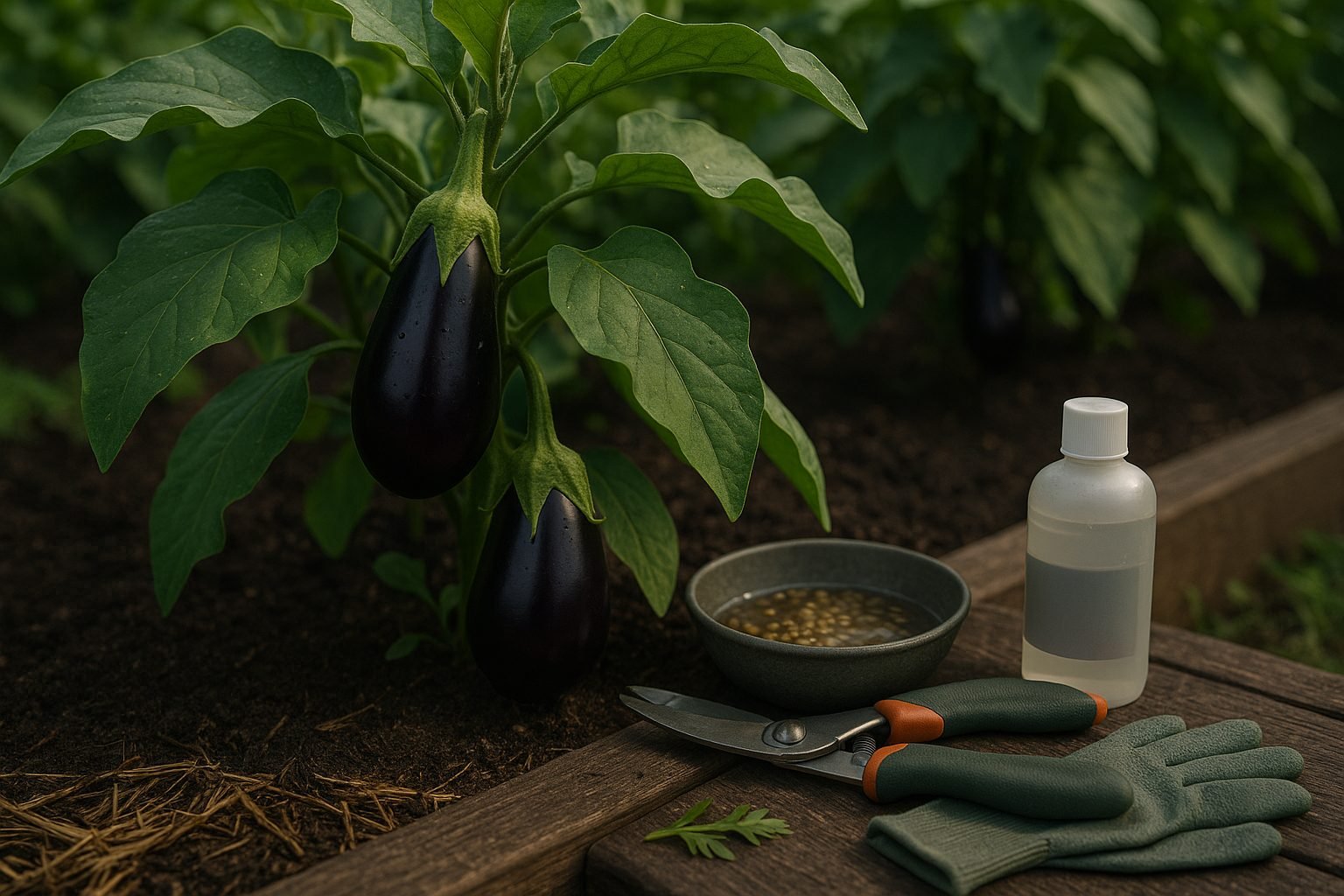
Before you start pruning your eggplants, gather the right tools: sharp pruning shears or scissors, gardening gloves to protect your hands, and rubbing alcohol to sanitize your tools between cuts (this helps prevent spreading disease).
Begin by inspecting the plant for side shoots—often called suckers—that grow in the junctions between the main stem and branches. Pinch or snip these off, especially those below the first main fork of the plant, as they sap energy from fruit production.
Next, look for any yellowed, wilted, or damaged leaves and trim these away to keep the plant healthy and improve airflow.
Remove any lower branches or leaves that touch the soil, since these are more prone to pests and disease; keeping the lower 6-10 inches clear works well.
Don’t overdo it—prune no more than a third of the plant at a time to avoid stressing it.
If you notice poor fruit set, try gently shaking branches in the morning to help pollinate flowers, or use a small paintbrush to transfer pollen between blooms.
Regular pruning not only channels the plant’s energy into producing bigger, healthier eggplants, but also makes it easier to spot pests early and harvest fruit when it’s ready.
Special Considerations for Eggplant Varieties and Common Issues
Pruning eggplants isn’t a one-size-fits-all task—dwarf and compact varieties usually need much less trimming than their taller, traditional cousins. With compact types, like the container-friendly Patio Baby, a light touch is best: simply remove yellowing or damaged leaves and pinch off small suckers growing at the base.
Traditional, larger varieties benefit from more strategic pruning—focus on removing lower leaves up to the first fruit cluster, as well as non-productive side shoots, to improve air circulation and boost fruit size. Vigorous growth can lead to tangled stems and shading, so thin crowded areas without stripping the plant bare.
For all types, keep an eye out for aphids, flea beetles, and spider mites; physically remove pests or use insecticidal soap, especially on new growth. To prevent diseases like powdery mildew or verticillium wilt, always prune with clean, sharp shears and avoid watering leaves.
One common mistake is over-pruning, which can stress the plant and reduce yields—never remove more than a third of the foliage at once. Also, don’t prune during wet weather, as this can invite infections. These careful steps ensure your eggplant plants stay healthy and productive all season.
Harvesting and Caring for Pruned Eggplants
Pruning your eggplants can make a big difference in both the quality and timing of your harvests. By selectively removing excess stems and leaves, you allow more sunlight and air to reach the fruit clusters. This helps the plant channel its energy into fewer, healthier eggplants—often leading to earlier and more robust fruit set.
When it’s time to harvest, use clean, sharp scissors or pruners to cut the eggplant with a short piece of stem attached; this reduces damage and prevents disease. Harvesting regularly, especially as soon as the fruits are glossy and just before they lose their sheen, encourages the plant to keep producing throughout the season.
Ongoing care is key:
- Water your eggplants consistently at the base to avoid wetting the leaves, which helps prevent fungal issues.
- Use a balanced, slow-release fertilizer after each major harvest or every few weeks to keep nutrients readily available.
- Keep an eye on new growth, as pruned eggplants will produce fresh shoots; if the canopy becomes too dense again, consider light pruning to maintain airflow and sunlight.
With this cycle of attentive pruning, timely harvesting, and consistent care, your eggplants will reward you with a steady, healthy crop.
Eggplant Pruning FAQs
Pruning eggplants might seem risky, but it usually results in stronger plants and better-quality fruit rather than lower yields. If you accidentally prune too much, don’t panic—eggplants are resilient and often bounce back with new growth, especially when kept well-watered and fed.
Whether your eggplants are grown in containers, raised beds, or greenhouses, regular pruning is recommended to improve airflow, reduce disease, and control size. Just remember to use clean, sharp tools and focus on removing crowded, diseased, or weak branches for the healthiest plants and the best harvests.