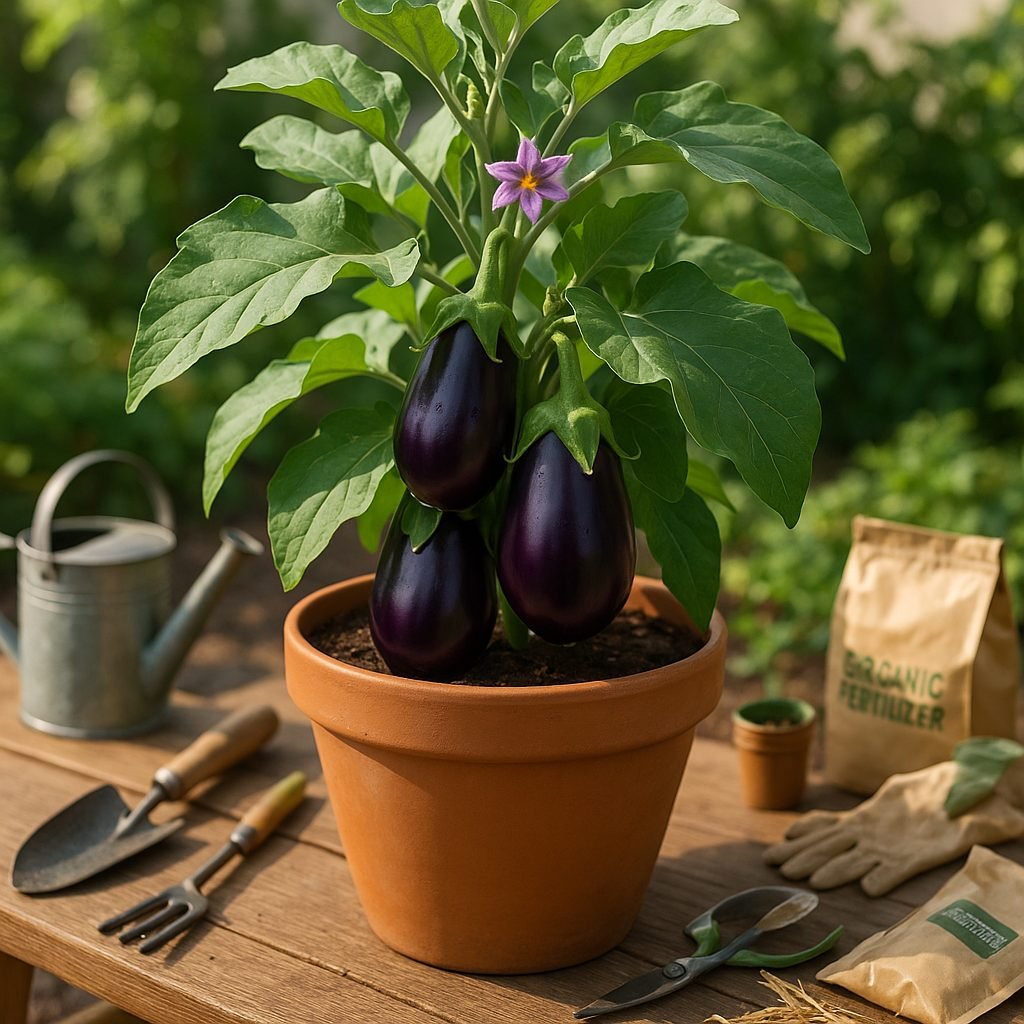
Introduction to Growing Eggplant in Pots
Choosing the right eggplant pot size is one of the most important steps when starting to grow these popular veggies in containers. Eggplant’s compact growth, vibrant fruits, and glossy foliage make them an attractive addition to patios, balconies, or any small-space garden.
Not only do they look great, but growing eggplant in pots lets you control soil quality, avoid common ground pests, and makes harvesting a breeze—even if you only have a few square feet to spare. Whether you’re an urban gardener or simply want to add a splash of purple to your backyard, container-grown eggplants are surprisingly simple and highly rewarding.
In this post, you’ll discover the ideal eggplant pot size for strong roots and a productive harvest, see which varieties are best suited for container growing, and get tips on soil, watering, and sunlight that lead to beautiful, healthy plants. Let’s dive in and help your homegrown eggplants thrive, no matter how limited your gardening space may be!
Choosing the Right Eggplant Variety and Pot
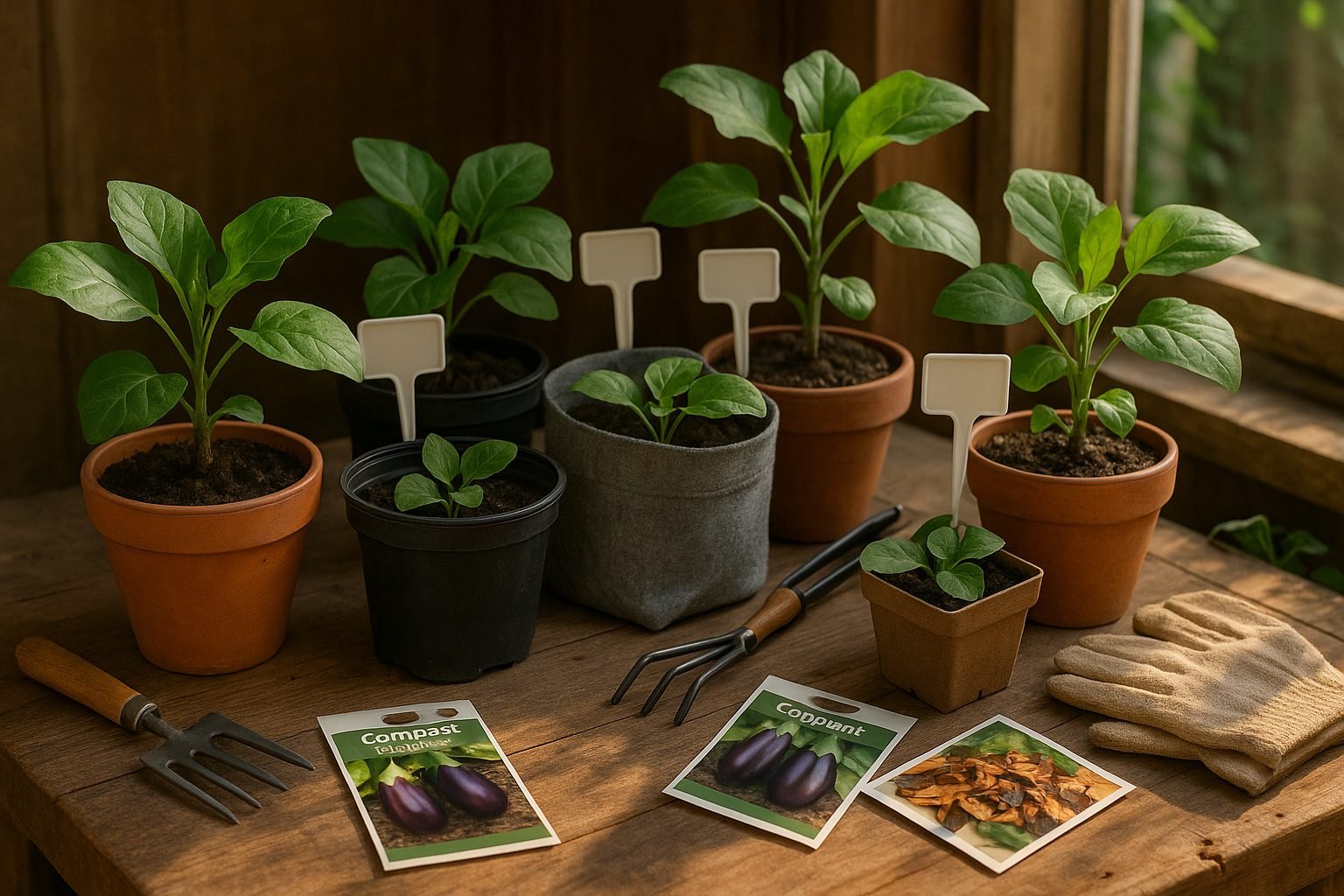
When it comes to growing eggplants in containers, picking the right variety is crucial for success. Look for compact, high-yield types such as Little Finger, Fairy Tale, or Patio Baby—these varieties thrive in confined spaces and produce plenty of fruit without the sprawling size of standard eggplants.
Choosing the right pot is just as important: opt for a container that holds at least five gallons; a 12- to 14-inch diameter, and similar or greater depth gives your plant’s roots enough space to develop. Make sure the pot, whether terracotta, plastic, or fabric, has several drainage holes to prevent waterlogged soil—a common killer of container eggplants.
While terracotta pots are sturdy and provide breathability, they can dry out quickly, so plastic or fabric grow bags might be better for gardeners who struggle to keep up with watering.
For healthy plants, start with strong, disease-free seedlings from a reputable nursery. Look for ones with thick stems and deep green leaves—avoid any with spots or wilting. Alternatively, sow high-quality seeds indoors eight to ten weeks before your last frost date. Use a seed-starting mix and keep the soil consistently warm—eggplants need temperatures above 70°F to germinate well. Investing in a heat mat is a good idea if your home is chilly.
Whichever route you choose, starting with the right variety and setup helps guarantee you’ll enjoy a lush harvest from your potted eggplant.
Preparing Soil and Planting Eggplants in Containers
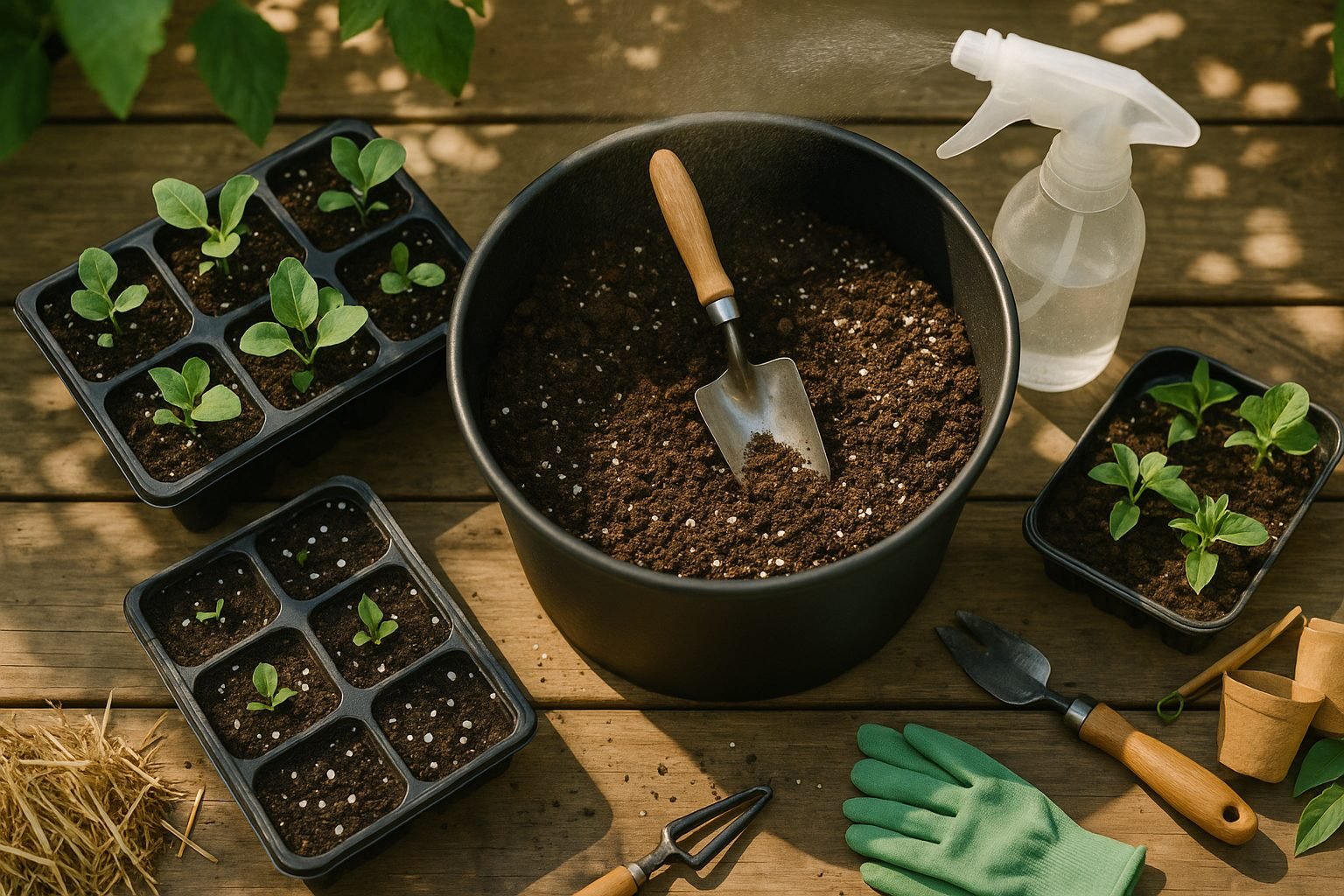
Getting your soil mix right is key to thriving container eggplants. Aim for a blend that’s both fertile and well-draining—use a mix of high-quality potting soil combined with compost or aged manure for richness, then add a handful of perlite or coarse sand to keep things airy, since eggplant roots hate soggy conditions.
Keep the soil slightly acidic to neutral, with a pH between 6.0 and 6.8. Most bagged mixes fall in this range, but a quick pH check can save headaches later.
If sowing seeds, plant them about 1/4 inch deep and keep the top inch of soil moist, placing the container somewhere warm, as eggplants love heat.
For transplants, dig a hole slightly deeper than the root ball, gently firm the soil around the plant, and space plants at least 18–24 inches apart—most patio containers only fit one mature plant comfortably.
Water thoroughly after planting, making sure excess drains away, then feed with a balanced liquid fertilizer or slow-release granules; this helps fuel initial growth.
Keep your container in a sunny spot, rotate it weekly for even development, and watch for the soil drying out quickly in warm weather—consistent moisture, without waterlogging, ensures robust, healthy eggplants ready for summer harvests.
Essential Care for Healthy Eggplants
For thriving eggplants, start by giving them a sunny spot—these heat-loving plants need at least 6 to 8 hours of direct sunlight each day for strong growth and fruit production.
Water consistently, aiming to keep the soil moist but not soggy. In containers, this often means checking moisture daily during hot weather, as pots dry out faster than garden beds.
Use a balanced fertilizer once a month or opt for a slow-release variety mixed into the soil at planting.
Container-grown eggplants can struggle with pests like aphids or spider mites—check beneath leaves regularly and remove any bugs with a strong spray of water or insecticidal soap.
Diseases like powdery mildew sometimes appear if airflow is poor, so avoid overcrowding and prune lower leaves to help air circulate.
Since eggplants can become top-heavy, especially in containers, gently tie the stems to stakes or use a small tomato cage to prevent them from tipping over.
If your plants flower but don’t set fruit, try hand-pollinating by gently brushing flowers with a soft paintbrush, and ensure weather isn’t too cool at night.
With these care steps and proactive measures, your container eggplants can stay healthy and productive all season long.
Harvesting and Storing Container-Grown Eggplants
Knowing when your container-grown eggplants are ready to harvest makes a big difference in their flavor and texture. Look for glossy, firm fruits with a uniform color—dull skin or brown spots mean they’re past their prime. Gently press the eggplant with your thumb; if it leaves an impression that quickly bounces back, it’s perfect for picking.
Use clean, sharp garden shears or a knife to cut the stem about an inch above the cap, avoiding any tugging that could damage the plant or fruit.
After harvesting, keep eggplants cool and store them unwashed in a perforated bag in the fridge—they’ll stay fresh for up to a week. If you have a bumper crop, freeze slices or cubes after briefly blanching them—great for tossing into curries, stir-fries, or casseroles later on.
For an easy recipe, try roasting eggplant wedges with olive oil and a sprinkle of your favorite spices, or whip up a smoky baba ganoush dip. The real reward is in tasting a homegrown eggplant’s fresh, tender flavor, so savor every bite and enjoy the satisfaction of your own little harvest, right from the patio!
Quick Tips & Troubleshooting for Beginner Success
Here are some easy tips to help you get started and keep your garden thriving:
- Water early in the day to help prevent fungus—stick your finger in the soil to check moisture before watering.
- Keep an eye out for pests like aphids or spider mites; a gentle spray with soapy water can often solve small infestations.
- Place containers where your plants will get the right amount of sunlight—most veggies need 6+ hours, but leafy greens can often handle part-shade.
- Try keeping a notebook or using a gardening app to jot down what you planted, when you watered or fertilized, and any surprises that pop up.
- Experiment with companion planting; pairing basil with tomatoes or marigolds with peppers can deter pests and boost growth.
Lastly, don’t be discouraged by setbacks—every new season is a fresh start. Celebrate small wins, learn from mistakes, and enjoy watching your container garden evolve!