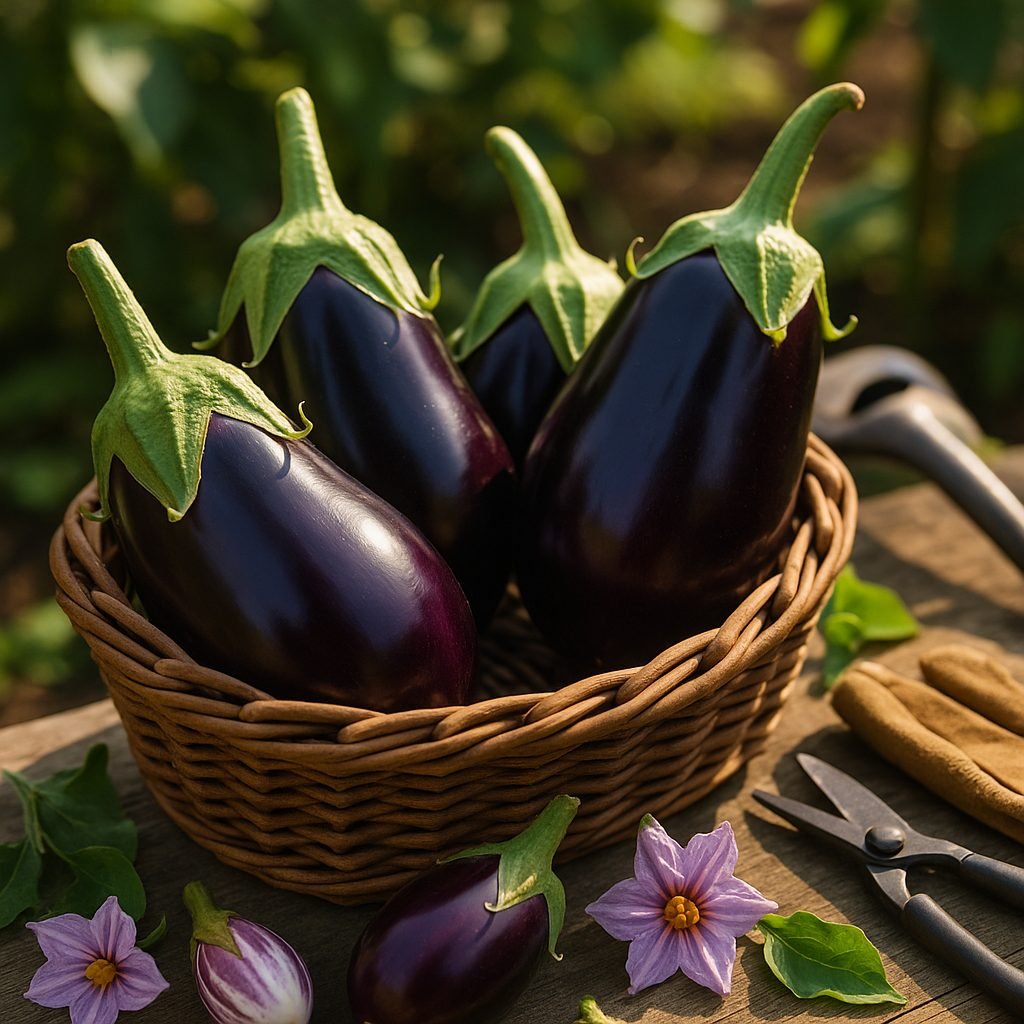
When Should You Harvest Eggplant?
Knowing the right ripe eggplant signs can make all the difference between a tender, flavorful harvest and a disappointing, bitter-picked fruit. On average, eggplants take about 65 to 80 days from transplanting to reach maturity, although your exact timeline can shift depending on the variety you grow and the season’s weather conditions.
For example, slender Japanese eggplants can often be ready a week or two earlier than classic globe types, while cool, cloudy weather may slow down fruit development, pushing harvests later than expected.
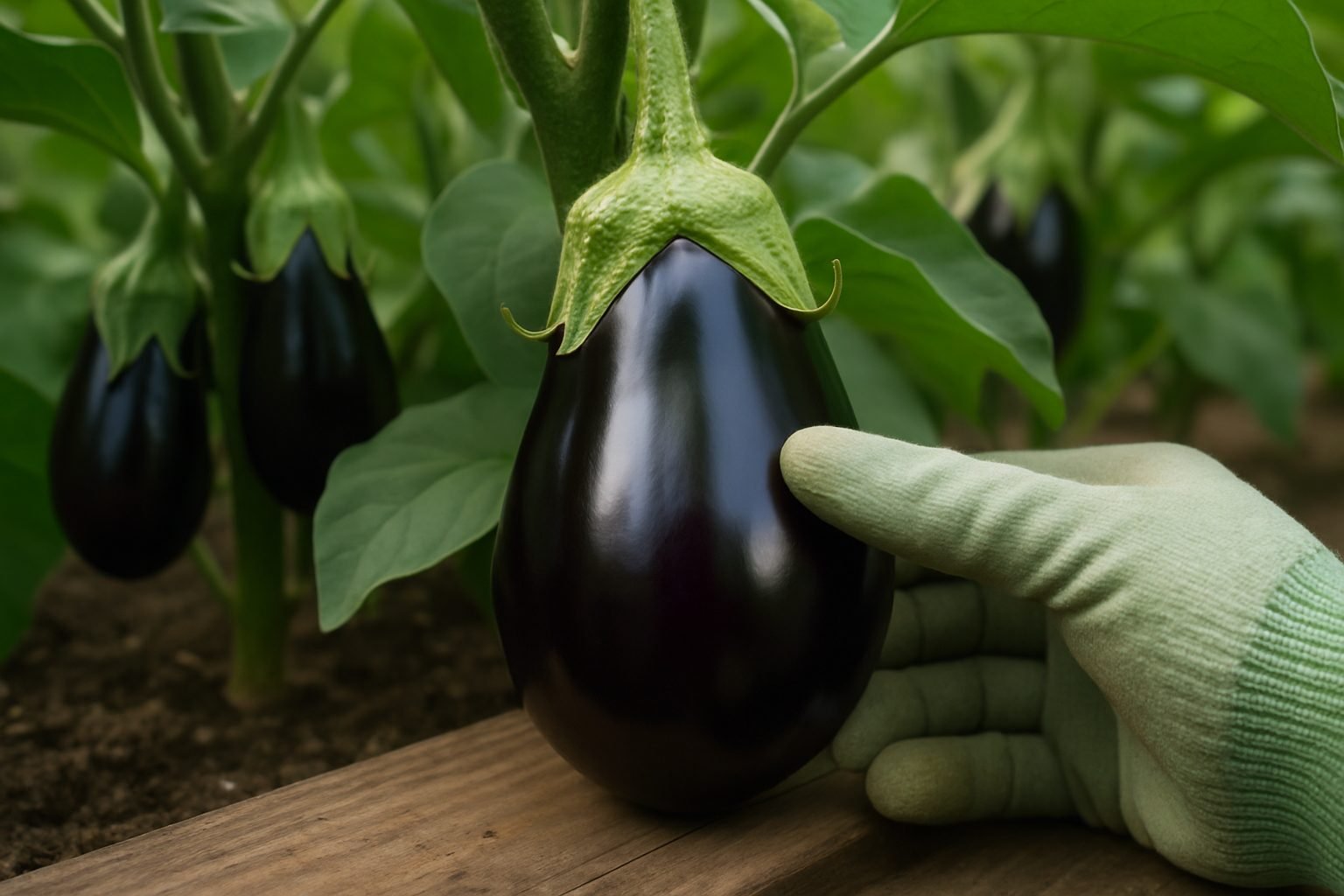
Fortunately, there are reliable indicators that your eggplants are just right for picking. Look for glossy, deep purple skin that feels resilient but not hard—if it dents gently under your thumb without leaving a lasting mark, that’s a great sign.
Size matters too, but don’t rely on it alone; fruits should be full and plump for their variety, but not oversized or dull. Another tip: the calyx, or green cap, should remain bright and fresh, not dry or brown.
Harvesting at the perfect moment means better flavor and texture, so don’t let your eggplants linger too long on the plant. If you’re unsure, cut one open; the seeds should be barely visible and pale.
Use these ripe eggplant signs as your go-to checklist, and you’ll enjoy better results at the table and in your garden.
Signs Your Eggplants Are Ready to Pick
Knowing exactly when your eggplants are ready to pick is key to getting that sweet, tender flavor they’re famous for. A ripe eggplant will have glossy, deeply colored skin—dullness or wrinkling often means it’s past its prime.
For deep purple varieties like Black Beauty, look for an even, rich color with no green tinge left. Lighter or unusually streaked types, like Rosa Bianca or Fairy Tale, also benefit from a shiny, smooth surface when ripe.
Gently press the eggplant with your thumb; a ripe one will give just a little and spring back. If it’s too firm, it needs more time, while a dent that stays could signal overripeness.
Size is another key factor, but remember that “ready” depends on the variety:
- Standard types do well around 6 to 8 inches long.
- Smaller varieties are perfect at just 3 to 5 inches.
Overripe eggplants can become bitter and spongy inside, so frequent checks are worth it. If you notice the skin turning dull, brownish, or feeling soft all over, you’ve likely waited too long.
Also, be mindful of the weather; eggplants are sensitive to frost, so harvest at the first hint of cool nights to avoid damage.
Picking them at just the right moment ensures their best taste and texture for your kitchen table—plus, it keeps the plants producing through the season. Trust your eyes and your fingertips, and don’t be afraid to check your crop often for peak ripeness.
How to Properly Harvest Eggplant
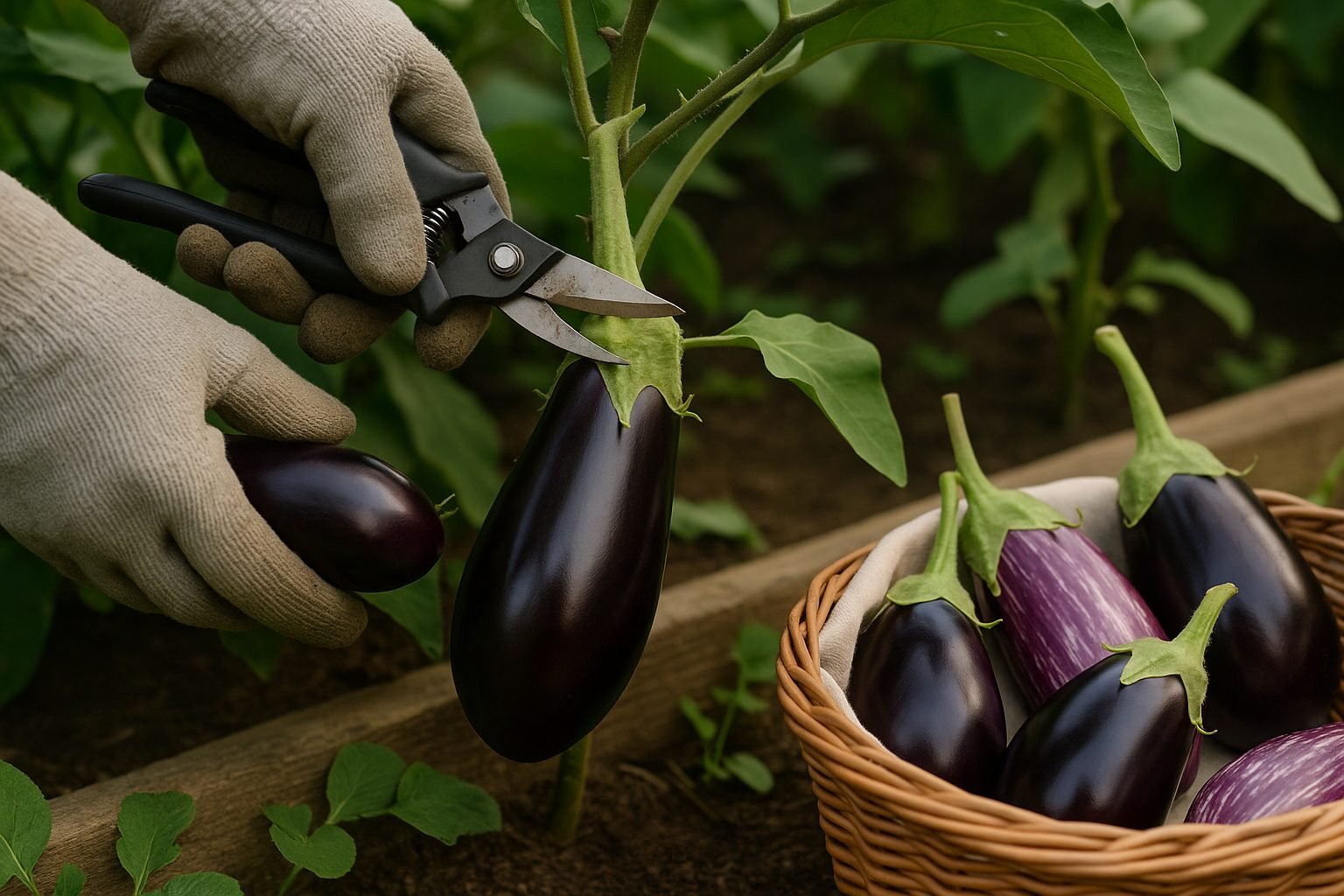
When it’s time to harvest eggplant, having the right tools and techniques makes all the difference. Start with a pair of clean, sharp garden shears or pruners; a small knife can work too, but snipping is usually safer for both you and the plant.
Always wear gardening gloves, especially if your eggplant variety has thorny stems or prickles—these can be surprisingly sharp and cause irritation.
To harvest, look for eggplants with glossy skin and a firm feel, cutting them off with about an inch of stem attached. Avoid pulling or twisting the fruit, as this can damage both the eggplant and the plant’s delicate branches. Hold the fruit gently in one hand while you snip with the other for better control.
If your plant has a lot of thorns, use the shears to carefully clear a small path around the stem first, reducing the risk of accidental pricks. Place harvested eggplants in a basket or soft container to avoid bruising.
By using the right tools and gentle hands, you can enjoy a healthy harvest and keep your plant producing throughout the season.
Do Eggplants Ripen After Harvest & What If You Wait Too Long?
Eggplants, unlike tomatoes or bananas, do not continue to ripen once picked—what you see at harvest is what you get. If you wait too long to harvest, the fruit can become dull-colored and develop tougher skin, a bitter flavor, and larger, more prominent seeds that make the eggplant less pleasant to eat.
On the other hand, picking too early means the eggplant might taste bland or have a slightly firmer, less creamy texture than ideal. If you end up with underripe eggplants, try slicing them thin and using them in stir-fries, curries, or sautéed dishes where their firmer bite can stand up well to bold flavors.
For overripe eggplants, roasting or mashing them into dips like baba ganoush can help mask any bitterness and make use of their softer flesh.
Always check for a glossy, uniform exterior and a slight give when pressed gently—these are good indicators of peak ripeness and will help you get the best flavor and texture from your harvest.
How to Store Fresh and Cooked Eggplant
To keep fresh eggplant at its best, store it at room temperature, away from direct sunlight, for up to two days. Just lay it on the counter without wrapping it, since eggplant hates trapped moisture.
If you won’t use it that quickly, place it in the refrigerator’s crisper drawer inside a paper bag or perforated plastic bag. This helps prevent sogginess and brown spots. Use it within five days for peak flavor.
For longer storage, slice, blanch, and freeze eggplant in airtight containers or freezer bags. Frozen eggplant works great in cooked dishes like casseroles or stews, but it tends to lose its texture for grilling or roasting.
When dealing with cooked or leftover eggplant (think ratatouille or eggplant parm), let it cool completely before sealing it in an airtight container in the fridge, where it will keep for 3–4 days. You can also portion leftovers and freeze them for up to three months—just remember to thaw overnight in the fridge for best results.
To avoid common storage mistakes:
- Never store raw eggplant with ethylene-producing fruits like apples or bananas, as this speeds spoilage.
- Avoid washing eggplant until you’re ready to use it, since trapped moisture causes it to spoil faster.
By following these simple steps, you’ll keep your eggplant dishes tasting fresher, longer.
Extra Tips for Growing and Enjoying Eggplant
For healthier and tastier eggplants, water them deeply and consistently—aim for at least an inch per week, focusing on the base of the plant to avoid fungal diseases. Eggplants thrive in full sun, so pick a spot with at least six hours of direct sunlight daily. Rich, well-draining soil with plenty of organic matter will give your plants the nutrients they need; mix in compost or aged manure at planting time for the best results.
To keep common pests like flea beetles and aphids at bay, use floating row covers early in the season and inspect your plants regularly so you can act fast if an issue pops up.
When you find yourself with a big eggplant harvest, get creative beyond the classics—eggplant parmesan and baba ganoush are always hits, but try roasting thick eggplant slices for sandwiches, tossing cubes into stir-fries, or blending cooked eggplant into dips or pasta sauces for added texture and flavor. If you’re feeling adventurous, experiment with grilling eggplant steaks or making homemade ratatouille.
Finally, to enjoy eggplants for a longer stretch each year, grow different varieties with staggered harvesting times—smaller Asian eggplants often mature sooner, while classic globe types or unique heirlooms such as Rosa Bianca bring extended variety to your garden and kitchen. Don’t be afraid to mix and match, as each type offers a unique flavor and texture, ensuring your eggplant dishes never get boring.