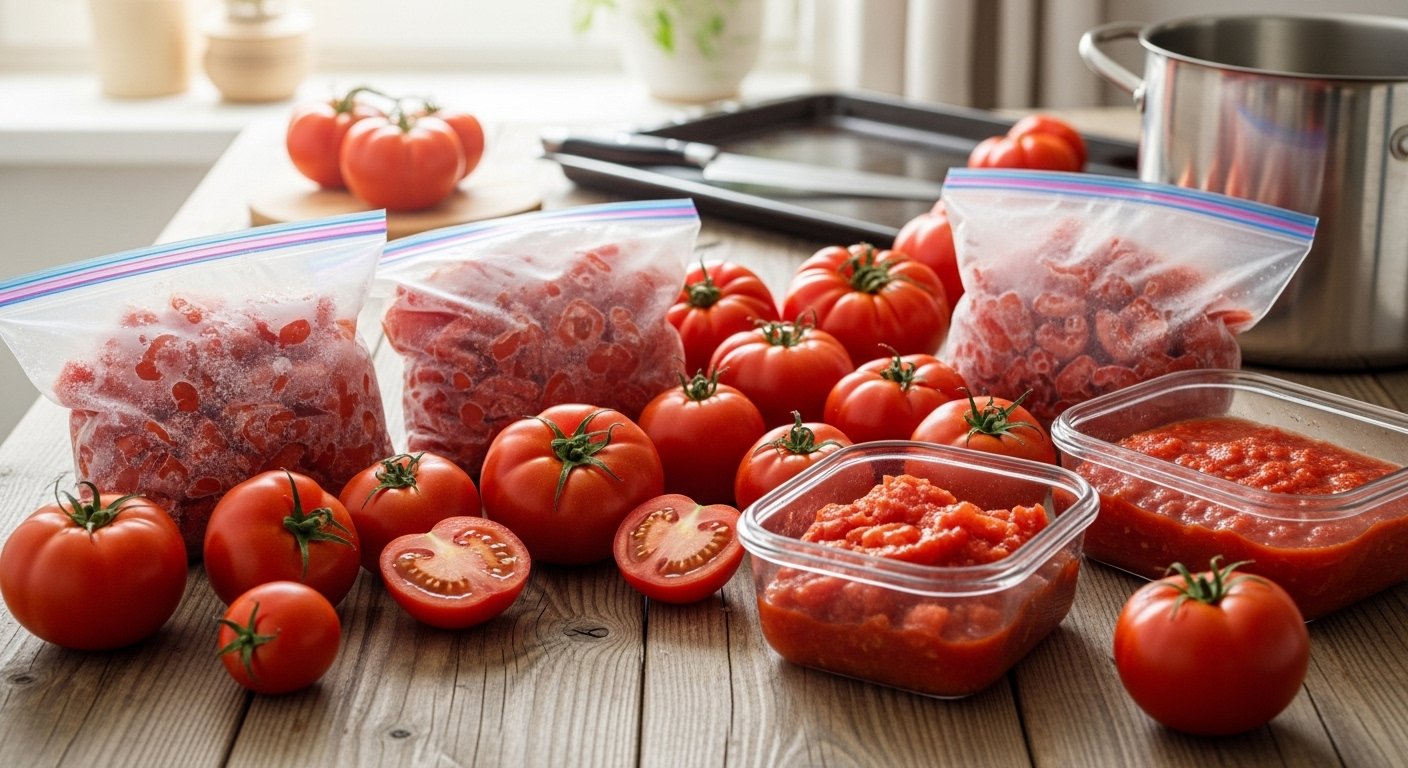
Why Freeze Tomatoes?
If you’re wondering whether you can freeze tomatoes, the answer is a resounding yes—and learning how to freeze tomatoes offers a big payoff for anyone who loves fresh produce but hates waste. Freezing tomatoes is a simple, practical way to preserve your garden bounty or surplus from the farmers market, letting you enjoy their vibrant flavor long after tomato season ends.
Unlike canning, which demands time, special equipment, and close attention to safety, or drying, which can alter both taste and appearance, freezing requires only a freezer-safe container or bag and a few spare minutes. For busy home cooks, it’s hard to beat the convenience: just wash, core, and pop your tomatoes in the freezer whole or chopped.
Freezing tomatoes also slashes food waste since you can stash tomatoes that are bruised or slightly overripe, saving money and reducing your environmental footprint. Plus, having a supply of frozen tomatoes on hand speeds up weeknight meal prep—just toss them into soups, stews, or sauces straight from the freezer, no defrosting needed.
While freezing does change the texture—making tomatoes softer and sometimes a bit watery—it doesn’t diminish their use in cooked recipes where a rustic sauce or burst of natural tomato flavor is all you need. Though you sacrifice some of the fresh tomato’s crisp bite, the trade-off is well worth it for the sheer ease and flexibility. If you want a fast, efficient way to prolong tomato season, freezing deserves a top spot in your kitchen routine.
Choosing & Prepping Tomatoes for Freezing
When freezing tomatoes, starting with the right fruit makes all the difference in quality and taste. Look for ripe tomatoes with a deep, consistent color—these will be the sweetest and most flavorful after thawing. Avoid tomatoes with blemishes, bruises, or soft spots, as imperfections can worsen during freezing and affect your end product.
Roma or plum tomatoes are favorites for freezing because their low moisture content helps them keep their shape better than juicier slicing varieties, but you can freeze whatever type you have on hand.
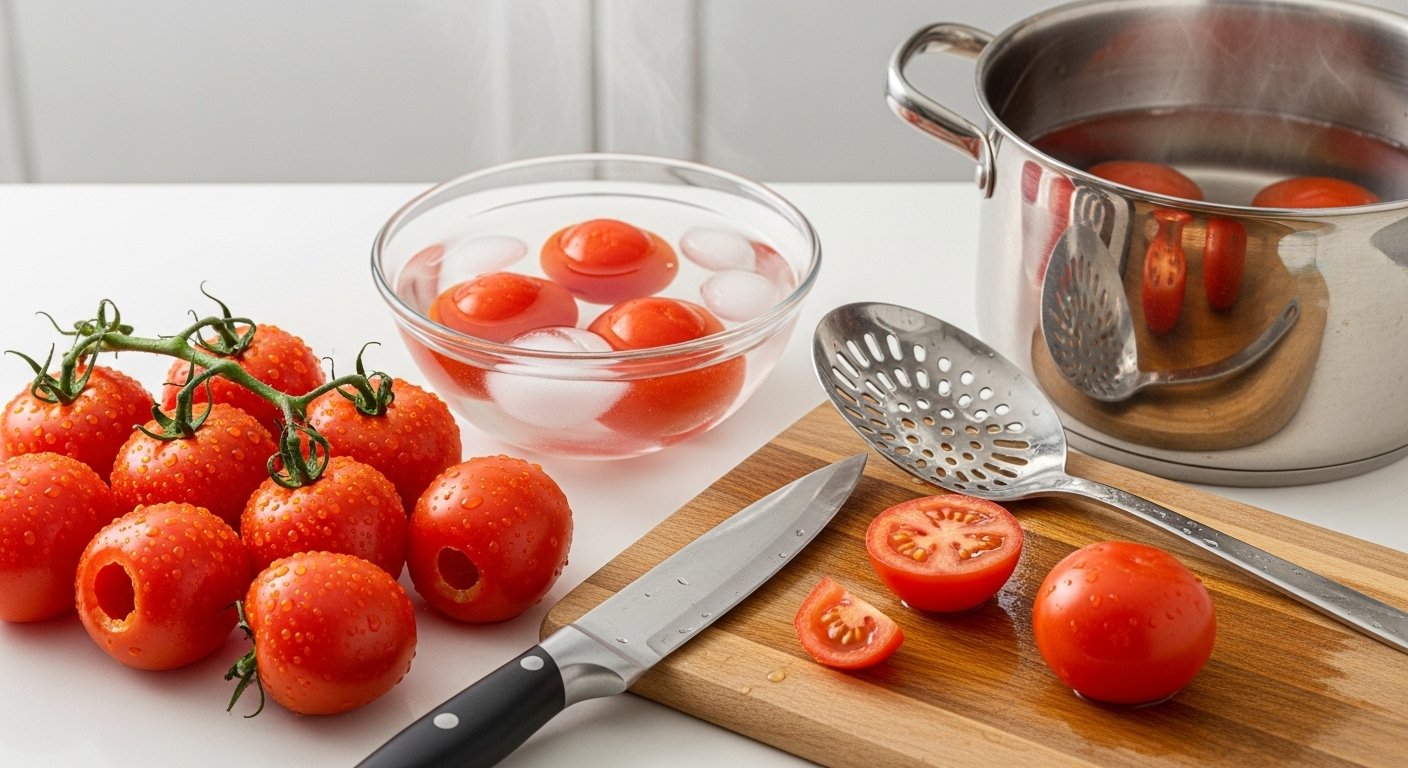
Before freezing, thoroughly wash your tomatoes under cool running water, removing any dirt or residue. Next, core each tomato to remove the tough stem area. If you wish, you can also peel them; a simple trick is to dip tomatoes in boiling water for 30 seconds, then transfer them to an ice bath—the skins should slip right off.
Peeling is optional; some people leave skins on for convenience, but peeled tomatoes yield a smoother sauce or soup after thawing. Removing seeds is another choice: halve the tomatoes and gently squeeze or scoop them out if you prefer a less watery texture in sauces.
Seeds and skins both add texture and some nutrition, but they can make thawed tomatoes a bit tougher or more bitter, especially if you’re using them for a delicate recipe later. Ultimately, your choice to peel or seed comes down to how you plan to use the frozen tomatoes—leave them whole for stews and casseroles, or take the extra step for velvety soups and sauces.
Whatever method you choose, prepping your tomatoes properly ensures the best flavor and texture when it’s time to enjoy your frozen harvest.
Freezing Methods Explained
Freezing tomatoes is a fantastic way to capture summer’s flavor for later use, and there are several methods to suit your needs.
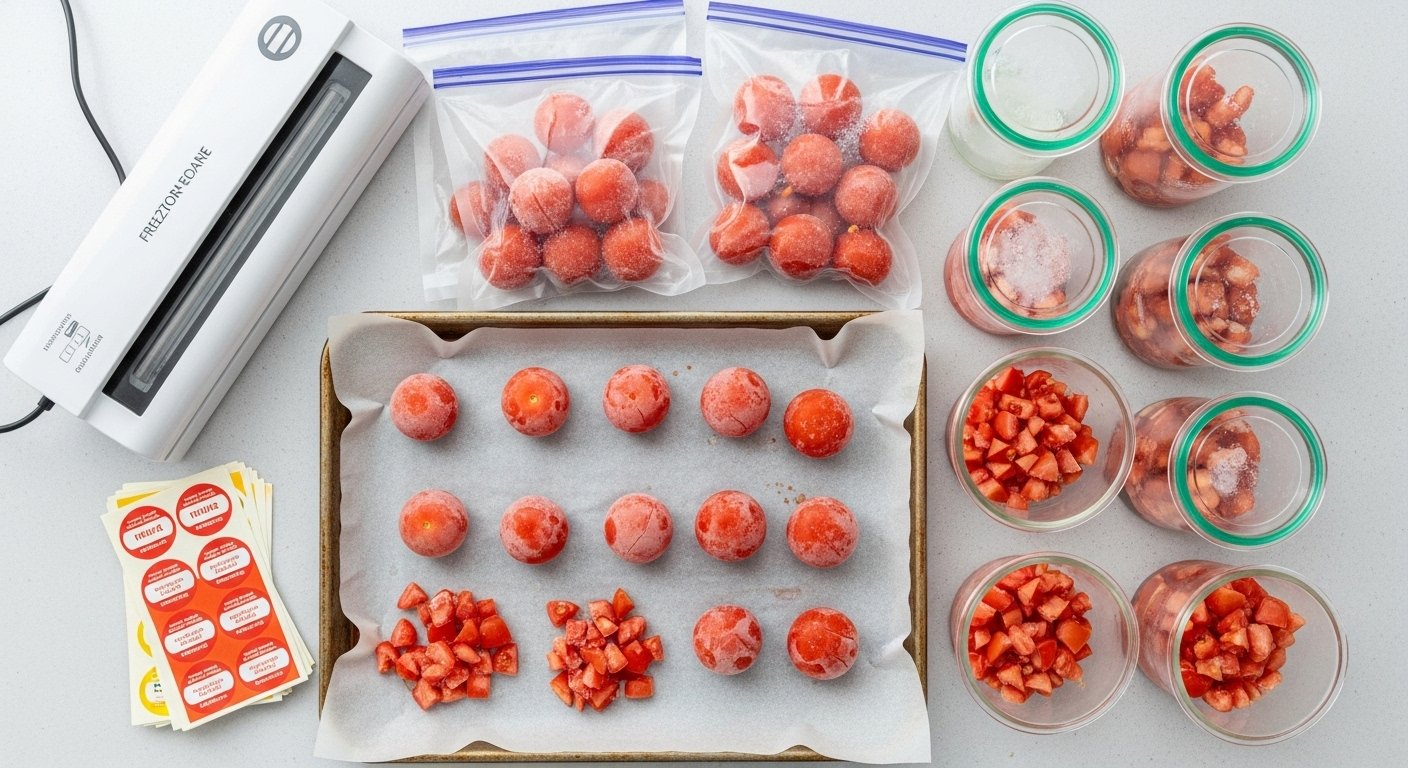
You can freeze tomatoes whole, which is the quickest method—just wash, dry, core, and freeze them on a baking sheet before transferring to freezer bags. This works well for sauces or soups when you don’t mind the skins.
Chopped and sliced tomatoes are ideal for recipes that call for measured amounts; simply dice or slice, spread them on a baking sheet to prevent clumping, freeze until firm, and store in airtight containers.
Pureeing tomatoes before freezing creates a ready-to-use base for soups and sauces.
For more flavor and a smoother texture, consider blanching—plunge tomatoes in boiling water for 30-60 seconds, then into ice water, slip off the skins, and proceed to freeze them in your preferred form. Blanching helps preserve color, flavor, and texture while making skins easy to remove, perfect for recipes where texture matters.
Raw freezing skips this step; just prep and freeze, which saves time but can result in minor texture changes and lingering skins, making it best for blended or long-cooked dishes.
How to Freeze Whole Tomatoes
To freeze whole tomatoes, wash and dry them, remove stems, arrange on a baking sheet until solid, then transfer to freezer bags and remove as much air as possible.
How to Blanch Tomatoes
For blanching, score an “X” on the bottom of each tomato, boil briefly, chill in ice water, then peel, chop, or puree as desired before freezing.
Essential Tools
- Baking sheets for pre-freezing
- Airtight freezer bags or containers for storage
- Sharp knife
- Large pot for blanching
- Slotted spoon
Label everything with the date for easy use later. By choosing the right freezing method for your needs, you’ll have garden-fresh tomato flavor at your fingertips even in the middle of winter.
Packing and Storing Frozen Tomatoes
When packing and storing frozen tomatoes, choosing the right container is your first step to success. Heavy-duty freezer bags are a popular and affordable option—they’re flexible, take up little space, and can be portioned to suit your needs. For extra protection, especially if you plan to freeze your tomatoes for several months, opt for airtight plastic or glass containers, or invest in a vacuum sealer, which removes all air and is a top choice for preventing dreaded freezer burn.
Before sealing any container, make sure to squeeze out as much air as possible if you’re using bags, or fill containers to the top to minimize air bubbles. For best results, spread tomatoes out in a single layer on a baking sheet to pre-freeze them, then transfer to your container; this keeps pieces separate, preserving texture and making it easy to use just what you need later.
To keep your freezer organized, label each bag or container with the date, tomato variety, and quantity—use waterproof markers or freezer-safe labels to avoid smudges. Designate one area of your freezer for tomatoes, stacking flat bags or containers for efficient use of space. Keep older batches in front so you use them before fresher ones.
Ideally, use frozen tomatoes within 8–12 months for optimal flavor and quality; after a year, they’re still safe but may lose taste or develop frost. By following these tips, not only will your frozen tomatoes last longer, but they’ll also taste better, making your cooking all year round a breeze.
How to Use Frozen Tomatoes
Frozen tomatoes are a fantastic staple to have on hand for cozy homemade sauces, soups, and hearty stews. Since freezing breaks down their cell walls, thawed tomatoes tend to be softer and a bit more watery than fresh ones—don’t worry, this actually works to your advantage in cooked dishes where a smooth texture and concentrated flavor are what you want.
For most recipes, you can add frozen tomatoes directly to a bubbling pot; there’s no need to thaw them first if you’re short on time. They’ll quickly break down under heat, melding seamlessly into a rich spaghetti sauce, chili, or curry.
If your recipe calls for chopped or diced tomatoes and you prefer a more uniform size, run the frozen tomatoes under a little warm water to loosen the skins. You can then peel and chop them while they’re still semi-frozen for less mess. Expect the juices to run more, so you might want to adjust for extra liquid by simmering longer or reducing the amount of other liquids in the recipe.
Closest to fresh flavor, frozen tomatoes shine in dishes where plenty of seasoning, herbs, and spices blend with their tangy taste—think tomato-basil soup, shakshuka, or a slow-simmered marinara. Just steer clear of using them raw in salads or sandwiches, as the texture becomes mushy and the flavor can be a little flat when uncooked.
With these easy tips, your surplus summer tomatoes become a secret weapon for flavor-packed winter meals.
Troubleshooting & FAQs
Freezing tomatoes can be incredibly convenient, but it does come with some challenges. One common issue is watery tomatoes after thawing—this happens because freezing breaks down tomato cell walls, releasing extra liquid. To fix this, drain the tomatoes in a colander before using them, or cook off the excess moisture in your recipe.
Many worry about refreezing thawed tomatoes, but as long as they haven’t been at room temperature for more than two hours, it’s generally safe. Just know that texture may suffer each time you thaw and refreeze. Speaking of texture, don’t be surprised if frozen tomatoes turn mushy once thawed; they’re best used in soups, sauces, or stews rather than salads.
Freezer burn is another concern and usually happens when air reaches the tomatoes. To prevent this, use airtight freezer bags, remove as much air as possible, and label with the freeze date. Icy clumps form when tomatoes retain too much water or aren’t sealed properly, so pat tomatoes dry before freezing and avoid overpacking.
Quick Tip List
- Do blanch tomatoes before freezing if you want better texture.
- Do use freezer-safe bags or containers and remove excess air.
- Don’t freeze tomatoes in large clumps; portion them for easy use.
- Don’t expect them to stay firm—accept that frozen tomatoes are best for cooked dishes.
- Don’t refreeze tomatoes repeatedly.
By following these simple steps and understanding what to expect, you’ll get the best results from your frozen tomatoes and reduce waste in the kitchen.
Bonus Tips for Success
Batch freezing tomatoes can be a real game-changer, especially when you’re dealing with a bumper harvest. Group similar-sized tomatoes for even freezing, and lay them flat on a baking sheet so they don’t stick together. Once frozen, transfer them to zip-top bags, labeling with the date for easy tracking.
To boost flavor, consider roasting tomatoes with garlic or herbs before freezing. This step intensifies their taste and gives you a head start on sauces or soups. Don’t hesitate to blend varieties—mixing sweet cherry tomatoes with meaty Romas creates richer, more complex flavor profiles in your final dishes.
Streamline your batch prep by setting up a simple assembly line: blanch several tomatoes at once, then peel, chop, and portion into bags as you go. If you’re short on freezer space, core and crush tomatoes before freezing to fit more into smaller containers or bags, pressing out as much air as possible.
For those working with lots of tomatoes, invest in stackable bins or reusable silicone bags to maximize freezer efficiency. By planning ahead and tweaking your approach based on quantity and available space, you’ll always have garden-fresh tomato flavor at your fingertips throughout the year.