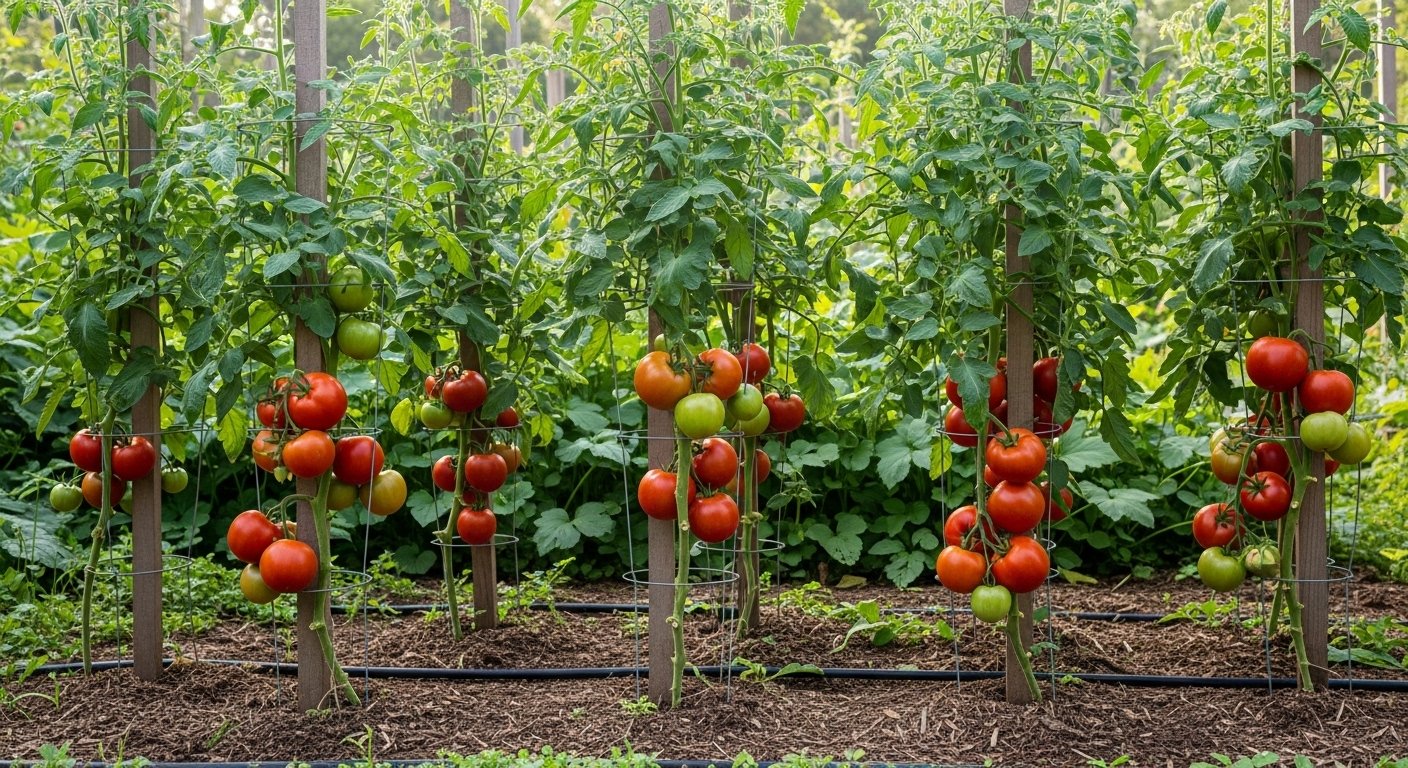
Why Trellis Tomatoes?
When it comes to maximizing your garden space and boosting your harvest, vertical tomatoes are a game-changer. Using trellising systems for growing tomatoes not only saves precious ground area but also offers a host of practical benefits for both new and seasoned gardeners. Trellised tomatoes often yield heavier harvests, as the plants get more sunlight exposure and airflow, leading to improved fruit quality and fewer blemishes. For example, gardeners who switch to vertical growing report firmer, cleaner tomatoes with fewer issues from pests or soil-borne diseases that thrive in crowded, untrellised patches.
One of the biggest advantages of training tomatoes vertically is the enhanced airflow around each plant. Lifting vines off the ground allows air to circulate more freely, rapidly drying leaves after rain or watering. This reduces common tomato diseases such as blight and mildew, keeping your plants healthier throughout the season. By staking or caging your tomatoes, you minimize leaf contact with damp soil—a major culprit behind early plant decline in traditional garden beds.
Trellising also makes the practical aspects of tomato gardening much easier. Harvesting ripe fruit is a breeze when you can see and reach each cluster, rather than hunting around dense, sprawling foliage. This is especially helpful for indeterminate tomato varieties, which keep growing and producing fruit throughout the season; their tall, vining habit thrives when given a sturdy trellis for support, often reaching six feet or more. In contrast, determinate tomatoes grow to a set height and produce fruit all at once, so their trellising needs are simpler—short cages or stakes usually suffice.
Whether you’re working with a small backyard plot or an ambitious vertical garden setup, switching to vertical tomato systems streamlines maintenance and helps ensure that your plants stay productive and healthy. With a little planning, you’ll enjoy easier care, bigger yields, and the satisfaction of baskets full of perfect, sun-ripened tomatoes.
Choosing the Right Trellising Method
When it comes to trellising tomatoes, selecting the right method can make a big difference in plant health, space usage, and your overall gardening success. Stakes, cages, single-stem string trellises, and arch trellises each offer unique benefits.
Staking is a classic, easy-to-install option: just drive a sturdy stake into the soil and tie your plant as it grows. This works well for determinate (bush-type) tomatoes and is ideal for small garden beds or containers. However, it requires regular tying and can topple under the weight of heavy fruit.
Tomato cages, usually made of wire, provide a supportive structure that allows the plant to sprawl within its ring. They’re great for determinate tomatoes in containers or small raised beds but can be awkward for large, indeterminate varieties since these outgrow standard cages quickly.
Single-stem string trellises, where vines are trained vertically up a string attached overhead, are a favorite for indeterminate tomatoes, especially in greenhouses or tight spaces. They maximize air circulation and sunlight but demand diligent pruning and frequent twining to maintain a single stem.
Arch trellises, which curve over rows or walkways, are visually appealing and accommodate robust, indeterminate vines by letting them cascade naturally, turning your garden into an edible tunnel. However, they require more space, expense, and setup.
For small gardens or container setups, stakes or cages are the simplest, most space-efficient solutions, particularly for compact, bushy determinate tomatoes. Larger raised beds or in-ground rows with plenty of vertical room can benefit from string or arch trellises, ideal for vigorous, sprawling indeterminate varieties.
Regardless of the trellising method you choose, match your support to your tomato type and available space:
- Determinate (bushy) tomatoes: Thrive with cages or stakes.
- Indeterminate (vining) tomatoes: Perform best when trained upward with string or arch trellises for maximum yield and easy harvesting.
Setting Up Your Tomato Trellis: Materials & Preparation
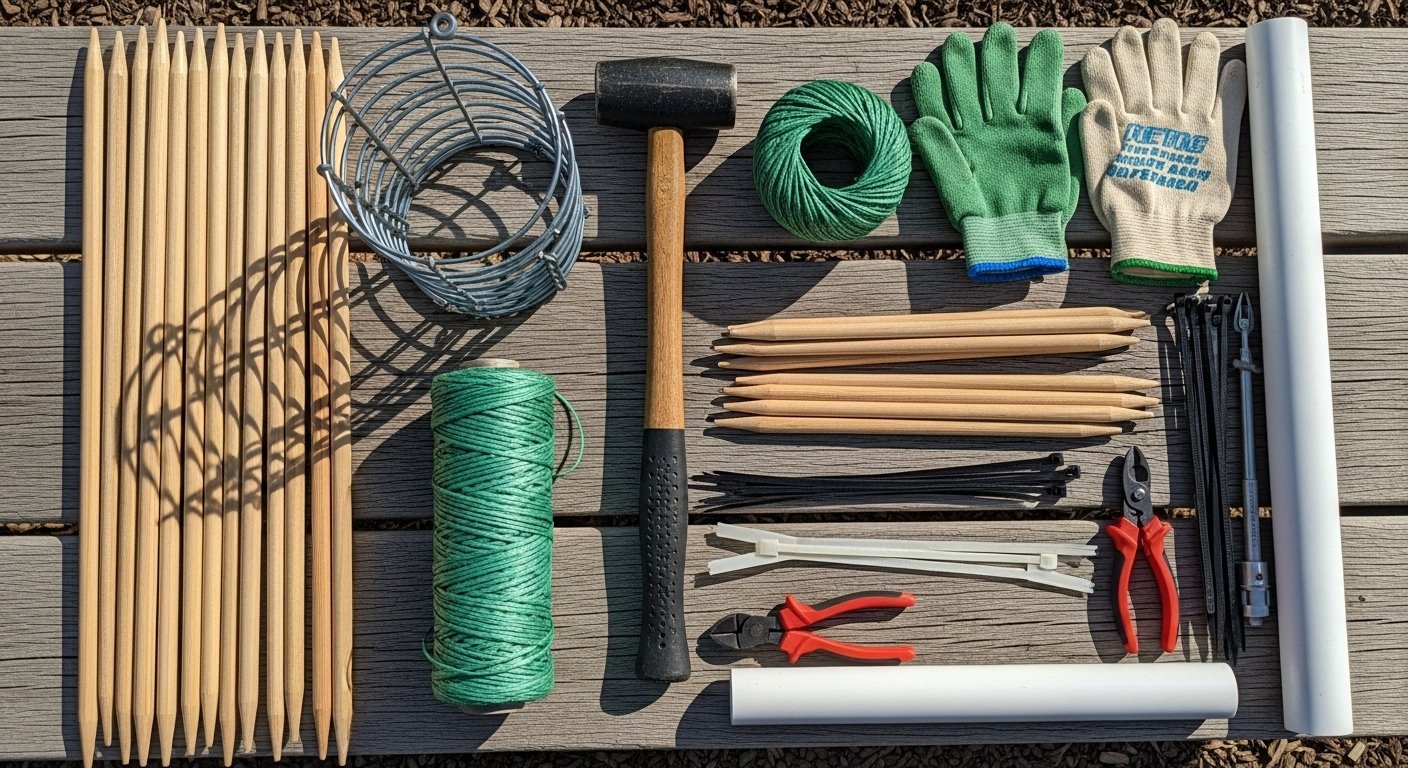
Before you dive into building your tomato trellis, gather the right materials and tools for the job. For a simple stake-and-twine setup, you’ll need sturdy wooden or metal stakes (about 6-8 feet tall), weather-resistant twine, a mallet, and garden gloves.
Tomato cages—often made from galvanized steel—are ready-made options that save time; just check that they’re strong enough to support mature tomato plants. If you want to try an arch or A-frame trellis for an eye-catching look (and to save space), you’ll need durable fencing panels or PVC pipes, zip ties, and maybe a pair of wire cutters.
Whatever style you choose, go for materials that can withstand rain, sun, and wind without rusting, rotting, or breaking—think treated lumber, powder-coated metals, or UV-resistant synthetic twine. Make sure anything touching your tomatoes is non-toxic and free from sharp edges that could cut tender stems.
Once your supplies are ready, turn your attention to the garden bed. Pick a spot that gets at least six to eight hours of sunlight a day, as tomatoes crave warmth and light. Space your trellises or cages at least two to three feet apart to allow good air circulation (reducing disease risk) and easy access for harvesting.
Prepare the soil by loosening it to about a foot deep and adding compost or balanced fertilizer, which encourages strong root growth. Remove large clumps, stones, or weeds to give your tomatoes the best start. Laying down mulch after planting can help retain moisture and keep weeds in check.
With a little prep work and the right materials, you’ll set the stage for healthier plants, bigger harvests, and a much easier gardening season.
Planting & Training Tomatoes on a Trellis
Getting tomatoes started on a trellis begins right at planting. Choose a sunny, well-drained spot and set your trellis system—stakes, cages, string lines, or sturdy fencing—in place before planting. Space tomato seedlings 18–24 inches apart, making sure each one sits close to its trellis for easy training.
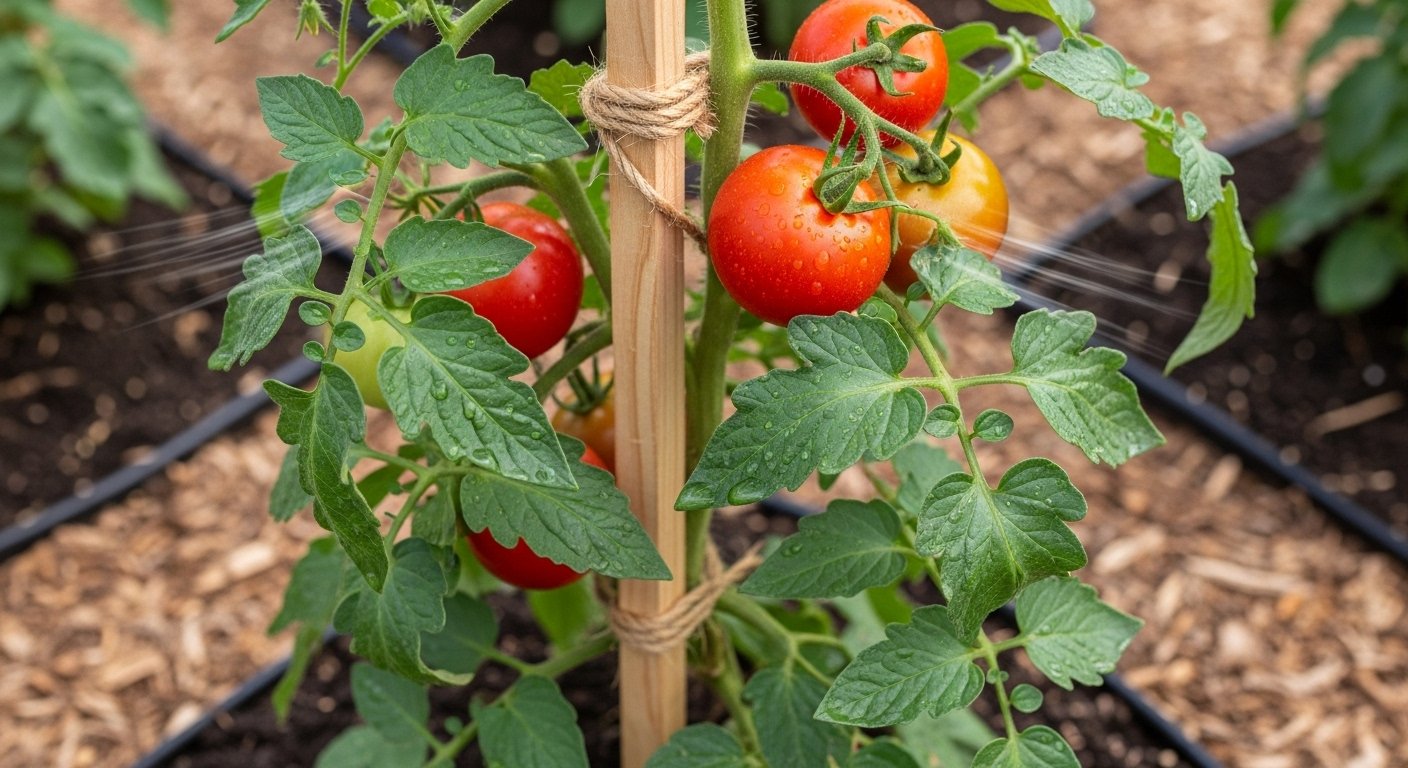
As the young plants grow, gently weave the main stem through the support or use soft plant ties, Velcro strips, or even strips of old t-shirts to loosely secure stems to the trellis. Tie in a figure-eight pattern to prevent choking or bruising. Aim to tie the stem just below or above leaf nodes, and repeat this every 8–10 inches as the plant gets taller.
Training should start early, when the plants are young and pliable—this helps prevent breakage and keeps the vines from flopping. Make it a habit to check your tomatoes every few days, correcting long, heavy branches before they get tangled or break under their own weight.
If a vine outgrows its support or breaks away, carefully re-tie it as close to the trellis as possible, using a stake as a backup if needed. For wayward or damaged vines, prune away broken sections and re-secure any healthy offshoots.
This steady, gentle training not only keeps the vines healthy and manageable, but also improves airflow, reduces disease risk, and ensures easy access to ripe tomatoes all summer long.
Pruning for Productivity: Keeping Your Tomatoes in Shape
Pruning is a simple yet powerful way to boost the productivity of your trellised, indeterminate tomato plants. These varieties keep growing and setting fruit all season, so pruning helps channel their energy into developing larger, tastier tomatoes instead of an unruly tangle of foliage.
Start by training your plants to a single main stem—just pick the strongest, healthiest shoot as it grows and gently remove the rest. The biggest job is sucker removal: suckers are the small shoots that sprout where each leaf joins the main stem. Left unchecked, suckers can turn into full branches, crowding the plant and producing a lot of smaller fruits. Snap or snip them off while they’re young (about 2–4 inches long) to keep things under control.
Be on the lookout for leaves that are yellowed, spotted, or damaged, especially at the base of your plant; removing these regularly not only tidies up but also helps prevent disease by improving airflow. However, don’t go overboard—too much pruning can expose fruit to sunscald or stress the plant, making it less productive. A thumb rule: keep enough healthy leaves to shade your tomatoes and feed the plant.
Regular, mindful pruning paired with a sturdy trellis keeps your tomato patch healthy, manageable, and bursting with high-quality fruit all season long.
Maintenance: Supporting, Watering, and Fertilizing
Proper maintenance is key to healthy, productive trellised tomatoes. As your plants grow, regularly check the stability of your trellis system—wind, rain, or the sheer weight of ripening tomatoes can pull supports loose over time.
Every week or two, gently inspect the ties holding stems to the trellis. Loosen any that look tight to prevent cutting into the vines, and add new ties above growing clusters to keep plants upright and reduce strain on the stems. Soft cloth strips or garden tape work best since they’re gentle on delicate plant tissue.
When it comes to watering, tomatoes prefer consistent moisture; letting the soil dry out between waterings can cause issues like blossom end rot, and overwatering encourages root rot. Stick your finger about an inch into the soil—if it feels dry, it’s time to water. Deep watering at the base of the plant encourages strong roots, while overhead watering can promote disease due to wet foliage. Mulching with straw or shredded leaves helps keep moisture even and reduces the need to water as often.
For fertilization, tomatoes are heavy feeders, especially when climbing a trellis and channeling energy into fruit production. Start with a balanced fertilizer at planting, then switch to one higher in phosphorus and potassium (such as a 5-10-10 formula) when fruit starts to set. Feed every three to four weeks, but avoid excess nitrogen, which causes lush foliage at the expense of fruit. Always water before and after applying fertilizer to avoid root burn.
Keep an eye out for pale leaves or poor fruit set, as these can be signs your plants need an extra nutrient boost. With a careful eye on support, watering, and feeding, your trellised tomatoes will reward you with vigorous growth and plentiful, delicious harvests throughout the season.
Harvesting and End-of-Season Cleanup
Knowing when to harvest trellised tomatoes is key to getting the best flavor and keeping your plants healthy. Look for tomatoes that have fully changed color—whether red, yellow, or another hue depending on the variety—and feel slightly soft to the touch, which is a reliable sign of ripeness. Gently twist each ripe fruit off the vine with one hand while supporting the branch with the other; this helps prevent snapping the stem or damaging nearby fruit clusters.
Continue picking every few days to encourage ongoing production, always being gentle to avoid bruising fruits, nicking stems, or leaving problematic stubs.
As the season winds down and temperatures start dropping—usually in late summer or early fall—prepare your plants for a smooth finish. “Topping” tomato plants by pinching off the growing tips two to three weeks before frost allows the plant to direct energy into ripening existing fruit rather than setting new ones.
Once the majority of tomatoes have been picked, cut vines at ground level using clean pruners. Remove all plant debris from around the trellis to reduce the risk of pests and diseases overwintering in your garden. It’s also a smart habit to remove and inspect trellis materials like strings, stakes, or cages—wash them with a mild disinfectant or soapy water before storage or reuse to limit the spread of any lingering plant issues into next year’s crop.
By following these steps, you set your tomatoes and your garden up for healthy, fruitful seasons to come.
Troubleshooting & Common Issues
Even the most carefully planned trellised garden can run into hiccups like trellis collapse, pest infestations, and tangled or broken stems.
If your trellis sags or collapses, it’s usually due to weak supports or overloaded vines. Reinforce posts with stakes or switch to sturdier materials like metal or thick wood, and regularly check the structure after storms.
Pests and diseases love the dense foliage that trellising can create. Reduce risk by keeping leaves trimmed for better airflow and inspect plants often for bugs or signs of mildew. Spraying neem oil or introducing beneficial insects like ladybugs can help naturally control infestations.
Tangled stems are a common headache, especially if you forget to train plants regularly. Use soft garden ties or strips of old t-shirts to gently secure vines and keep them spaced.
For broken stems, trim any damaged growth back to a healthy node to prevent disease spread, and support the plant better with additional ties.
Consider marking your calendar for weekly checks—it only takes a few minutes and can save you from bigger problems down the line. By staying vigilant and acting fast, you’ll keep your trellised crops healthy and productive all season.