Choose the Right Tomato Variety
When it comes to growing tomatoes, hot climate conditions pose unique challenges, but choosing the right tomato variety can make all the difference between a thriving crop and a disappointing harvest. Some tomatoes wilt, struggle, or fail to set fruit when daytime temperatures consistently stay high or the sun beats down relentlessly. Others, however, have evolved or been bred specifically for resilience in heat and dry air, showing remarkable tolerance to sun exposure and water scarcity.
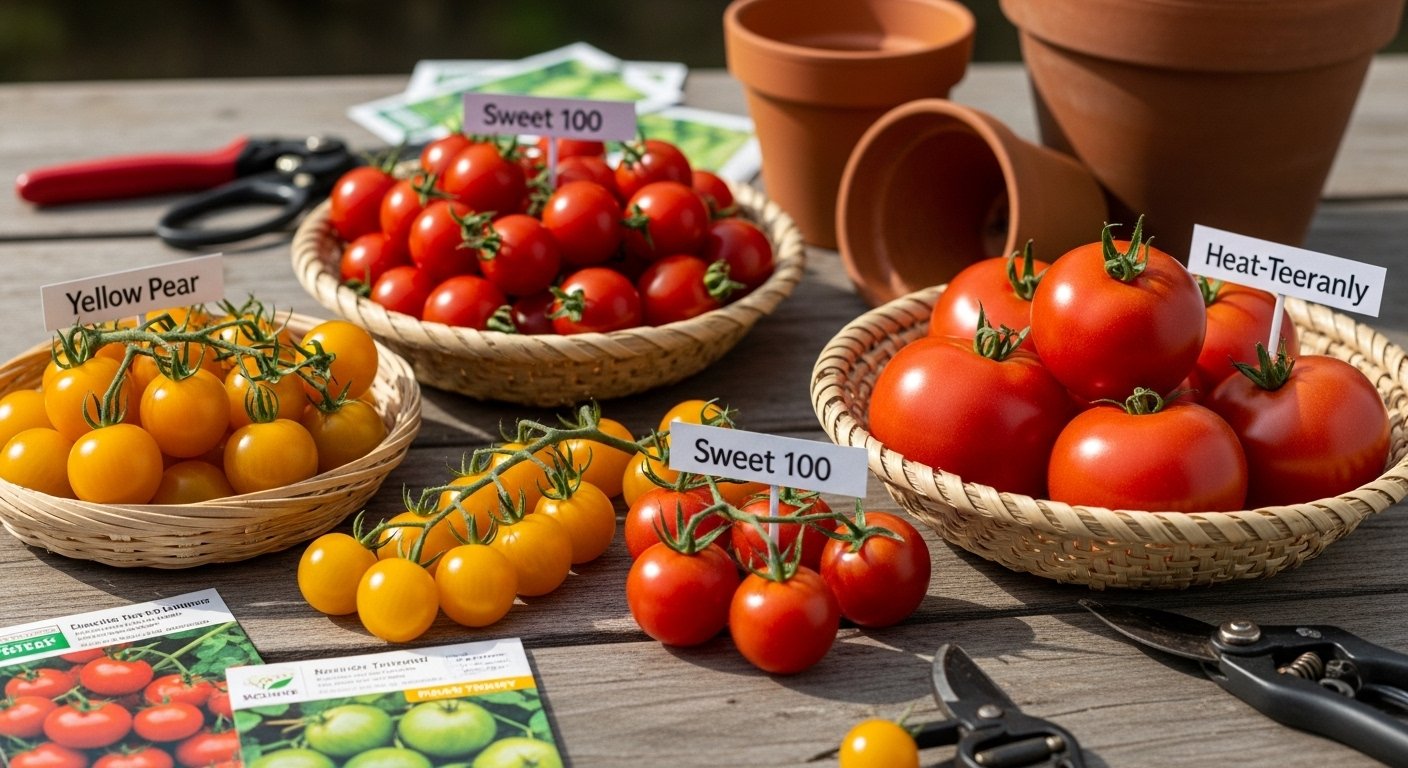
If you garden in a region where summer feels endless and rain is rare, opt for varieties labeled as heat-tolerant or sunscald-resistant. Popular choices include Heatmaster, Solar Fire, Florida 91, and Phoenix—these varieties were developed to handle highs above 90°F and still set juicy fruit. Cherry tomatoes such as Juliet, Sweet 100, and Yellow Pear are also great for hot climates, since they often mature faster and set fruit more reliably in extreme conditions. Those in especially dry climates may find success with Mediterranean or Middle Eastern heirlooms like Principe Borghese or Santorini, which have stood the test of intense heat and minimal water.
When scanning seed catalogs or nursery seedlings, look for quick-maturing, determinate types, as these tend to finish fruiting before peak heat becomes punishing. Strong, thick leaf canopies are another key trait, helping shield fruit from sunscald—a common issue where intense sunlight literally cooks the tomato’s skin. Crack resistance, disease resistance to wilt, and solid root vigor are all bonuses in hot climate gardening.
Ultimately, the tomatoes hot climate gardeners choose should be not only resilient but productive, delivering on flavor no matter how fierce the afternoon sun. By making smart choices at planting time, you’ll set the stage for a harvest that survives—and even thrives—despite the heat.
Plant in the Right Location
Choosing the right spot in your yard is crucial for growing healthy, productive tomato plants. Tomatoes love plenty of sunlight—aim for six to eight hours of direct morning light—but too much intense afternoon heat can stress them, especially in warmer climates.
To strike a balance, look for a location that gets full sun early in the day but is shielded from the harshest afternoon rays; this could mean planting near a fence, tall shrubs, or using a strategically placed shade cloth. Good air circulation is just as important as sunlight, since stagnant air encourages diseases. Avoid cramming plants too close to walls or other plants that block airflow.
Take advantage of natural microclimates in your yard: for example, a slightly elevated bed may get better drainage and warmth, while a spot near the house might retain more heat overnight. Pay attention to how the sun moves through your garden—sometimes even neighboring trees can provide just the right amount of dappled shade during the hottest hours.
By observing how light and breezes play across your yard at different times of day, you can pick a location that gives tomatoes the sunlight they need without baking them, helping to ensure robust, fruitful plants.
Protect Tomatoes from Sunscald and Heat Stress
Sunscald and heat stress are common challenges for tomato growers, especially during the hottest parts of summer. You’ll recognize sunscald by pale, whitish, or gray patches on the fruit’s sun-exposed side, which often turn thin and papery. Leaves suffering from heat stress may curl inward, develop brown or yellow crispy edges, or wilt even if the soil is moist.
To protect your tomatoes, consider these strategies:
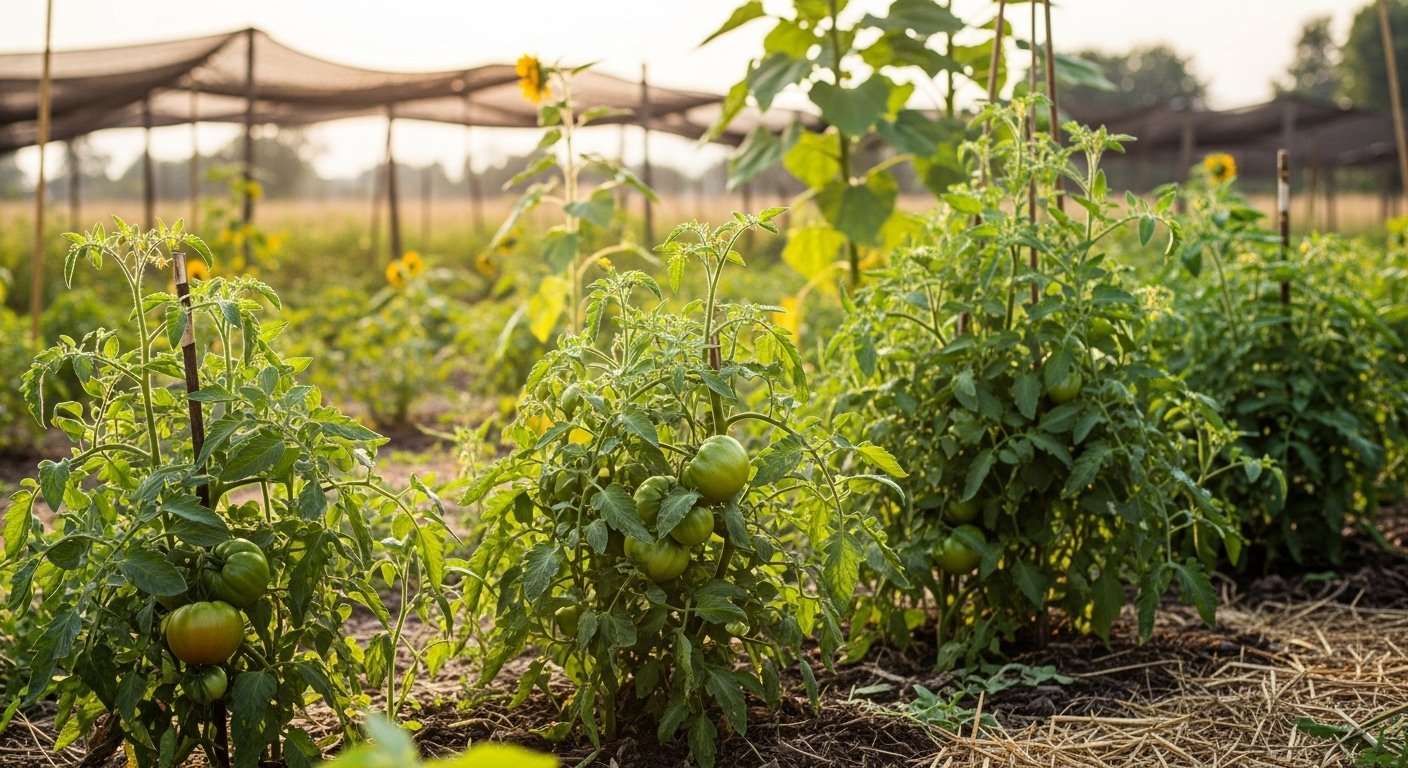
- Use simple shade cloth draped over cages or stakes; a cloth with 30-50% shade offers enough protection without blocking essential light.
- Apply lightweight row covers to provide relief during intense afternoon sun.
- Plant tall companion crops like sunflowers or corn nearby to shield tomatoes for part of the day while creating a cooler microclimate.
Hardening Off Seedlings
If you’re starting with seedlings, take time to gradually introduce them to outdoor sunlight—a process known as hardening off. Over a week, move your young plants outside for increasingly longer periods, starting with just a couple of hours of morning sun, then extending exposure each day. This gentle transition helps leaves thicken and adapt, reducing shock and vulnerability to sunscald when finally planted out.
By combining shade, smart plant placement, and proper acclimation, you’ll give your tomatoes the best chance to thrive despite the heat.
Mulching and Soil Care
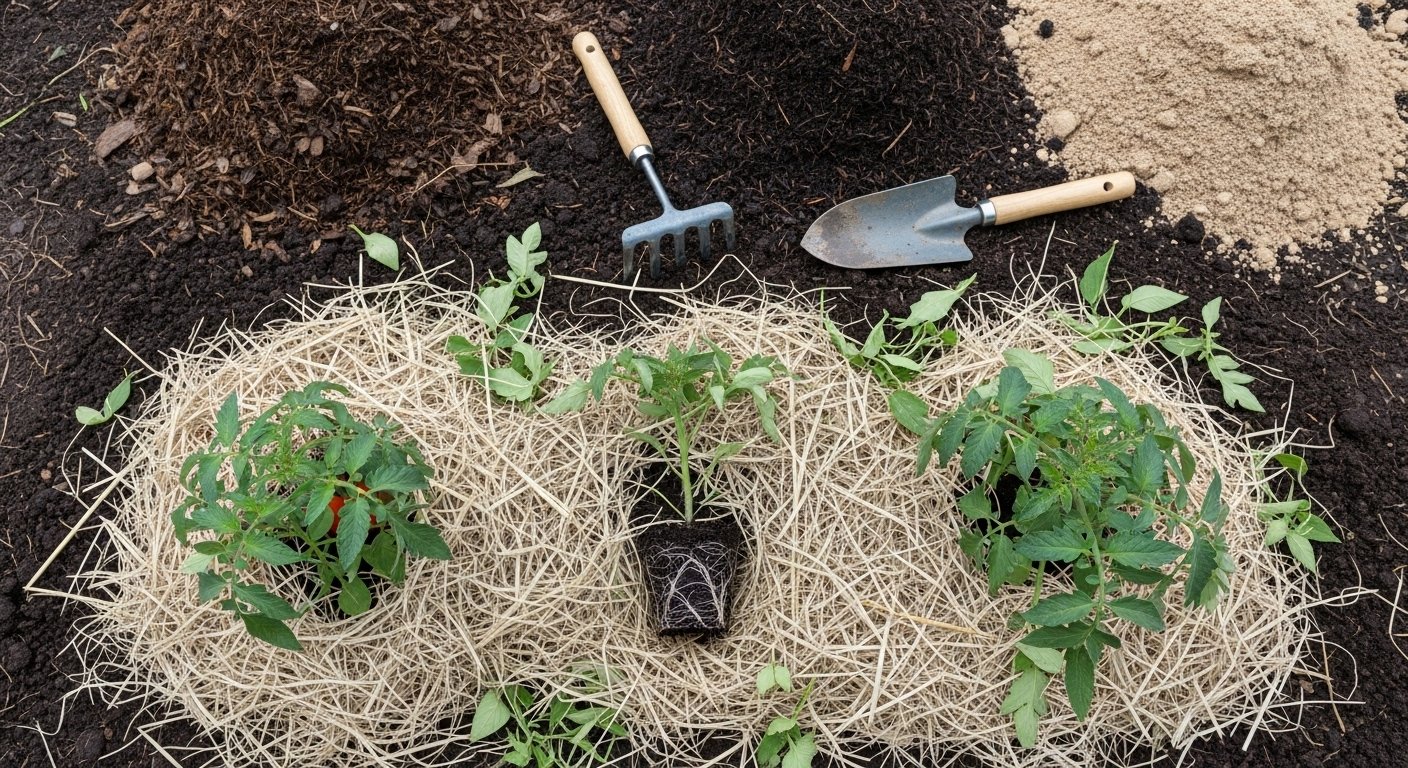
Mulching is a simple yet powerful way to help your tomato plants thrive, especially in hot, sunny climates. By covering the soil around your plants with mulch, you lock in precious moisture that would otherwise evaporate quickly in the heat. This means you’ll spend less time watering, and your plants get more consistent hydration.
Mulch also acts as a natural barrier against drastic temperature swings, keeping soil cooler during scorching afternoons and more stable overnight. For those blazing summers, opt for organic materials like straw, shredded leaves, or grass clippings. These not only insulate well but also break down over time to enrich your soil. Avoid using dark-colored plastics, which can trap too much heat and stress your plants.
Underneath that mulch, healthy, well-draining soil is key. If your soil is compacted or heavy with clay, mix in compost or coarse sand to improve texture and drainage. This helps tomato roots breathe and reduces the risk of disease during hot, humid spells.
By combining smart mulching with well-prepped soil, you create an ideal microclimate for robust tomatoes—less stress for you and tastier results from your garden.
Watering Wisely
Tomatoes grown in full sun need deep, consistent watering to thrive, especially during hot weather. Instead of shallow, frequent sprinkles, aim to soak the soil to a depth of six to eight inches each time you water. This encourages roots to grow deeply, making plants more resilient to heat stress and drought.
A good rule of thumb is to provide tomatoes with about one to two inches of water per week, adjusting as needed if extreme heat dries out the soil more quickly. Avoid the common mistake of letting the soil swing between bone-dry and soggy; uneven watering can cause problems like blossom end rot or fruit cracking. Instead, check the soil by sticking your finger a couple of inches down—it should feel moist but not waterlogged.
Irrigation methods matter, too. Drip lines or soaker hoses deliver water right to the root zone, minimizing evaporation and leaf wetness, which helps prevent diseases. Overhead watering, by contrast, can splash soil (and disease spores) onto leaves and waste water through evaporation, so it’s best avoided.
With the right watering habits, your tomatoes are far more likely to produce juicy, healthy fruit all summer long.
Managing Pests, Diseases & Harvest Timing
Heat stress can make tomato plants more vulnerable to pests and diseases by weakening their natural defenses and slowing growth. When temperatures soar, plants may drop flowers, wilt more easily, and develop thinner leaves—creating openings that encourage pests like aphids, spider mites, and whiteflies to move in.
Hot, humid conditions also invite fungal problems such as blight and powdery mildew, which thrive when plants are stressed. To stay ahead, check the underside of leaves regularly for insect clusters or tiny webs, and remove affected foliage promptly.
Consider using gentle measures like spraying leaves with soapy water or neem oil for mild infestations. For fungal issues, prune the lower leaves to improve airflow and water at the base in the early morning to keep leaves dry. Mulching can also help regulate soil temperature and reduce splashing, which spreads spores.
When heatwaves strike, try harvesting tomatoes as soon as they show a blush of color—at their first sign of ripening, they can safely finish coloring indoors on a kitchen counter. This strategy not only protects them from sunscald or cracking but also prevents flavor loss caused by extended exposure to high heat on the vine.