Common Reasons for Tomato Leaf Curl
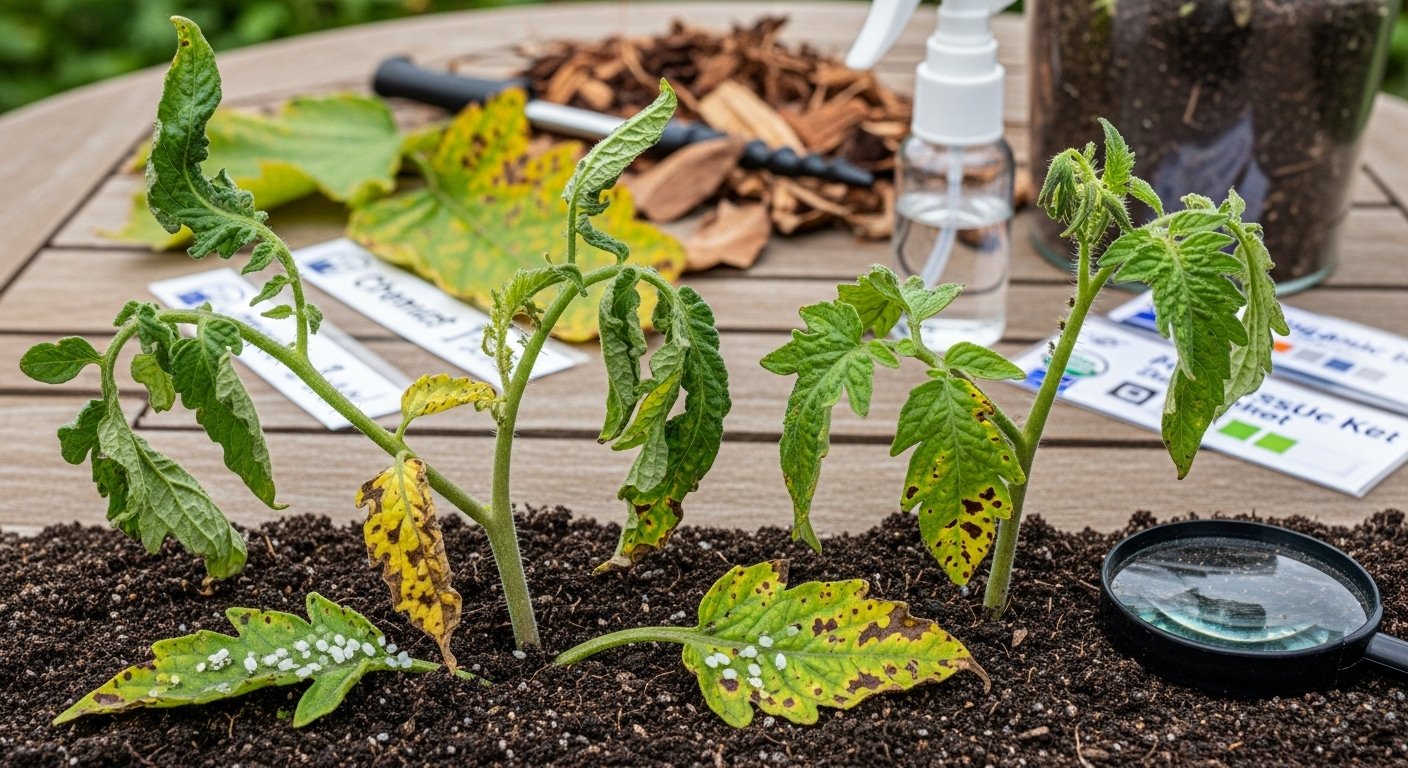
Tomato leaf curl is a common issue that frustrates gardeners and can spell trouble for your tomato crop if left unchecked. The telltale signs—leaves curling upwards, twisting, or puckering—might look similar, but the underlying causes can be quite different.
Environmental stress is a frequent culprit; hot, windy weather or inconsistent watering can cause leaves to curl as the plant tries to conserve moisture. Improper care, such as over-fertilizing (especially with nitrogen-rich products), can also trigger curling by forcing the plant to grow too quickly.
Diseases, particularly viral infections like tomato yellow leaf curl virus, show not just curling but also stunted growth and yellowing foliage. These pathogens often arrive via insect vectors like whiteflies. Pests themselves are another cause—sap-sucking insects such as aphids and thrips physically damage leaves and may transmit disease.
Finally, chemical exposure from nearby herbicide drift or overzealous pesticide application can damage plant tissues, leading to distorted and curled leaves.
Identifying the Cause
Each cause leaves subtle clues:
- Environmental stress affects many leaves at once.
- Improper care usually follows a recent change in routine.
- Diseases often bring other symptoms like discoloration.
- Pests can be found on leaf undersides.
- Chemical damage may cause irregular spotting.
It’s crucial to identify the reason behind your tomato leaf curl before rushing to treat it. Applying a random fix without a clear diagnosis can worsen the problem. Taking time to observe your plants and consider recent weather, care habits, and pest presence will guide you toward the right solution, giving your tomatoes the best chance to bounce back quickly.
Environmental Stress and Watering Issues
Environmental stress is a major cause of leaf curl in tomato plants, arising from factors like fluctuating temperatures, prolonged drought, or excessive heat. During hot spells, tomato plants lose water quickly, causing their leaves to curl upward as a protective response to prevent further water loss.
Drought conditions or irregular watering can make this worse—plants might wilt or develop crispy leaf edges. Interestingly, overwatering can be just as harmful, leading to yellow, swollen, or downward-curling leaves, and even root rot.
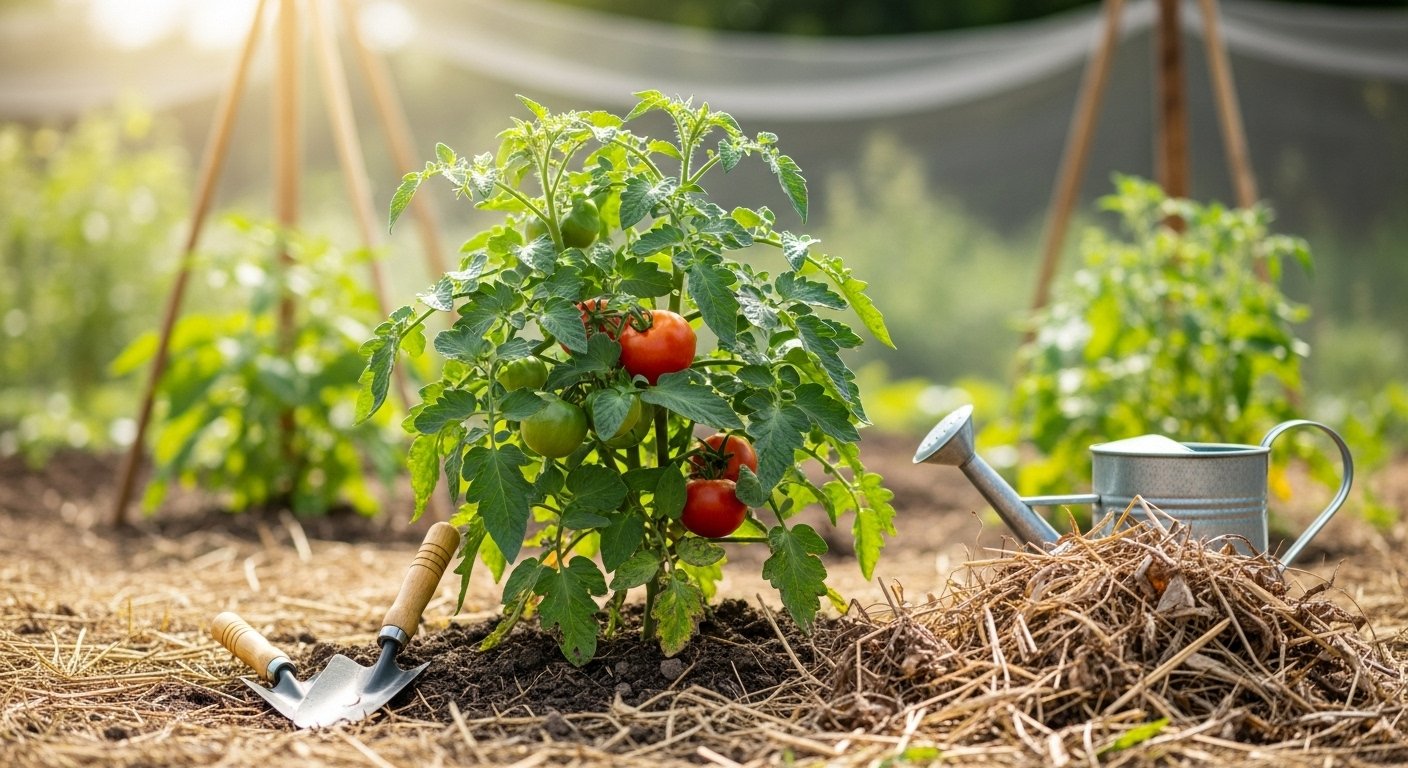
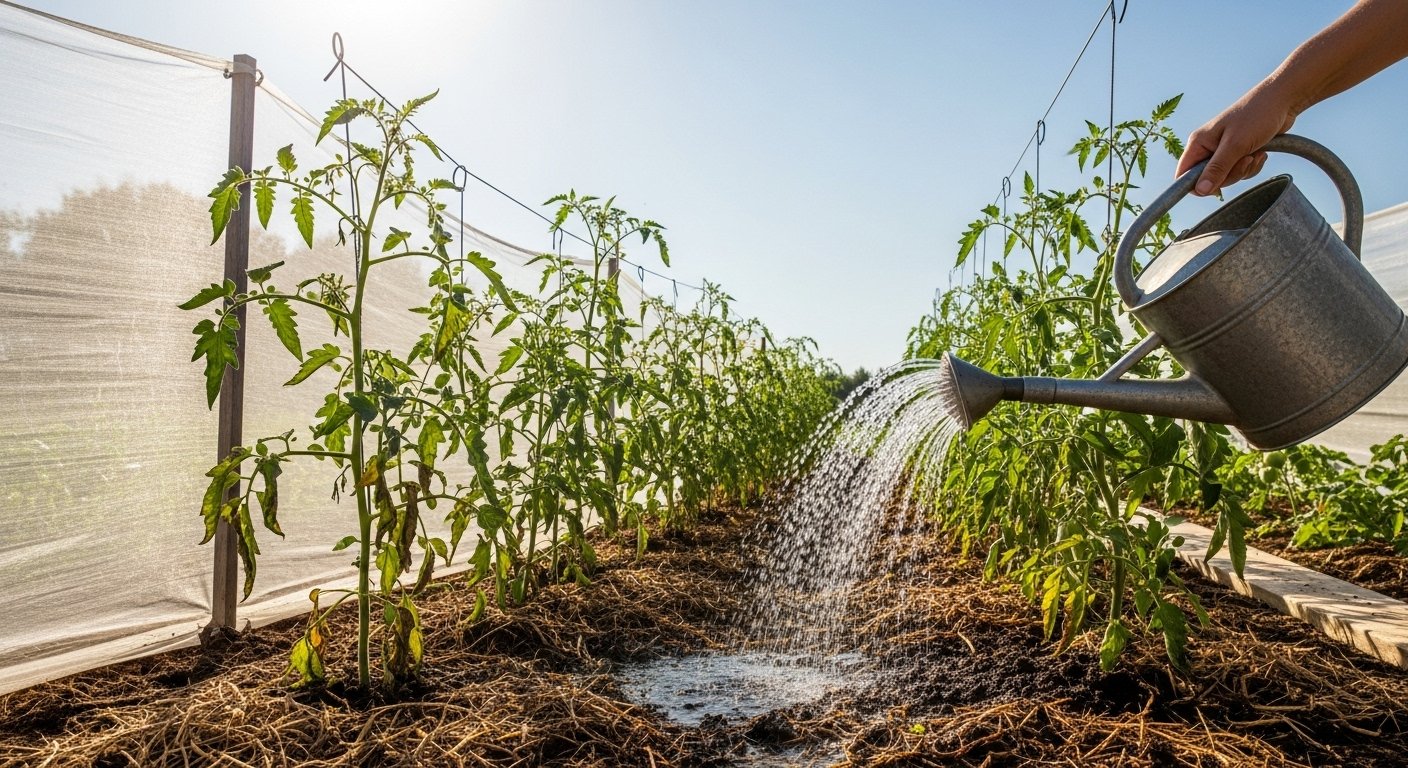
A good rule of thumb is to water deeply and consistently—aim for the soil to stay moist but never soggy. Water early in the morning to reduce evaporation. Laying down a layer of organic mulch, like straw or shredded leaves, helps stabilize soil moisture and temperature, shielding roots from extreme heat.
On particularly scorching days, consider using shade cloth or even a simple bedsheet draped over stakes in the afternoon to provide relief from the harsh sun.
Healthy tomato leaves should look flat, firm, and vibrant green, while stressed leaves may appear wilted, curled, discolored, or brittle. If you notice these changes, review your watering schedule, check soil moisture, and look for signs of heat damage. Adjust your care right away—a quick response can often prevent long-term problems and help your tomatoes recover.
Nutrient Deficiencies and Soil Problems
Curling leaves are often a plant’s SOS signal, and nutrient deficiencies—especially in calcium and magnesium—are a common culprit. When a plant doesn’t get enough calcium, new leaves might look distorted or curl at the edges, while a magnesium shortage typically causes yellowing between the veins and upward curling.
Poor soil quality—whether it’s compacted, waterlogged, or lacking organic matter—can block roots from absorbing these key minerals, even if they are present in the ground. If you notice leaf curl along with specific symptoms like yellow spots or crisp edges, nutrient issues might be to blame. In contrast, pests or diseases tend to cause irregular patches, spots, or fuzzy growth.
Start by getting your soil tested; many local extension offices and garden centers offer affordable kits that reveal exactly what your soil is missing. If calcium is low, add gypsum or lime (but check your soil’s pH first—lime will raise it). For magnesium, a sprinkle of Epsom salts worked into the soil can help.
You can also boost fertility with organic compost or well-balanced fertilizers designed for your plant type. For stubborn nutrient lockouts, make sure your soil drains well and isn’t too acidic or alkaline, as extreme pH levels make nutrients harder for roots to absorb. The right amendments not only reverse leaf curl but also set the stage for healthier, hardier plants in the long run.
Chemical Damage and Herbicide Drift
Exposure to herbicides or weed killers—even those applied nearby—can cause tomato leaves to curl due to a phenomenon called herbicide drift. This happens when chemical particles become airborne during spraying and are carried by the wind, accidentally landing on vegetables like tomatoes.
Herbicide damage often results in leaves twisting, curling tightly, becoming distorted, or developing a “shoe-string” appearance. New growth is especially sensitive, sometimes appearing stunted or pale. Unlike pest damage, which may leave visible holes, bite marks, or webbing, and unlike diseases that typically cause yellowing patches or spots, chemical injury usually causes widespread, uniform leaf curling on otherwise healthy-looking plants.
To minimize the risk of herbicide drift:
- Always apply chemicals carefully, preferably on windless days.
- Use shielded or low-pressure sprayers to reduce drift.
- Maintain a buffer zone between treated areas and your garden.
- Consider installing physical barriers like plastic or mesh screens when spraying nearby.
- Opt for hand-pulling weeds or applying mulch around tomatoes to lessen reliance on herbicides.
These strategies help protect your tomato plants from unintended chemical exposure and promote a healthier garden environment.
Tomato Pests and Diseases
Tomatoes, a staple in many gardens, frequently fall victim to pests like aphids and whiteflies, as well as viral and bacterial diseases that often cause leaf curl. Aphids are tiny, soft-bodied insects that cluster on new growth, sucking sap and leaving behind curled, yellowed leaves and sticky honeydew. Whiteflies are small white specks that flutter when disturbed; their feeding leads to wilting and curling, often accompanied by sooty mold.
Leaf curl can also indicate infection by viruses such as Tomato Yellow Leaf Curl Virus or bacterial pathogens like Pseudomonas. Both of these stunt plant growth and deform foliage. Accurate diagnosis begins with close inspection—use a magnifying glass to spot pests under leaves, and note if symptoms spread rapidly, which is a hallmark of viral infections.
Early intervention is key: prune and dispose of infected leaves, and remove heavily infested plants to prevent further spread. For pest control, integrated pest management (IPM) is very effective. Start with organic solutions like introducing natural predators, such as ladybugs for aphids, spraying insecticidal soap, or using neem oil. Sticky traps also help manage whiteflies.
Chemical pesticides should be a last resort. If needed, choose targeted, tomato-safe products and follow label instructions carefully. Additionally, regularly rotate crops, maintain healthy soil through composting, and ensure adequate spacing for airflow. These cultural practices greatly reduce disease pressure.
By combining regular monitoring, organic interventions, and careful use of chemicals, you can keep your tomatoes healthy and productive throughout the season.
Healthy Plant Care and Prevention Tips
Preventing tomato leaf curl starts with simple but vital garden practices. First, practice crop rotation—avoid planting tomatoes in the same spot year after year to reduce the buildup of soilborne pests and diseases that cause leaf curl. Choosing resistant tomato varieties can also make a big difference; check seed packets or nursery labels for those bred to withstand common viruses.
Pay attention to your local planting calendar and set your tomatoes out at the right time, as stress from cold or heat can trigger leaf curl. Regular monitoring is key: check leaves weekly for curling, yellowing, or pests. Early action, such as removing affected leaves or isolating a sick plant, gives your tomatoes the best chance for recovery.
Don’t overlook effective pruning—remove crowded or lower leaves to improve airflow and help the plant focus energy on healthy branches. Proper spacing is crucial; give each tomato plant plenty of room to reduce humidity and the spread of infections. Keep your garden clean by picking up fallen leaves, disposing of disease-prone debris, and sanitizing tools between uses.
These steps may seem small, but together they create a healthier environment that discourages leaf curl and supports strong, productive tomato plants. If leaf curl appears, act fast: isolate affected plants, trim damage, and check for pests like whiteflies, which often spread viruses. With vigilance and the right care, you’ll enjoy a resilient tomato patch all season long.