How to Tell When Your Tomatoes Are Ready to Harvest
Learning how to harvest tomatoes is essential if you want juicy, flavorful fruits without accidentally damaging your tomato plants. But the secret lies not just in careful picking, but also in truly knowing when your tomatoes are ready to harvest.
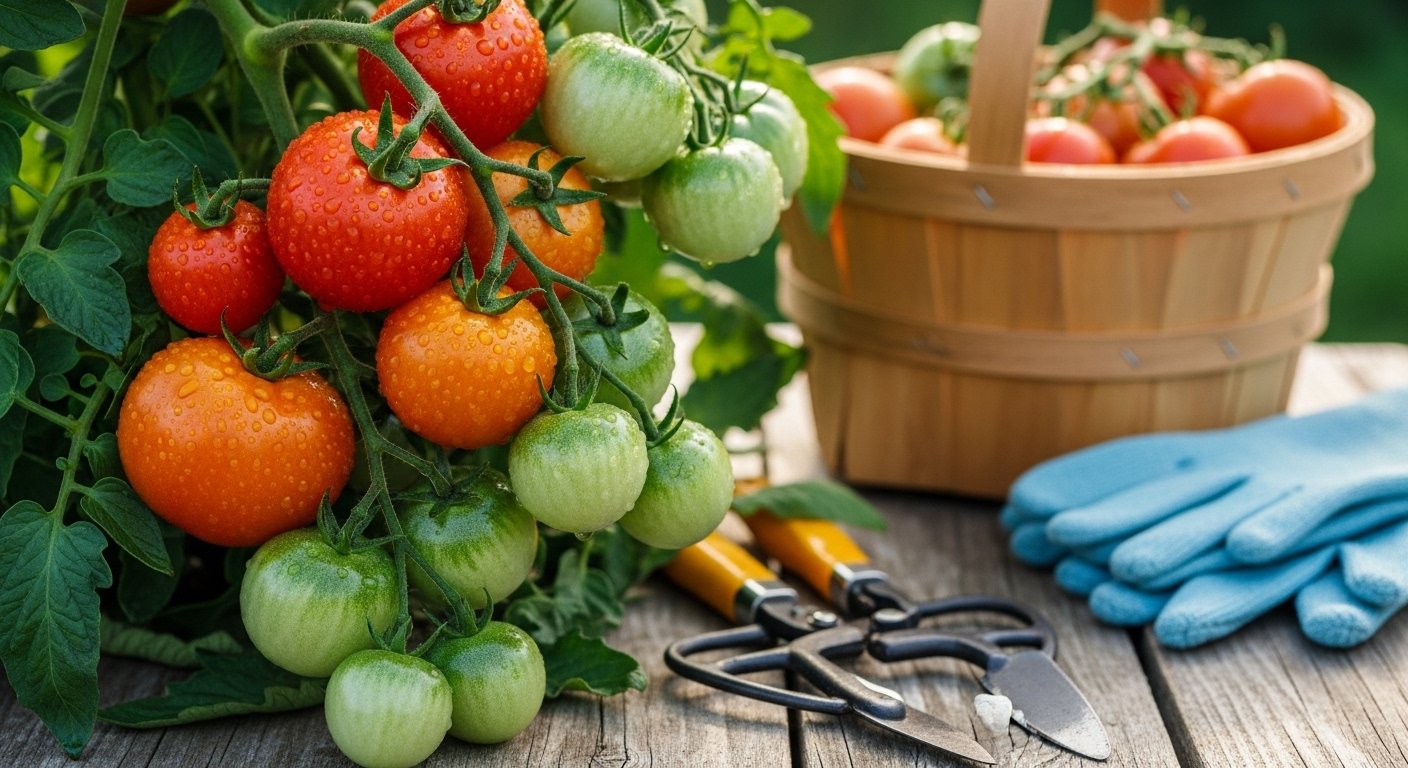
The key signs start with color—a ripe cherry tomato glows deep red or yellow (depending on the variety), plum tomatoes show rich, uniform color, and beefsteak tomatoes boast a vibrant, full hue with no traces of green near the stem. Gently squeeze the fruit: ripened tomatoes feel firm but respond with a slight give, while under-ripe ones stay hard and overripe ones turn soft and mushy. Aroma is equally telling; sniff close to the stem and you should detect a sweet, earthy scent, especially pronounced in beefsteak and cherry types.
Harvesting too early deprives your tomatoes of maximum flavor and sweetness, leaving them bland or mealy. If you wait too long, you’ll find their texture soft, watery, or even prone to splitting.
To avoid this, visually inspect your plants daily as ripening speeds up fast in warm weather. Don’t simply tug a tomato when you think it’s ready. Instead, cradle it gently and twist until it releases with minimal force. This helps prevent stem or plant damage.
Common mistakes include picking by color alone—some varieties deepen in shade off the vine—or assuming all fruits on a cluster ripen together. Take each tomato one by one, checking for even color, gentle firmness, and that telltale smell. With these simple checks, you’ll make sure your harvest is as tasty as it is bountiful, without setting your plant back for next season.
The Best Time of Day to Pick Tomatoes
Choosing the right time of day to pick your tomatoes can make a surprising difference in their flavor and how long they keep. Harvesting in the morning, especially before the sun has fully warmed the plants, often results in tomatoes that are firmer and more hydrated since they’ve absorbed moisture from the cooler overnight air.
Morning-picked tomatoes also tend to have higher acidity and brighter flavors, making them ideal for fresh eating. On the other hand, picking in the afternoon, after hours of sun exposure, can make tomatoes a bit softer and sometimes sweeter because the warmth encourages sugars to develop—but this can also shorten their shelf life and lead to quicker spoilage or wrinkling, especially in very hot climates.
For the best results, plan to harvest tomatoes when the fruits are fully colored but not overripe, and try to pick them in the cool of the morning if you plan to store or transport them. If you’ll be using them the same day, an afternoon harvest can bring out maximum flavor.
No matter what, avoid picking during the hottest part of the day when the tomatoes are hot to the touch, as sudden temperature changes can affect texture and quality.
Keeping a simple schedule—checking your vines early in the day and again in late afternoon—can help you catch tomatoes at their perfect ripeness and ensure every pick is as fresh and delicious as possible.
How to Properly Harvest Tomatoes (Step-By-Step)
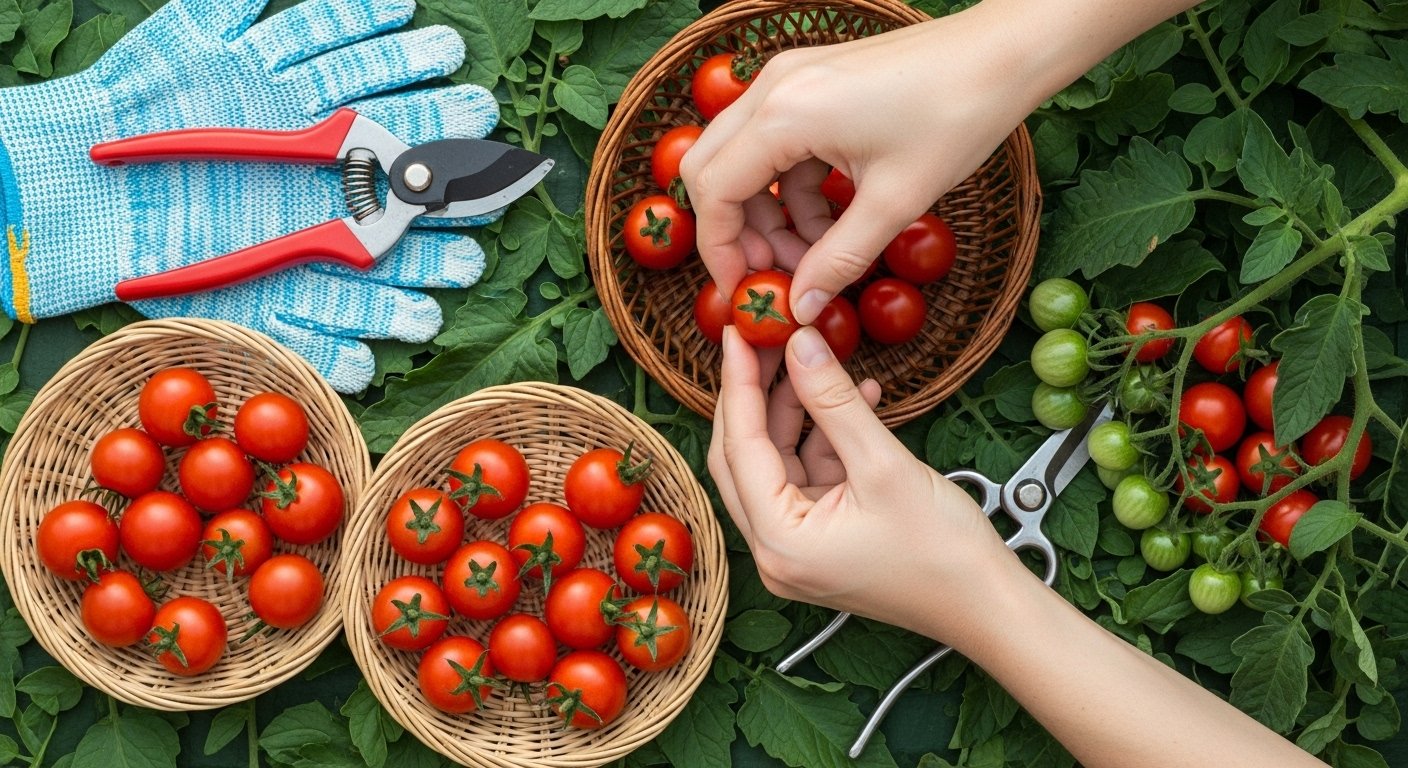
To harvest tomatoes properly, start by gathering a few essential tools: clean garden snips or sharp scissors, a pair of gardening gloves to protect your hands, and shallow containers or baskets to gently collect the fruit.
Begin early in the day when tomatoes are coolest and less prone to bruising. First, inspect the fruit for ripeness—look for full, even color and a subtle give when gently squeezed.
For cherry and grape tomatoes, use your fingers to neatly twist or snap the fruit from the vine, being careful not to pull and damage nearby stems. For larger varieties like beefsteak or heirloom tomatoes, use snips or scissors to cut the fruit, leaving a short stem attached, which helps prolong freshness.
Always support the tomato with your other hand while cutting or twisting to avoid dropping and bruising the fruit. Place picked tomatoes carefully in a single layer in your container; stacking them can cause bruises and early spoilage.
After finishing, check the plants for damaged leaves or stems and trim them with clean snips to encourage healthy growth. Consistently using gentle techniques and the right tools will keep both your tomatoes and your plants in top shape throughout the season.
What To Do If Your Tomatoes Aren’t Fully Ripe
If your tomatoes aren’t fully ripe when it’s time to pick—maybe because a frost is coming or you’re trying to save them from hungry pests—don’t worry; you can still enjoy red, juicy tomatoes with a little patience. One simple trick is to put unripe tomatoes in a paper bag with a ripe banana or apple. These fruits produce ethylene gas, which encourages the tomatoes to ripen faster. Just check them regularly and remove any that start to rot.
Another easy method is to line tomatoes on a sunny windowsill, turning them every couple of days so they ripen evenly. Just keep in mind that direct sunlight can occasionally toughen the skin, so a bright but not scorching spot is ideal.
Some gardeners also swear by placing tomatoes in a cardboard box or a newspaper-lined drawer to provide a dark, slightly humid environment that helps the fruit mature gently.
While tomatoes ripened indoors or off the vine might not be as sweet or aromatic as those sun-ripened outside, they’re often perfectly good for salads, sauces, and snacks. Off-vine ripening is especially useful if your growing season is cut short by cold weather or when pests or diseases threaten your crop.
By using these tricks, you can still savor homegrown tomatoes even after the weather turns cool—just remember that, with a little care, green tomatoes have the potential to end up almost as tasty as their garden-grown siblings.
How To Store Freshly Harvested Tomatoes
Storing freshly harvested tomatoes properly can make all the difference in preserving their vibrant flavor and texture. For the best taste, keep your tomatoes at room temperature—out of direct sunlight and stem-side down—until they’re fully ripe. Refrigeration is best avoided for unripe or just-picked tomatoes, as cold temperatures can dull their flavor and cause the flesh to become mealy. Only place them in the fridge once they’re at peak ripeness and you need to extend their life by a few more days.
If your tomatoes are bruised or have tiny splits, use those first since damage accelerates spoilage. Try chopping and cooking them into sauces or salsa to prevent waste.
For longer-term storage, consider canning: whole, diced, or as a homemade sauce. Follow safe canning practices to lock in freshness for months. Alternatively, you can freeze tomatoes—either whole, diced, or pureed—by simply washing, coring, and placing them in freezer-safe bags. Keep in mind that freezing alters texture, so thawed tomatoes are best used in cooked dishes like stews or soups rather than fresh salads.
By handling each tomato gently, storing them in a single layer to avoid bruising, and giving a second life to damaged ones through cooking or preservation, you’ll enjoy the best of your harvest well into the year.
Troubleshooting Common Harvesting Issues
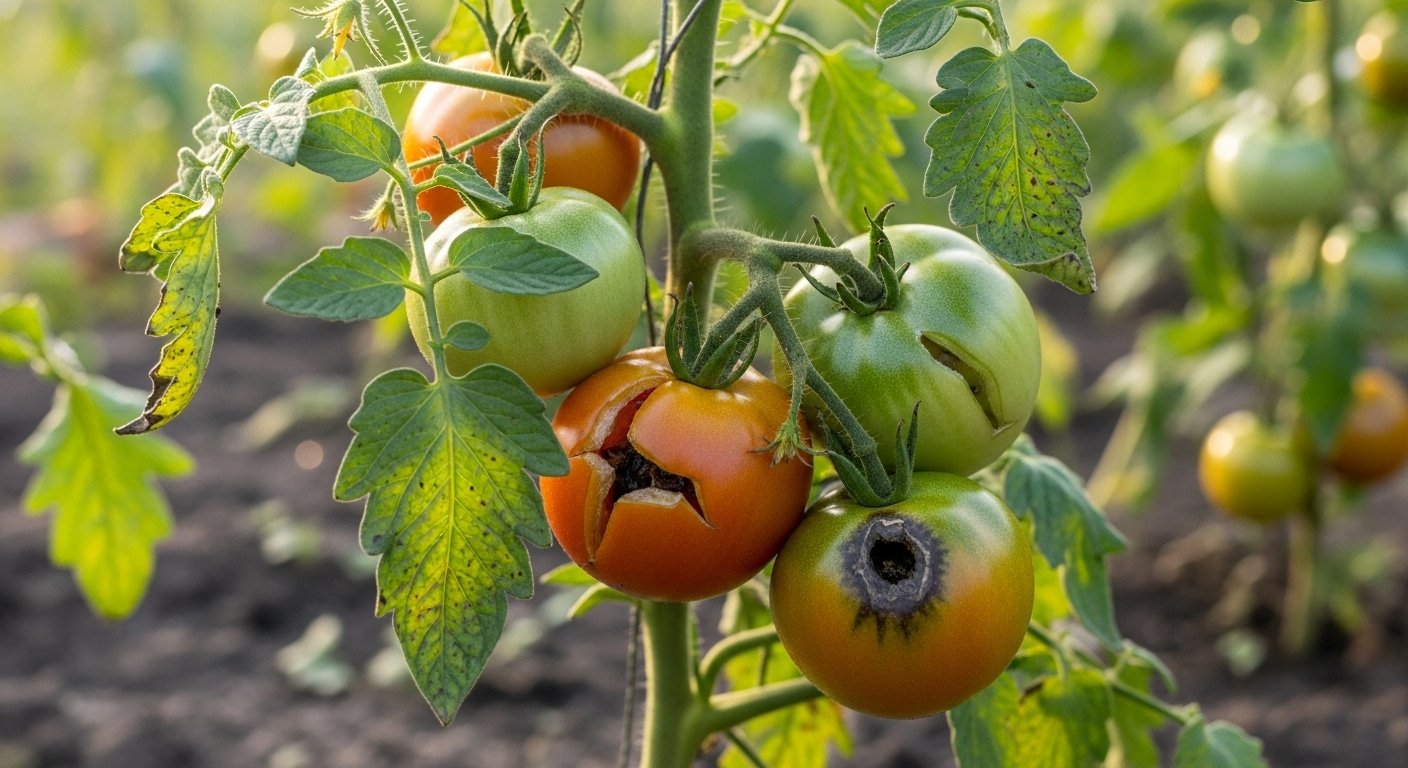
Harvesting your garden’s bounty isn’t always straightforward, and issues like cracking, splitting, and blossom end rot can throw a wrench in the process.
Cracking and splitting often happen when fruit absorbs too much water too quickly after a dry spell—try to keep watering consistent and harvest after the morning dew dries to help prevent this.
Blossom end rot, which appears as sunken, dark spots on the fruit’s base, is usually tied to calcium deficiency aggravated by irregular watering; picking fruits as soon as they ripen and mulching can reduce the risk.
Pests and diseases are another concern: watch out for signs like holes, discolorations, or sticky residues, and remove affected produce quickly to limit their spread.
If you spot overripe fruits, gather them promptly—even if you can’t eat them all, using them in jams or sauces minimizes waste and reduces their allure for pests.
For underripe fruits, bring them inside and let them ripen at room temperature; placing tomatoes or peppers in a paper bag can speed this up.
Sudden weather swings, such as unexpected frosts or heat waves, may require rapid action—cover tender plants with cloth on cold nights or harvest early if severe heat is on the way.
Staying observant and flexible with your harvest routine not only boosts yield but also helps you stay one step ahead of common garden headaches.