Introduction to Sweet Potato Vines
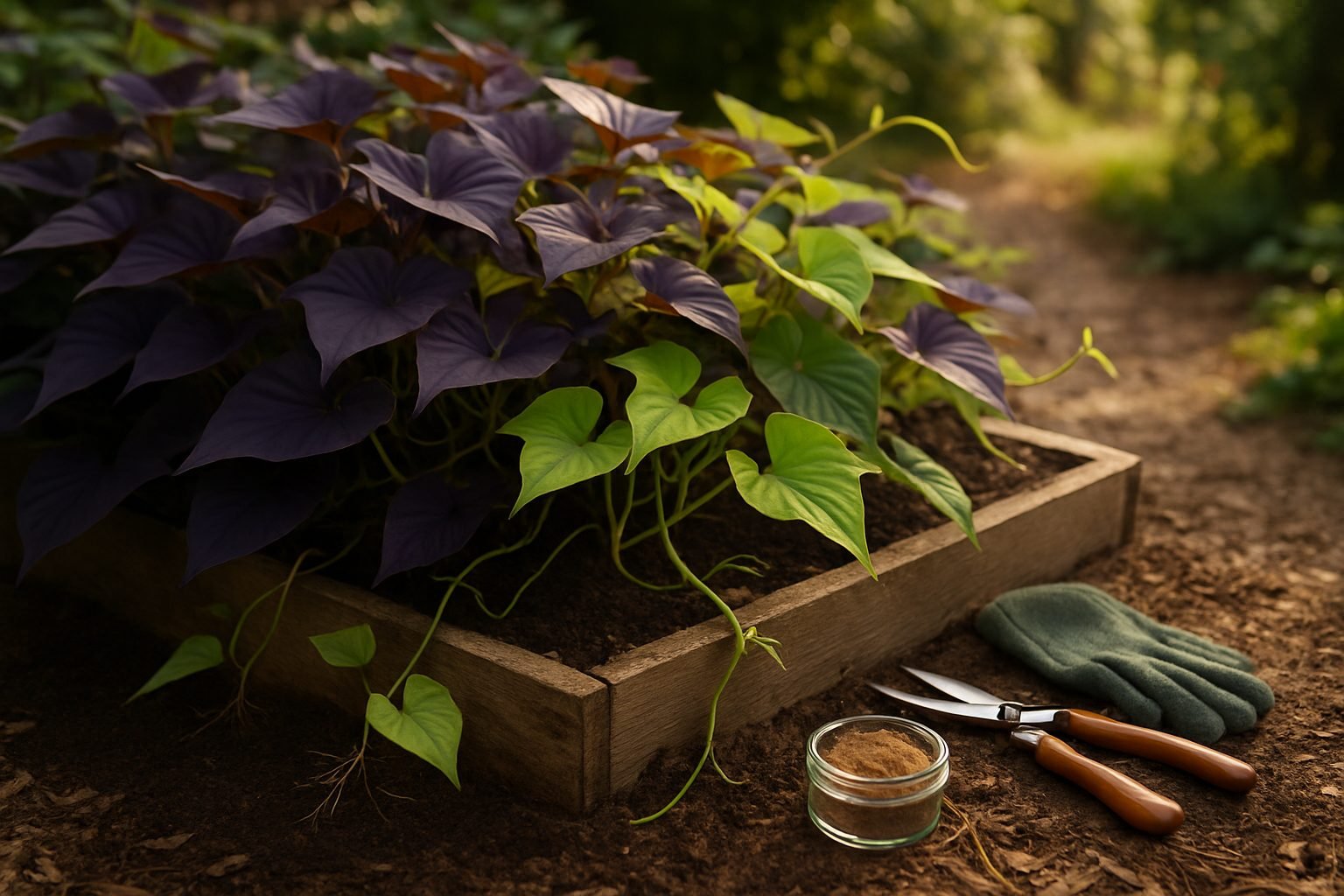
Pruning sweet potatoes is a topic that often puzzles both new and seasoned gardeners, especially when it comes to those lush, sprawling sweet potato vines (Ipomoea batatas) you see draping elegantly from garden beds, containers, or even hanging baskets. Unlike their more reserved vegetable cousins, sweet potato vines are known for their vigorous growth and striking foliage, which ranges in shades from deep purple to chartreuse. This makes them not only a valuable crop plant but also a sought-after ornamental for anyone wanting to brighten up patios or garden paths.
Whether you’re growing them for their nutritious edible roots or simply to enjoy their cascading leaves as an ornamental feature, sweet potato vines have an undeniable presence in gardens everywhere.
But with rapid growth come a few questions—chief among them is whether pruning actually helps or hinders your sweet potato plants. Should you trim back the runners that threaten to take over your beds? Will pruning sweet potatoes lead to bigger tubers, bushier plants, or simply a tidier appearance?
In this article, we’ll cut through the confusion. You’ll learn exactly when and how to prune your sweet potato vines, the real-world benefits and risks of trimming, and practical tips to keep both your edible and ornamental varieties healthy. Whether your goal is a bountiful harvest or a show-stopping display, these guidelines will help your sweet potato vines thrive, saving you time and boosting your gardening confidence this season.
Choosing and Planting Sweet Potato Vines
When choosing sweet potato vines, start by considering the look and growth habits you want for your space. Ornamental varieties like ‘Blackie’ or ‘Marguerite’ offer bold foliage colors—deep purple or bright chartreuse—and work wonderfully in planters or borders, while edible types such as ‘Beauregard’ or ‘Georgia Jet’ are bred for tuber production and thrive in vegetable gardens.
It’s important to match the variety to your climate: southern regions with long, warm seasons can support most types, but if you garden in a cooler climate, choose quick-maturing or short-season varieties and consider starting indoors.
Sweet potatoes need plenty of sun (at least six hours daily) and loose, well-drained soil that’s rich in organic matter. Avoid heavy clay, which can stunt growth and cause roots to rot.
For ground planting, prep your site by loosening soil to a depth of 8-12 inches and mixing in compost or aged manure. For containers, use a loose, quality potting mix in a pot at least 12 inches deep.
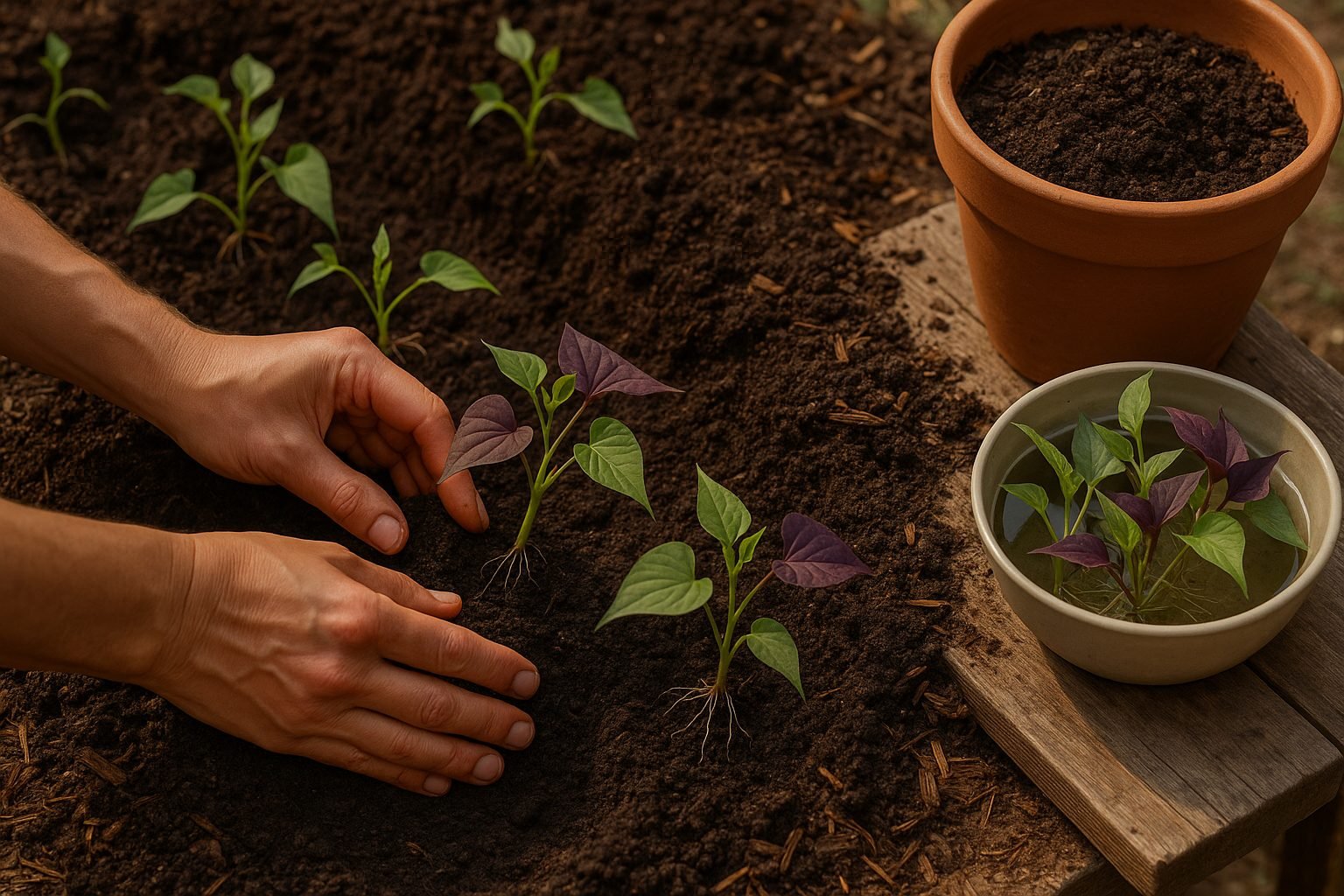
Once nighttime temperatures stay above 50°F, plant slips (young vine starts) about 12-18 inches apart in rows that are three feet apart—this gives the vigorous vines plenty of space to sprawl. Gently bury each slip so that at least half its length is below soil level, and water well to settle the roots. If you’re using tubers, place them horizontally under an inch of soil.
Sweet potato vines love the heat, so wait until late spring, and be patient as they establish; regular watering and occasional feeding will give them a strong start. With the right variety and a bit of preparation, you’ll enjoy vibrant foliage all season and, for edible types, a tasty harvest in fall.
Sweet Potato Vine Care Essentials
Caring for sweet potato vines is surprisingly straightforward, making them a favorite among both beginners and seasoned gardeners. Start with consistent watering—keep the soil evenly moist but not waterlogged, especially during hot, dry spells. For most climates, watering once or twice a week works well, but always check the top inch of soil; if it’s dry, it’s time to water. Mulching with straw or shredded bark helps retain moisture and keeps soil temperatures steady, which is crucial for healthy root development.
When it comes to fertilization, use a balanced, slow-release fertilizer at planting time, and consider a light feeding midseason if your vines seem lackluster. Avoid high-nitrogen fertilizers, as these can promote lush leaves at the expense of tuber growth—especially important if you want to harvest sweet potatoes, not just enjoy the foliage.
Sweet potato vines thrive in warm conditions and are happiest when daytime temperatures remain above 70°F (21°C). They are frost-sensitive, so plant them only after the last spring frost and be prepared to protect them or bring containers indoors if a cold snap threatens in fall.
Give your sweet potato vine as much sunlight as possible; full sun (at least six hours daily) yields the bushiest growth and deepest leaf color, although they’ll tolerate partial shade with more subdued results. In hot, southern climates, a bit of afternoon shade can actually help prevent leaf scorch during the peak of summer. High humidity is ideal, but these vines are fairly adaptable, making them suitable for a wide range of garden settings.
Training and Support
Whether you’re growing sweet potato vine for lush groundcover, dramatic vertical accents, or in containers, training and support can enhance both their beauty and manageability.
- In landscape beds, the vines will naturally sprawl and cover ground quickly but can be gently directed away from neighboring plants using landscape stakes or low garden fencing.
- For dramatic aerial displays in containers or hanging baskets, encourage trailing stems to climb by providing trellises, obelisks, or simple bamboo stakes.
- Pinch back vine tips to keep growth bushy and full, and don’t hesitate to trim any wayward stems—these cuttings can be easily rooted in water to start new plants, making sweet potato vine a rewarding choice for both novice and expert green thumbs.
Pruning and Training Sweet Potato Vines
Pruning sweet potato vines isn’t just about keeping your garden tidy—it’s a key step for healthier, more productive plants. Left unchecked, sweet potato vines can quickly take over with rampant growth that may crowd out other plants and lead to tangled, less-productive tubers.
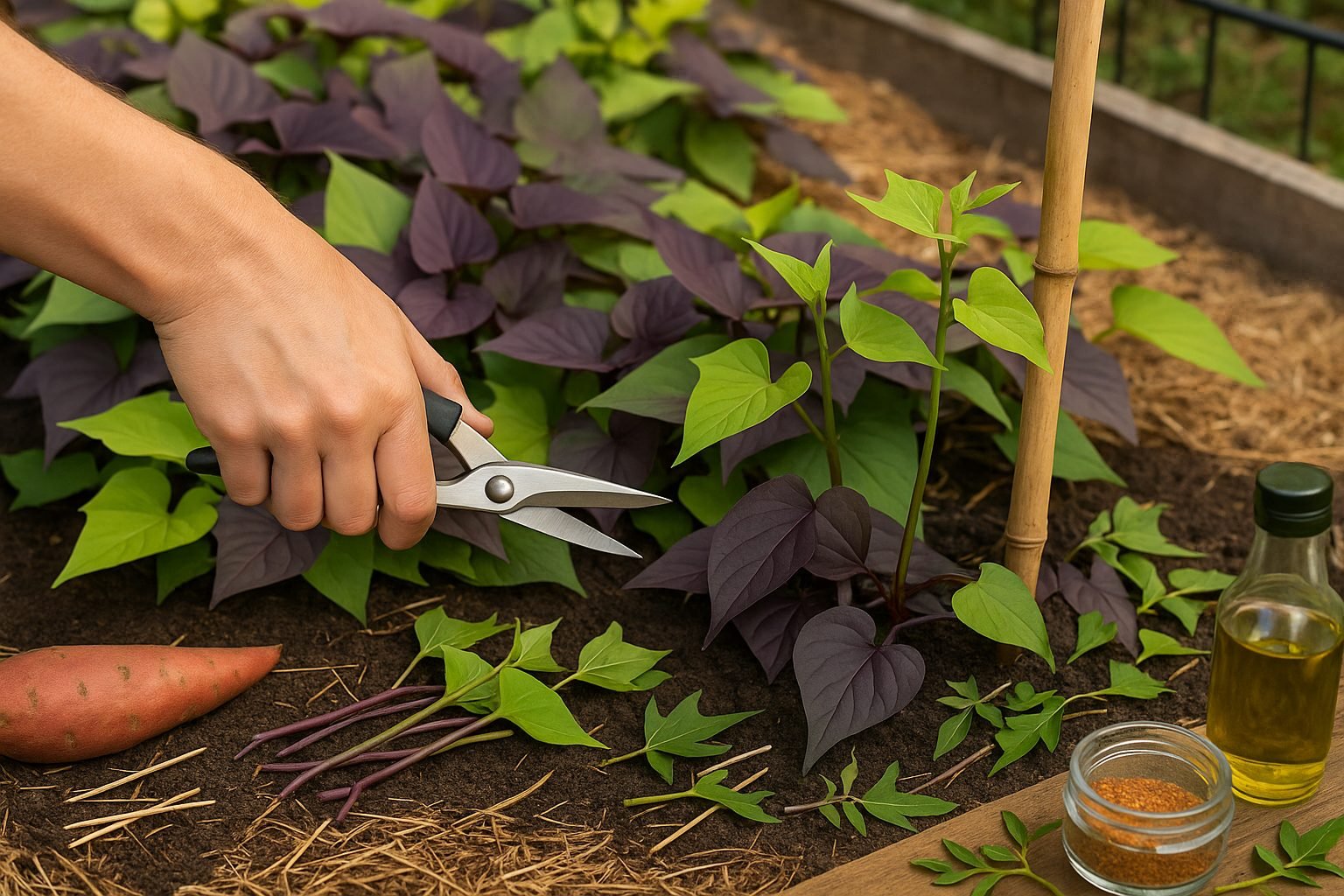
The best time to prune is during the growing season, once the vines are well-established but not flowering heavily; this helps redirect the plant’s energy into tuber development rather than leafy sprawl. Use clean, sharp garden shears or scissors to snip away unruly or damaged stems, cutting close to the base without harming the main stem. Always disinfect your tools before and after use to prevent spreading plant diseases. For safety, wear gloves to protect your hands from sap and accidental nicks.
When pruning, start small—removing too much at once can stress the plant—and focus on shaping the vine as you go. If your goal is vertical growth, try gently tying the main stems to a sturdy trellis, fence, or bamboo stakes using soft, flexible ties so you don’t damage the stems.
For bushier plants, pinch off the tips of the vines regularly; this simple trick encourages side shoots, giving your sweet potatoes a fuller, more controlled look while also improving air circulation. Many gardeners find success checking their vines every two weeks, making minor adjustments rather than waiting for overgrowth.
By combining careful pruning and targeted training, you’ll not only keep your plants attractive but also boost your sweet potato harvest at season’s end.
Managing Pests, Diseases & Common Problems
Dealing with garden pests and plant problems starts with knowing what to look for. Aphids—tiny green, black, or white bugs—often cluster on new stems and leaves, leaving behind sticky honeydew and curled foliage. Beetles, like the bright orange Colorado potato beetle, chew visible holes in leaves, while caterpillars munch irregular patches and sometimes leave droppings behind.
Regularly inspect plants, especially the undersides of leaves, and act quickly—hand-pick larger bugs, blast aphids off with a strong spray of water, or use organic insecticidal soap if infestations get out of hand.
Fungal diseases can appear as dark spots, moldy growth, or yellowing leaves. These issues thrive in damp, crowded conditions—space plants well and water early in the morning at the base to let leaves dry promptly. Copper-based fungicides or homemade sprays with baking soda can slow the spread if caught early, but always remove and destroy infected plant parts to avoid spreading spores.
Root problems, such as rot, typically show up as wilting, stunted growth, or mushy tubers, and are caused by soggy, poorly drained soil. Avoid overwatering and plant in raised beds or loose soil to improve drainage.
Nutritional or environmental stress can lead to other common issues, like leggy, stretched stems (often from insufficient sunlight or overcrowding), leaf discoloration (yellowing from nitrogen deficiency, purple hints from phosphorus lack), and meager tuber harvests due to poor soil quality or inconsistent watering.
Encourage strong, compact growth by placing plants where they get plenty of sunlight, thinning seedlings so each has space, and fertilizing every few weeks with a balanced feed. For best tuber production, consistently keep soil moist but not wet, and feed with potassium-rich fertilizer once tubers start forming.
With regular observation and a bit of preventive care, you can tackle most problems before they get out of hand and enjoy a healthy, thriving garden.
Propagation and Overwintering Sweet Potato Vines
Propagating sweet potato vines is simple and rewarding, with several methods to fit your needs. The most common way is using cuttings—just snip a healthy vine tip about six inches long, remove the lower leaves, and place the stem in water or moist soil. Within a week or two, roots will appear, and you can pot up your new plant.
Another tried-and-true method is starting from slips. To do this, place a mature sweet potato tuber halfway in water with the pointed end up; after a few weeks, sprouts (called slips) will emerge from the top. Once the slips are six inches tall, twist them gently from the tuber and plant them in soil or water to root.
For those looking to save time year to year, simply save healthy tubers after harvest—store them in a cool, dry spot indoors over the winter. When spring returns, use them to start new slips or plant directly in the garden after the last frost.
Overwintering Sweet Potato Vines
Overwintering sweet potato vines depends largely on your climate. In mild or warm regions (USDA zones 9 and up), you can mulch the soil heavily in late fall to protect the tubers, and chances are good the vines will come back in spring.
In colder climates (zones 8 and below), the vines and tubers will not survive frost outdoors. Instead, dig up the tubers after the first frost, let them dry for a day or two, then store them in peat moss, sawdust, or sand in a cool (55-60°F), dark, and well-ventilated area.
For ornamental sweet potato vines grown in containers, simply trim the foliage and bring pots indoors before the first hard frost—keep them in a brightly lit spot, water sparingly, and avoid letting the soil get soggy. If space is tight, take a few cuttings before frost and root them in water for winter—these make lovely houseplants and can be replanted outside in spring.
With these methods, you’ll have healthy, vigorous sweet potato vines ready to go each growing season.
Harvesting and Enjoying Sweet Potatoes
Knowing when to harvest sweet potatoes is key for the best flavor and texture. Look for yellowing foliage or wait about 90 to 120 days after planting, when the weather starts to cool but before the first frost—these are good indicators that the tubers are ready.
To harvest, gently loosen the soil around each plant with a garden fork or spade, taking care not to nick the tubers. Lift them out and brush off excess dirt, but avoid washing them immediately.
For better sweetness and shelf life, cure the sweet potatoes by placing them in a warm (about 80°F), humid spot for 7 to 10 days. Once cured, store them in a cool, dark, well-ventilated place where they can last for months.
Don’t toss those cuttings—sweet potato vines make attractive potted houseplants or eye-catching additions to garden beds, especially varieties with chartreuse or purple leaves.
Beyond just baking or roasting the roots, you can sauté young sweet potato leaves for a nutritious green, similar to spinach. Enjoy your harvest in stews, fries, casseroles, or even smoothies for a sweet twist, making sure to savor both the roots and their versatile, edible greens.