Introduction
Dealing with carrot pests is a crucial part of growing strong, healthy carrots and ensuring you get the most out of your garden or small farm. If you’ve ever planted carrots only to find tunnel-riddled roots or wilted, yellowing tops, you know firsthand how much damage carrot pests can cause. Issues like distorted growth and reduced harvests not only impact your hard work but can also discourage even seasoned gardeners.
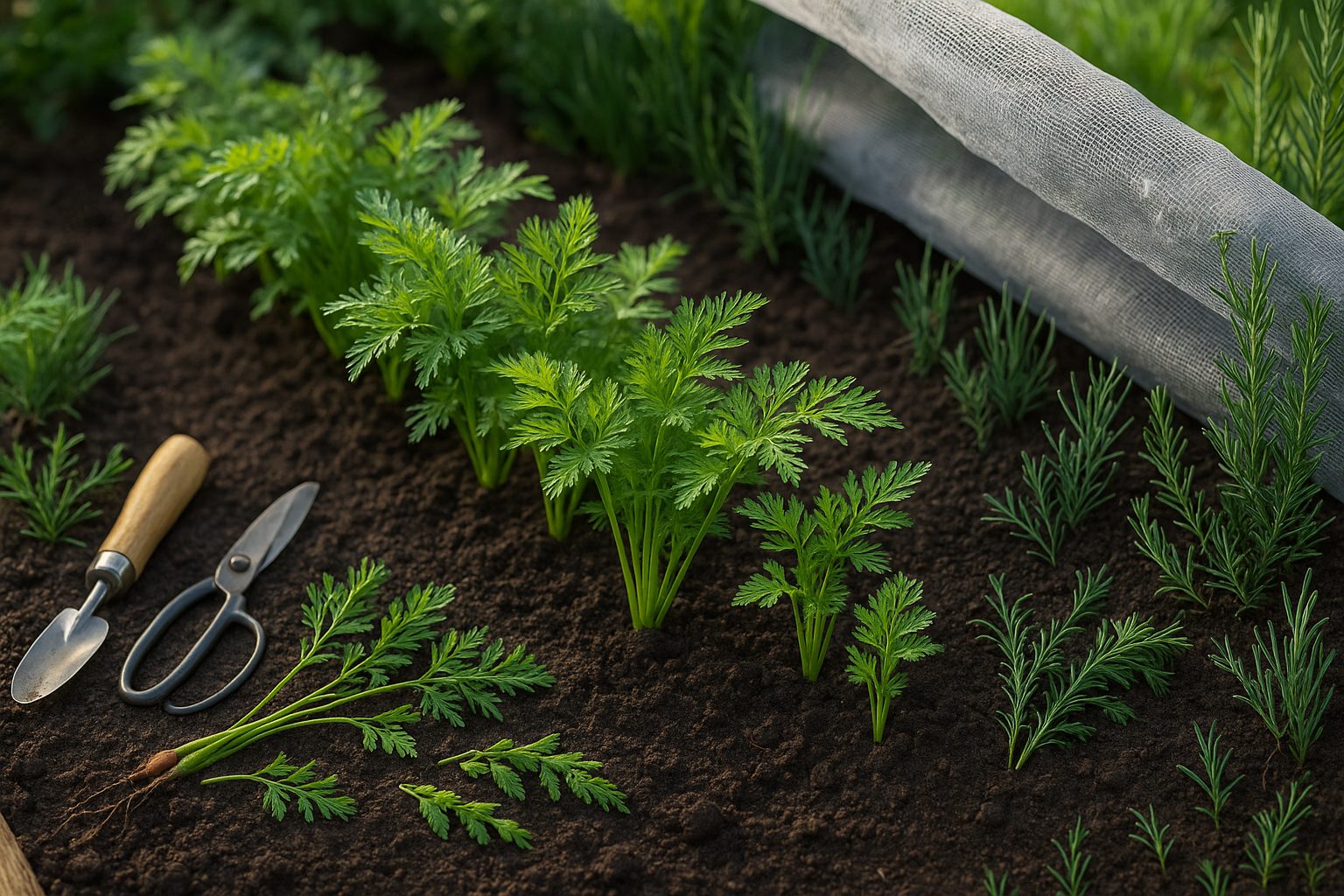
Some of the most common threats include carrot rust fly larvae—which tunnel through roots leaving brown trails—plus aphids, wireworms, and nematodes. These pests can quickly multiply and wreak havoc if not kept in check. Thankfully, you don’t need to rely on harsh chemicals to protect your crops; natural strategies like crop rotation, netting, companion planting, and mulching often make a big difference.
Learning to spot early signs of trouble—like stunted tops or discolored leaves—can help you act before pests take over. In the following guide, we’ll explore approachable and effective ways to identify, prevent, and manage carrot pests without resorting to synthetic pesticides. Whether you grow a few carrots in raised beds or tend to a larger plot, these tips will help you enjoy healthier plants and tastier harvests all season long.
Identifying the Most Common Carrot Pests
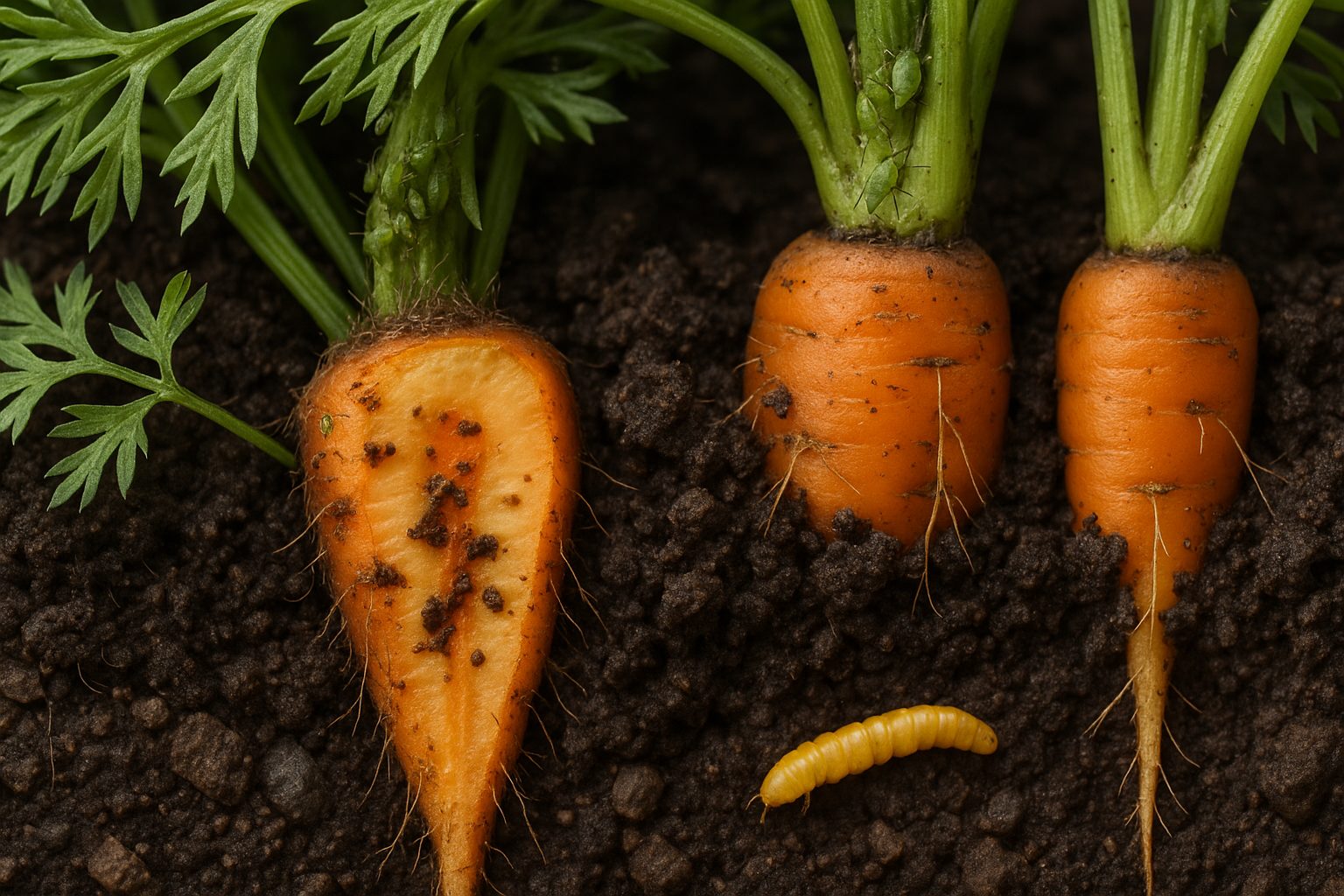
Carrots, a staple in many gardens, can attract a surprising range of pests that threaten both their foliage and roots. Among the most common culprits are:
- Aphids: Tiny, soft-bodied insects that cluster on leaves and stems, often leaving behind sticky honeydew that attracts ants and encourages mold.
- Carrot flies: Their larvae tunnel into the roots, causing brown, rusty scars and stunted growth. Early warning signs include wilting or yellowish foliage.
- Weevils: Especially the carrot weevil, recognizable by their distinctive snout and the crescent-shaped holes they chew into roots.
- Cutworms: Fat, curled caterpillars that gnaw through young carrot stems at soil level, causing sudden collapse.
- Leafhoppers: Small, wedge-shaped insects that are quick and hard to spot. Their feeding leaves pale, stippled patches, and they can transmit diseases like aster yellows, which causes twisted, discolored tops.
- Nematodes: Microscopic roundworms that invade carrot roots, creating galls or stubby, misshapen vegetables.
- Wireworms: Slender, yellowish larvae of click beetles that bore tiny tunnels into roots, leading to rot and poor storage quality.
Gardeners might also occasionally encounter less persistent pests, such as:
- Armyworms: Chew large holes in both leaves and roots overnight.
- Parsleyworms: Bright green and black-striped caterpillars that snack on foliage.
- Mirid bugs: Puncture leaves and cause brown, deformed spots.
- Turnip moth caterpillars: Tunnel deep into roots much like carrot fly larvae.
Early detection is key: regularly inspect your carrot patches for signs of wilting, holes, tunnels, or discoloration. Consider rotating crops, using row covers, and encouraging beneficial predators like ladybugs and ground beetles to keep pest populations in check. Taking these steps and recognizing the tell-tale signs of each pest can help you protect your harvest and enjoy healthier, more robust carrots.
Major Pest Profiles: Spotting and Understanding the Threats
Aphids are tiny, soft-bodied insects that cluster on the undersides of carrot leaves, often appearing as green, black, or gray specks. While individually small, an infestation can quickly sap plant strength as aphids suck out sap, causing leaves to curl, yellow, or become distorted. Look for sticky honeydew residue—a telltale sign that aphids are feeding—sometimes accompanied by ants farming the pests or sooty mold forming on the foliage. Beyond cosmetic damage, heavy aphid populations can stunt growth and spread plant viruses, making early detection crucial.
Carrot rust fly poses a more hidden threat, with tiny black adult flies laying eggs in the soil near carrots. When the larvae hatch, they burrow into the roots, creating rust-colored tunnels that scar and rot the carrots from within. If you notice reddish-brown rings or mushy patches on harvested roots, or weak, wilting tops, suspect rust fly larvae at work. Preventive row covers can help keep adult flies away from carrots during egg-laying season.
Cutworms and wireworms target seedlings and young plants in subtle but devastating ways. Nocturnal cutworms chew through stems at soil level, often leaving freshly chewed seedlings toppled over, while wireworms bore into roots, causing stunted, yellowed plants or sudden wilting. To spot cutworm issues, check for severed stems in the morning; to detect wireworms, look for small holes or tunnels in roots and plant a potato slice in the soil overnight—wireworms gather there by morning.
Carrot weevils, though less common, are deliberate but stealthy. Adult weevils lay eggs near the crown, and their grubs chew winding tunnels into roots, causing misshapen, scarred carrots with blackened entry holes or brown tunnels inside—especially an issue in regions with established populations.
Leafhoppers often arrive in large groups, appearing as small, wedge-shaped, green insects that leap from foliage when disturbed. Their feeding leaves yellow stippling on leaves, and more importantly, they can transmit aster yellows—a disease that twists and discolors carrot tops and affects root development.
Nematodes, microscopic roundworms, are hard to see but easy to recognize by the damage: stunted growth and swollen, gnarled roots affectionately called “root knots.” These deformities prevent carrots from growing deep or straight and make harvests less productive. Rotate crops and solarize soil to keep nematode levels down.
Understanding these distinct signs can help you catch problems early before pests reduce your carrot crop to a fraction of its potential.
Why Prevention Is Key for Healthy Carrots
Preventing pest infestations in your carrot patch is far easier—and more effective—than tackling an outbreak once it’s taken hold. When pests like carrot rust flies or nematodes establish themselves, they can devastate your crop and linger in the soil for years. Instead of reacting after the fact, focus on proactive strategies.
Start with crop rotation; avoid planting carrots or related crops like parsley in the same bed year after year. Rotating beds breaks pest cycles and confuses insects searching for their favorite host. Next, keep your beds tidy: remove plant debris and weeds that can harbor pests or diseases, and sanitize tools to prevent spreading issues from one area to another.
Healthy soil is another line of defense—enrich your beds with compost to support robust, resilient carrot plants that can outgrow minor pest pressure. If you live in an area with known carrot pests, consider using lightweight row covers or fine-mesh netting as a physical barrier. This simple step keeps adult insects from laying eggs and is especially useful right after sowing seeds.
Above all, make it a habit to walk through your garden regularly and check for early signs of trouble, such as wilted leaves or holes in the foliage. Early detection lets you act fast before a small issue turns into a major infestation.
By integrating these tactics into your carrot-growing routine, you’ll spend less time fighting pests and more time harvesting sweet, healthy roots. Prevention not only protects your current crop but also sets the stage for seasons of healthy harvests to come.
Natural and Integrated Pest Management (IPM) Strategies
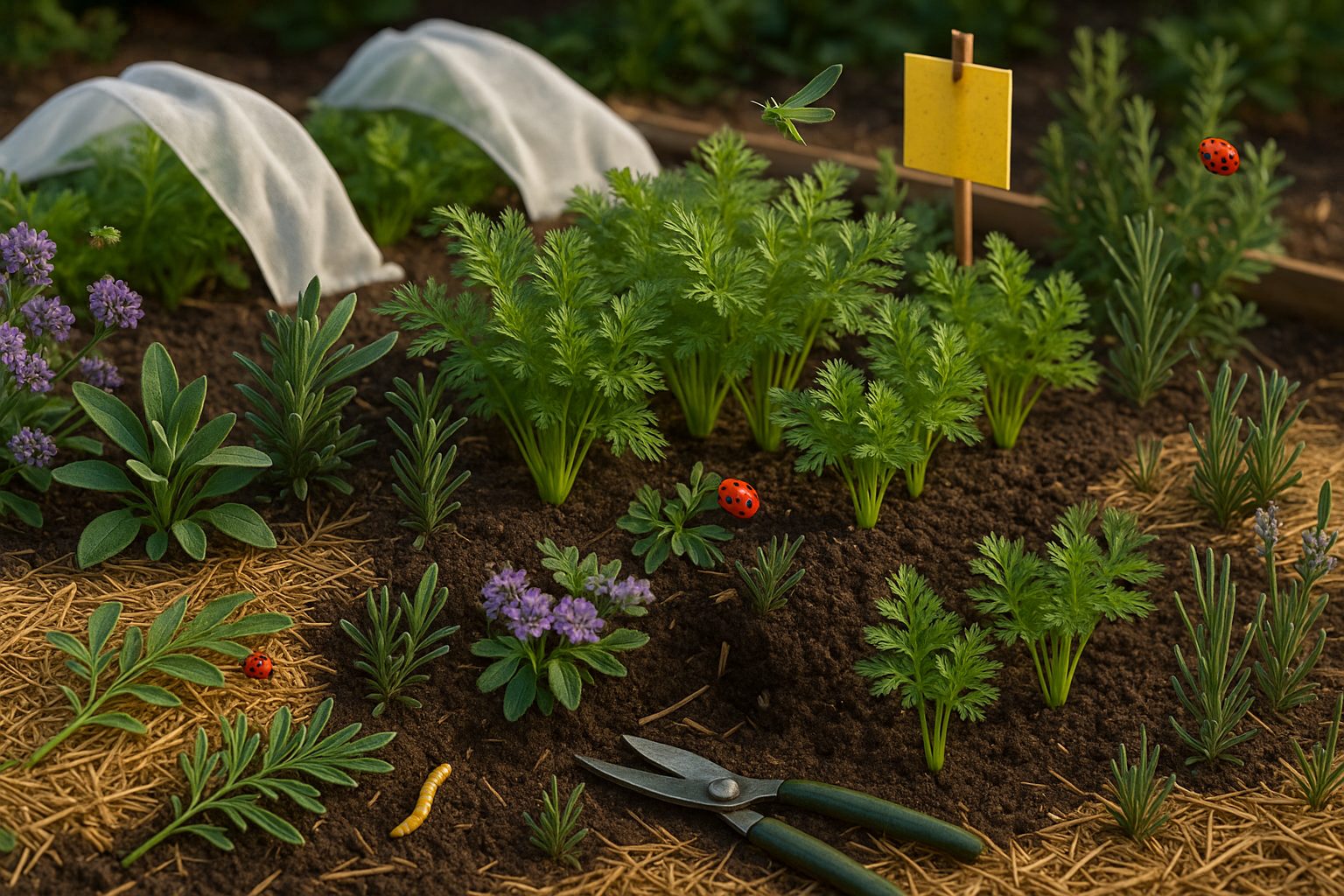
Integrated Pest Management (IPM) offers a smart, eco-friendly way to protect your carrot crop while minimizing the use of harsh chemicals. At its core, IPM combines several gentle yet effective strategies to tackle pests—so you can keep carrot flies, aphids, and other common threats in check without harming the environment.
For home gardeners, simple practices make a big difference:
- Floating row covers can physically block carrot flies from reaching your plants, especially early in the season when egg-laying peaks.
- Companion planting is another great option—herbs such as chives, rosemary, or sage help mask the scent of carrots and repel unwanted bugs.
- To boost natural defenses, encourage beneficial insects like ladybugs and lacewings by planting nectar-rich flowers or keeping small patches of wild plants nearby; these allies feed on aphids and other pests before they become a problem.
- Manual removal—like picking off caterpillars or scraping away eggs—works best when you spot pests early or have small plantings.
The key to success with non-chemical controls is timing: use row covers right after sowing, introduce beneficial insects as soon as pests appear, and maintain routine inspections.
Most importantly, cultivate biodiversity in your garden. Mixing carrots with other vegetables, herbs, and flowers creates a balanced ecosystem where natural predators help maintain pest populations, reducing the need for interventions. With a little planning and regular observation, you’ll find your carrot patch stays healthy and chemical-free.
When and How to Use Chemical Controls Safely
Chemical controls for pests in carrot crops should only be considered when all other methods—like crop rotation, physical barriers, or encouraging beneficial insects—have failed to manage a pest problem. For example, if you’ve tried manually removing carrot rust flies or used floating row covers with limited success, and pest populations are still threatening your crop, chemical intervention may be warranted as a last resort.
When using pesticides, it’s crucial to prioritize safety for pollinators, soil health, and your local environment. Follow these guidelines to minimize risks:
- Apply pesticides during late evening or early morning when bees and other pollinators are less active.
- Avoid spraying on windy days to prevent drift.
- Use spot treatments instead of broad spraying whenever possible to limit chemical use and environmental impact.
- Choose pesticides specifically labeled as safe for carrots—such as those containing spinosad or certain pyrethrins—which target common carrot pests but break down quickly and are considered less harmful to beneficial insects.
Every product can vary, so always read the entire product label carefully. Follow all application rates and safety instructions exactly, including wearing proper protective equipment and observing any buffer zones near water or natural habitats. If you’re unsure, consult your local agricultural extension office for guidance tailored to your region.
Remember: chemical pesticides are not a substitute for good cultural practices, and their routine use can lead to pest resistance or ecosystem harm. Their role is to provide a targeted, temporary solution when carrot pests pose a serious threat—not for regular or preventive use.
By following these practices, you help protect both your crop and the surrounding environment, keeping your garden productive and resilient for future seasons.
Recovering and Protecting Carrots After an Infestation
After discovering your carrot bed has suffered from a pest infestation, effective recovery starts with inspecting each plant. Remove and dispose of any heavily damaged or diseased foliage to limit lingering pests or diseases—never compost these, as you risk reintroducing the problem.
Gently loosen and aerate the soil, mixing in organic amendments like finished compost or well-rotted manure to encourage healthy regrowth and restore nutrients lost to hungry insects. If the infestation was severe, it’s often best to remove affected carrots entirely and wait a few weeks before replanting, giving the soil a chance to settle and natural predators to reduce any remaining pest populations.
For replanting, consider rotating your crops—avoid putting carrots or related species (like parsley or celery) in the same spot the next season to disrupt pest cycles.
Preventative Strategies
- Use floating row covers to block flying insects.
- Install sticky traps for monitoring pest presence.
- Introduce beneficial insects like ladybugs or lacewings.
- Mulch with straw to deter soil-dwelling pests and conserve moisture.
Water with care, aiming for even moisture to reduce plant stress, since stressed plants are more vulnerable to attack.
Keeping Records for Future Success
Keep detailed notes after each season: jot down when infestations occurred, which pest species were present, what worked for control, and how your carrots fared overall. By reviewing these records regularly, you’ll spot trends and fine-tune your garden management practices, making each new season a little easier and your carrots a lot healthier.
Conclusion: Cultivating Healthy, Pest-Resistant Carrots
Growing healthy, pest-resistant carrots takes more than just sticking seeds in the dirt and hoping for the best—it requires attention, consistency, and a balanced approach to pest management. By staying vigilant for early signs of trouble, such as chewed leaves or tiny holes, you can take swift, targeted action before pests become a major problem.
Integrated pest management (IPM) strategies, like crop rotation, companion planting, manual pest removal, and introducing helpful insects such as ladybugs, not only keep pests in check but also protect the health of your soil and the flavor of your carrots.
Remember, there’s rarely a one-size-fits-all solution. What works for one garden may not be right for another, so keep experimenting and adjusting your methods as you learn.
For gardeners eager to deepen their knowledge, resources such as local agricultural extension offices, online gardening communities, and reputable sites like the National Gardening Association or university horticulture departments can offer tailored advice and support.
Continuous learning and collaboration with other gardeners will help you stay on top of challenges and lead to more reliable, bountiful carrot harvests season after season.