
What is Carrot Fly?
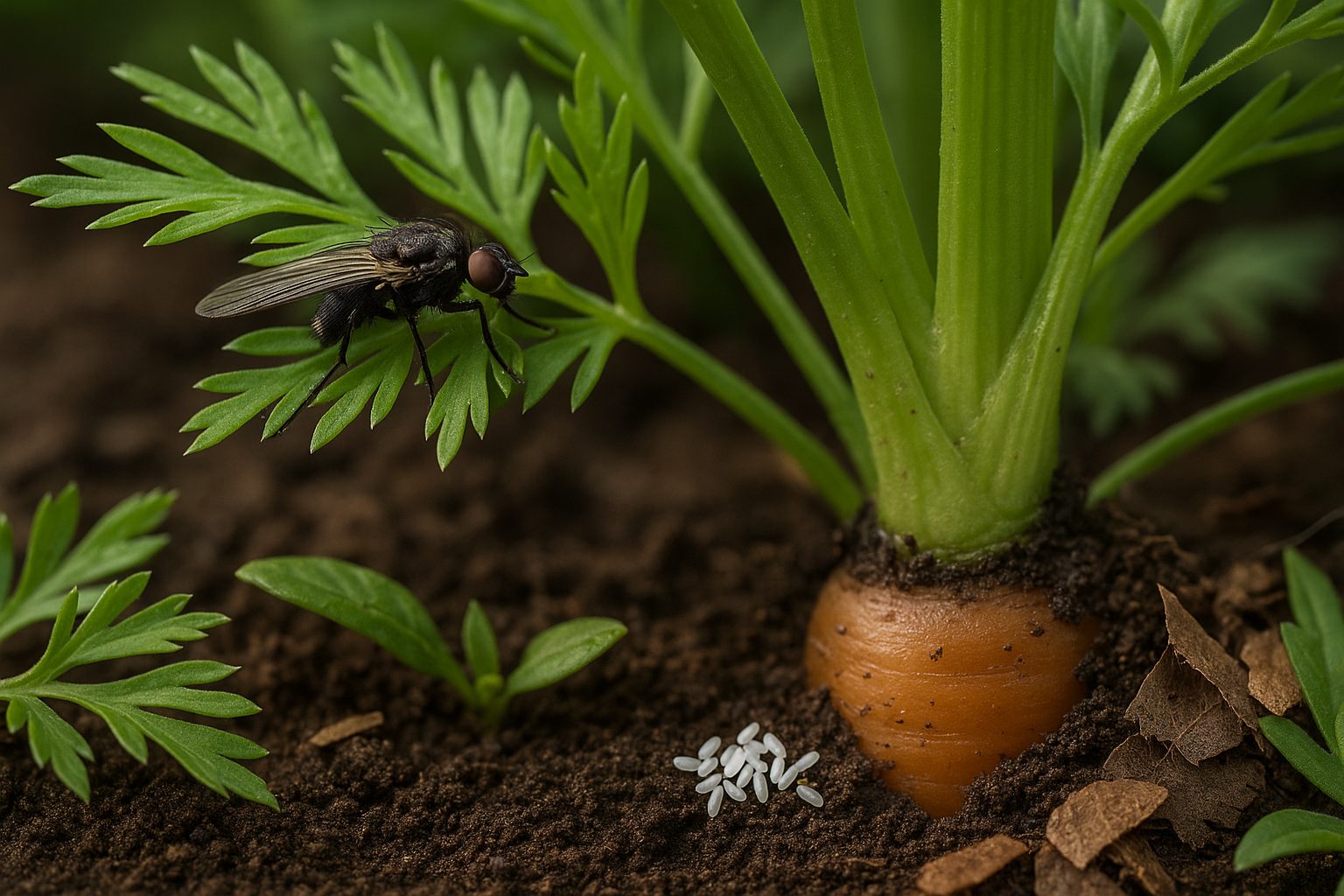
The carrot root fly is a persistent pest that can quickly ruin your dreams of crisp, sweet homegrown carrots. This tiny, black-bodied insect targets not only carrots but also other members of the carrot family like parsnips, celery, and parsley.
The carrot root fly’s larvae are the real culprits—after adult flies lay eggs at the base of plants, the hatching larvae burrow into the roots, creating winding tunnels and brown scars that leave crops unappetizing and prone to rot.
The fly’s life cycle begins when adults emerge in spring and lay delicate white eggs near susceptible plants. These eggs hatch into small, cream-colored larvae within a week, which then spend several weeks chewing into root crops before pupating in the soil. With two to three generations per growing season, the damage can add up fast if not controlled early.
Watch particularly for attacks if you grow young, tender carrots, as these are the most vulnerable. Parsnips, celery, and parsley can also fall victim, so it pays to watch for stunted growth, rusty grooves in roots, or yellowing leaves—the telltale signs that carrot root fly has made itself at home in your garden.
Signs and Damage Caused by Carrot Fly
Carrot fly infestations can be spotted by looking for clear signs like rusty-brown scars or tunnels along carrot roots, often winding just beneath the surface. These scars are caused by tiny, pale carrot fly larvae burrowing and feeding through the root flesh.
As the larvae feast, affected plants may also show stunted growth or yellowing, wilted leaves, since damaged roots struggle to take up water and nutrients. Unlike other pests such as wireworms, whose tunnels are straighter and larger, carrot fly larval damage appears as finer, twisting tracks concentrated near the root’s crown and tips.
It’s not unusual to see the foliage become patchy or weak, signaling trouble below. While mildly scarred carrots are still safe to eat, it’s important to trim away affected areas, as secondary rot can set in and make the roots mushy or off-flavored. Deep or widespread infestations often leave portions of the root slimy, discolored, and unappetizing.
For home gardeners, removing damaged sections and using undamaged parts is acceptable, but heavily infested crops may need to be discarded. One tip is to keep an eye on carrot thinnings and harvest time—roots with minor surface marks are usually fine for cooking, but if in doubt, cut open a root to check for healthy, firm flesh before use.
How to Prevent Carrot Fly Infestations
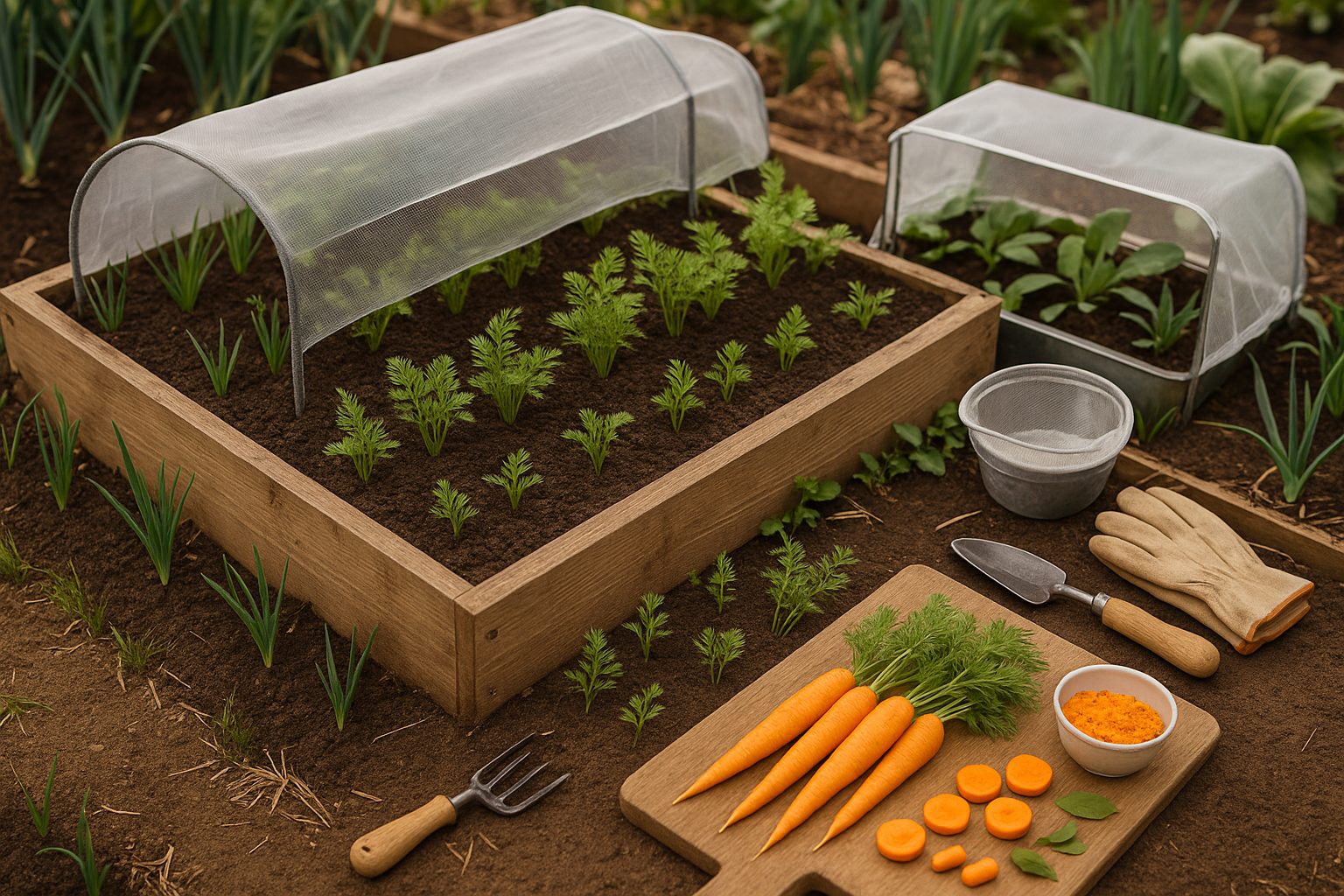
Preventing carrot fly infestations starts with smart cultural techniques that make your garden less inviting. One of the most effective tips is to cover your carrot beds with a fine mesh or horticultural fleece as soon as you sow—this barrier physically prevents adult carrot flies from reaching the plants to lay eggs.
Planting varieties that are less attractive to carrot fly, such as ‘Resistafly’ or ‘Flyaway’, can further reduce damage. Consider raising your carrot beds at least 18 inches off the ground; carrot flies tend to stay low, so this simple trick limits access.
Crop rotation is also crucial: avoid planting carrots or related crops (like parsnips) in the same spot each year to disrupt the pest’s life cycle. When it’s time to thin your carrot seedlings—a necessary step for healthy growth—do so in the evening or on windy days, when adult flies are less active, and immediately remove all thinned foliage from the area to avoid attracting pests.
To confuse and deter adult flies, try companion planting with onions, leeks, or rosemary, whose strong scents mask the carrots.
Finally, remember not to overcrowd your carrots—space seeds at least 2–3 inches apart to allow airflow and reduce humidity, creating a less favorable environment for carrot flies.
By combining these approaches, you’ll boost your chances of a healthy, pest-free harvest.
Organic and Chemical Management Options
When managing pests in your garden, organic strategies offer safe and sustainable results. Simple row covers can physically block insects from reaching your plants, which is especially useful for crops like lettuce and brassicas. Biological controls, such as introducing beneficial nematodes, target specific pests below ground without harming other organisms.
Encouraging natural predators, like ladybugs and birds, by planting diverse flowers or installing birdhouses creates a balanced ecosystem where pests are less likely to thrive. Opting for pest-resistant plant varieties also helps minimize infestations from the start.
While chemical controls—like targeted pesticides—can be effective in severe outbreaks, they should be used as a last resort. Always follow label directions to protect pollinators and your own health. Home gardeners should weigh the risks, considering potential harm to beneficial insects and soil health.
The most sustainable and successful approach is integrated pest management (IPM), which combines several methods—physical barriers, biological allies, smart planting choices, and only occasional, careful chemical use. This balanced strategy not only controls pests but also builds long-term resilience for your garden.
Planning Ahead: Garden Design to Minimize Carrot Fly
Smart garden design can make a big difference in keeping carrot fly numbers down. Since carrot flies are poor fliers, simply planting your carrots in a breezy spot or away from garden edges can help—wind makes it harder for them to find your crop. Many gardeners swear by physical barriers like fine mesh or horticultural fleece; these are placed right over the rows to stop flies from landing on the soil.
For the best results, combine layout strategies with careful timing. Use a garden planner app or just a notebook to track sowing dates, locations of previous infestations, and even wind patterns in your yard. Every season, run through a checklist:
- Rotate crops
- Avoid sowing in the same spots as last year
- Set up barriers early (preferably before seedlings emerge)
- Weed regularly to reduce hiding spots
- Keep a journal to track problems you notice
This proactive approach helps you stay one step ahead of carrot fly year after year.
Frequently Asked Questions about Carrot Fly
Carrot fly can be a concern for gardeners, and it’s natural to have questions. If your carrots have been affected, the good news is they’re usually still edible—just cut away any damaged parts, which may look brown or tunneled.
Carrot fly season typically spans from late spring through early autumn, with adults laying eggs in waves, so it’s smart to stay vigilant throughout the warmer months. They don’t only target carrots; related root vegetables like parsnips, celery, and parsley can also be at risk.
How to Prevent Carrot Fly Damage
- Cover crops with fine mesh.
- Sow carrots later in the season.
- Choose resistant varieties.
- Practice crop rotation.
- Avoid thinning carrots on windy days, as the scent attracts flies.
What to Do if Carrot Fly Has Struck
Remove and destroy infected plants to limit the spread. For most gardeners, a combination of physical barriers and smart habits makes a noticeable difference.