Introduction to Radishes
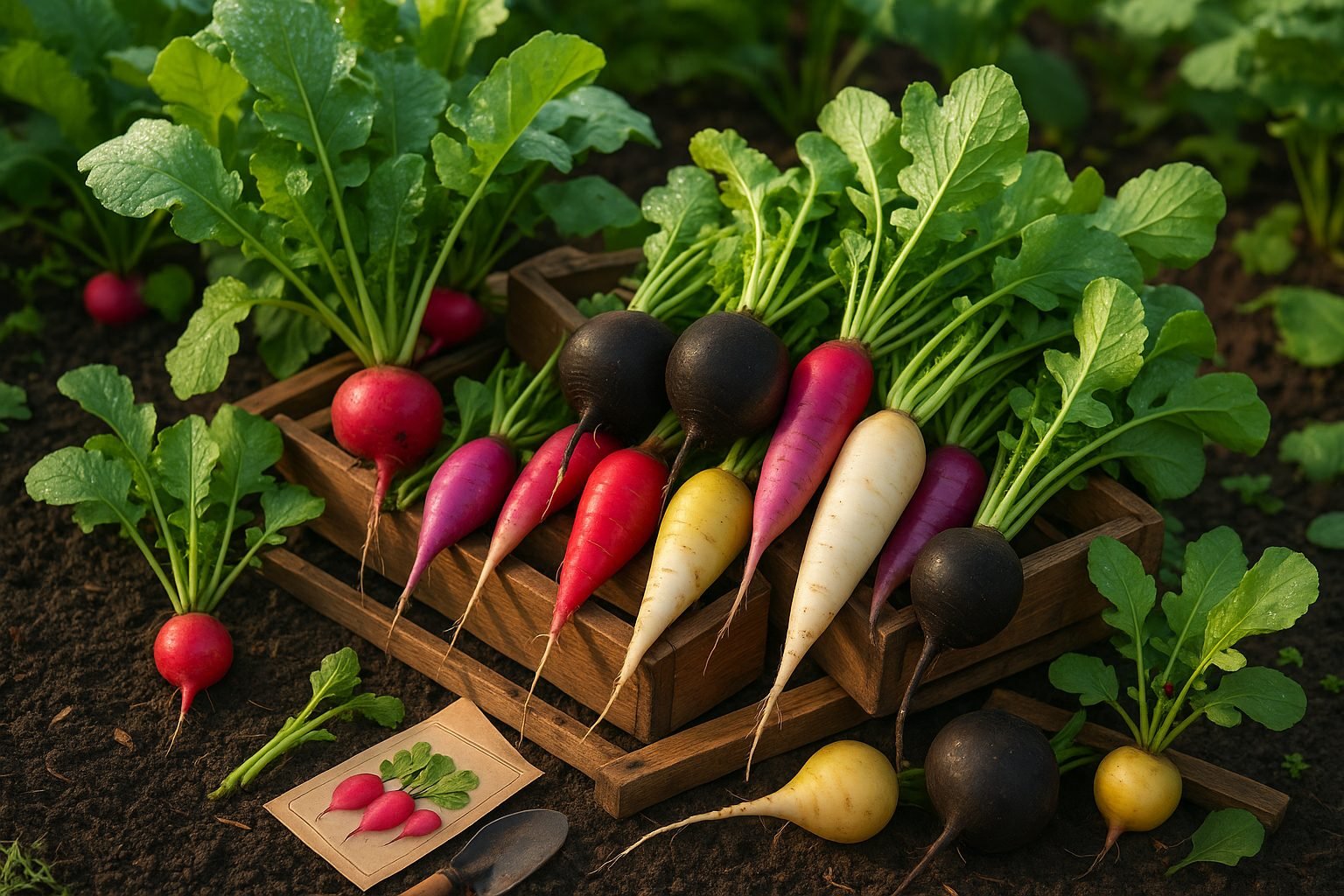
If you’re curious about the best radish types to grow, you’re not alone—radishes have earned their place as one of the most popular choices in home gardens and kitchens worldwide. These crisp root vegetables, members of the Brassicaceae family, are prized for their lightning-fast growth and adaptability, making them friendly even for first-time gardeners.
But there’s more to radishes than meets the eye; the world of radish types to grow is delightfully diverse. Radishes come in a rainbow of colors—from classic red and white to striking blacks, purples, and even greens. They vary in shapes too, with round, oval, and elongated roots, and range from the familiar peppery flavor to sweet, mild, or even spicy notes.
This versatility makes them a favorite not just in salads, but also in stir-fries, pickles, tacos, and vibrant crudité platters across global cuisines. Growing your own radishes at home is both rewarding and practical: their rapid germination means you can harvest some varieties in as little as three weeks. Plus, you can tailor what you grow to suit your family’s tastes and favorite dishes.
Whether you want to add crunch to summer salads, color to your meals, or experiment with unique heirloom varieties, radishes are the perfect choice for gardeners and adventurous cooks alike.
Different Types of Radishes
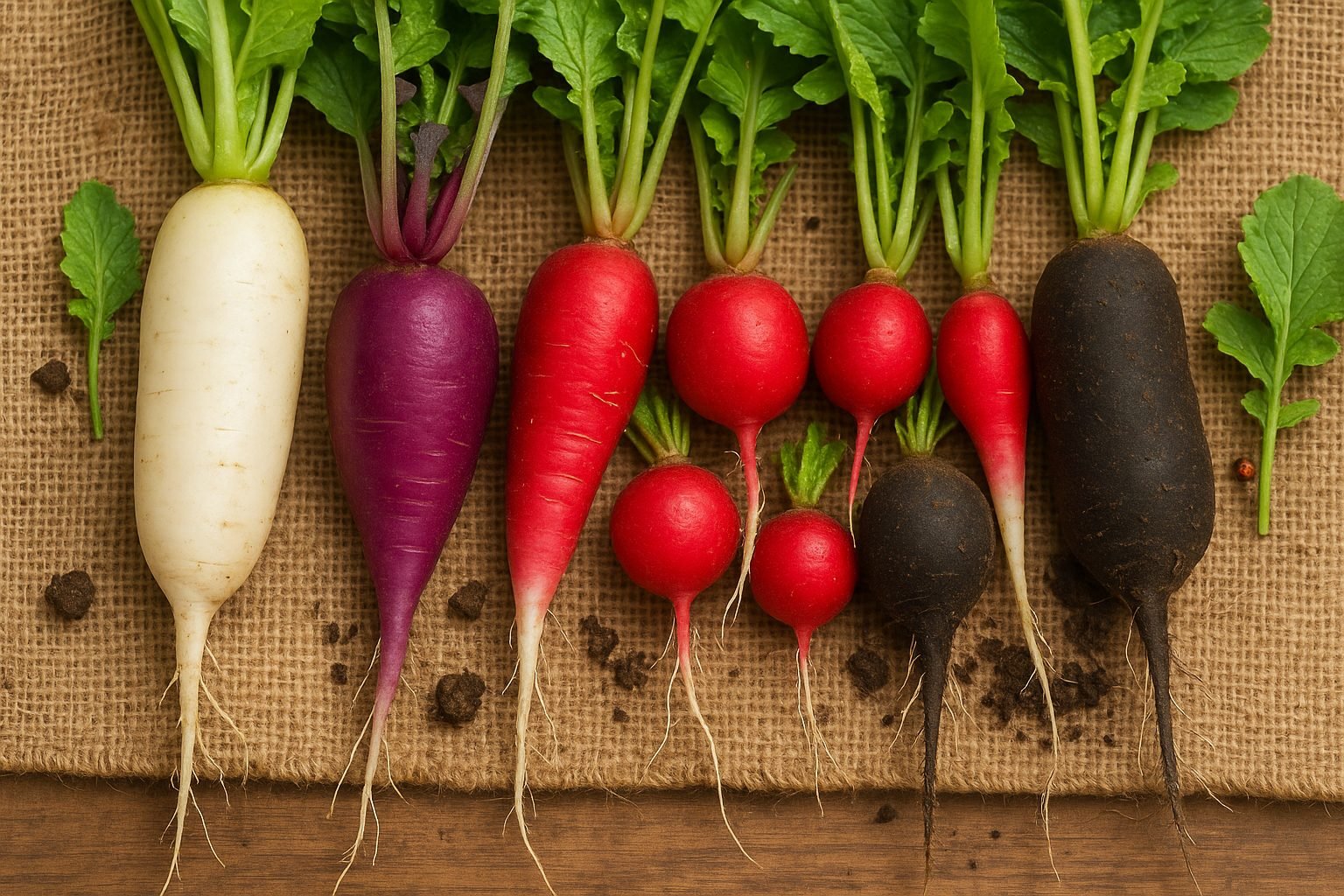
Radishes come in a surprising range of colors, shapes, and flavors, making them a versatile addition to any garden or kitchen. Classic red radishes are the most familiar, offering a crisp texture and a peppery bite—perfect for salads and easy to grow in cool spring or fall weather.
White radishes, like the daikon, are popular in Asian cuisine; their mild, juicy flavor and large size make them ideal for pickling, stir-fries, or grating into slaws, and they thrive in cooler seasons.
Black radishes have thick, dark skin and a spicier, earthier flavor, making them a unique choice for roasting or slicing thinly in salads; they do well in both cool and mild climates.
Yellow radishes, less common, provide a sweet, less spicy taste and add unexpected color to dishes, while purple radishes are often chosen for their vibrant hues and mild, crisp bite, brightening up crudité platters or sandwiches.
When choosing which type to grow or buy, consider your local climate—red and white radishes suit cooler weather, while some yellow and purple varieties can handle a bit more warmth. Flavor preferences matter too: opt for black or red varieties if you enjoy spice, or choose white, yellow, or purple types for sweetness and milder flavor.
For culinary use, think about how you’ll use them—raw for crispness or cooked for a softer, mellow taste. Trying a few varieties each season is a great way to discover what you like best and enjoy a colorful, flavorful harvest.
Essential Steps for Growing Radishes
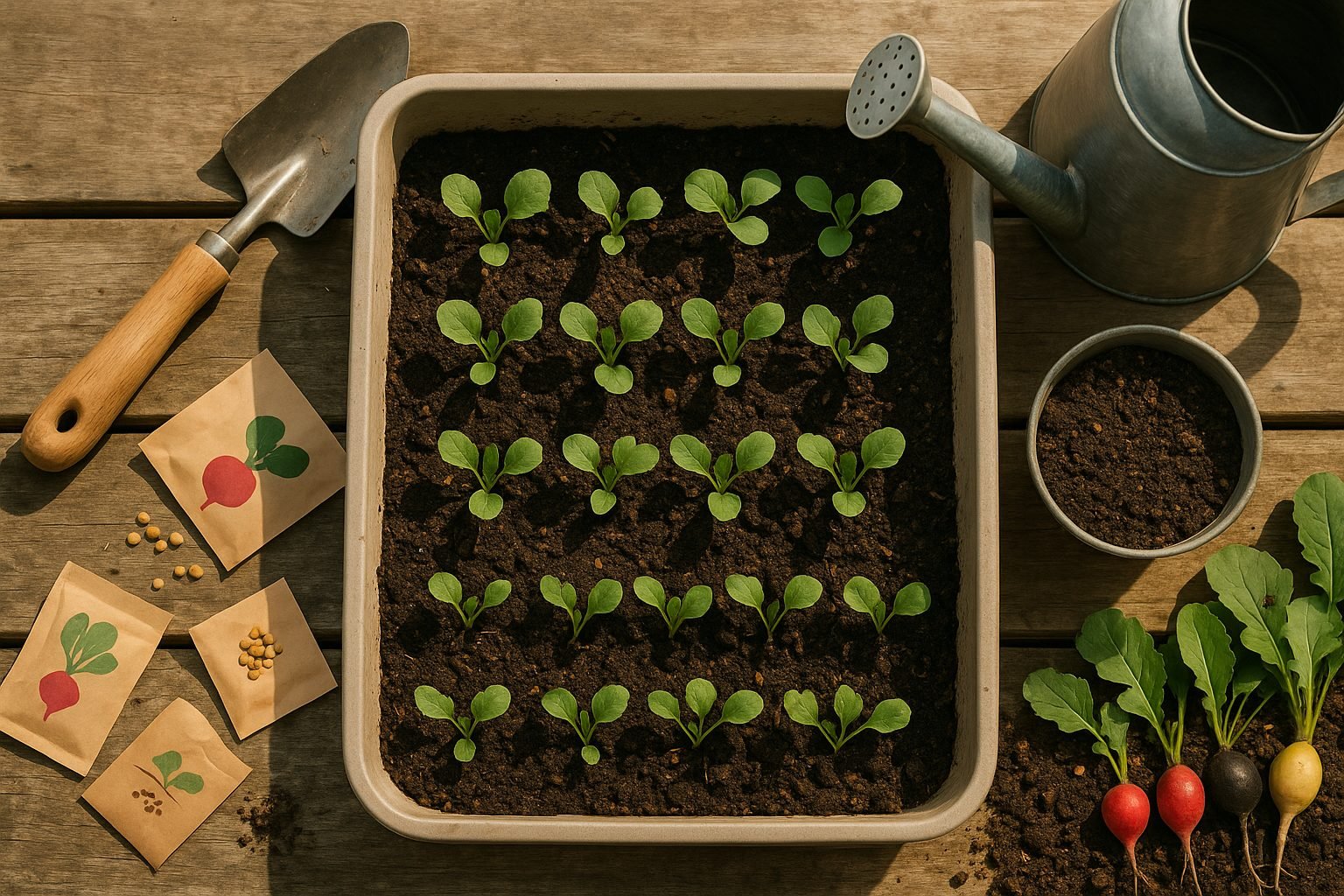
Growing radishes is a rewarding and beginner-friendly gardening project, but great results start with the basics: good soil and the right spot. Radishes prefer loose, well-drained soil that’s rich in organic matter, so mix in compost or aged manure before planting. Avoid heavy or compacted soil, as tough ground can stunt root growth.
Choose a sunny location that gets at least 6 hours of direct sunlight daily. Radishes can tolerate partial shade, but too little light may cause leggy tops and small bulbs. For planting, sow radish seeds directly in the garden or in containers about ½ inch deep and 1 inch apart—there’s no need to start seeds indoors.
Keep the soil consistently moist but not soggy; uneven watering can cause splitting or a hot, woody taste. When seedlings reach about an inch tall, thin them out to approximately 2 inches apart so each root has room to grow.
In small spaces or on balconies, radishes thrive in containers. Just choose a pot at least 6 inches deep and fill it with quality potting mix. Make sure the container drains well to prevent waterlogged roots.
Radishes are known for their fast turnaround—they can often be harvested in as little as three to four weeks after sowing, depending on the variety and weather. Check if the shoulders of the radishes are poking above the soil and feel firm to the touch; this usually means they’re ready to pull.
For a continuous harvest throughout the season, plant radishes every couple of weeks. With simple attention to soil, sunlight, and watering, even new gardeners can enjoy a steady supply of crisp, homegrown radishes all season long.
Troubleshooting Radish Growing Problems
Radishes are fast-growing and generally easy to cultivate, but even seasoned gardeners can run into issues like pests, premature bolting, and root splitting. One of the most common culprits is the flea beetle—a tiny, jumping insect that leaves peppery holes in the leaves.
To keep them at bay, try floating row covers or sprinkle a ring of diatomaceous earth around your seedlings. If aphids appear, a gentle blast of water from the hose or a spray of homemade insecticidal soap (just a few drops of mild liquid soap in water) can do the trick without using chemicals.
Bolting, when plants flower too soon, usually happens in warm weather or if the soil dries out. Prevent this by sowing seeds in cooler months, keeping the soil moist, and using mulch like grass clippings or straw to moderate soil temperature.
Root splitting typically results from inconsistent watering—after a dry spell, a sudden drenching can cause the roots to crack. Aim for even, steady moisture by watering consistently and using mulch to retain soil dampness.
Crop rotation helps avoid disease buildup, while removing any weak or infested plants stops problems from spreading. With these simple, organic techniques, even beginners can troubleshoot radish issues and look forward to a healthy, tasty harvest.
Harvesting and Storing Your Radishes
Harvesting radishes at the right time makes all the difference in their taste and crunch. Most radish varieties are ready to pick about three to four weeks after planting, once the roots are roughly the size of a marble or about an inch across. Gently pull one from the soil to check before harvesting the rest.
If you leave them in the ground too long, radishes often become woody, pithy, or overly spicy, while underdeveloped radishes will be small, pale, and lack their signature snap. For the best texture, harvest early in the cool morning when the radishes are firm and juicy.
After picking, snip off the leafy tops (they draw out moisture if left attached) and wash off dirt. Dry them well, then store in a perforated plastic bag or a covered container in the fridge’s crisper drawer—this helps keep them crisp for up to two weeks.
Avoid storing radishes with ethylene-producing fruits like apples or bananas, as this can promote spoilage. If you notice spongy, cracked, or yellowing radishes, these are signs of over-maturity or improper storage; they’re best added to compost.
Keeping these tips in mind ensures you’ll enjoy radishes at their freshest and crunchiest.
Radish Uses in the Kitchen
Radishes are surprisingly versatile and can add a peppery crunch or gentle sweetness to a wide range of dishes. For raw applications, sliced radishes shine in salads—try tossing them with arugula and a squeeze of lemon for a refreshing, zesty side. They also make a quick, healthy snack when paired with hummus or herbed cream cheese.
When cooked, radishes mellow in flavor and become juicy and tender. Roasting them with olive oil, salt, and pepper transforms their typical bite into something almost potato-like, while a quick sauté with garlic and greens highlights their earthy notes. Pickling is another fan favorite, especially for daikon radish: simply soak thin slices in vinegar, sugar, and a pinch of salt for a tangy topping on tacos or grain bowls.
Nutrition Benefits
Nutrition-wise, radishes are low in calories but packed with vitamin C, fiber, antioxidants, and even a touch of potassium, supporting everything from digestion to immune function. Daikon, the large white Asian radish, is especially high in water content and vitamin C, making it perfect for hydrating salads or crunchy slaws.
Getting Started with Radishes at Home
To get started at home, try thinly slicing red radishes over avocado toast, roasting halved radishes with a drizzle of honey, or tossing julienned daikon into a stir-fry with soy sauce and ginger. With just a bit of creativity, you can turn humble radishes into the highlight of your next meal.
Conclusion and Inspiration
Growing and eating radishes is a simple way to add both nutrition and flavor to your meals while enjoying the satisfaction of harvesting your own food. Radishes are packed with vitamins, fiber, and antioxidants, making them an excellent addition to salads, sandwiches, and even roasted dishes.
If you’re new to radishes, why not start with colorful varieties like French Breakfast or Cherry Belle? Both are crisp and slightly sweet, perfect for beginners. Spring and fall are ideal times to plant, and you’ll see results in just a few weeks—great for those who want quick wins in the garden.
Try slicing radishes thinly for a crunchy salad topping, pickling them for a zesty snack, or roasting them for a surprisingly mellow side dish. Don’t be afraid to experiment—radishes grow well in containers and small spaces, so anyone can enjoy their fresh, peppery bite from garden to table.