Introduction
When planning your garden, knowing the ideal number of onions per square foot can make all the difference between a healthy, bountiful harvest and a patch full of crowded, struggling bulbs. Proper spacing is more than just a technical detail; it’s a key factor that affects sunlight, airflow, and ultimately, the quality and size of your onions. For home gardeners and small-scale growers, the question “how many onions per square foot?” isn’t just academic—it directly impacts how efficiently you use your precious growing space and the total number of onions you can produce.
Whether you’re starting with seeds, sets, or transplants, finding the right balance ensures each bulb has enough room to develop strong roots and grow plump. In this article, we’ll explore why spacing matters, share proven recommendations for different onion varieties, explain how to lay out your garden bed for optimal yields, and offer practical tips if your onions aren’t thriving. By the end, you’ll have clear, actionable advice to confidently plan and plant your next onion crop.
Understanding Onion Growth Habits
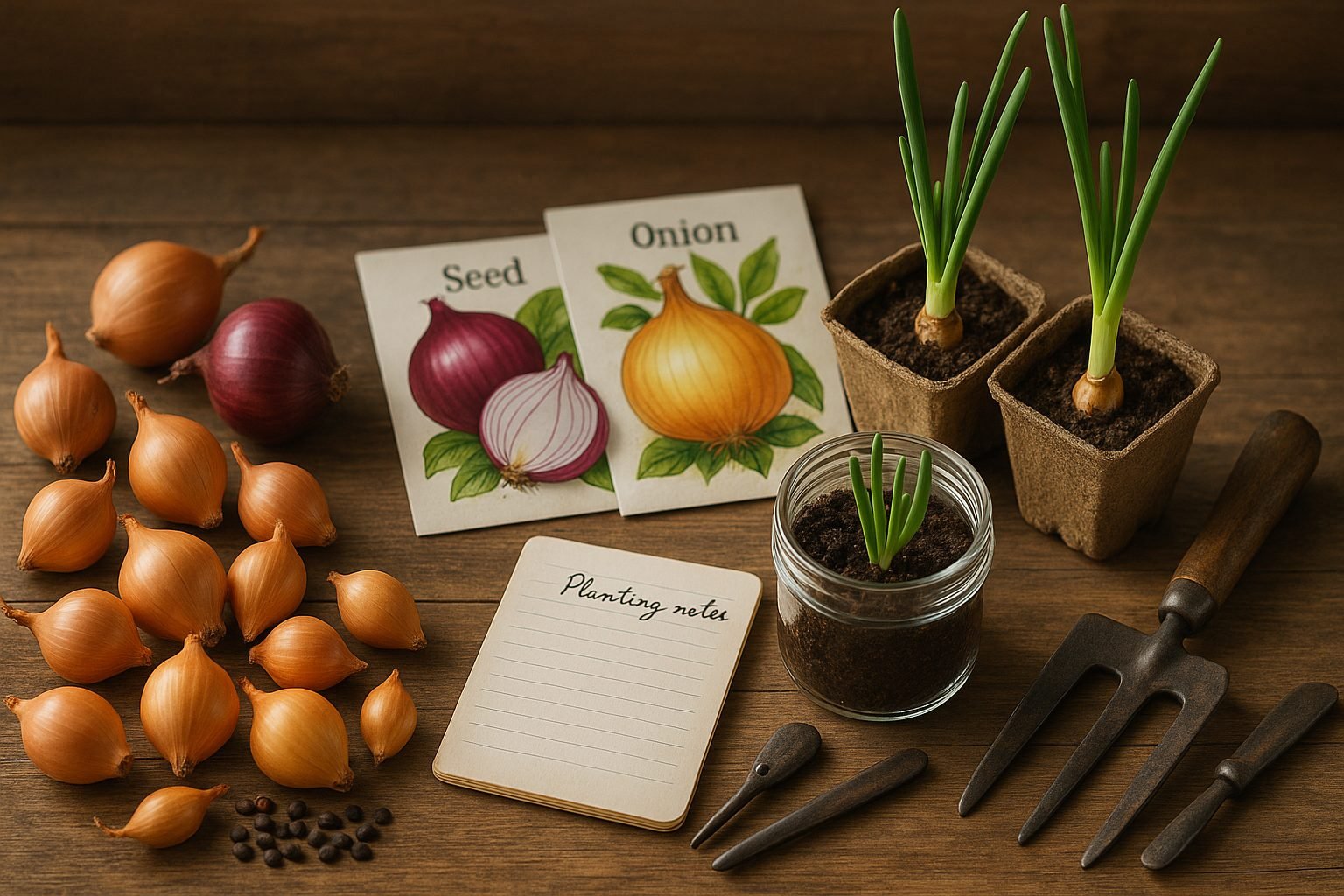
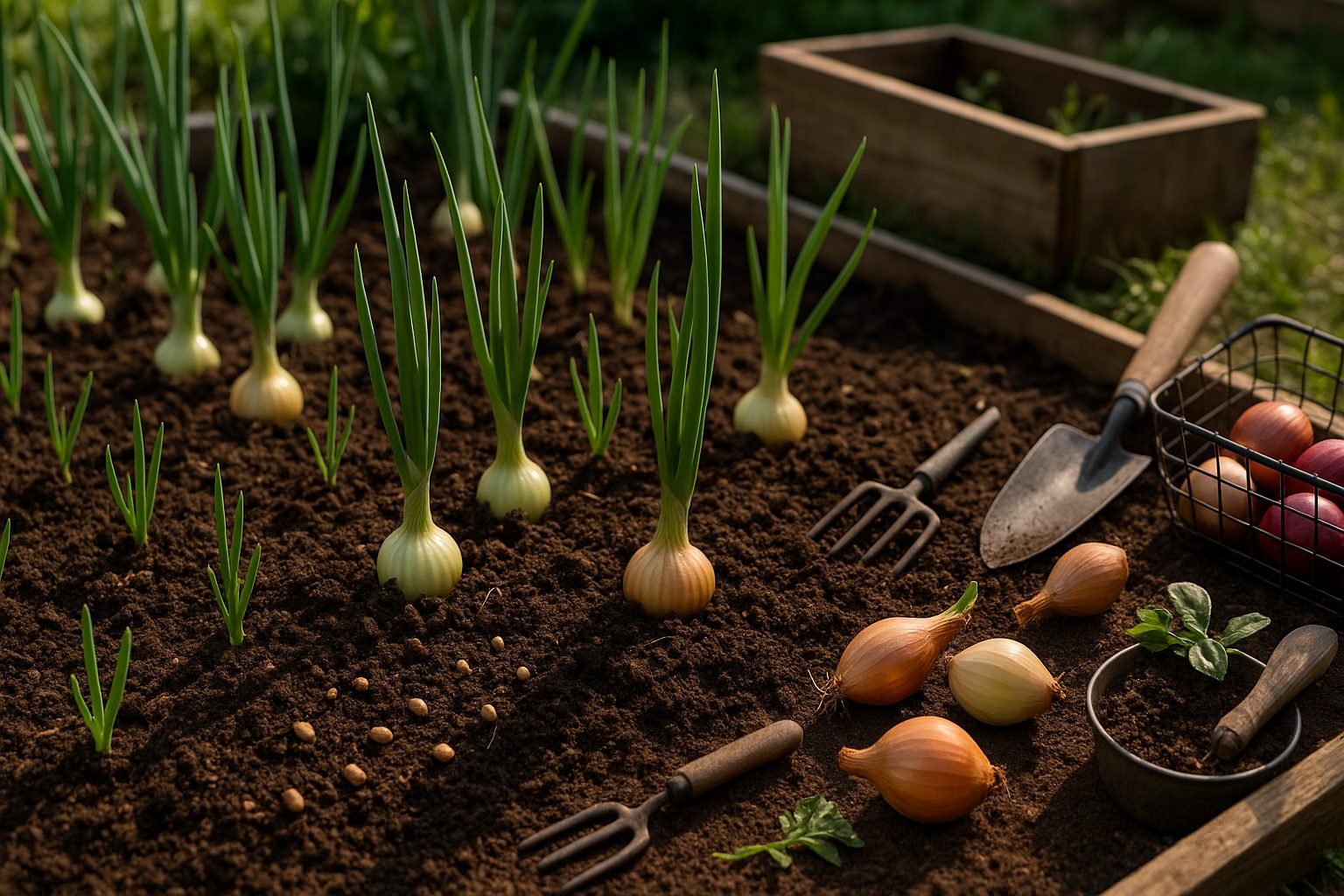
Onion plants come in several types, and understanding their growth habits is essential for determining the ideal number of onions per square foot in your garden. Bulb onions, the variety most often harvested for their large, round bulbs, need more space to expand underground—typically about 4 inches between plants. This spacing allows for approximately 9 to 12 bulbs per square foot.
Green onions, also known as scallions or spring onions, are harvested earlier before bulbs fully form. Because of this, they can be planted much closer together, with 16 to 20 plants per square foot being common, making them a great option for gardeners with limited space.
Bunching onions, which don’t develop large bulbs but grow in small clumps, typically fit about 9 to 16 plants per square foot, depending on the variety and how large you prefer to harvest them.
The ultimate size of your onion crop also depends on each variety’s natural growth pattern. Storage onions, bred for curing and long shelf life, usually require more room due to their emphasis on developing bigger bulbs. Fresh-eating onions, cultivated to be tender and mildly flavored, are often harvested young and take up less space.
Be sure to check the seed packet or supplier’s recommendations for your specific onion variety. Some “giant” cultivars need as much as 6 inches between plants, while finer bunching types may thrive when planted densely. Planning your layout with these growth habits in mind can greatly improve your yield and the overall health of your crop.
The Recommended Spacing for Onions
When planning your onion bed, spacing your onions correctly can significantly affect both the size and yield of your harvest. Traditional row gardening suggests planting onions 4 to 6 inches apart within rows spaced about 12 to 18 inches apart. This spacing allows each plant enough room to develop a healthy bulb and makes weeding and watering easier.
However, if space is limited or you prefer a more efficient layout, using the square foot or intensive gardening method lets you grow onions closer together. Most gardeners using this method plant 4, 9, or sometimes even 16 onions per square foot, depending on the variety and the bulb size you want at harvest.
For large storage onions, space them about 4 inches apart, which translates to roughly 9 onions per square foot. If you’re growing smaller varieties or don’t mind varying bulb sizes, you can fit 9 to 16 onions per square foot. Keep in mind that tighter spacing usually results in smaller bulbs, but you’ll likely get more total onions in the same area.
For home cooks who frequently use green onions (harvesting before full bulb formation), closer spacing is a smart way to maximize your garden’s yield. As a general rule, consider your goals: larger bulbs need more space, while tighter spacing produces more, but smaller, onions per square foot. If you’re unsure, start with 4 inches apart and adjust your spacing next season based on your results.
Square Foot Gardening: How Many Onions Per Square?
Square foot gardening is a popular method for maximizing garden space and yield, especially if you’re working with raised beds or small plots. Instead of planting in long, spaced-out rows, you divide your garden into one-foot-by-one-foot sections—each square becomes a mini-plot for your chosen vegetable.
Onions are especially well-suited for square foot gardening thanks to their compact root systems and upright growth. To determine how many onions per square foot, consider both the type of onion and how large you want the bulbs to grow.
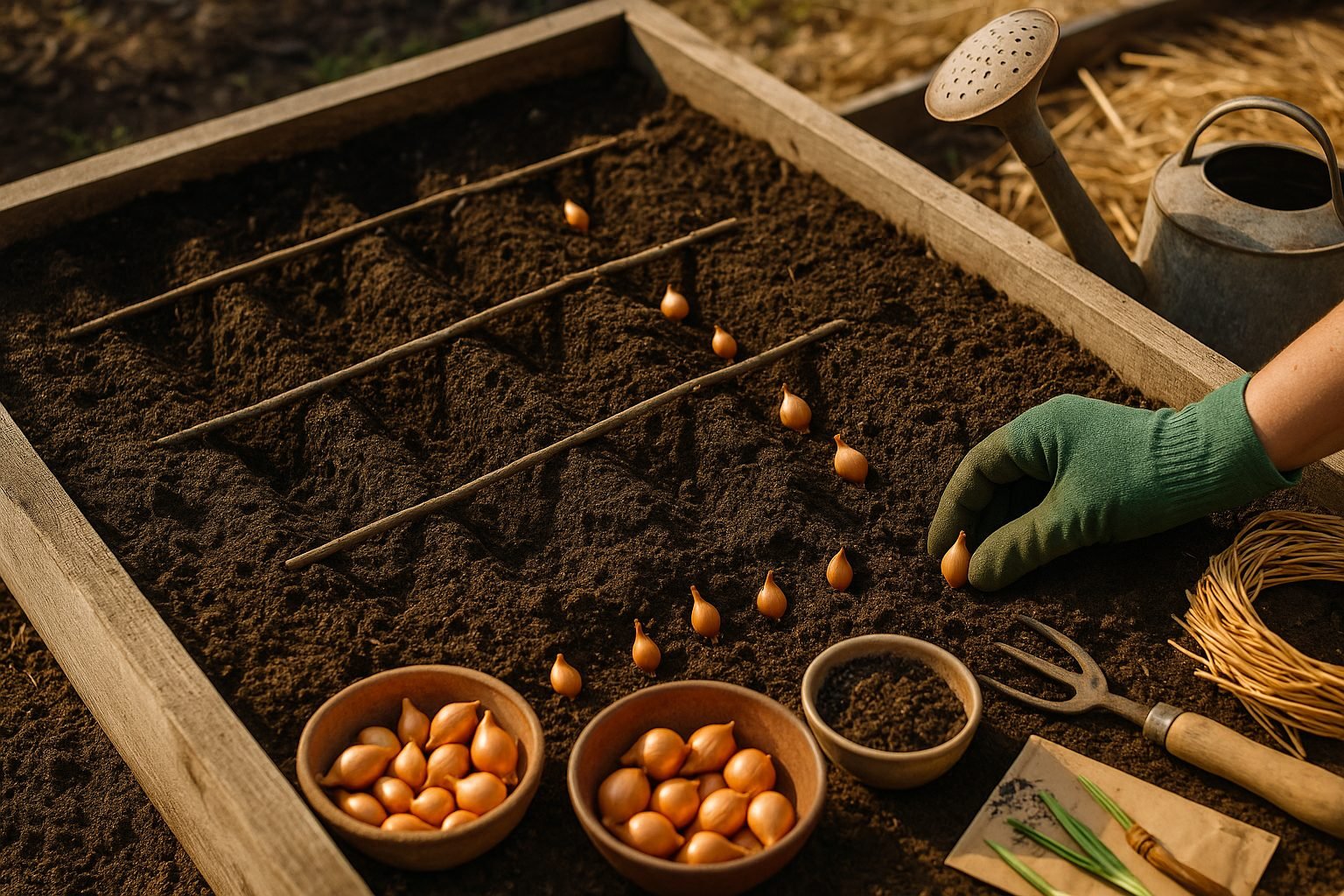
For standard globe onions (grown from sets or seeds), you can plant 9 per square foot—placing them about 4 inches apart for a good balance between bulb size and efficient use of space. However, if you want really large onions (the baseball-sized kind), it’s best to plant just 4 per square foot, spacing them 6 inches apart. For smaller varieties or if you’re growing green onions (scallions), you can fit up to 16 per square foot, at 3-inch spacing. For example, if you only want tender green tops and don’t plan to let the bulbs mature fully, crowding more in is totally fine.
Compared to traditional row planting, where onions are typically spaced 4-6 inches apart in rows 12-18 inches apart (which works out to about 4 onions per square foot at best), the square foot method allows you to grow just as many or often more onions in the same area, with less wasted space. Plus, square foot gardening simplifies planning and crop rotation, and helps control weeds since the close spacing shades the soil.
To get started, just mark your grid, loosen the soil in each square, and plant your onions at the recommended spacing for your chosen variety—it’s that simple.
Factors Affecting Onion Plant Density
When deciding how many onions per square foot to plant, several key factors influence the ideal density for strong, healthy crops. First, soil fertility plays a major role—rich, well-amended soil can support more onions close together since the roots have plenty of nutrients to share. In contrast, thinner soil with low organic matter means each bulb needs more space to access what it requires; crowding in poor soil can stunt growth.
Sunlight is another crucial consideration. Onions thrive with at least 6–8 hours of direct sun daily; less sunlight slows development and results in smaller bulbs, so it’s wise to space them more generously if your garden is shadier. Reliable water availability also prevents onions from competing too fiercely for moisture. If irrigation is inconsistent or drought is common, wider spacing helps each plant access water, reducing stress and risk of bolting.
Pests and diseases, such as onion maggots or fungal issues, become more problematic in dense plantings where air circulation is limited and physical barriers like mulch are impractical. For example, if you face persistent fungal problems, spacing onions farther apart can reduce disease spread.
On the other hand, in urban gardens with rich, sunny beds and no major pest or disease issues, planting onions more closely (up to 16 per square foot for green onions) maximizes yield. Gardeners aiming for larger bulbs to store might space them more widely, planting only 4–6 onions per square foot, even in optimal conditions.
Ultimately, tailoring the number of onions per square foot to suit your unique garden environment will produce the healthiest and most plentiful harvests.
Tips for Maximizing Onion Yield in Small Spaces
To get the most onions per square foot in a small space, a strategic approach makes all the difference. Start by selecting the right variety; smaller, “bunching” onions like ‘White Lisbon’ can be planted up to 16 per square foot, while larger bulb onions do best at 9 per square foot. Choose onion sets or transplants over seeds for a head start—they establish faster and usually yield better in limited space.
Use succession sowing by planting new sets or seeds every 2-3 weeks during the planting window to extend your harvest. Companion planting can boost onion health and save space—try growing onions alongside carrots, lettuce, or beets, but avoid planting them too close to peas and beans, which can stunt growth.
In raised beds or containers (at least 8-12 inches deep), use loose, rich soil amended with compost for optimal root development. Thinning is crucial: if seedlings cluster too tightly, gently remove extras to achieve your target spacing, preventing overcrowding and onion rot.
Keep onion beds well-weeded—onions don’t compete well with weeds—and mulch lightly to retain moisture without attracting pests. Feed every 2-3 weeks with a diluted, low-nitrogen fertilizer once the tops are a few inches tall, since too much nitrogen encourages leaf growth over bulb formation. Lastly, maintain consistent watering of about an inch per week to help bulbs swell, but avoid overwatering, especially as harvest time approaches.
With thoughtful planning and attentive care, even a small garden or balcony can yield a bountiful onion harvest.
Common Mistakes to Avoid
Many gardeners make the mistake of planting too many onions per square foot, hoping for a bigger harvest but ending up with stunted or misshapen bulbs. Overcrowding restricts airflow and limits the space each onion needs to develop properly, often resulting in smaller bulbs and a higher risk of disease.
Another common error is neglecting proper soil preparation. Onions thrive in loose, well-draining, nutrient-rich soil. Heavy or compacted soil makes it difficult for onions to expand, while poor fertility leads to weak growth.
Watering mistakes, such as overwatering or letting the soil dry out too much, can also cause problems. Consistent, moderate moisture is key to good bulb formation. Additionally, some gardeners underestimate how much sunlight onions need and mistakenly plant them in partial shade. Insufficient sunlight causes thin leaves and tiny onions, drastically reducing your yield.
To avoid these issues, measure carefully—generally, planting 4–6 onions per square foot is ideal for most varieties. Till the soil well and mix in compost before planting, ensure your bed receives at least six hours of direct sun daily, and aim to keep the soil moist but not soggy. Paying attention to these details will lead to thriving onions and a satisfying harvest.
Conclusion
The ideal number of onions per square foot typically ranges from 4 to 16, depending on the variety and your desired bulb size. Starting with 9 onions per square foot is a great balance for most gardeners. However, don’t hesitate to experiment and adjust the spacing based on your garden’s conditions and your preferred onion size. Every plot and climate can produce different results, so watch how your onions grow and make changes as needed. If you have any onion planting tips or success stories, we’d love to hear from you—share your experiences in the comments!