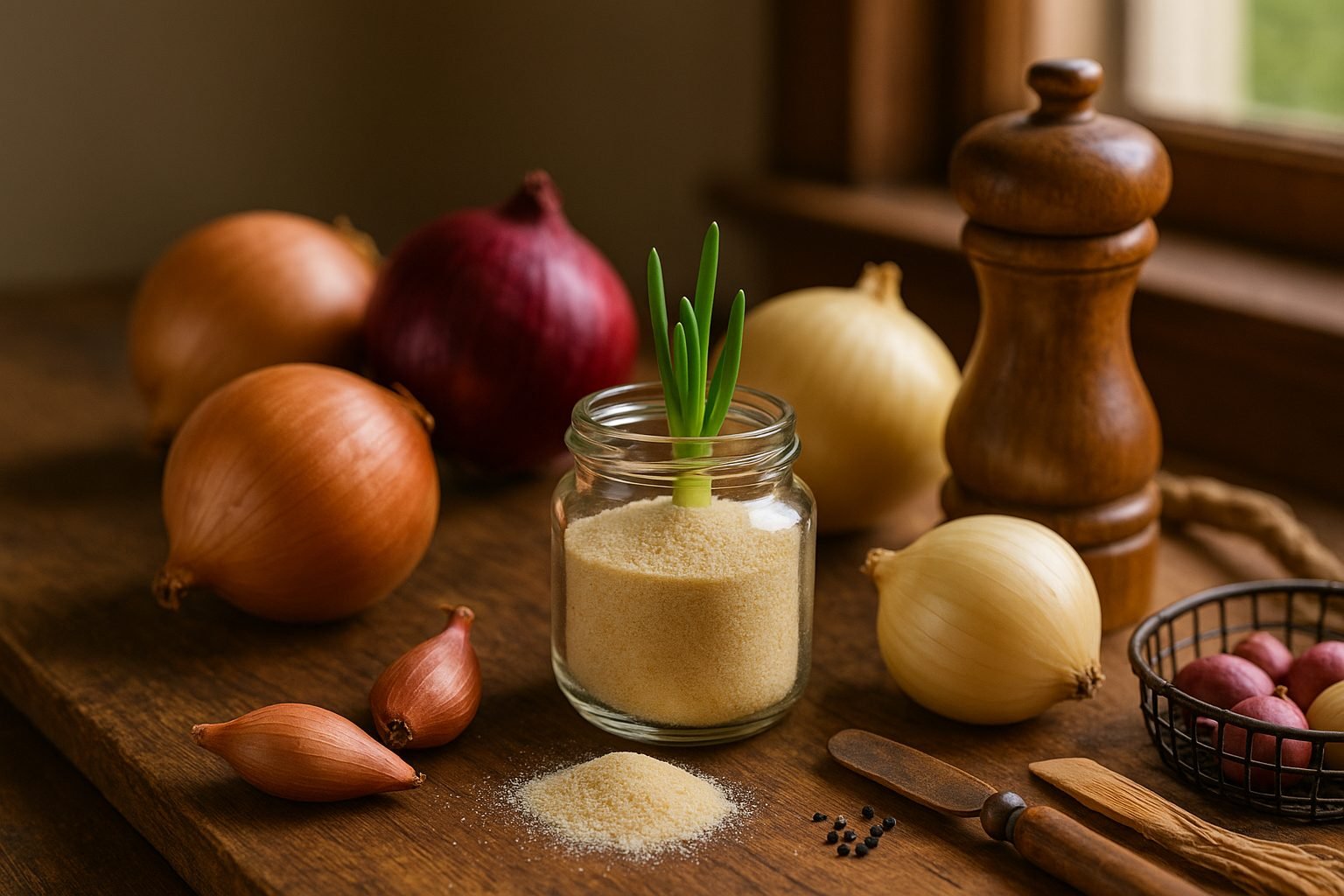
Why Make Your Own Onion Powder?
If you’ve ever wondered whether it’s worth the effort to create homemade onion powder, the answer is a resounding yes—especially when you’ve grown the onions yourself. Homemade onion powder delivers unmatched freshness, intense flavor, and the satisfaction of using ingredients straight from your backyard. Unlike store-bought versions that can sit on shelves for months and potentially lose potency, your own batch has a vivid, sweet, and savory punch that elevates everything from soups to spice rubs.
Many people don’t realize how much better the taste can be: homemade versions often have a fuller aroma and a natural complexity that mass-produced powders simply can’t replicate, giving your dishes a distinctive edge.
Making your own onion powder isn’t just about better taste—it also makes financial sense. Buying specialty spice blends or even a small jar of onion powder can add up over time, especially considering how often this pantry staple gets used. Drying your own onions and processing them into powder lets you stretch a homegrown harvest much further, saving money while reducing kitchen waste.
Plus, you’re in full control of the final product. Want your onion powder coarse for a little texture, or extra finely milled for sauces? Prefer a blend of red, yellow, and sweet onions for deeper flavor? Customization is easy when you make it yourself.
Perhaps one of the best advantages is knowing exactly what goes into your food. Homemade onion powder contains no preservatives or anti-caking agents—just pure, ground onions—so you can confidently add it to family recipes, homemade seasoning mixes, or even as a quick sprinkle over roasted veggies.
Having a jar of homemade onion powder on hand is a game-changer in everyday cooking, whether you’re boosting the flavor of a casserole, jazzing up eggs, or infusing marinades with garden-fresh oniony goodness. Once you make the switch, you may never go back to store-bought spices again.
Choosing the Right Onions and Supplies
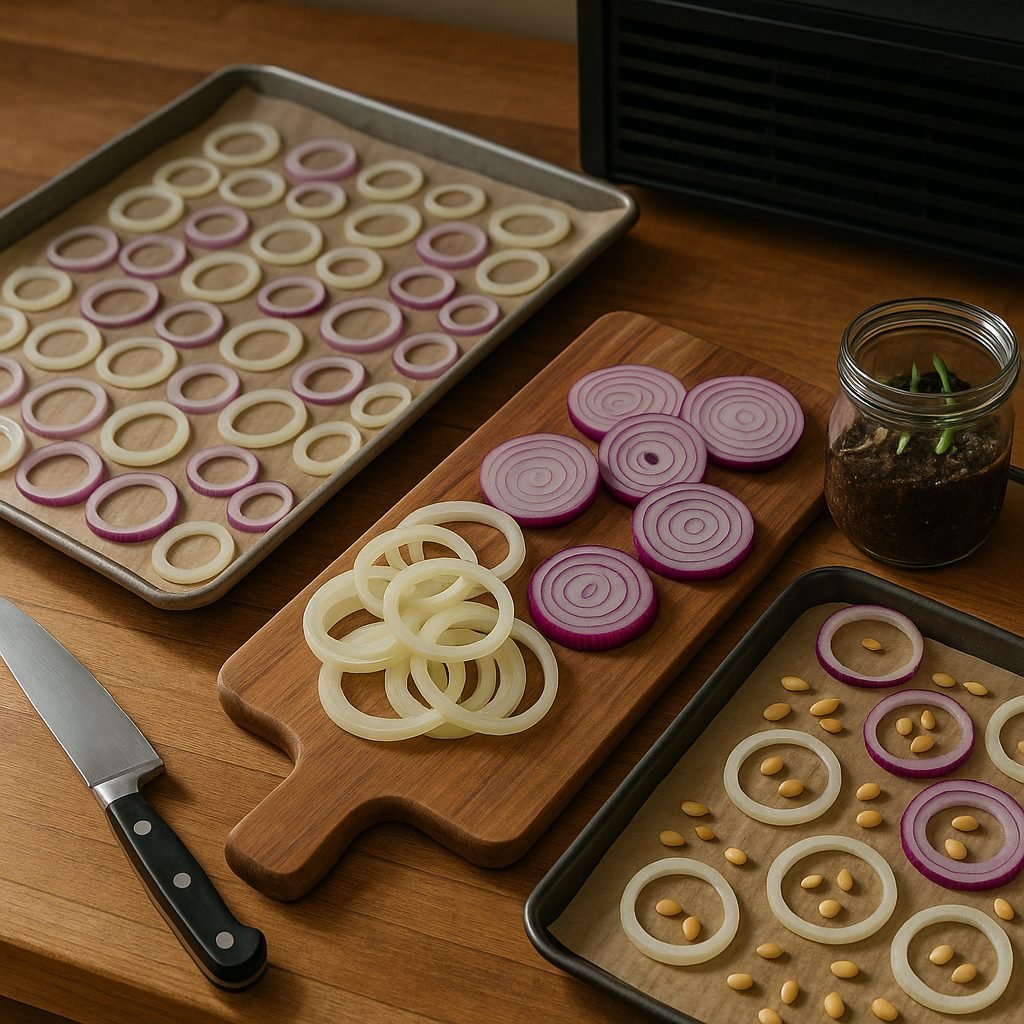
Selecting the right onions is key to making flavorful homemade onion powder. Yellow onions are the most popular choice; they offer a strong, classic taste that’s perfect for everyday cooking. White onions have a sharper, milder flavor, which works well if you want a less overpowering powder. Red onions add a slightly sweet, tangy note and color, while sweet onions like Vidalia or Walla Walla are ideal if you prefer a milder, sweeter powder.
For the best results, choose onions that are firm, dry-skinned, and free from soft spots. When it comes to supplies, you’ll need a sharp knife and cutting board for slicing, plus a baking sheet for oven drying or a food dehydrator for even, hands-off results. Once dried, a blender or spice grinder will help you turn those crisp slices into a fine powder.
To make the drying process smoother, slice onions into even, thin pieces (about 1/8 inch thick); this helps them dry at the same rate and prevents burning or under-drying. Spread them out in a single layer and avoid stacking. Wear kitchen gloves or chill onions in the fridge before cutting to minimize tearing up.
After drying, let the onions cool completely before grinding to avoid clumping caused by lingering moisture. Store your finished powder in a tightly sealed container away from sunlight, and it’ll stay potent for months.
If you’re new to making onion powder, start small and experiment with a couple of varieties to see which flavor profile you like best in your cooking.
Step-by-Step Instructions: Making Onion Powder
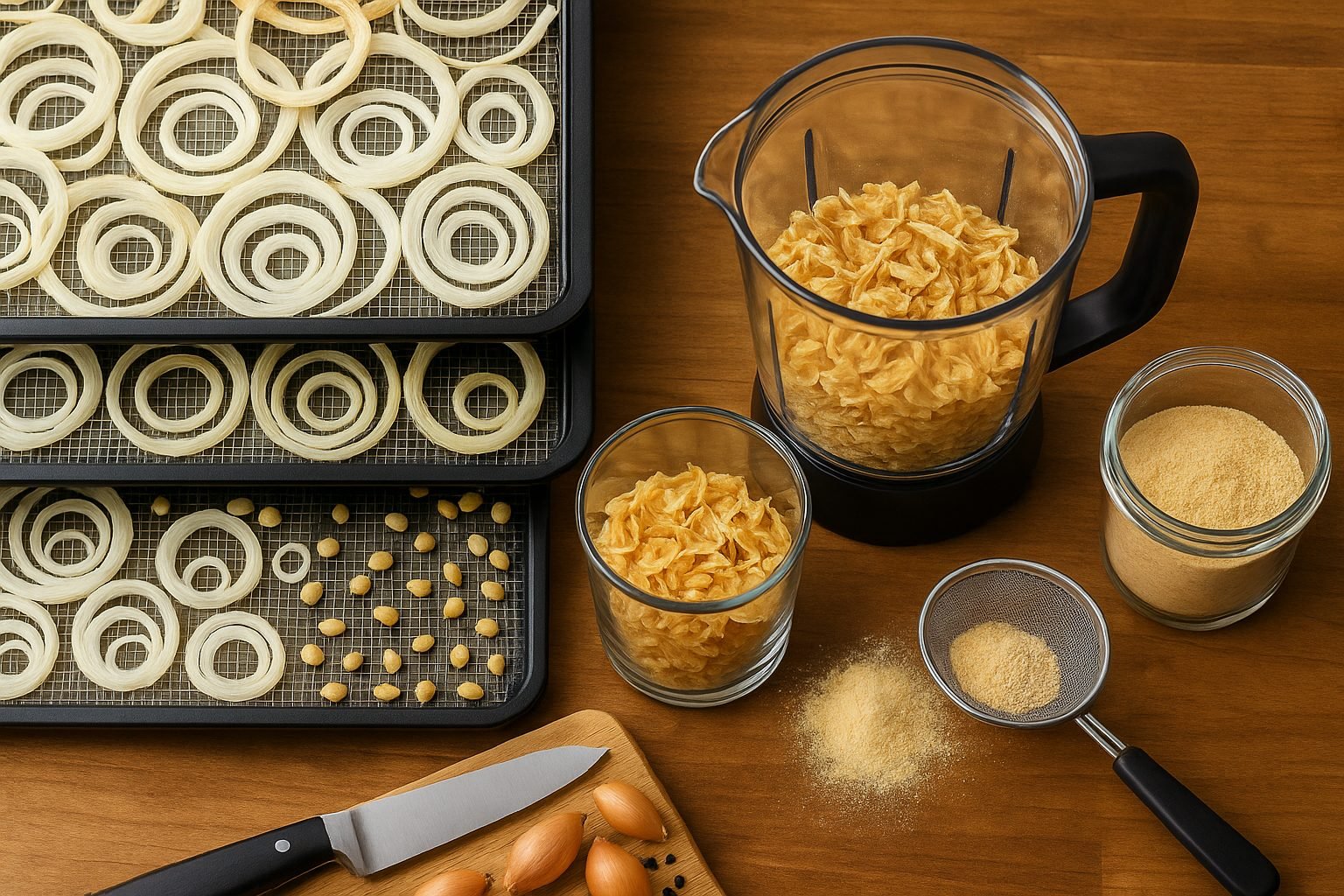
Start by selecting fresh, firm onions for the best flavor—older onions can develop bitterness. Begin preparation by peeling off the outer skins and removing the root and stem ends.
Make sure to slice the onions as evenly as possible, ideally into thin rings or half-moons about 1/8 inch thick. Even slicing is crucial because uniform pieces dry at the same rate, preventing burning or under-drying. Use a sharp knife, mandoline, or food processor if available.
Once your onions are sliced, you can choose to dry them in the oven or a dehydrator.
Oven Drying Method
Arrange the slices in a single layer on parchment-lined baking sheets. Set the oven to its lowest temperature, typically around 150°F (65°C), and prop the door open with a wooden spoon to allow moisture to escape. This process can take 4 to 6 hours and requires occasional flipping of the pieces for even drying.
The main advantage of oven drying is convenience, though it can be less consistent and risks scorching if not watched closely.
Dehydrator Drying Method
A dehydrator offers more controlled, consistent drying—simply spread the slices on trays and set to 125°F (52°C) for 6 to 8 hours, rotating trays as needed.
While dehydrators yield more even results and free up your oven, they do require additional equipment.
Checking for Dryness
No matter the drying method, dryness is key: the onion pieces should snap and crumble easily, not bend. Let the onions cool completely, then check again because any remaining moisture will cause clumping later.
Grinding and Storing
Transfer the thoroughly dried onions to a spice grinder, high-powered blender, or even a clean coffee grinder. Your goal is a fine, even powder.
- Pulse in short bursts, shaking the grinder for uniformity.
- Sieve the powder if you want the silkiest texture, repeating the process with any larger bits.
Store the finished onion powder in an airtight container in a cool, dark place, and enjoy bold flavor whenever you need it.
Storing Homemade Onion Powder for Freshness
To keep your homemade onion powder fresh and flavorful, store it in airtight containers—glass jars with secure lids or high-quality plastic containers work best to block out air and moisture. Make sure the powder is completely cool and dry before sealing it, as any residual moisture can encourage clumping or mold growth.
Place the container in a cool, dry spot away from direct sunlight, such as a pantry or cupboard. This helps prevent the volatile oils in the onion powder from breaking down. Most homemade onion powder stays at its best for up to 6 months, but check periodically for signs of spoilage. Clumping, musty odors, or unusual color changes can indicate moisture has gotten in or the powder is losing potency.
If you live in a humid climate or want extra protection, toss a food-safe silica gel packet into the container to absorb excess moisture—just make sure it doesn’t come into contact with the powder itself by wrapping it in parchment paper. For easy access without introducing new moisture each time, consider using smaller containers and opening only one at a time.
Regularly sniff and taste a bit of the powder; if it seems bland or stale, it’s time to make a new batch. These simple storage habits will help ensure your homemade onion powder stays dry, aromatic, and ready to flavor your favorite dishes.
Creative Uses for Onion Powder in Cooking
Onion powder is a pantry staple for good reason—its concentrated flavor and incredible versatility make it a secret weapon for home cooks. Add a burst of savory depth by mixing onion powder into homemade seasoning blends for everything from roasted veggies to popcorn; start with about a teaspoon per cup of seasoning mix.
For marinades and dry rubs, onion powder disperses easily and won’t burn like fresh onions, making it perfect for grilled meats or tofu—combine one tablespoon with olive oil, garlic powder, and paprika for a quick steak rub.
You can effortlessly elevate snacks by sprinkling onion powder on chips, roasted nuts, or even pretzels.
It’s equally indispensable in soups and stews when you want subtle onion flavor without texture; use one tablespoon of onion powder to substitute for one medium fresh onion, or two teaspoons in place of one tablespoon of dried minced onion.
Dips and dressings are other great candidates: whip up a flavorful ranch dip by blending one cup of sour cream with one teaspoon onion powder, a half teaspoon garlic powder, and a tablespoon of fresh herbs.
For a fun twist, try stirring onion powder into mashed potatoes or hummus for extra savoriness.
The beauty of onion powder is how easy it is to blend in and boost flavor without extra prep—it’s your shortcut to tasty, aromatic dishes in minutes.
Troubleshooting and Pro Tips for the Best Results
Getting the best flavor and texture from homemade onion powder can take a little finesse, but tackling common issues is simple with a few pro tips.
Bitterness often creeps in if the onions are overcooked during drying, so use a low oven temperature or a dedicated food dehydrator, and check frequently to prevent browning—the goal is to dry, not roast.
Grinding onions into a fine powder sometimes trips people up; if your blender or spice grinder struggles, try pulsing small batches at a time, and consider adding a pinch of uncooked rice to absorb excess moisture and help everything blend more evenly.
Clumping powder is another frustration, especially in humid climates—stir in a teaspoon of cornstarch or use silica gel packets to keep it dry, and always store your powder in an airtight jar.
For flavor lovers, don’t be afraid to experiment: adding a clove or two of dried garlic or a handful of smoked onion slices before grinding brings subtle new notes to your powder.
Sweet yellow onions yield a milder, more versatile powder, while red or shallot varieties give a sharper kick, so feel free to mix and match to suit specific recipes.
If you want to scale up for gifting or bulk use, slice and dry onions in big batches—just be sure each layer has plenty of airflow.
Custom blends like onion-garlic or onion-celery powders are easy to create by drying and grinding all ingredients together.
With a bit of creativity and these troubleshooting tips, you’ll not only eliminate common pitfalls but also have a unique, homemade kitchen staple that’s fresher and more customizable than anything store-bought.
Frequently Asked Questions about Homemade Onion Powder
Making homemade onion powder is surprisingly simple, even if you don’t have a dehydrator. Just slice onions thinly and dry them in your oven at its lowest temperature, checking often to avoid burning. Alternatively, you can air-dry the slices by spreading them out in a well-ventilated, dry room.
Choose any common onion—yellow, white, or red—all will work, though sweet onions may produce a milder powder. Once your slices are completely dry and brittle, use a blender, food processor, or even a clean coffee grinder to pulverize them into a fine powder.
The key to maximizing shelf life—typically up to a year—is ensuring the powder is absolutely moisture-free before transferring it to an airtight container. Glass jars with tight seals or vacuum-sealed bags offer the best protection.
To prevent clumping, which often happens in humid climates or if a little moisture sneaks in, slip a few grains of uncooked rice or a food-safe silica gel packet into your jar. If your powder does clump, simply break up any lumps with a fork or give it another brief whirl in the grinder.
Many users find their onion powder loses pungency over time; to revive the flavor, try toasting the powder briefly before adding it to recipes, or simply use a bit more if it seems weaker than expected.
Using Homemade Onion Powder
Homemade onion powder is perfect for soups, rubs, dressings, and anywhere you want a subtle onion flavor without texture.
What Not to Confuse It With
Don’t confuse onion powder with onion salt, which is a premixed blend of onion powder and salt (usually a 3:1 salt-to-onion ratio). Using onion salt directly as a substitute can easily oversalt your dish.
Dried minced onion, on the other hand, is made from small, dehydrated onion flakes and offers more crunch and texture, releasing flavor more slowly. Swap with powder only when texture won’t matter.
Storage Tips
In short, homemade onion powder is a versatile staple if stored and used correctly. Label your jar with the date and check regularly for clumping or off smells, discarding it if you notice any spoilage.
With these tips, you’ll enjoy a fresher, more flavorful alternative to anything store-bought.