Introduction to Radish Microgreens
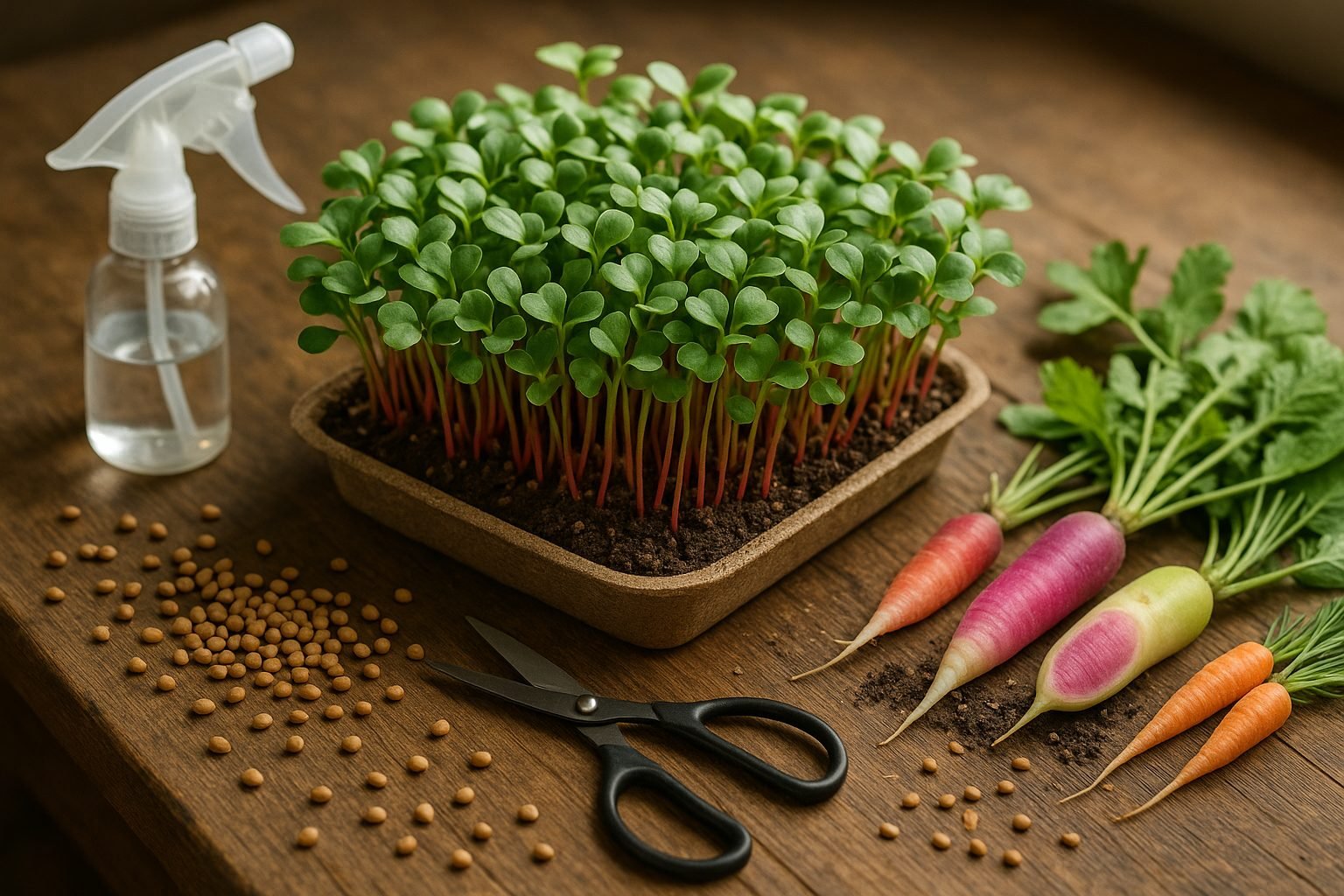
radish microgreens have taken the culinary and gardening worlds by storm, and for good reason—they’re not only an easy crop for beginners but also a powerhouse of flavor and nutrition right from your windowsill. These tiny, vibrant greens are harvested just days after germination, packing all the peppery bite of mature radishes into delicate, colorful leaves and shoots.
Their rosy stems and bright green leaves add a splash of color to salads, sandwiches, and even fancy restaurant plates. With a quick 7-10 day turnaround from seed to harvest, they’re perfect for anyone eager to grow fresh food with minimal effort.
In this guide, we’ll explore why radish microgreens are so popular: their rapid growth cycle, bold taste, and visual appeal. You’ll discover tips for successful indoor growing, easy harvesting, and creative ways to enjoy them in meals. Whether you’re a seasoned gardener or a curious novice, you’ll learn about the health benefits these microgreens bring to your diet and how a few simple steps can turn your kitchen into a green, nutritious oasis.
Dive in to find out how you can grow and eat radish microgreens year-round and reap their array of benefits.
Nutritional Value and Health Benefits
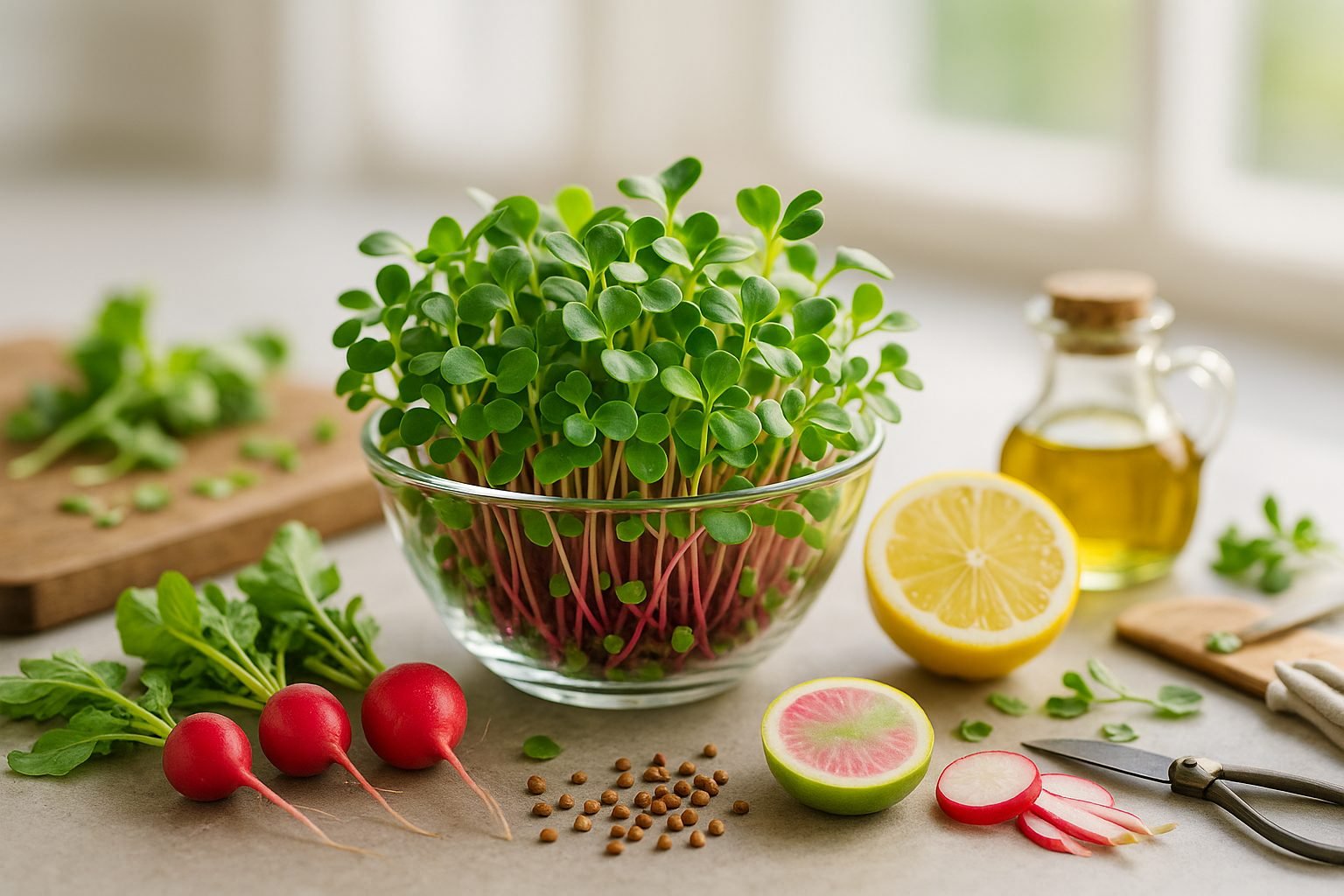
Radish microgreens are nutritional powerhouses in a tiny package, offering a concentrated dose of key vitamins and minerals. Rich in vitamin C, these greens can help boost your immune system, assisting your body in warding off common illnesses and speeding up recovery from colds.
Radish microgreens are also packed with antioxidants, including flavonoids and carotenoids that protect your cells from oxidative stress and may reduce the risk of chronic diseases over time. In addition, their fiber content makes them a smart choice for digestive health by supporting regularity and feeding beneficial gut bacteria.
For anyone looking to add an anti-inflammatory boost to their meals, radish microgreens provide valuable plant compounds like sulforaphane, which have been linked to reduced inflammation in the body. They are incredibly versatile — toss them into salads, pile onto sandwiches, or sprinkle over soups for a fresh, peppery crunch that makes eating healthy effortless.
Just a handful added to your daily diet is an easy way to ramp up nutrient intake without extra calories, making radish microgreens a perfect fit for anyone aiming to maintain a well-balanced, health-conscious lifestyle.
Popular Varieties of Radish Microgreens
Radish microgreens come in several popular varieties, each bringing unique flavors and visual appeal to your plate. Rambo radish microgreens are striking with their deep purple stems and vibrant green leaves, adding a bold splash of color to salads and sandwiches. They offer a strong, peppery bite—a favorite among those who love spicier flavors.
Daikon radish microgreens, on the other hand, are pale green with a milder, crisp taste that pairs well with delicate dishes like sushi, spring rolls, or light salads. Red Arrow is another common choice, recognized for its pinkish-red stems and fresh, zesty heat that falls somewhere between Rambo and Daikon in flavor intensity.
In terms of growth rates, all three varieties are fairly quick to produce harvestable shoots, usually within 7 to 10 days. However, Daikon tends to be the fastest growing, making it ideal for beginners eager to see quick results.
When choosing which variety to grow, consider both taste preference and your planned use:
- For intense, spicy notes and visual drama, Rambo is best.
- For a milder, sweeter crunch that won’t overpower other flavors, select Daikon.
- If you want something in the middle, Red Arrow’s moderate heat and attractive stems complement both raw and cooked dishes.
By mixing varieties, you can experiment to find your favorite flavor profiles and create subtle layers of spice, color, and texture in your meals.
Step-by-Step Guide to Growing Radish Microgreens
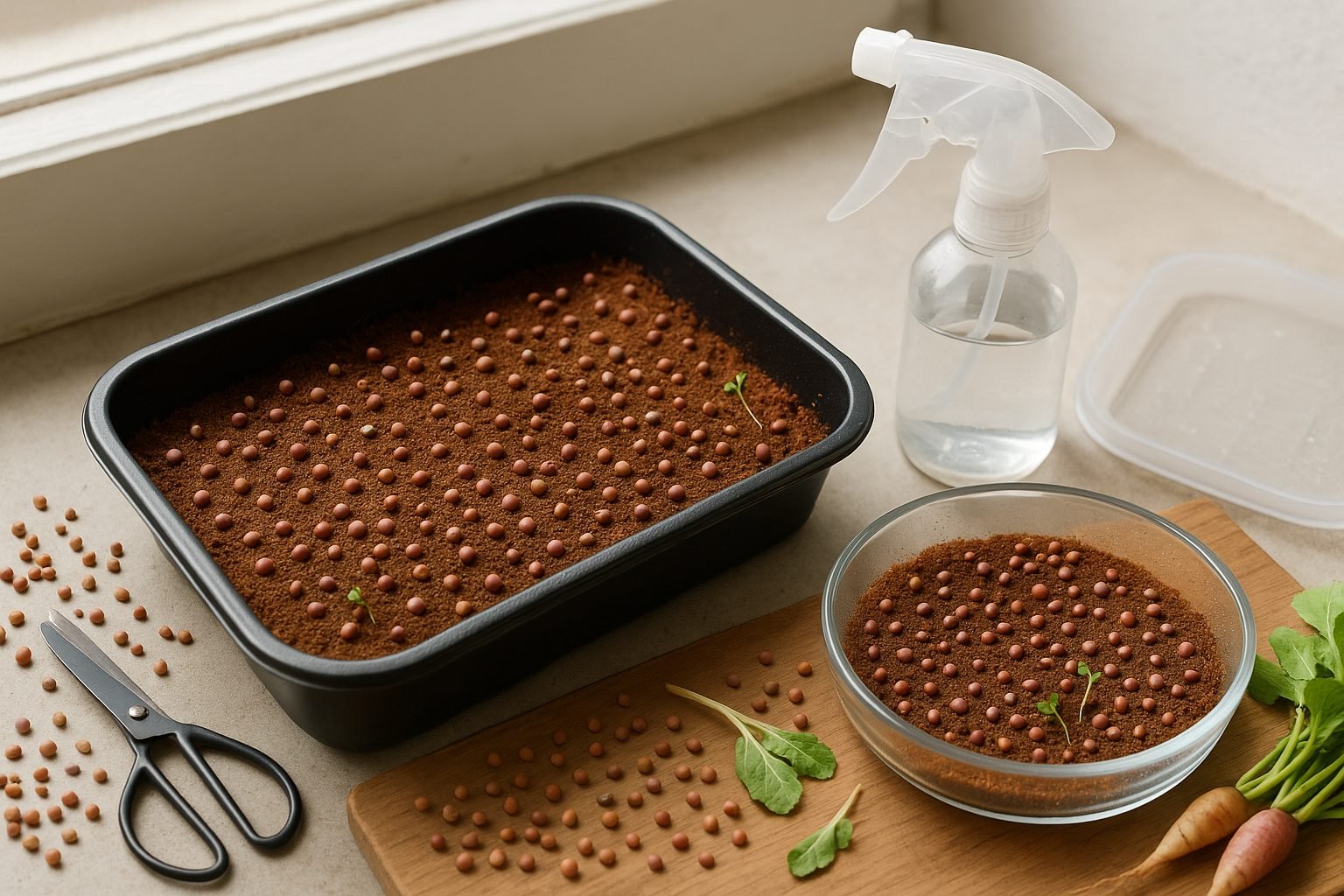
To grow radish microgreens at home, you’ll need just a few basic supplies: radish microgreen seeds (often labeled as “microgreens” or “sprouting” seeds for best results), a shallow growing tray (with or without drainage holes), a spray bottle for watering, and a growing medium like seed-starting potting mix, coconut coir, or even paper towels.
Start by selecting high-quality seeds from a reputable source, as they germinate quickly and have better flavor. Radish seeds don’t require pre-soaking—just spread them evenly over a moistened growing medium, aiming for light but thorough coverage so seeds have space to sprout. Gently press the seeds into the surface to ensure good contact without burying them.
Mist the seeds with water from your spray bottle, then cover the tray with a lid or another tray to block out light for the first two days. This helps the seeds germinate evenly and encourages strong, upright growth.
Place the tray in a warm spot (about 65–75°F is ideal), checking daily to keep the medium damp but not waterlogged; avoid letting seeds sit in puddles, which can cause mold. When you see sprouting, usually on day 2–3, remove the cover and move your tray to a spot with bright, indirect light, such as a kitchen counter near a window.
Continue misting lightly each day, watching for the first set of “true” leaves, which usually appear by day 6–10. Harvest your radish microgreens with clean scissors when they reach 2–3 inches tall—just above the soil line. Rinse gently before eating.
For best results:
- Avoid overcrowding seeds, which can cause poor airflow and mold.
- Never let the medium dry out completely.
- Always use clean equipment to prevent fungus.
With these simple steps, you’ll enjoy fresh, peppery microgreens in just over a week!
Harvesting and Storing Radish Microgreens
Radish microgreens are ready to harvest when they’re about two to three inches tall and have developed their first set of true leaves, which look slightly different from the initial smooth, rounded seed leaves. You’ll notice the stems are sturdy and the color is vibrant—usually a bright green with a hint of red or purple, depending on the variety.
To check if they’re ready, gently run your fingers across the greenery; they should feel tender but not floppy or wilted.
To harvest, use clean, sharp scissors or a knife to snip the stems just above the soil line—avoid pulling or tugging, as this can disturb the roots and introduce dirt.
Immediately after harvesting, rinse the microgreens thoroughly in cold water to remove soil and seed hulls, then lay them out in a single layer on a clean kitchen towel or paper towels to air-dry. Avoid excess moisture, as it can encourage spoilage.
Once dry, store your radish microgreens in a breathable container or a loosely closed plastic bag lined with a dry paper towel, and keep them in the refrigerator. For best flavor and texture, use them within five to seven days—they’ll stay crisp and lively if stored this way.
Culinary Uses and Recipe Ideas
Radish microgreens pack a spicy, peppery punch that can instantly brighten up a wide range of dishes. Try tossing a handful into salads for a crunchy, zesty upgrade—pairing them with creamy goat cheese, citrus segments, and toasted nuts creates a balanced, flavor-packed bowl.
In sandwiches or wraps, radish microgreens add a lively kick; layer them with turkey, avocado, and hummus for extra texture and zip. These tiny greens also make an eye-catching, fresh garnish for soups; sprinkle over classic tomato or potato leek soup just before serving for a subtle heat and vibrant color.
Their bold flavor pairs especially well with mild cheeses, eggs, and root vegetables—try topping scrambled eggs or roasted sweet potatoes with a generous sprinkle. If you’re feeling creative, blend radish microgreens into pesto or whip them into a tangy yogurt dip with lemon, garlic, and fresh herbs.
For busy weeknights, stir a handful into your favorite grain bowls or stir-fries just before serving for a nutritious, spicy boost. Since their peppery notes mirror the bite of mature radishes, they work beautifully alongside foods that can soften or counterbalance that heat, such as creamy avocado, sweet bell peppers, or nutty grains like quinoa and farro.
With their intense flavor and appealing crunch, radish microgreens are a simple way to add both nutrition and gourmet flair to everyday meals.
Economic and Urban Gardening Benefits
Urban gardening offers significant economic benefits, especially for those looking to tap into the rising market demand for fresh, locally grown produce. With consumers increasingly seeking organic and sustainably farmed options, urban gardeners can easily find buyers at farmers markets, local restaurants, or through community-supported agriculture (CSA) programs.
Even on a small scale—using rooftops, balconies, or community plots—growers can turn a profit by focusing on high-demand crops like microgreens, salad mixes, herbs, or heirloom tomatoes, which often fetch premium prices due to their freshness and quality.
For beginners, urban gardening provides a low-barrier entry: you don’t need acres of land or heavy machinery, just some basic supplies, a sunny spot, and a willingness to learn. Online resources and local gardening groups offer a wealth of support for those just starting out.
Sustainability is built into urban gardening, as growing food close to home reduces transportation emissions and packaging waste. Plus, aligning with current food trends—like plant-based eating and reducing one’s carbon footprint—can give even the smallest operation a competitive edge.
By starting with small, manageable projects and scaling up as confidence grows, urban gardeners can enjoy steady income, healthier communities, and a lighter environmental impact, all while meeting the modern demand for food that’s fresh, ethical, and local.
Frequently Asked Questions
Radish microgreens can absolutely be eaten raw, and in fact, that’s how most people enjoy them—adding a peppery crunch to salads, sandwiches, or smoothies. When it comes to serving size, a small handful (about 1/4 to 1/2 cup) per day is a good starting point for most adults, offering plenty of nutrients without overwhelming your system. You can easily mix them into your meals a few times a week for variety.
As for safety, radish microgreens are considered safe for most people when grown and handled properly. Always ensure you’re buying from a trusted source or growing your own in clean conditions to avoid potential contamination. Rinse them gently under cold water before eating, and store them in the fridge to maintain freshness.
While rare, individuals with cruciferous vegetable allergies—or those with very sensitive digestive systems—should start with a small amount to check for any reaction. For most people, though, radish microgreens are a nutritious and easy way to boost your meals with vitamins, minerals, and antioxidants, all without much fuss.
Conclusion
Radish microgreens offer a simple yet powerful way to boost your meals and your health. Packed with nutrients and bursting with a peppery crunch, they’re an excellent addition to salads, sandwiches, or even as a vibrant topping for avocado toast.
Growing them couldn’t be easier—just sprinkle seeds in a shallow tray, mist with water, and you’ll have fresh greens in less than two weeks. Whether you’re a seasoned chef or a gardening beginner, experimenting with radish microgreens can open up new flavors and inspire creativity in your kitchen.
Plus, their rapid growth and minimal care requirements mean you’ll enjoy quick results and a constant supply of fresh produce. Give radish microgreens a try—you might be surprised by how much flavor, nutrition, and fun they bring to your home cooking and gardening routine.
Start small, try different dishes, and see how these little greens can make a big impact on your daily habits.