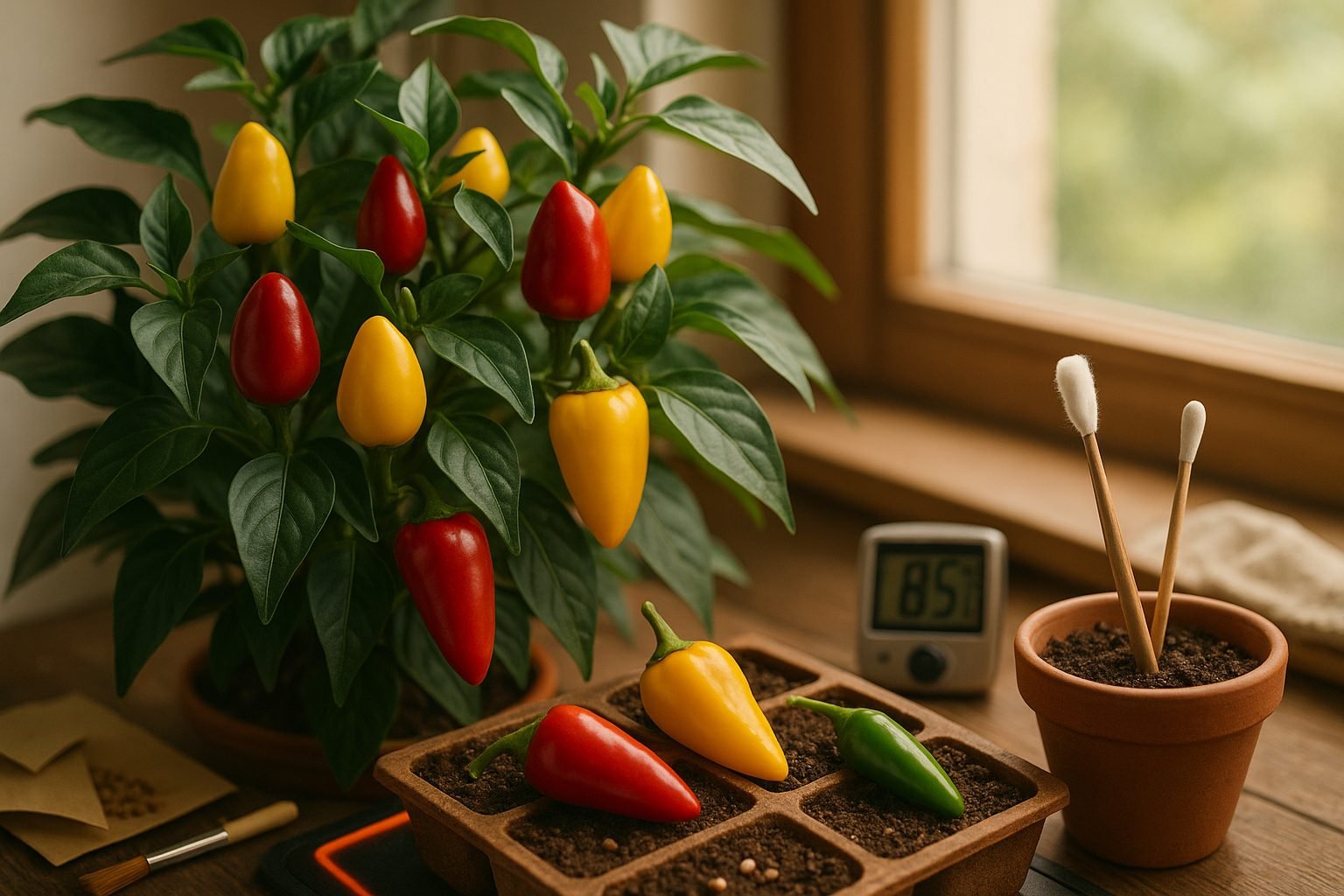
Why Hand Pollination is Important for Indoor Pepper Plants
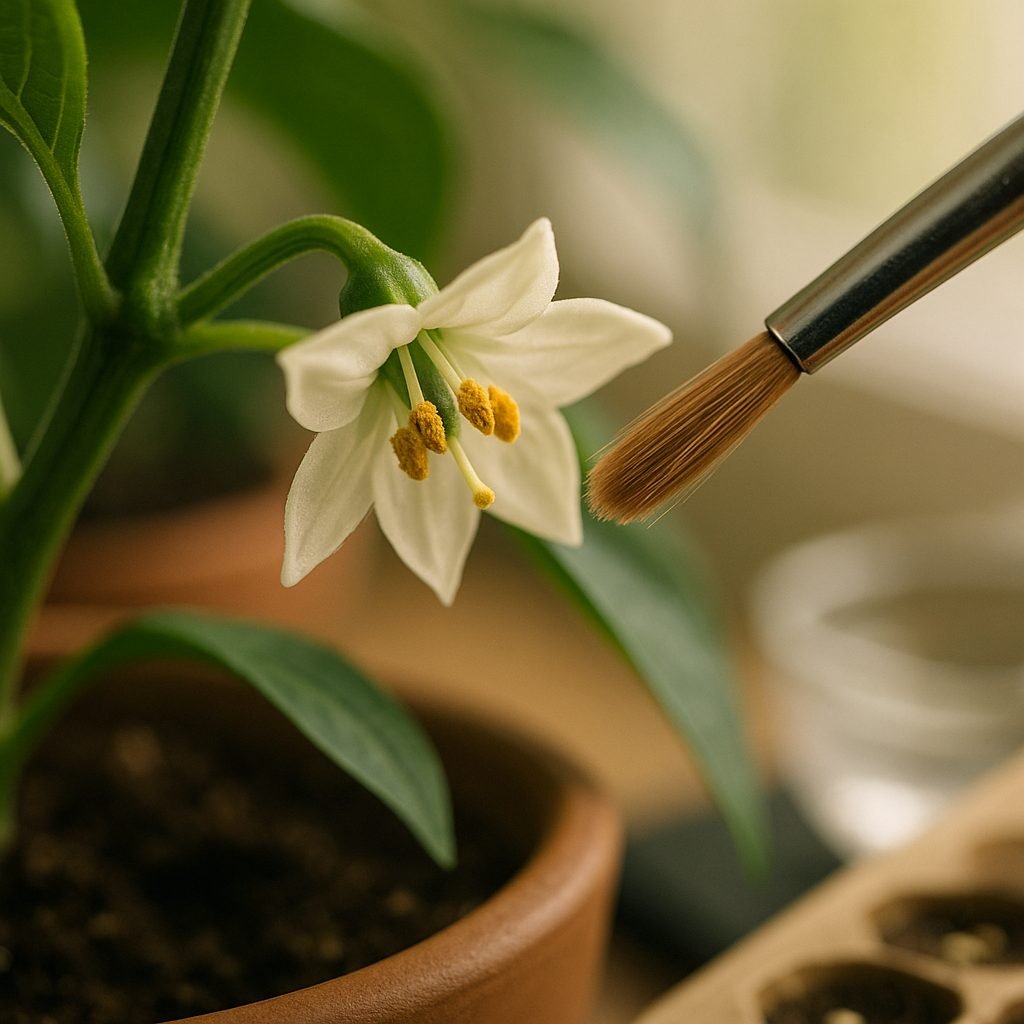
Pollinating hot peppers indoors presents unique challenges for home gardeners, mainly because of the lack of natural pollinators like bees and the absence of wind that typically helps transfer pollen outdoors. Unlike garden environments, your living room or greenhouse doesn’t offer the same bustling ecosystem, and pepper flowers often depend on these forces for successful fertilization.
That’s where hand pollination comes in—a simple but crucial technique that can significantly increase your indoor pepper plants’ fruit set and yield. Manually transferring pollen from the flower’s stamen to its stigma ensures the blooms don’t drop off without producing fruit, which is a common sign that your plants need pollination.
Here are some hints that indicate it’s time to hand pollinate:
- You notice lush foliage but no peppers forming after several weeks of flowering.
- Flowers drop off before fruit sets.
Home gardeners benefit greatly from this method because it allows better control over the growing process and helps maximize the harvest from even a small space. By regularly inspecting your pepper plants and learning to hand pollinate—using a small brush or even a cotton swab—you can avoid the frustration of flower drop and empty plants.
Consistency is key. Spending a few minutes gently brushing each flower every couple of days can lead to vibrant, productive pepper plants, making your indoor gardening truly rewarding.
Understanding the Pepper Plant Pollination Process
Pepper plants rely on a fascinating pollination process to produce those tasty fruits you see in gardens and kitchens. Outdoors, their small white flowers attract gentle breezes and occasional bees, which nudge the pollen from the anther—the male part of the flower—onto the stigma, the female part that leads to fruit set once fertilized.
One reason peppers thrive in open gardens is that their flowers are “perfect,” meaning each flower contains both anthers and stigmas. This allows peppers to mainly self-pollinate, with pollen often transferring from the anther to the stigma within the same blossom. However, a gusty wind or a bee visiting from a nearby plant can create opportunities for cross-pollination, where pollen travels between different pepper plants, sometimes resulting in unique hybrids.
Indoors, natural pollination gets tricky since there’s little wind and few pollinators. Without this movement, pollen doesn’t always reach the stigma, so flowers may drop off without forming fruit. Gardeners growing peppers indoors often resort to gentle hand-shaking of plants, using a soft paintbrush or tapping flower stems to mimic nature’s touch and help pollen land where it needs to go.
Understanding this process can help you get the most from your pepper plants, whether you’re raising them outside under sun and breeze or inside on a sunny windowsill.
When and How to Hand Pollinate Pepper Plants
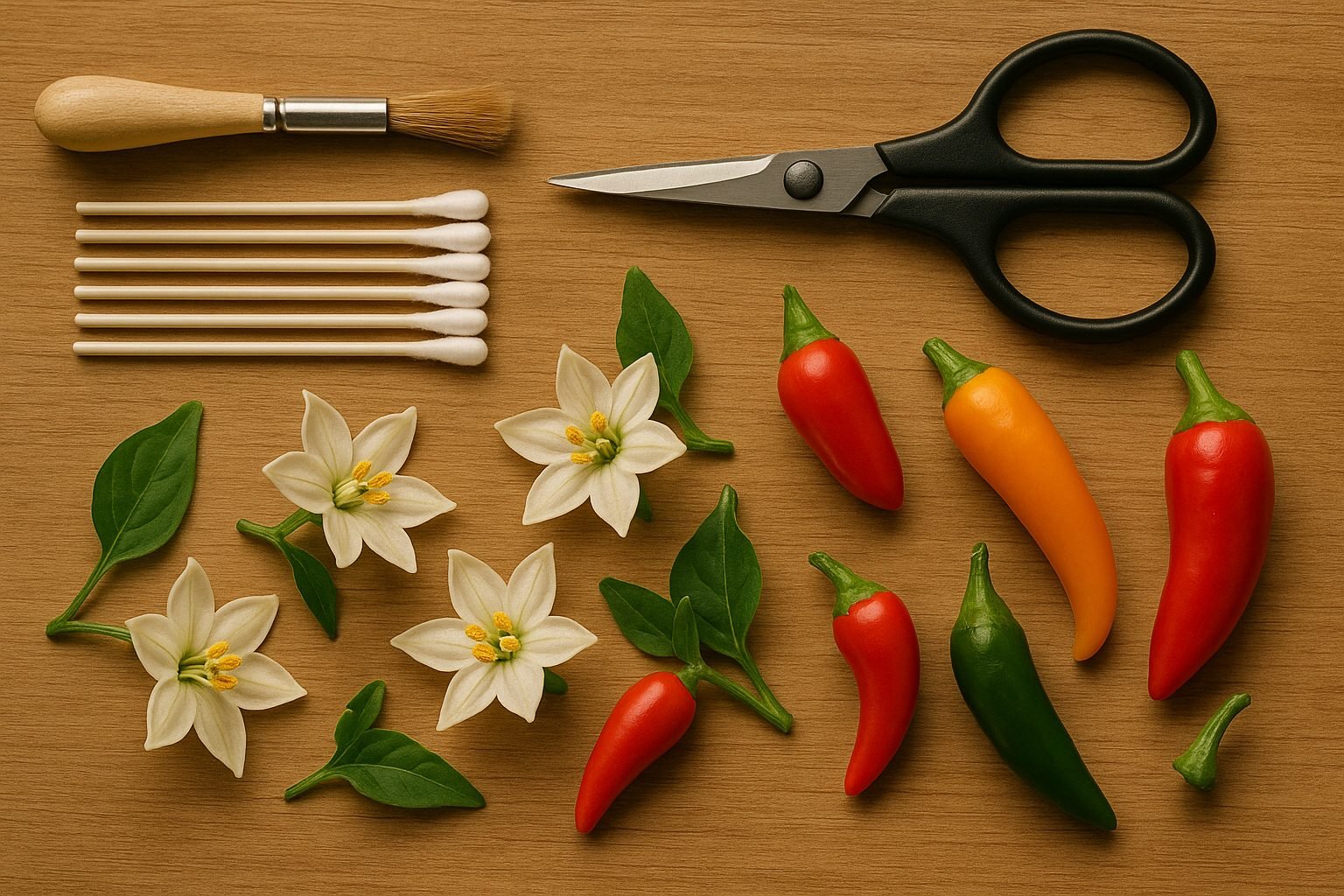
Hand pollination of pepper plants is most effective during the peak of their flowering stage, ideally in the morning when blossoms are fully open and pollen is most viable. Start by arming yourself with a small, soft paintbrush or a clean cotton swab—these tools are gentle enough not to damage the flowers. Alternatively, you can simply give each plant a gentle shake if you have several peppers clustered together, which helps dislodge and distribute pollen naturally.
To hand pollinate using a brush or swab, lightly touch the center of each flower (where the yellow pollen is visible) to pick up pollen, then dab it onto the central stigma of other open blooms. Aim to repeat this process every couple of days during the flowering period to increase the chances of every blossom being pollinated.
Handle each flower delicately; pepper blossoms are fragile, and too much pressure or repeated handling can cause them to drop off. Always use clean tools to avoid transferring diseases between plants, and make sure your hands are dry to prevent tearing petals.
If you’re not seeing small fruit form after blossoms fade, you might be missing the optimal window—pepper flowers are only receptive to pollen for a short time once they open, usually just a day or two. Overhandling is another common mistake; touching flowers too much or too roughly can result in poor fruit set.
For best results, observe your plants daily and pollinate only the flowers that are wide open and fresh, spacing out your pollination sessions to avoid stressing the plant. With a gentle hand and attentive timing, hand pollination can significantly boost your pepper harvest, especially in indoor gardens or greenhouses where natural pollinators are scarce.
Optimizing Your Indoor Environment for Pollination Success
Creating an ideal indoor environment for pollination starts with getting the basics right—light, temperature, and humidity are all essential for healthy flowers. Flowers need plenty of bright, indirect light to bloom and attract pollinators (or be receptive to hand pollination), so use full-spectrum grow lights if your space lacks direct sunlight.
Keep your indoor temperature in the comfortable range of 65–75°F (18–24°C) and try to avoid sudden fluctuations, as stress can hinder flower production. Humidity should hover between 40–60%; too little and flowers may dry out, too much and you risk mold or fungal problems.
Air Circulation: The Secret Weapon
Effective air circulation is key for indoor pollination. Unlike outdoor gardens, indoor spaces can get stuffy and stagnant, making it harder for pollen to move naturally. Place oscillating fans around your plants on gentle settings—just enough to mimic a light breeze. This encourages sturdy stems and helps pollen drift from flower to flower.
Choosing the Right Containers and Soil
For container growing, choose pots with good drainage and never overcrowd your plants. Use high-quality, well-aerated potting soil rich in organic matter to ensure roots get enough oxygen and nutrients to support blooming. For extra insurance, consider using containers made of breathable materials like fabric or unglazed clay, which prevent soil from becoming waterlogged.
Assisting Pollination
If you’re growing fruiting crops or self-pollinating plants, gentle hand-shaking or using a small paintbrush can help transfer pollen, especially when combined with good airflow.
By dialing in these environmental factors, you’ll set the stage for robust blooms and maximize your indoor garden’s pollination success, whether you’re nurturing flowering houseplants or producing homegrown veggies.
Preventing Flower Drop and Maximizing Fruit Set
Flower drop can be a frustrating setback for anyone hoping for a bountiful harvest, but understanding the main causes can help you keep more blooms on your plants and maximize fruit set. Flower drop often results from plant stress—such as inconsistent watering, poor nutrition, or sudden temperature swings.
For example, tomatoes are especially sensitive to drought or heavy rains, so keeping the soil consistently moist (not soggy) is key. A balanced fertilizer goes a long way; too much nitrogen encourages leaves at the expense of flowers and fruit, while too little leaves plants weak.
Another big factor is pollination: vegetables like peppers, squash, and tomatoes rely on either wind or pollinators, such as bees and butterflies, to transfer pollen from flower to flower. If you’re gardening indoors, lightly shaking the branches or using a small paintbrush to move pollen can greatly reduce flower loss.
In the garden, attract more pollinators by planting flowers like marigolds or borage nearby. Most importantly, be patient—after successful pollination, fruit may take time to set and develop, and plants sometimes shed a few excess flowers naturally to focus their energy on maturing fruit.
By minimizing stress, ensuring good nutrition and pollination, and giving your plants time, you’ll see more flowers turning into healthy fruits.
FAQs and Common Problems with Hand Pollinating Peppers
When hand pollinating peppers, many gardeners wonder how to know if they’ve succeeded. A key sign is visible fruit set within a week or two: after you transfer the pollen, watch for tiny peppers forming behind the flowers, and the petals will often dry up and drop.
If you aren’t seeing fruit, a few common mistakes could be to blame. Timing matters—flowers are only receptive for about a day, so try hand pollinating in the morning when blooms are fully open.
Gently brush the inside of several flowers with a small paintbrush or cotton swab, mimicking the motion of a bee. Rough or rushed handling can actually cause flowers to drop off, so take your time and be as gentle as possible.
If you’re still not seeing fruit, consider environmental issues like high heat, low humidity, or lack of light, as these can prevent fruit set even if pollination was successful.
Don’t get discouraged—plants are resilient. Trim away failed flowers to save the plant’s energy for new blooms, and keep providing steady watering, occasional fertilizer, and good airflow.
Often, a change in technique or slight improvement in growing conditions is all that’s needed. With patience, you’ll likely see your peppers bounce back and produce healthy fruit.
Harvesting and Enjoying Your Peppers
After successful hand pollination, your peppers are ready to harvest when they’re fully colored—whether that’s red, yellow, orange, or their final shade—have a glossy sheen, and feel firm to the touch. They should have a slight give but not be soft or wrinkly. You might also notice the pepper easily detaches when gently twisted or snipped, which is a good cue that it’s time to harvest.
Always use scissors or garden shears instead of pulling by hand to avoid damaging the plant or breaking branches. Hold the stem with one hand and cut with the other for extra care, especially on indoor or container-grown plants.
Once harvested, home-grown peppers shine in countless recipes:
- Slice them fresh into salads
- Stuff them with grains and veggies
- Roast for rich, smoky flavors
- Dice into omelets, salsa, or homemade pizza for a pop of color and taste
Hand-pollinating indoors may take a little patience, but the reward is fresh, vibrant produce right from your windowsill. Not only does it give you control over quality and variety, but there’s also a real joy in tasting the literal fruits of your own handiwork—something every food lover should experience at least once!