Introduction
If you’ve started your garden and noticed leggy garlic seedlings stretching toward the light, you’re not alone. “Leggy seedlings” are young plants that grow tall, thin, and weak instead of short and sturdy—a common frustration for home gardeners everywhere. This happens when seedlings don’t get enough light, causing them to overreach and develop floppy stems that struggle to support further growth. Left uncorrected, leggy garlic seedlings can lead to poor bulb development and lower harvests since these fragile plants may not establish healthy roots or withstand outdoor conditions.
Fixing leggy seedlings is crucial for a successful garlic crop. Sturdy, well-developed seedlings adapt better when transplanted, resist pests, and ultimately produce bigger, more flavorful bulbs. In this article, we’ll demystify the main causes behind this common problem, including inadequate light, high temperatures, and overcrowding. You’ll learn practical prevention strategies anyone can use—like adjusting your lighting setup or spacing your seedlings correctly—and get step-by-step solutions for rescuing stretched-out sprouts before it’s too late. Let’s dig in so your garlic gets the strong start it deserves!
What Causes Leggy Seedlings?
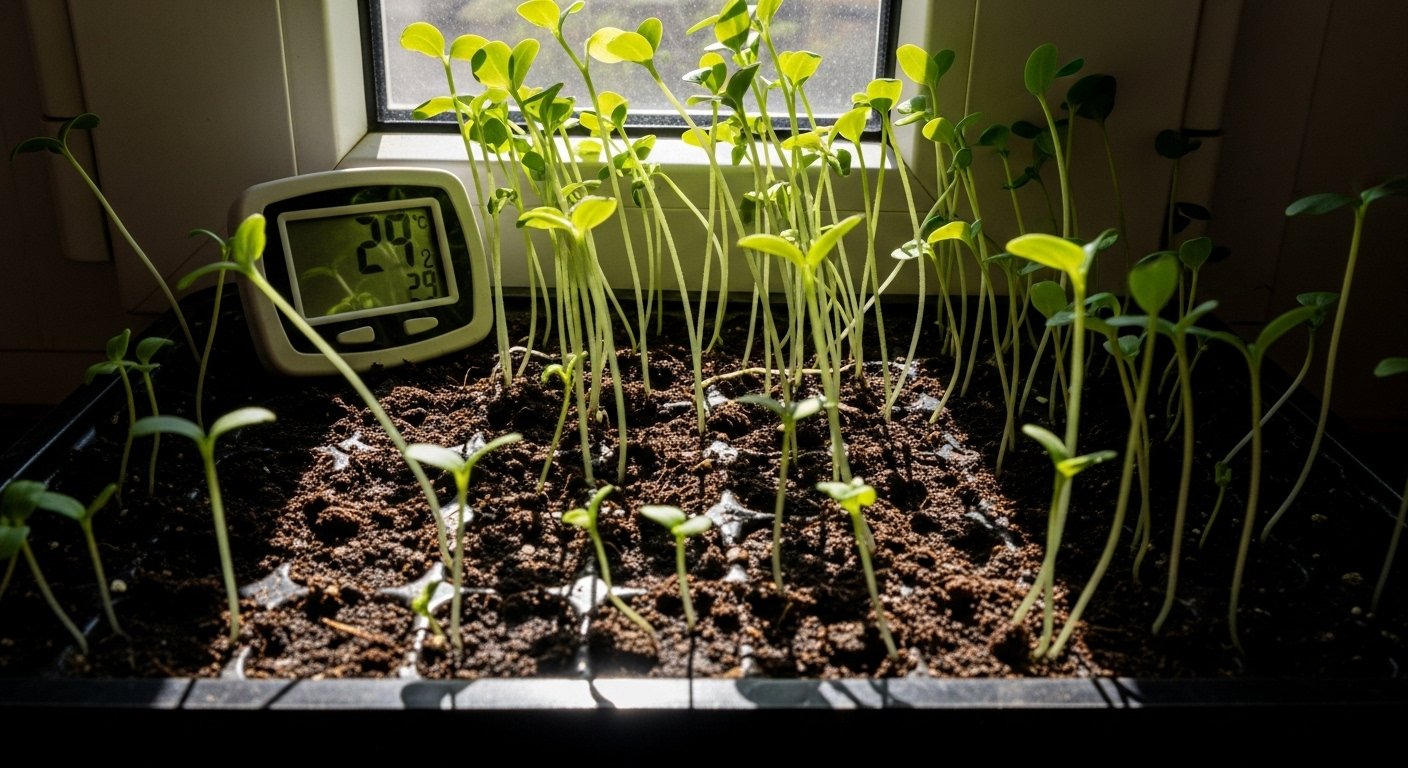
Leggy seedlings are a common frustration for gardeners, and understanding the causes can help you grow healthy, robust plants. The most frequent culprit is insufficient light—when young seedlings don’t get at least 12 to 16 hours of bright, direct light daily, they stretch toward the nearest source in an effort to survive. This results in tall, thin, spindly stems that are weak and unable to support healthy leaves.
High temperatures also contribute, as warm environments can speed up growth before the plant is ready, causing the stems to elongate excessively in search of cooler air and stronger light. Overcrowding in seed trays or pots forces plants to compete for light, air, and nutrients, so they grow upward quickly to outpace their neighbors, leading to the same frail, leggy result.
Overwatering can be equally problematic since soggy soil reduces oxygen to roots and makes it harder for seedlings to develop strong stems. Meanwhile, excess fertilizing encourages rapid, weak stem growth rather than the balanced development needed for sturdy plants.
Recognizing the symptoms early—like spindly, fragile stems, pale or small leaves, and a general leaning or reaching toward windows or lights—allows you to act before it’s too late. If you spot these warning signs, try moving your seedlings to a brighter location, reducing temperatures, thinning overcrowded trays, watering less frequently, and holding off on fertilizer until they develop their first set of true leaves.
Taking these practical steps can help prevent leggy growth and set your garden up for success.
How to Prevent Leggy Seedlings
To prevent leggy seedlings, start by providing enough light from the moment your seeds sprout. Place seed trays near a bright south-facing window if possible. However, since windows rarely provide enough consistent light, many gardeners rely on affordable LED grow lights positioned 2–3 inches above the seedlings for about 14–16 hours each day.
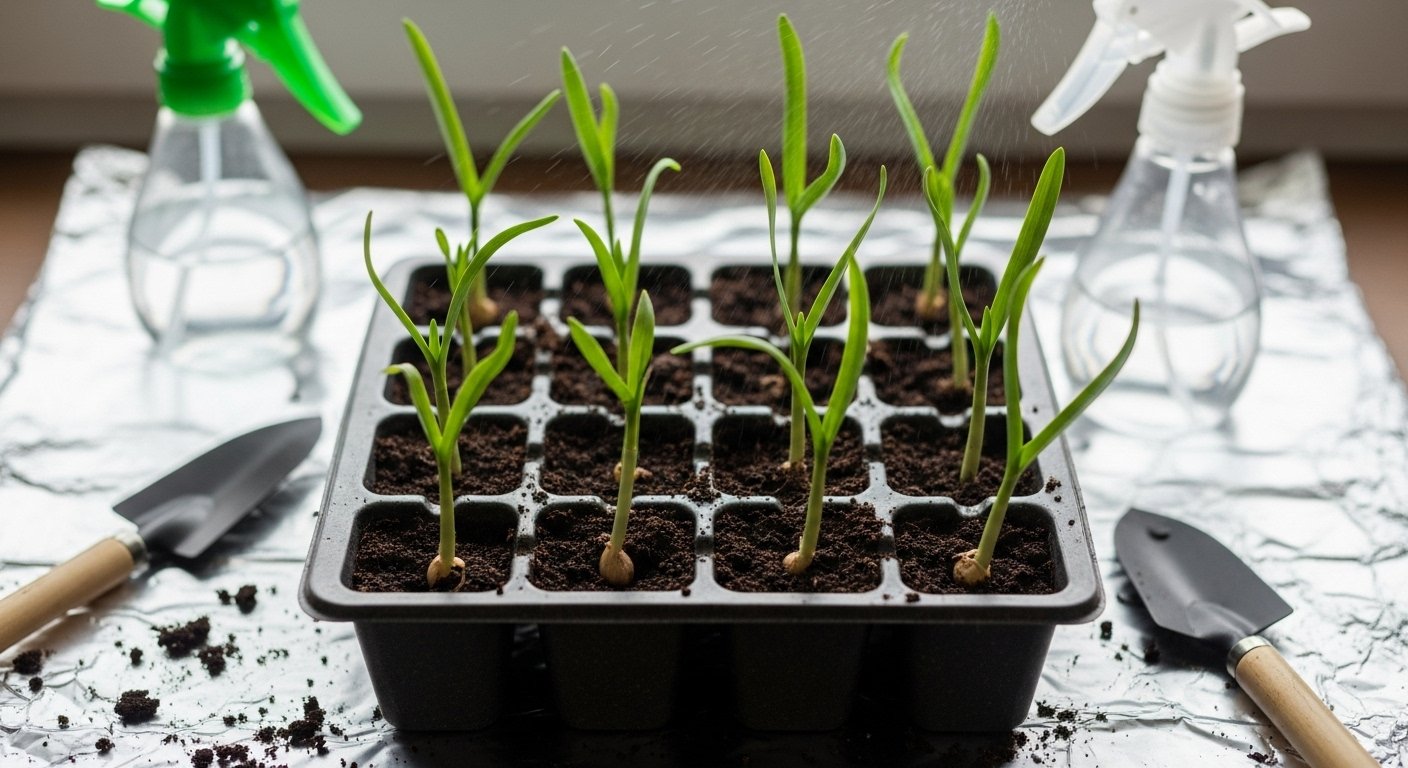
To boost light exposure even more, position reflective surfaces like aluminum foil or white poster board around your setup to bounce extra light onto young plants.
Proper spacing of seeds also makes a big difference—crowded seedlings compete for light and stretch upward. Check seed packets for recommended spacing, and thin out extras as soon as possible.
When watering, aim for even moisture by using a spray bottle or bottom-watering tray to avoid both soggy soil and dry patches. Overwatering can weaken stems, making them more prone to flop.
Temperature regulation is key: most seeds germinate well at 65–75°F, but cooler growing conditions around 60–65°F once they’ve sprouted encourage sturdier, shorter growth rather than spindly stems.
Don’t forget the growing medium—use a fine, light seed-starting mix rather than dense garden soil, as it allows roots to develop easily while holding the right amount of moisture.
Finally, start seeds indoors just a few weeks before your area’s last frost date (check local charts online). Sowing too early forces seedlings to spend too much time inside, increasing the chance they become leggy.
With the right light, space, and care, your seedlings will grow compact and healthy—ready for strong starts in your garden.
How to Fix Leggy Seedlings
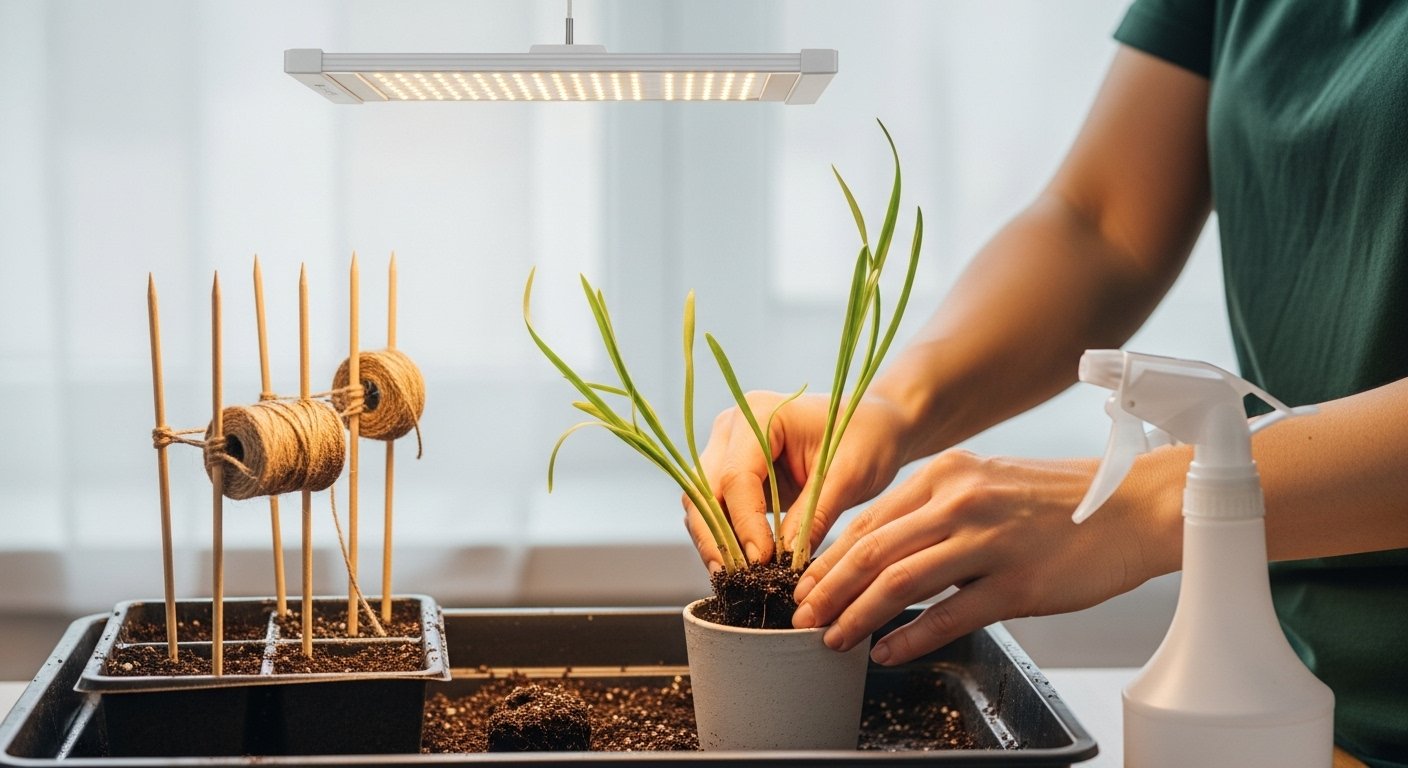
Rescuing leggy seedlings isn’t as daunting as it may seem, and with a few simple steps, you can help them grow stronger and healthier. Start by gently transplanting each seedling deeper into fresh potting soil—most seedlings can have their stems buried up to the lowest set of leaves, encouraging stronger root development and a sturdier base.
If your seedlings are too floppy to stand upright, use soft support stakes (like wooden skewers or popsicle sticks) and loosely tie the stems with twine or plant tape so they stay upright without being constricted.
Next, focus on improving their light exposure. Move the trays or pots closer to a bright window or place them under a grow light, positioning the light just a few inches above the seedlings to prevent further stretching.
If weather permits, gradually introduce your seedlings to the outdoors—a process called hardening off—by placing them outside in a sheltered, shady spot for a couple of hours a day, slowly increasing their time and sun exposure over a week or two. Avoid rushing them into full sun or wind, as sudden changes can shock fragile plants.
Common mistakes to watch out for include overwatering, which can rot young roots, and neglecting to increase airflow around seedlings; gentle breezes from a fan help them grow sturdier. Also, resist the urge to fertilize immediately after transplanting—wait until you see new growth, as too much fertilizer too soon can burn delicate seedlings.
By replanting deeply, supporting weak stems, optimizing light, and acclimating your seedlings slowly, you’ll set them up for success and stronger growth as the season progresses.
Caring for Recovered Seedlings
Once your rescued seedlings show signs of life, careful aftercare is key to help them regain strength and thrive. Start by optimizing their light—place them in a bright spot with indirect sunlight, gradually increasing exposure to direct sun over a week. Too much light too soon can stress tender seedlings, while too little may stunt their growth.
Watering is best done consistently but sparingly; check that the top inch of soil feels dry before watering, and use a spray bottle for even moisture without waterlogging, which can lead to root rot.
As seedlings develop more leaves, introduce a diluted, balanced liquid fertilizer once every two weeks to provide essential nutrients without overwhelming fragile roots.
Regularly inspect seedlings for early signs of problems like yellowing leaves, drooping stems, or spots, which could indicate pests, disease, or nutrient imbalances. Remove any debris and dead foliage to prevent fungal issues, and consider gently rotating trays every few days to promote even growth and prevent leaning.
If you notice mold or pests, act swiftly—use natural remedies like neem oil for pests or move plants to improve airflow and discourage mold. By keeping a close eye on your seedlings and adjusting their care as needed, you’ll give them the best chance to recover and develop into strong, healthy plants.
Long-Term Tips for Healthy Seedlings
Maintaining healthy seedlings over the long term involves more than just watering daily—it’s about consistent, proactive care. Start by always sanitizing your seed trays and tools before every new batch. This simple habit helps prevent the spread of diseases that can wipe out young plants.
Rotate your crops each year to avoid depleting soil nutrients and to outsmart pests and pathogens that target specific plant families. When buying seeds, choose hardy, disease-resistant varieties suited to your climate. Local garden centers and reputable online retailers typically provide good information on which varieties perform best in your region.
Another valuable practice is keeping a growing journal or digital log. Record what seeds you started, when you planted them, what fertilizer or soil mix you used, how often you watered, any pest issues, and the overall results. This recordkeeping will help you spot successful strategies and catch recurring problems early, saving you time and frustration in the future.
For ongoing education and troubleshooting, tap into resources like university extension websites, your local gardening club, or online forums such as the r/gardening subreddit. These communities are full of experienced growers eager to help. Consider following a couple of science-based YouTube channels or blogs, too, which often post detailed tutorials and updates on common seedling concerns.
By sticking to these best practices and staying curious, you’ll set yourself up for sturdy, healthy seedlings season after season.
Conclusion
Preventing and fixing leggy seedlings isn’t complicated—it just takes a bit of observation and care. Start by giving your seedlings plenty of bright, indirect light, placing them near a sunny window or using inexpensive grow lights to avoid weak, stretched stems. Rotate your trays daily to encourage even growth, and don’t be afraid to gently brush the tops of your plants or set a small fan nearby to mimic outdoor breezes, which strengthens stems.
If you notice your seedlings getting tall and spindly, act quickly by moving them to better light and replanting them deeper in fresh soil if possible. Keep watering consistent but not excessive, and avoid overcrowding so each plant has room to thrive.
The payoff for this attentive early care is huge—healthy, sturdy plants are better able to resist pests, transplant shock, and harsh weather outside. Remember, no gardener gets it perfect every time. Experiment with different lighting setups, soil types, and schedules to see what works best for you, and don’t be discouraged if some seedlings struggle along the way.
Each season is a learning experience, and your efforts now will pay off in a garden full of strong, productive plants. Stay curious, try new things, and celebrate your progress!