“`html
Introduction
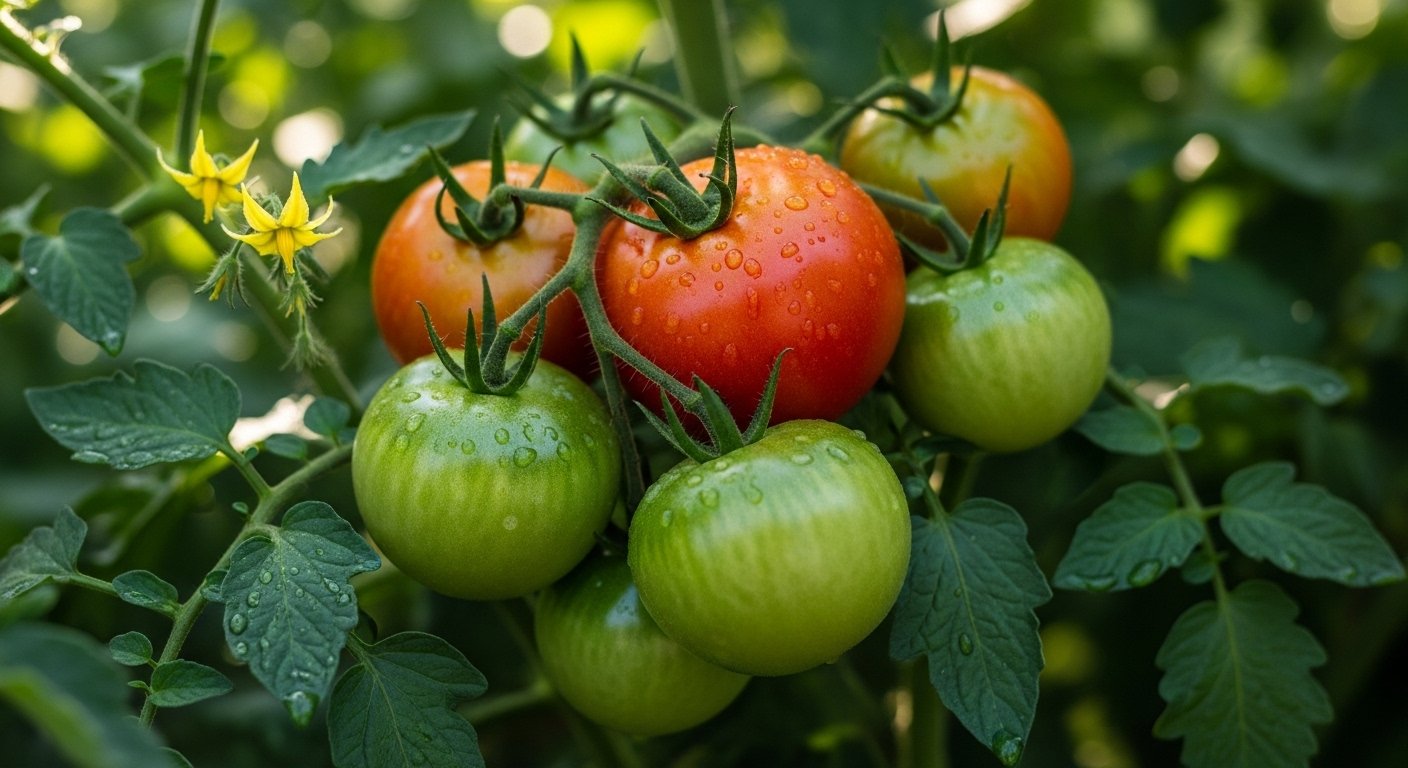
If you’re struggling with tomatoes not ripening on the vine, you’re not alone. Many gardeners and home cooks find themselves impatiently waiting as green tomatoes stubbornly refuse to turn red, especially as the growing season draws to a close or a sudden chill sets in.
Weather is a major culprit—cool temperatures, shorter days, and inconsistent sunlight can all slow down the ripening process. Sometimes, it’s not just the temperature; issues like excessive watering, dense foliage blocking sunlight, or letting too many fruits develop at once can leave your tomatoes stuck in their green phase.
This can be frustrating, especially when you’re eager for juicy, homegrown tomatoes in your next salad or sauce. The good news? You don’t have to give up on those green tomatoes just yet.
In this blog post, we’ll walk you through straightforward, real-world solutions to help coax your tomatoes into turning red—whether they’re still in the garden or have already been picked. From adjusting your watering routine to strategically pruning leaves, or using a simple household trick like ripening tomatoes indoors with a banana, these tips will give you the confidence to make the most of your harvest, right up to the last tomato.
“`
Why Tomatoes Don’t Ripen on the Vine
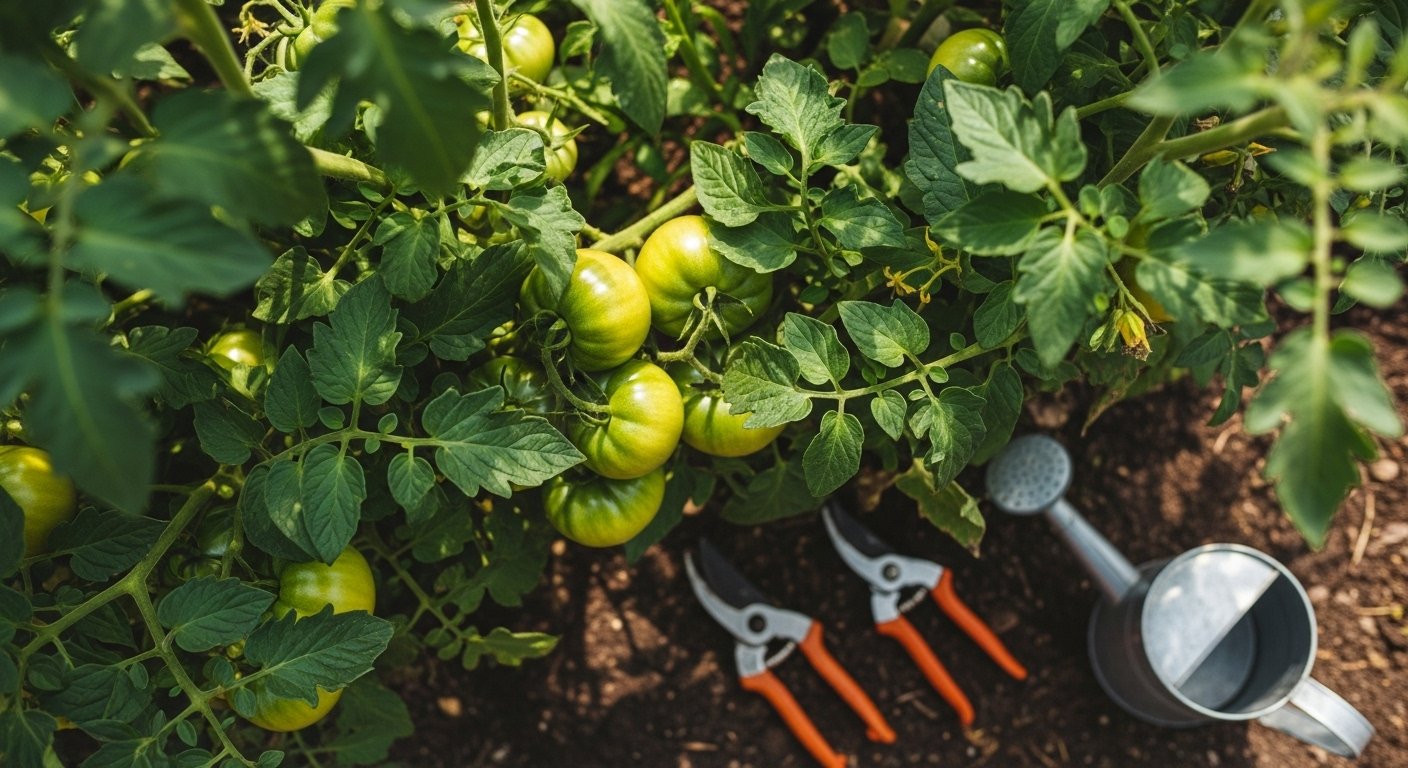
Getting tomatoes to ripen on the vine isn’t always as straightforward as it seems, mainly because several environmental factors come into play. Tomatoes require the right balance of temperature, sunlight, and stress management to move from green to red.
Ideally, daytime temperatures should be between 70°F and 85°F; if it gets hotter than 86°F or drops below 50°F, the ripening enzymes slow down or even stop working, causing stalled progress. Sunlight is crucial too, as tomatoes depend on the energy from the sun to fuel the complex chemical changes inside their fruit.
However, excessive heat combined with strong sun can stress the plant, making it divert energy to survival rather than fruit development.
The biological process of ripening is triggered by a hormone called ethylene, which sparks the breakdown of chlorophyll (the green pigment) and the buildup of lycopene and carotene—pigments that turn tomatoes red, signaling they’re ready for picking.
In real-life gardens, you might notice tomatoes that stay stubbornly green, especially toward the end of the season. This often happens because shorter, cooler days and overcast weather provide less sunlight and heat just when the plant needs a final push.
Other common causes include:
- Overcrowded plants shading each other
- Too much nitrogen in the soil, leading to excess leaf growth instead of fruit ripening
- Inconsistent watering that further stresses the plant
For gardeners, a practical tip is to prune some foliage to improve airflow and light exposure or bring nearly mature green tomatoes indoors to ripen on a sunny windowsill if frost threatens. These small tweaks can help your tomatoes cross the finish line from green to red, even when the weather isn’t cooperating.
Harvesting Green Tomatoes: What to Look For
When harvesting green tomatoes, it’s important to choose ones that are mature enough to ripen off the vine. Mature green tomatoes are generally about their full expected size for the variety, feel firm but not rock hard, and often have a slightly lighter green color with a faint blush at the blossom end.
Look for a subtle waxy sheen—mature fruit is duller than the shinier, deep green of immature ones. To avoid bruising or introducing disease as you pick, cradle each tomato in your hand and snip the stem with clean pruning shears or scissors, leaving a small bit of stem attached. Avoid pulling or twisting, as this can damage both the fruit and the plant.
Handle tomatoes gently and place them in a single layer rather than piling them, which reduces the risk of soft spots. On the other hand, skip tomatoes that are still shiny, hard, and very small, as these are unlikely to ripen once picked—they simply haven’t developed enough internal sugars or softening enzymes required for ripening.
Also, any fruit with obvious signs of rot, frost damage, or broken skin should be left behind; they’re unlikely to improve and could spread problems to healthy produce during storage. By focusing on maturity, gentle handling, and quick visual assessments, you can maximize your harvest of green tomatoes ready for finishing indoors.
Effective Indoor Ripening Methods
Ripening tomatoes indoors can be surprisingly simple with a few tried-and-true methods. Start by selecting tomatoes that are mature but still firm and showing a hint of color—they’ll ripen best.
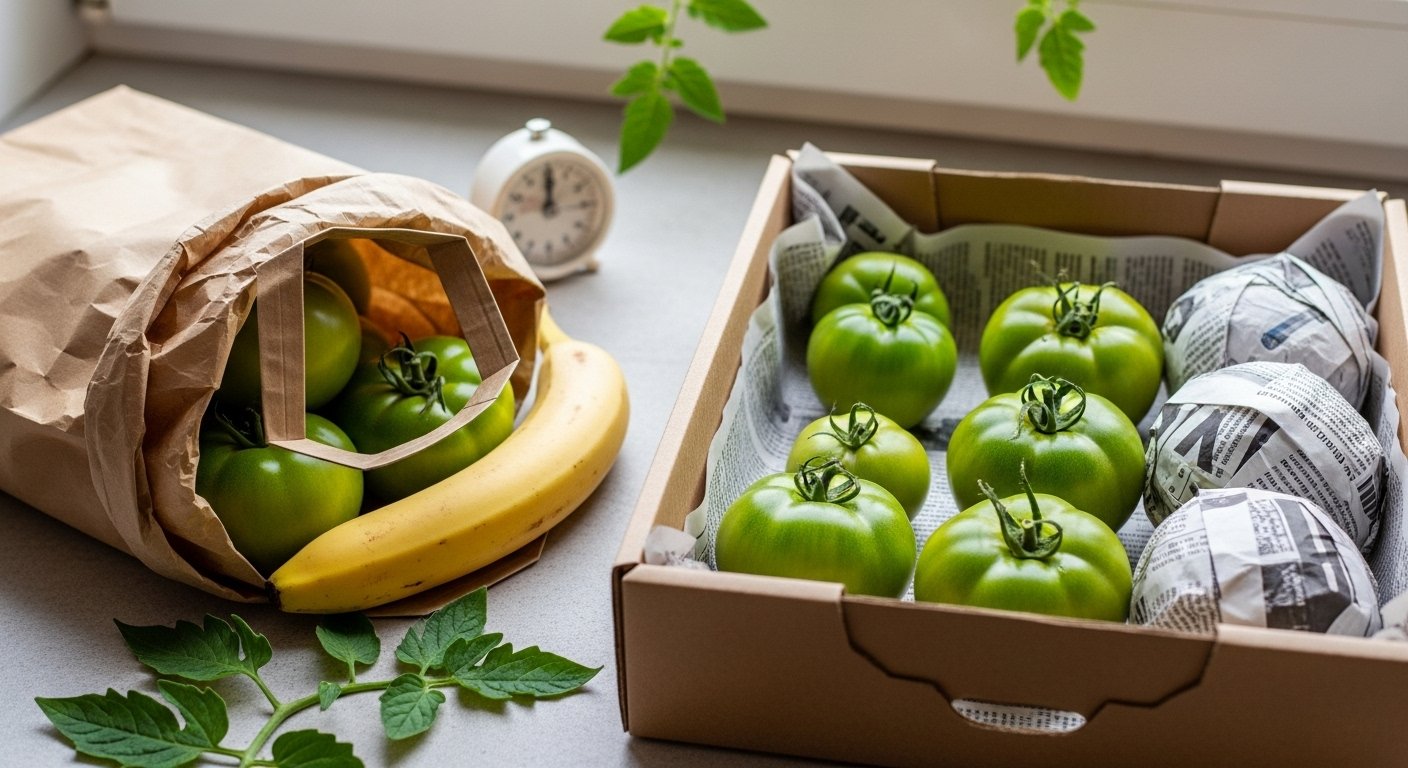
One of the easiest techniques is the paper bag method: place your tomatoes inside a brown paper bag, add a ripe banana or apple (both release ethylene gas to speed up ripening), and loosely fold the top of the bag shut.
For larger batches, use a cardboard box lined with newspaper—spread the tomatoes out in a single layer, add an ethylene-producing fruit, and cover lightly with more newspaper to trap the gases while allowing airflow.
Alternatively, wrap individual tomatoes in sheets of newspaper and place them in a box or drawer; this helps reduce the risk of bruising and keeps them clean.
Check your tomatoes daily for signs of color change and softness, and quickly remove any that show mold or soft spots to prevent rot from spreading.
For best results, keep your ripening setup at room temperature, away from direct sunlight and drafts.
Track the ripening progress by noting which tomatoes were packed first and rotate or use them accordingly—this way you’ll always have perfectly ripe tomatoes ready for your next meal.
Optimizing Conditions for Ripening
Getting the right balance of temperature and humidity is crucial for fruit to ripen properly without spoiling. Most fruits ripen best at room temperature, ideally between 65-75°F (18-24°C), because cooler temperatures can slow the process while excessive heat can cause premature softening or spoilage.
Humidity should be moderate—around 60-70%—to keep fruits from drying out and shriveling, but not so high that it encourages mold. Store fruit in a location away from direct sunlight, as sun exposure can make them too warm and cause uneven ripening or tough skins.
A countertop in a shaded part of the kitchen works well, especially when there’s good air circulation to prevent humidity from building up. Avoid sealing fruits in airtight containers or plastic bags; instead, use a fruit bowl, paper bag, or ventilated drawer.
If you notice one side of a fruit ripening faster, turn it occasionally to help it ripen evenly. For issues like shriveling, add a damp paper towel nearby (not touching the fruit) to boost humidity. If mold starts to develop, separate any overripe or damaged pieces immediately to keep it from spreading.
By fine-tuning your storage setup and keeping an eye on changes, you can enjoy perfectly ripe, flavorful fruits with minimal waste.
What to Do if Tomatoes Refuse to Ripen
If your tomatoes are stubbornly refusing to ripen on the vine, don’t worry—there’s still plenty you can do. First, try coaxing a little more color from them by picking the green tomatoes and placing them in a paper bag with a ripe banana or apple; these fruits give off ethylene gas, a natural ripening agent.
Setting tomatoes on a sunny windowsill can also help, but keep an eye on them to avoid shriveling or sun scald. Sometimes, though, the chill of fall means your green tomatoes just won’t turn red, no matter what.
This is the perfect time to get creative in the kitchen. Fried green tomatoes are a Southern classic—just slice, dip in cornmeal, and pan-fry for a tangy, crunchy treat. You can also chop them up for a zesty green tomato salsa, simmer into a flavorful chutney, or slice thinly for tart pickles that brighten any sandwich.
Embrace their unique flavor and firm texture rather than seeing them as a disappointment. At season’s end, it’s smart to accept that your remaining green tomatoes are as mature as they’ll get, so adapt your recipes and savor the fresh twist they bring to your meals.
With a little flexibility, you’ll find that unripe tomatoes can add a delicious and unexpected spark to your cooking.
Pro Tips & FAQs
For the best tomato ripening results, try grouping tomatoes by size so that similar fruits mature at a more even pace—smaller ones often ripen faster than larger ones. Removing stems before storing helps prevent bruising and stem-puncturing nearby fruit.
To speed things up, place tomatoes in a breathable paper bag with a ripe banana or apple; these fruits release ethylene gas, which encourages ripening. Typically, tomatoes take a few days to two weeks to ripen off the vine, depending on their initial color and room conditions.
Yes, even smaller tomatoes can ripen if they’ve started to change color before picking—just give them a little time on the counter away from direct sun. Frequently check your ripening tomatoes for any signs of soft spots, mold, or wrinkling. If you spot a rotten fruit, remove it immediately to prevent the spread of spoilage to healthy ones.
Remember—eating large amounts of underripe, green tomatoes can cause stomach discomfort due to solanine, a naturally occurring compound, so only sample them in moderation. If you’re ever unsure whether a tomato has gone bad, trust your senses: discard anything that smells off, feels mushy, or looks suspicious.
These simple steps can help you enjoy the best flavor and safety from your home-ripened tomatoes.
Conclusion
Successfully ripening green tomatoes at home is easier than many think—just remember a few tried-and-true methods. You can place tomatoes in a paper bag or cardboard box with a ripe banana or apple to speed things up, spread them out in a single layer in a warm, shady spot indoors, or even hang whole vines upside down in a cool basement if you have space.
Don’t be afraid to experiment—different varieties and stages of ripeness may respond better to different methods, so try a few and see what works best for your harvest. If some tomatoes just won’t ripen or it’s getting really cold, don’t toss them out; green tomatoes make delicious fried treats, salsas, or chutneys.
With a little patience and creativity, you can enjoy the fruits of your labor even after summer ends, turning every last tomato into something tasty and satisfying.