Why Grow Tomatoes in Hanging Baskets?
Choosing the best tomatoes for containers is a smart move, especially if you’re short on outdoor space or want to spice up your patio with vibrant, edible decor. But have you considered the unique advantages of growing tomatoes in hanging baskets instead of traditional garden beds or regular pots? Hanging baskets unlock a world of benefits for both beginner and seasoned gardeners.
They instantly make the most of vertical space, making them perfect for small yards, apartment balconies, or even sunny inside corners. By going up instead of out, you free up precious floor space while enjoying a lush, cascading display that truly stands out.
Hanging baskets are not just about saving space—they offer practical perks, too. Tomatoes grown off the ground are less susceptible to soil-borne diseases and common pests like slugs or cutworms, reducing the need for chemical interventions and constant monitoring. Harvesting becomes a breeze as you can simply snip ripe tomatoes right at eye level, sidestepping the usual kneeling and bending that comes with ground-level gardening. This setup adds accessibility for those with mobility concerns and makes gardening more enjoyable for everyone.
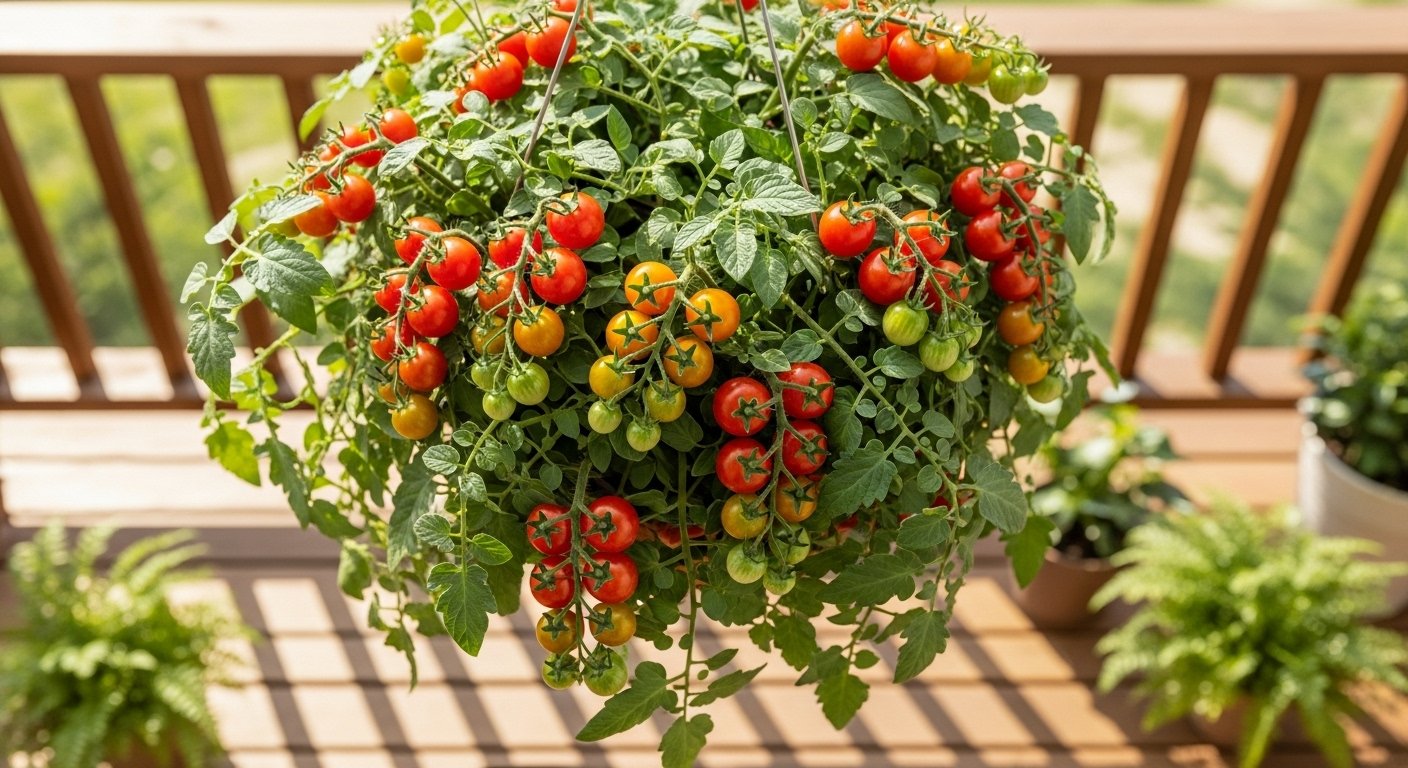
From a decor perspective, baskets brimming with tomato plants produce a show-stopping display of trailing vines, delicate yellow blossoms, and vivid fruit—transforming utilitarian vegetables into living art. By selecting compact or trailing varieties—the best tomatoes for containers—you’re also ensuring a high yield in a limited area, matched with beautiful foliage that can liven up any dull wall or fence.
Whether you want to brighten your balcony or maximize a modest patio, hanging baskets marry function and form, creating a practical and eye-catching solution for fresh, homegrown tomatoes right outside your door.
Choosing the Right Tomato Varieties for Hanging Baskets
Selecting the right tomato varieties is crucial for success when growing in hanging baskets, as these containers offer limited space and soil compared to ground planting. Compact, determinate, or trailing tomato types are your best options since their growth habits naturally suit the constraints and aesthetics of baskets.
Trailing varieties like Tumbling Tom and Cherry Falls spill gracefully over the sides, creating a lush display while producing an abundance of small, juicy cherry tomatoes. Tiny Tim and Micro Tom are both dwarf determinate varieties; their petite size makes them perfect for even the smallest baskets or balconies, and they yield small, rounded fruits with a punchy, classic tomato taste.
The Balcony cultivar is similarly compact but tends to offer slightly larger fruit, often with a sweeter flavor and a striking red hue. For color variety, Tumbling Tom comes in both red and yellow options, adding visual interest alongside tangy-sweet snacking tomatoes.
These basket-friendly types generally have a bushy or trailing habit, require less support, and mature quickly—making them great for eager gardeners or those with limited time and space.
In contrast, steer clear of large indeterminate or beefsteak varieties, as their sprawling vines and hefty fruits overwhelm basket settings and demand more nutrients and support than containers can provide. Sticking with compact or trailing options ensures a healthy, manageable plant that’s both productive and eye-catching in your hanging garden.
Essential Supplies and Container Setup
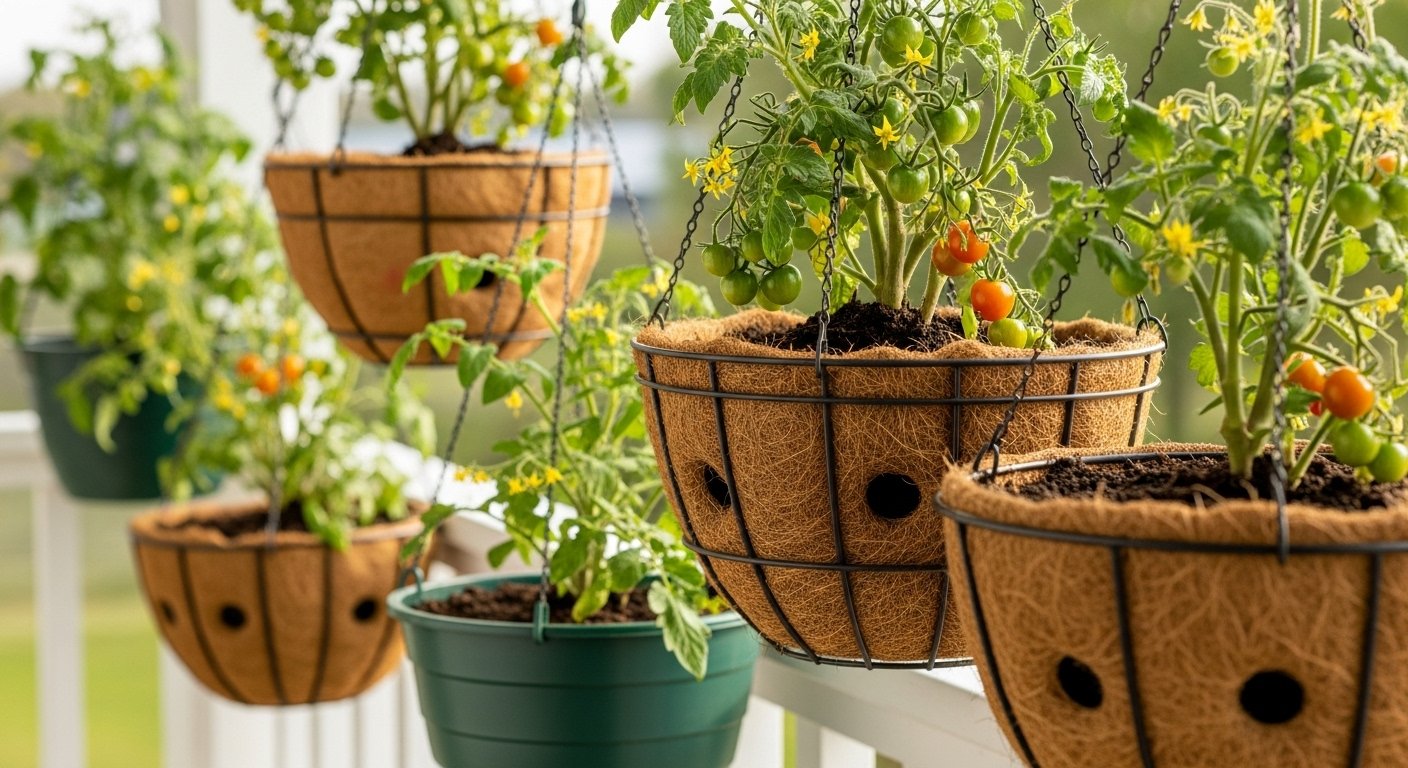
Starting with the right supplies is crucial for growing healthy tomatoes in hanging baskets. Begin by selecting a hanging basket at least 12 to 16 inches in diameter—this size gives roots enough space to spread and supports the weight of a full-grown tomato plant. Sturdy materials like plastic, metal, or coir (coconut fiber) are all solid choices, but make sure the basket can hold moist soil without deteriorating.
Drainage is key to preventing root rot, so pick baskets with several drainage holes in the base. For extra protection, line metal or wire baskets with a layer of natural coco liner or landscape fabric; this keeps soil in place while still allowing water to escape.
Next, use a high-quality potting mix formulated for vegetables; avoid digging up garden soil, as it’s too heavy and won’t drain well in baskets. Mix in a slow-release granular fertilizer before you plant—this provides steady nutrition without frequent additions, especially important in small containers.
When assembling your basket, first line it if needed, fill it loosely with potting mix (don’t pack it down), and leave about two inches from the rim to make watering easier. Before hanging, insert a small dish or saucer at the bottom to help the basket retain some moisture, or consider using a self-watering insert if you want lower maintenance.
Watering is crucial: invest in a watering can with a long, narrow spout or a lightweight hose attachment to reach hanging baskets easily. As a quick tip, check baskets daily in summer; hanging baskets dry out faster than ground containers.
With these supplies and steps, your tomatoes will have the foundation they need to thrive and produce a generous harvest, even in a small space.
Planting Tomatoes in Hanging Baskets: Step-by-Step Guide
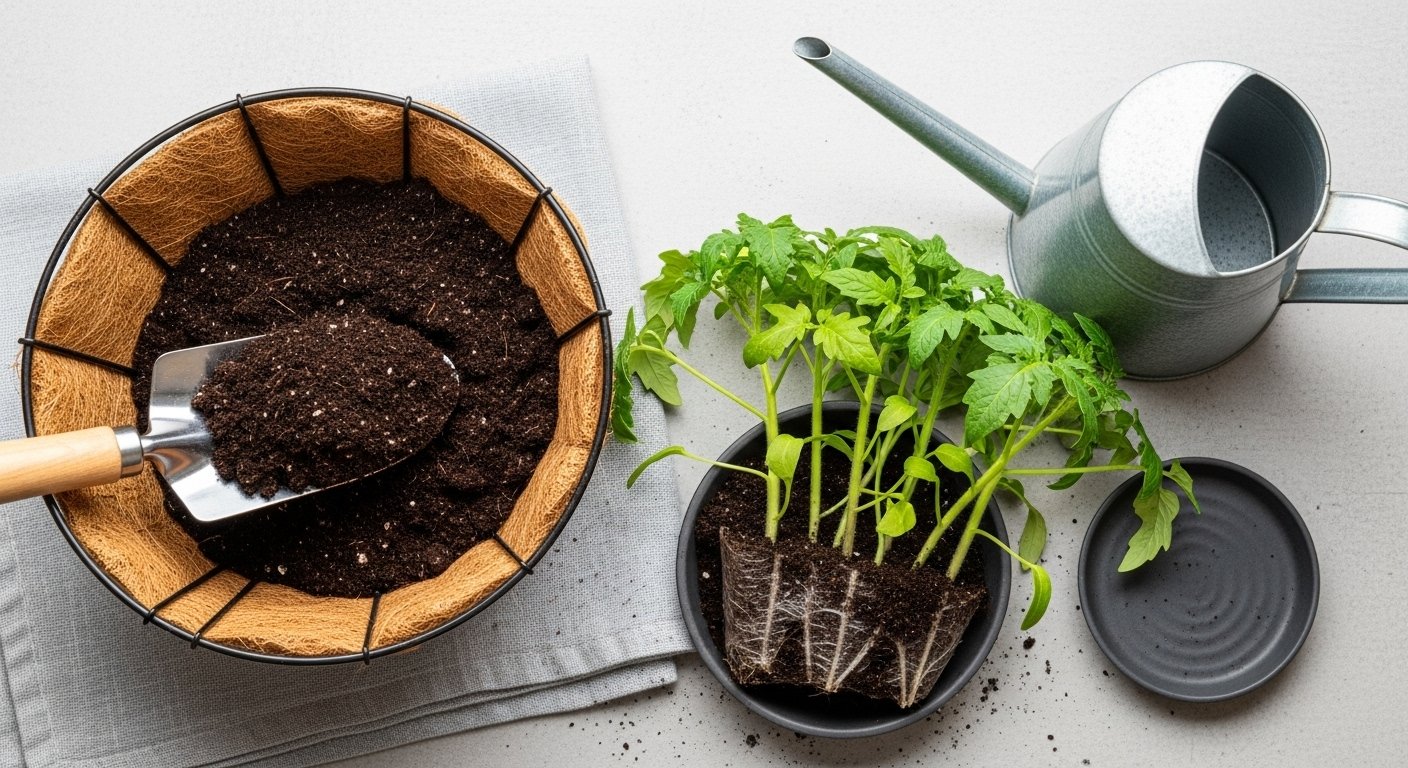
Transplanting tomato seedlings into hanging baskets is a fantastic way to save space and create an eye-catching garden feature. To get started, choose healthy seedlings with sturdy stems and select a basket at least 12 inches wide and deep to give the roots ample room.
Fill the basket with high-quality, well-draining potting mix—avoid regular garden soil, which can become compacted and harm your plants. When planting, bury the seedlings a bit deeper than they were in their original containers, leaving the bottom leaves just above soil level. This encourages new roots to sprout along the buried stems, leading to a stronger plant overall.
Be careful not to overcrowd the basket; plant only one tomato per basket, or two if they are very small or compact varieties, to prevent competition for nutrients and airflow issues that promote disease.
Reducing Transplant Shock
To minimize transplant shock, water your seedlings thoroughly about an hour before moving them. Handle them gently by their leaves rather than by delicate stems, and transplant in the early morning or on a cloudy day to avoid harsh sun exposure.
After planting, water deeply until moisture runs from the bottom of the basket, helping to settle the soil around the roots. Avoid letting the basket dry out, as hanging containers lose water quickly—check soil moisture daily, especially in hot weather.
Feeding and Watering Tips
- Start with a diluted liquid fertilizer suited for vegetables about a week after transplanting, gradually increasing the strength as the plant grows.
- Encourage strong root systems by allowing the top inch of soil to dry slightly between waterings, but never let the entire soil mass dry out.
Common Mistakes to Avoid
- Using too small a basket, which leads to crowded roots.
- Failing to water consistently, causing plants to wilt easily.
- Placing baskets in too much shade, which reduces fruit production.
By choosing good soil, spacing your plants wisely, and watering attentively, you’ll give your hanging tomato plants the best possible start for a season full of juicy harvests.
Care Tips: Watering, Feeding, and Supporting Your Plants
Keeping your hanging tomato plants thriving starts with consistent, attentive care, especially when it comes to watering and feeding routines. Because baskets dry out faster than garden beds, check soil moisture daily—press your finger about an inch deep into the soil; if it feels dry, it’s time to water.
Water slowly until you see drainage from the bottom, allowing roots to fully absorb moisture, but avoid letting baskets sit in collected water to prevent root rot. Early signs of under-watering include drooping or wilted leaves, dry, crumbly soil, and smaller fruit development, while yellowing leaves, mushy stems, and persistent soggy soil indicate over-watering.
During hot spells, your plants may need watering every day or even twice daily, especially if located in windy or sunny spots, so be flexible and observe your baskets closely.
Alongside water, tomatoes are heavy feeders and need regular nutrition—use a balanced liquid fertilizer or a tomato-specific feed every 10-14 days, following label instructions for dilution and application. Slow-release granular fertilizers can also be mixed into the soil at planting time but supplement with liquid feeds when fruits begin to set for best results.
Always fertilize when the soil is moist to avoid root burn, and try to pour the fertilizer directly onto the soil, not the foliage.
As your plants grow and vines begin trailing over the sides, consider support structures like hanging basket cages, soft ties, or lightweight trellises. These not only keep stems from snapping under the weight of fruit but also improve airflow, reducing the risk of disease.
In windy areas or with especially prolific trailing varieties like ‘Tumbling Tom’, support can make the difference between a bountiful harvest and broken branches.
With attentive watering, timely feeding, and proper support, your hanging tomato baskets will reward you with lush, healthy growth and delicious fruit all season long.
Dealing with Pests and Common Problems
Growing tomatoes in containers comes with its own set of challenges, especially when dealing with pests and common issues. Aphids, whiteflies, and spider mites are frequent invaders—you might notice sticky residue, discolored leaves, or tiny webs. Fungal diseases like powdery mildew and early blight can also appear, particularly in humid or crowded conditions.
For a chemical-free approach, try releasing beneficial insects like ladybugs, routinely wiping leaves with a mild soap-and-water solution, or making a DIY spray using water, a few drops of dish soap, and neem oil.
Improving airflow is essential: space out your plants so leaves don’t touch, prune any dense growth, and rotate pots every few days if they’re close to a wall. Consider mulching the surface with straw to keep soil moisture even and deter soil-borne fungal spores from splashing up.
Troubleshooting Common Issues
- Blossom End Rot: This appears as dark, sunken spots at the base of fruits and is often caused by inconsistent watering or calcium deficiency. Prevent it by watering evenly and adding crushed eggshells or calcium supplements to the soil.
- Wilting: Wilting can signal overwatering, underwatering, or root rot. Check soil moisture with your finger before watering, and ensure pots have drainage holes.
- Yellowing Leaves: Yellow leaves might indicate nutrient imbalances, too much or too little water, or simply old foliage. Prune off yellowed leaves and feed plants with a balanced organic fertilizer every couple of weeks.
Regularly inspect your plants from top to bottom, wipe off any pests, and promptly remove diseased leaves. Consistent, gentle care makes a big difference—spot and treat issues early to keep your container tomatoes thriving.
Harvesting and Enjoying Your Basket Tomatoes
Knowing exactly when to pick your basket tomatoes can make all the difference in taste and texture. Look for vibrant, fully colored fruit that feels slightly firm but gives just a bit when squeezed—this means it’s ripe and ready to harvest. Avoid pulling tomatoes off the vine, as this can damage the plant and hinder future growth.
Instead, use clean scissors or garden shears to snip the stems, which encourages more flowers and fruit to form. If your basket is overflowing, don’t let those vine-ripened gems go to waste—get creative!
Ways to Enjoy Your Fresh Basket Tomatoes
- Freshly picked tomatoes shine in summer salads, sliced onto sandwiches, or tossed with olive oil and basil for a quick bruschetta.
- For a simple weeknight dinner, try roasting cherry tomatoes with garlic and tossing them over pasta.
- Blend ripe tomatoes into homemade salsa for a fresh and flavorful treat.
Storing and Sharing Your Harvest
Tomatoes store best at room temperature, out of direct sunlight. If you have a large harvest, consider canning, freezing, or making small-batch sauces to preserve their flavor.
Sharing garden-fresh tomatoes also brings a smile—arrange a mix in a basket with a note and gift them to a neighbor or friend. Whether you’re enjoying them in a caprese salad, topping grilled bread, or simply savoring them straight from the vine, basket tomatoes offer endless ways to celebrate the flavors of your harvest.