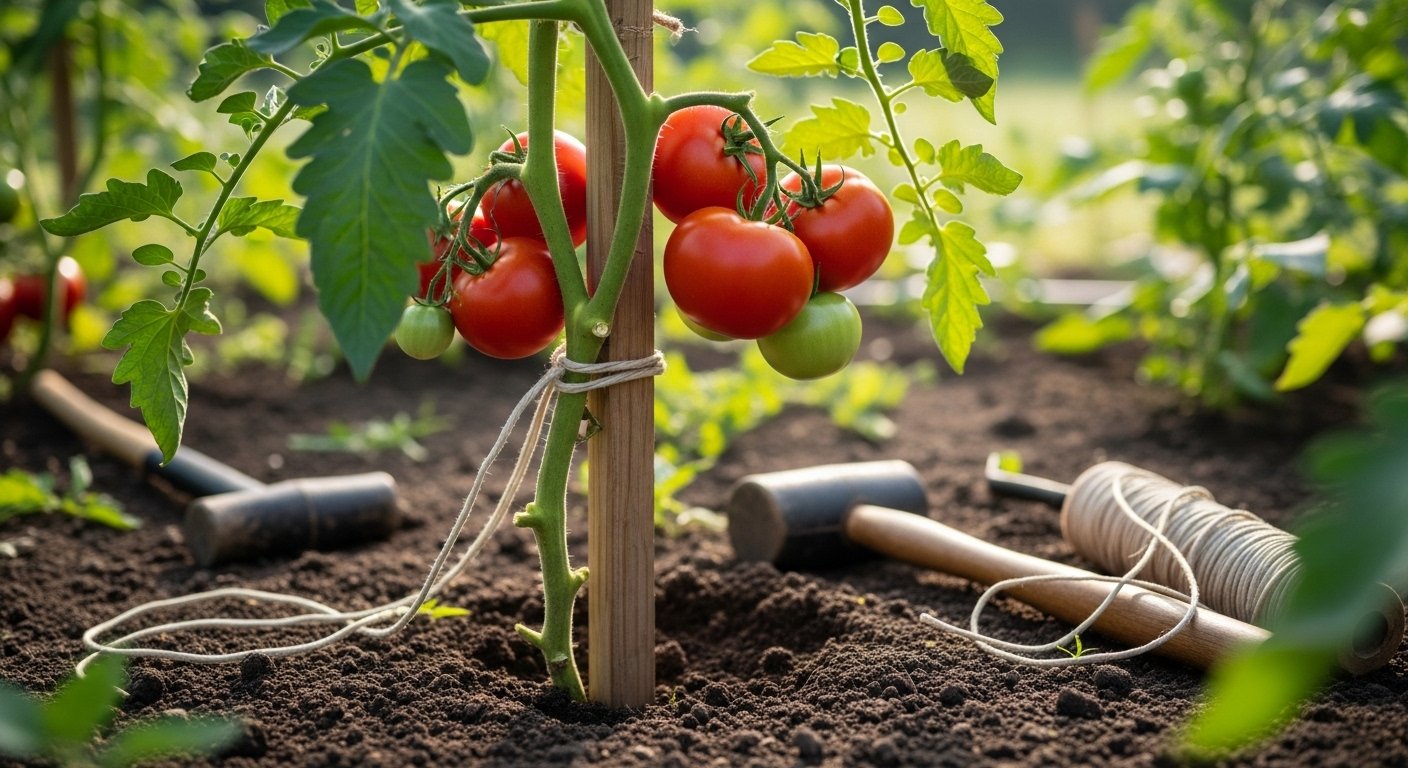
Why Support Tomatoes?
If you’ve ever grown tomatoes, you’ve likely wondered about staking them and whether it’s really necessary. Supporting your tomato plants isn’t just about keeping things neat—it’s essential for strong, healthy growth, maximizing your harvest, and making your job as a gardener much easier.
When tomato plants receive good support, they develop sturdier stems that can hold heavier fruit, which means less breakage and disappointment come harvest time. Well-supported branches also allow for better airflow, drying leaves more quickly after rain or watering, which significantly reduces the risk of fungal diseases like blight and mildew. Plus, with fruit lifted off the soil, there’s less chance of rot and fewer pests nibbling away at your precious tomatoes.
On the other hand, letting tomato plants sprawl on the ground opens your garden up to a host of issues. Sprawling vines can become tangled, making it difficult to spot ripening fruit or figure out where to prune. Tomatoes lying on the soil are more prone to splitting, rotting, and being snacked on by slugs and other critters. Another downside is that low-hanging fruit and dense foliage often trap moisture, creating the perfect environment for fungal diseases to take hold.
This is why most gardeners choose to support their tomatoes, typically using one of two main methods: staking or caging. While both approaches have their fans, staking tomatoes is often preferred for indeterminate varieties because it keeps plants upright, improves sun exposure, makes harvesting easier, and maximizes garden space. By staking, you set your tomato plants up for a healthier, more productive season.
Know Your Tomato Types: Determinate vs. Indeterminate
Understanding the difference between determinate and indeterminate tomato plants is key to a successful harvest. Determinate tomatoes, sometimes called “bush” types, grow to a set height—usually 3 to 4 feet—stop growing, and produce all their fruit in a short window.
Because of this compact growth habit, they’re perfect for small gardens or containers. Determinate varieties don’t need heavy-duty support; simple tomato cages or small stakes generally do the trick since the plants stay manageable and their stems are less likely to snap under heavy fruit loads.
In contrast, indeterminate tomatoes keep growing, flowering, and fruiting throughout the season, often reaching heights of 6 to 10 feet or more. These vining varieties need sturdy, tall support systems that can handle both their size and the weight of continuous fruit: think strong cages, trellises, or tall stakes anchored firmly in the ground.
Gardeners growing indeterminate types, such as popular heirlooms or cherry tomatoes, should plan to check and tie up the vines regularly as the season progresses.
When deciding which support to use, first check your seed packet or plant label for “determinate” or “indeterminate.” Use lightweight cages or short stakes for determinate types and invest time in installing taller, stronger supports for indeterminate varieties.
Picking the right support not only keeps your plants healthy and upright but also makes harvesting easier and reduces the risk of disease by keeping fruit off the ground.
Staking vs. Caging vs. Trellising: What’s Best?
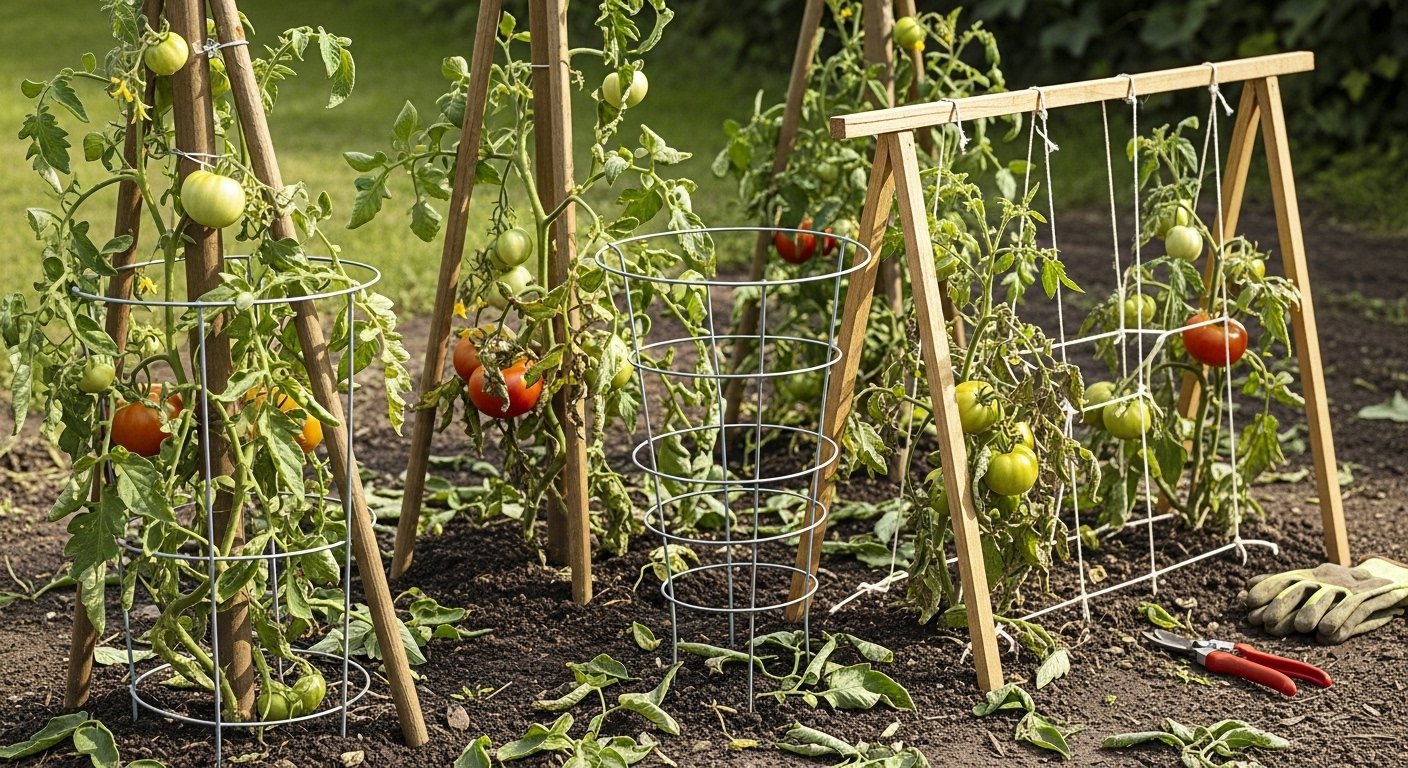
When it comes to supporting your tomato or climbing vegetable plants, staking, caging, and trellising each have unique pros and cons that could make one a better fit for your garden than the others.
Staking is the simplest and most space-saving method—just drive a sturdy pole into the ground near each plant and tie the main stem as it grows. It’s quick, budget-friendly, and works well for compact gardens, but it can require frequent tying and may not offer enough support for heavy fruit or sprawling varieties.
Caging, by contrast, wraps plants with a wire or metal cylinder, letting stems lean naturally while still getting support. This method requires less attention once in place and is great for bushy or determinate tomatoes. However, large cages can be bulky, costly, and hard to store—plus, reaching ripe fruit deep inside may be tricky.
Trellising involves using horizontal or vertical frameworks to guide multiple plants upward with strings, netting, or wooden slats. While trellising is the most labor-intensive upfront, it’s perfect for maximizing air circulation and sunlight in bigger plots, can boost yields, and makes harvesting easy since fruits are visible and off the ground. However, it needs more space and sturdy installation to handle the weight of mature plants.
For small urban gardens or container setups, staking or compact cages are ideal due to their minimal footprint. If you grow lots of indeterminate or vining plants and have some room to spare, a strong trellis system pays off in increased output and easier harvests.
Ultimately, choose your support based on your space, time, and how many plants you grow—sometimes, mixing methods is the best way to support a thriving and manageable home garden.
Choosing and Installing the Best Tomato Stakes
When it comes to keeping your tomato plants upright and thriving, the type of stake you choose can make a big difference. Wooden stakes, often made from sturdy hardwoods, are affordable and easy to find but can rot after a few seasons. Bamboo stakes are lightweight, natural-looking, and generally last a little longer, while metal stakes—usually steel or coated rebar—provide maximum strength and can be reused year after year. Commercial tomato stakes often come in specialized designs like spiral, cage-shaped, or collapsible versions, tailoring support to different plant varieties and garden spaces.
No matter which material you pick, your stake should be at least 6 to 8 feet tall to accommodate growth and strong enough to withstand wind and the weight of heavy fruit. Place your stakes before planting or very soon after to avoid disturbing delicate roots later; set them 3 to 6 inches from the seedling, on the side where sunlight or wind is strongest for extra stability.
To install, drive the stake about 12 inches deep into the soil using a mallet for wood, bamboo, or metal, making sure it stands upright. As the tomato plant grows, loosely tie the main stem to the stake with soft garden twine, fabric strips, or plant clips, leaving enough room for the stem to expand—never use wire or anything that might cut into the plant. Check ties every few weeks, adjusting and adding as needed to keep your plant supported.
By planning ahead and choosing the right stake, you’ll set your tomatoes up for a strong, productive season.
How to Stake Tomato Plants: Step-by-Step
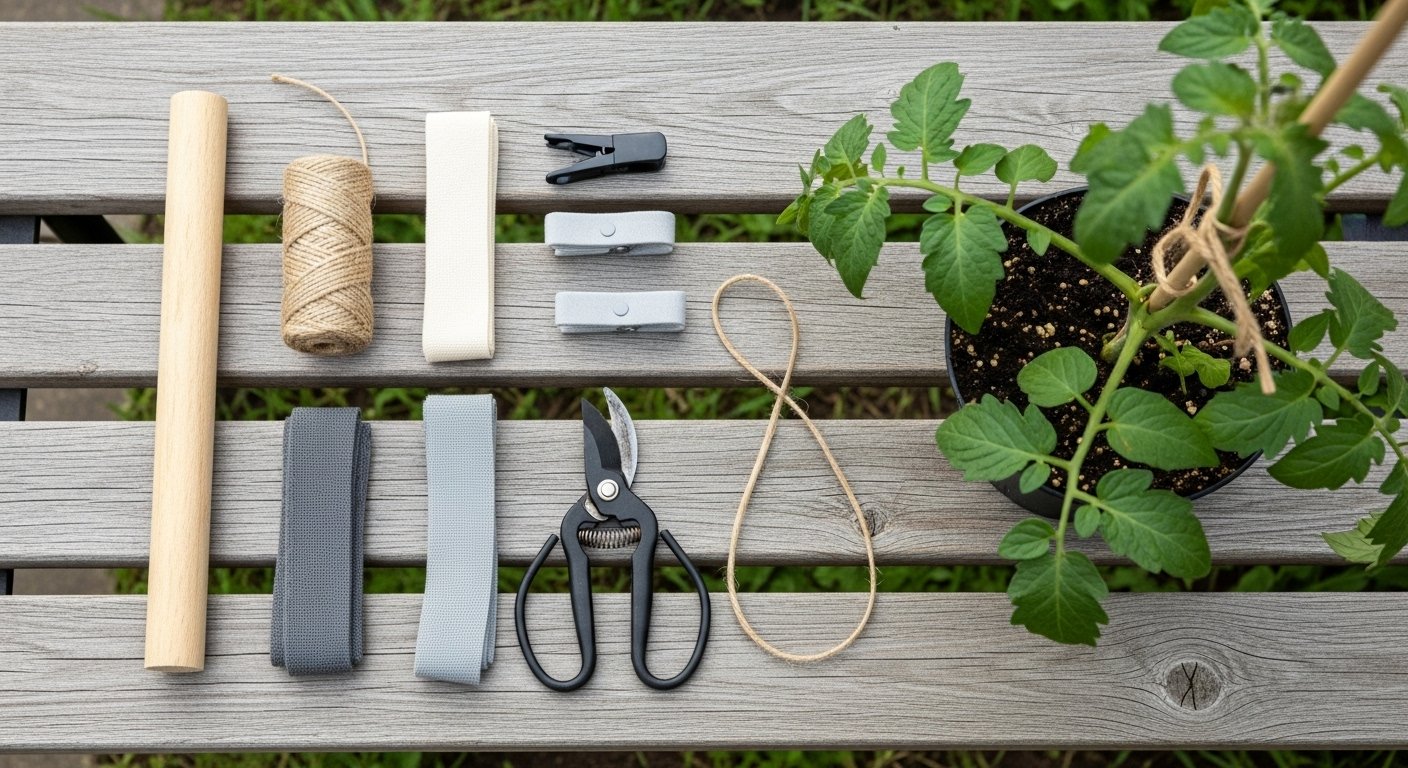
Staking your tomato plants is an easy way to keep them upright, healthy, and productive all season. Start by choosing sturdy wooden or metal stakes, about 6-8 feet tall, and drive each one into the ground 3-4 inches from the base of your plant, being careful not to damage the roots.
As your tomato grows, gently tie the main stem to the stake using soft materials like garden twine, cloth strips, or even old pantyhose—these are flexible enough to prevent cutting into the stem as the plant sways and thickens.
Make the first tie when the plant is about 12 inches tall, then add new ties about every 8-10 inches up the stem as the plant gains height. Always tie in a loose figure-eight: one loop around the stake and the other around the stem, so the plant can move a little without breaking.
Check your ties weekly, especially after storms or rapid growth; loosen or retie if you notice any pinching. Prune off side shoots or ‘suckers’ regularly to encourage the plant to focus energy on growing fruit and staying manageable.
Throughout the season, keep the area under your tomatoes tidy, removing any yellow leaves and debris to prevent disease. With this steady care and gentle support, your tomato plants will grow strong and produce a healthy, easy-to-harvest crop.
Pruning for Healthier, Heavier Yields
Pruning plays a crucial role in getting the most from your staked tomato plants, especially when it comes to both plant health and the weight of your harvest. By removing suckers (the small shoots that sprout between the main stem and branches), you help indeterminate varieties focus their energy on growing larger, juicier fruit rather than excess foliage.
For these tall, vining plants, start pruning when suckers are about 2 to 4 inches long—just pinch them off with your fingers or use sterilized scissors. Additionally, snip away lower leaves near the soil to keep splash-up diseases at bay and boost air circulation, which cuts down on fungal issues.
On the other hand, determinate tomato plants, which grow to a set height and produce fruit all at once, benefit from minimal pruning—just remove any leaves that touch the soil and occasional suckers low on the plant. This targeted approach prevents overcrowding and helps sunlight reach ripening fruit.
The result is a well-ventilated, tidy tomato patch where fruit matures evenly, reducing the risk of disease and producing a bounty of top-quality tomatoes. Simple, regular pruning can make all the difference between a tangled mess and a thriving, productive garden.
Common Problems and Pro Tips for Staking Success
Many gardeners run into issues with staking, like tying branches too loosely or too tightly—both can cause problems. Loose ties might let plants flop in the wind, while tight ties can cut into stems and restrict growth. The type of stake matters, too: weak, undersized stakes can snap or bend, leaving plants vulnerable.
If you’re growing heavy fruit (think tomatoes or melons), double up on support and use wide, soft ties to avoid bruising the stems. A classic mistake is forgetting regular checks; ties can constrict as plants grow, and stakes can shift after storms. Set a weekly “maintenance walk” to inspect your supports and adjust as needed.
Facing strong winds? Angle stakes to brace against the prevailing direction and use multiple stakes for larger plants. Disease is another challenge; damp ties or stakes can harbor pathogens, so opt for weatherproof materials and space plants for good airflow.
For an expert trick, use removable “figure eight” loops for ties—the twist cushions stems while keeping them secure, and it’s easy to loosen as the plant grows. Mulch around the base to prevent weeds and help keep fruit off the soil. Finally, rotate stake positions each year to reduce disease buildup in the soil—a small change with big results.
With thoughtful staking and a little routine care, you’ll not only protect your plants but can also look forward to healthier, more abundant harvests.