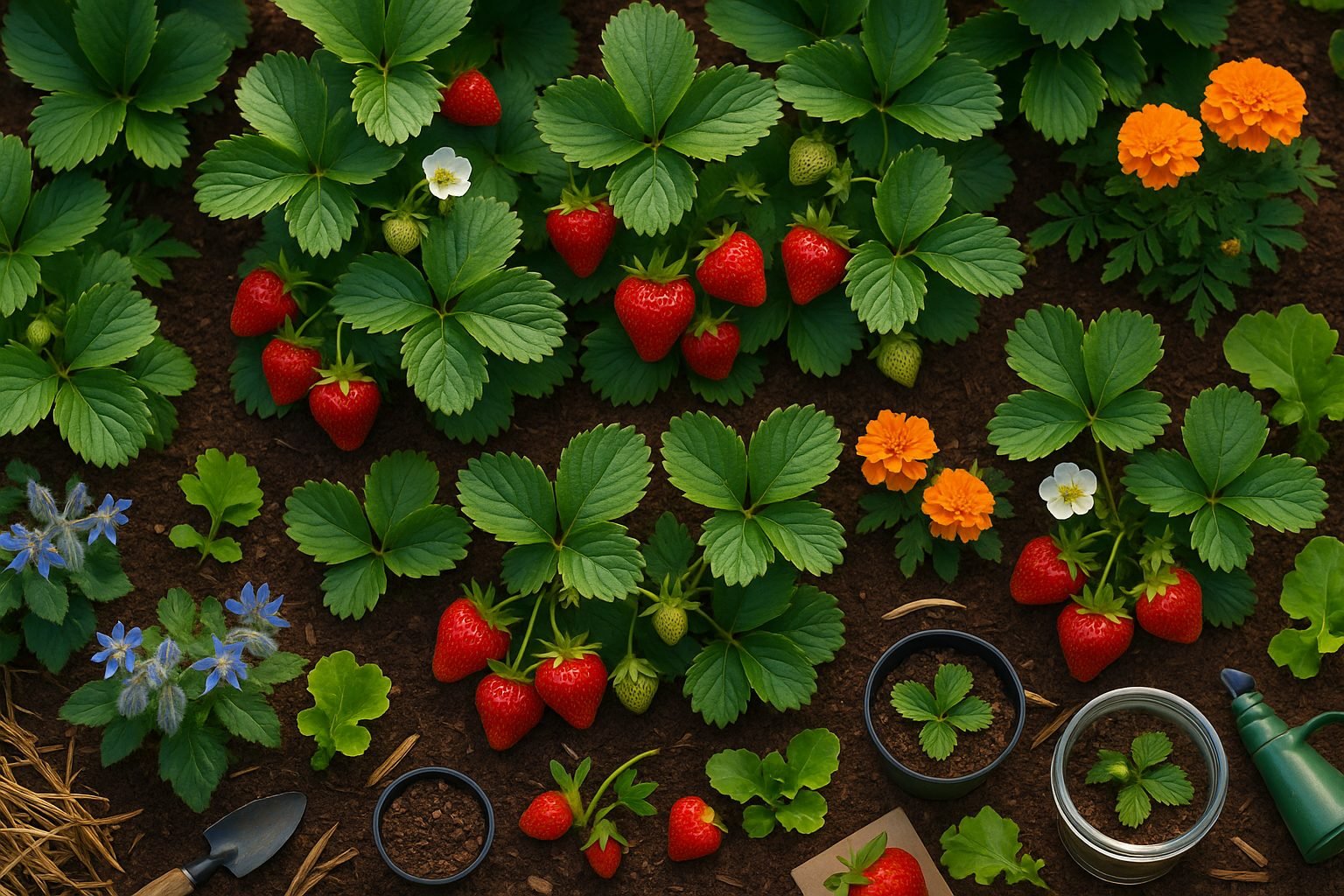
What is Companion Planting for Strawberries?
If you’ve ever wondered what not to plant near strawberries, you’re in the right place. Companion planting is a time-tested gardening strategy where you grow certain plants together to help them thrive. For strawberries, this technique isn’t just clever—it’s essential.
By choosing the right strawberry neighbors, you can naturally reduce pests, bolster plant growth, and even boost the sweetness and flavor of your fruit. For example, planting aromatic herbs like basil nearby can repel harmful insects, while lettuce offers ground cover that locks in soil moisture.
On the flip side, placing the wrong plants near your strawberries—like certain types of cabbage or members of the nightshade family—can open the door to disease or poor harvests.
In this article, you’ll learn about the best companions for your strawberry patch, which plants to avoid, and practical tips to set your garden up for a delicious, healthy harvest. Whether you’re a seasoned gardener or a newbie, understanding what not to plant near strawberries can make all the difference in your growing season.
Best Companion Plants for Strawberries
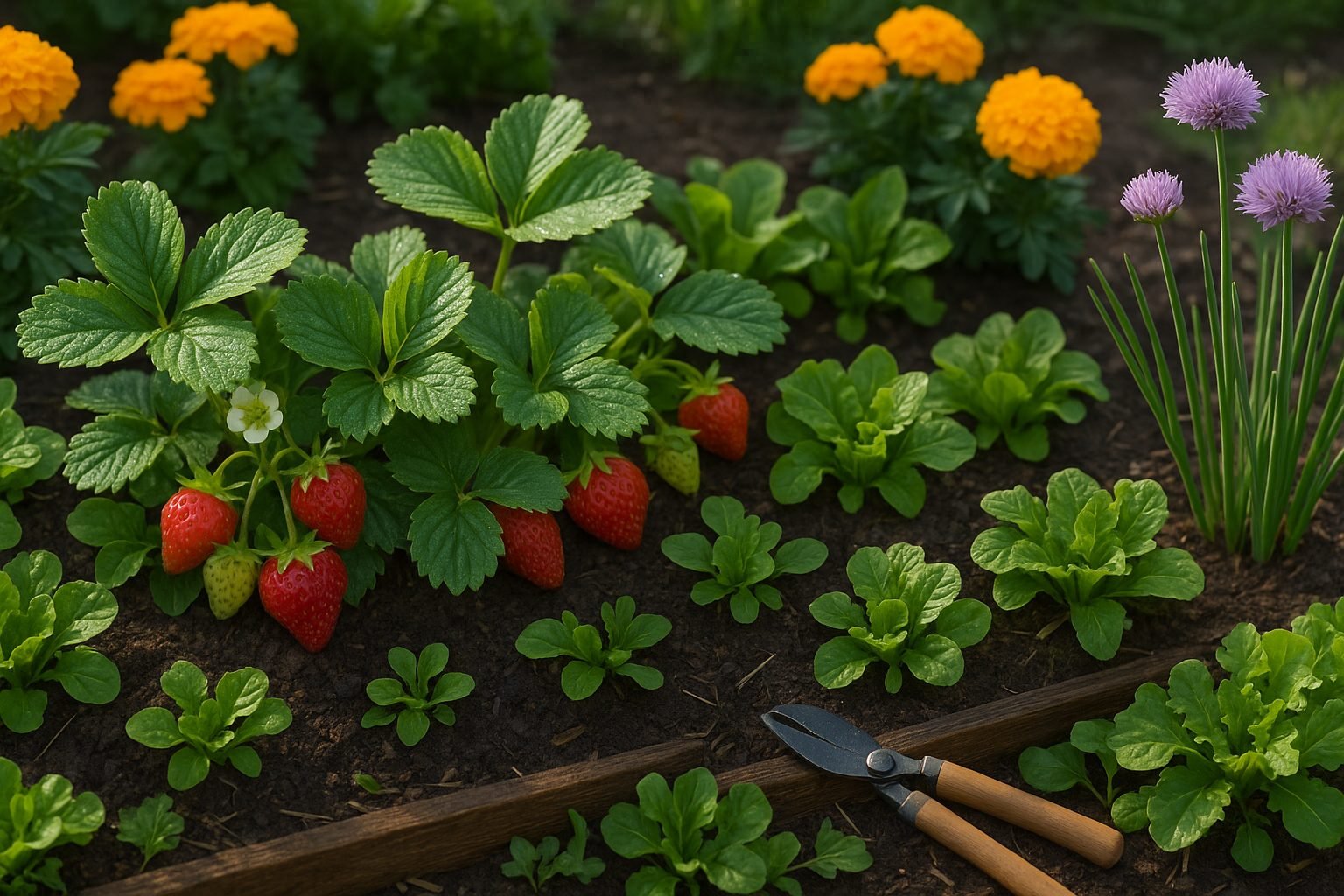
Pairing strawberries with the right companion plants can lead to healthier plants and better harvests. Several options stand out for their proven benefits.
Leafy greens like lettuce and spinach make excellent strawberry neighbors. Their low-growing leaves help smother weeds and retain soil moisture, creating a cool microclimate that strawberries love.
Alliums—such as onions, garlic, or chives—act as natural pest repellents. They release sulfur compounds that deter troublesome insects like aphids and slugs. Simply plant them in a border around your strawberry patch or intersperse a few bulbs throughout the bed.
Borage is a fantastic companion, attracting bees for improved pollination and repelling strawberry-eating pests like worms. Plus, it’s said to enhance strawberry flavor when grown nearby. Sow borage seeds sporadically around your strawberry plants for easy integration.
Marigolds are another favorite, thanks to their bright blooms that keep nematodes and other pests at bay. Position them at the corners or edges of your strawberry bed for a cheerful, protective barrier.
Herbs like sage and thyme further boost this natural defense system. Both have aromatic foliage that confuses and deters flying pests, while their compact habit won’t crowd your strawberries. Try tucking small thyme or sage plants between strawberry rows or at the garden’s edge for a fragrant, multi-beneficial display.
Garden Arrangement Tips
When arranging your garden, think layered:
- Place strawberries in the center or in rows.
- Plant taller alliums near the borders.
- Interplant marigolds or borage for color and function.
- Slot in herbs wherever space allows.
Rotate companions each season to keep pests guessing and ensure your soil stays healthy. With these smart combinations, you’ll cultivate a productive strawberry patch and create a thriving ecosystem that keeps pests in check and supports pollinators—all without resorting to chemicals.
Herbs That Pair Well With Strawberries
Pairing strawberries with the right herbs can not only boost their flavor but also improve the health of your garden. Thyme is a great companion for strawberries, as it repels destructive worms and attracts pollinators like bees, which are vital for producing juicy fruits. Simply plant thyme around the borders of your strawberry patch or intersperse it between plants.
Sage is another helpful herb, known for warding off pests like slugs and beetles that often target strawberry plants. It doesn’t compete for nutrients or space, so you can tuck sage plants among your strawberries for a pest-resistant boost.
Dill brings its own set of benefits, attracting beneficial insects like hoverflies and ladybugs that prey on aphids, which can harm strawberry plants. Consider planting dill just upwind to let its aroma carry through the patch, encouraging natural pest control.
Borage is perhaps the strawberry’s best friend in the herb world; its vibrant blue flowers are bee magnets, and its deep roots help bring up nutrients from the soil, subtly enriching the area. Interplant borage directly with strawberries, as the two grow well together. The borage’s leaves can even be chopped and used as mulch after the season.
Mixing these herbs with strawberries not only promotes healthier, more productive plants but also creates a more beautiful and fragrant garden, turning your berry patch into a thriving ecosystem. Remember to leave enough space for each plant to ensure good airflow and prevent overcrowding, as healthy herbs encourage healthy strawberries!
Plants to Avoid Near Strawberries
When planning your strawberry patch, it’s important to be mindful of the plants growing nearby, as certain species can hinder your strawberry plants’ health and productivity.
Members of the cabbage family—such as broccoli, cauliflower, kale, and Brussels sprouts—should be kept at a distance because they compete heavily with strawberries for nutrients and may attract pests like aphids and slugs that can also harm strawberry plants.
Tomatoes, eggplants, and peppers—popular nightshades—pose another risk, as they are susceptible to verticillium wilt, a soil-borne disease that can devastate strawberries if it spreads.
Strong-flavored alliums, including garlic, onions, and chives, may also suppress strawberry growth by releasing compounds into the soil that inhibit root development.
To keep your strawberries healthy, plan to leave at least 18–24 inches of space between strawberry rows and any of these less-compatible plants. Rotate your crops yearly to avoid a buildup of soil pathogens, and consider using physical barriers or dedicated raised beds to separate strawberries from unfavorable neighbors.
A little advance planning not only reduces disease risks and competition for resources but also helps your strawberry patch thrive and produce more flavorful fruit throughout the season.
Companion Planting Strategies for a Healthy Strawberry Patch
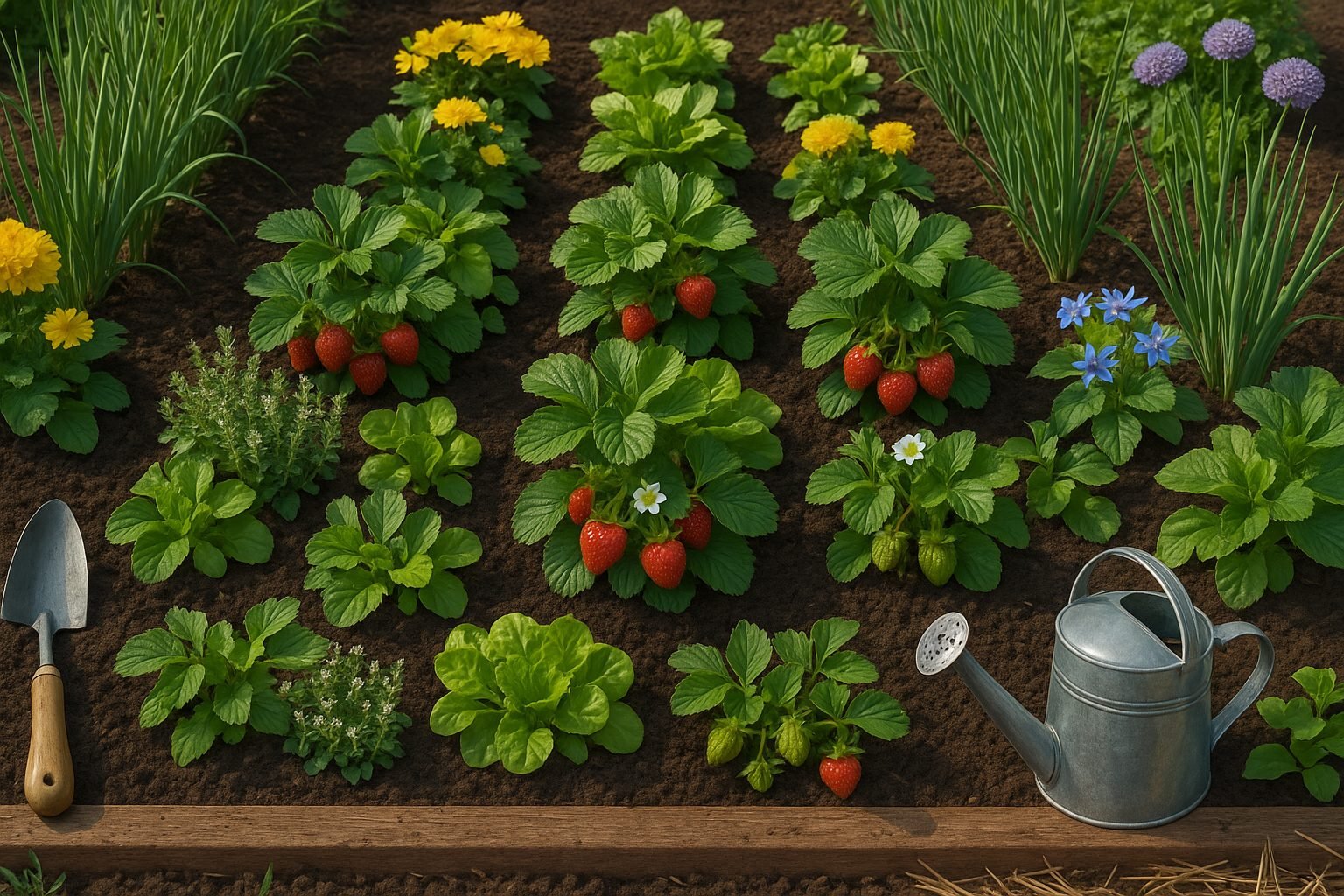
Creating a thriving strawberry patch often starts with smart layout and companion choices, whether you’re planting in garden beds or containers.
Garden Bed Planting
For garden beds, arrange strawberries in raised rows or wide mounds with enough space—about 12 to 18 inches—between plants to ensure good airflow, which helps prevent disease. Interplant low-growing companions like thyme or lettuce between strawberry rows to fill bare soil, conserve moisture, and naturally suppress weeds.
Container Planting
In containers or grow bags, mix strawberries with bushy herbs like basil or chives, which repel pests such as aphids, along with marigolds that discourage nematodes and beetles.
Succession Cropping and Rotation
For ongoing health, practice succession cropping by staggering the planting of quick-growing leafy greens—sow radishes or spinach early, harvest them before strawberries spread out, then replace them with basil or borage as warm weather arrives. Rotate your patch each year to prevent soil-borne diseases—move strawberries and their companions to a different part of the garden, and plant legumes like bush beans in last year’s strawberry spot to replenish nitrogen.
Sample Companion Plans
- Classic Trio: Plant strawberries as your main crop, tuck in spinach between them in early spring, and use bush beans as a summer/fall follow-up.
- Container Combo: Pair three strawberry plants with a trailing nasturtium at the edge and a cluster of chive bulbs in the center, creating a mini-ecosystem that manages pests and looks beautiful.
By mixing layouts, staggering crops, and rotating beds, you’ll enjoy lush, productive strawberry patches and tackle many common garden problems before they start.
Additional Tips for Successful Strawberry Companion Planting
To make the most of strawberry companion planting, it pays to give your patch a little extra TLC. Regular mulching is a game changer—not only does it keep the soil moist, but it also suppresses weeds and prevents fruit rot by keeping berries off the damp ground. Straw or pine needles are popular mulch choices for strawberries.
Water consistently, especially during fruiting season, aiming for about an inch per week. Avoid overhead watering to minimize fungal issues; instead, use drip irrigation or a gentle soaker hose. Keep an eye out for pests like slugs or aphids by inspecting leaves and fruit often. Encourage beneficial insects or use natural deterrents like crushed eggshells around plants.
For soil health, enrich your patch with compost or well-aged manure before planting, and consider rotating crops each season to prevent disease buildup. Strawberries thrive in slightly acidic, well-drained soil, so a simple pH test and minor soil amendments can go a long way.
Fertilize lightly in early spring and after the first harvest, but don’t overdo it—excessive nitrogen can promote leafy growth at the expense of fruit. One common mistake is overcrowding companion plants, which can stunt strawberries and their neighbors; give each plant enough space for good airflow and sunlight.
Avoid pairing strawberries with cabbage family plants, tomatoes, or potatoes, as they can share pests and diseases. Overlooking the diverse needs of companion plants—like shade tolerance or growth habits—can also backfire, so research your chosen combinations ahead of time.
With a bit of strategic planning and ongoing care, companion planting can help your strawberries flourish and reward you with a bigger, healthier harvest.