Introduction
Fertilizing zucchini is one of the most essential steps to ensure your plants grow healthy, strong, and abundant with fruit. Anyone who’s tended a summer garden knows that even the hardiest zucchini plants need the right nutrients at the right time to truly thrive. In this post, we’ll break down everything you need to know about fertilizing zucchini—covering when to feed your plants, what types of fertilizers work best, how to apply them safely, and which common mistakes to avoid.
Whether you’re a first-time gardener or looking to boost last year’s harvest, you’ll find straightforward, practical tips that fit any level of experience. Get ready to give your zucchini plants the nutritional boost they deserve and enjoy a season full of crisp, flavorful squash straight from your garden.
Understanding Zucchini’s Nutrient Needs
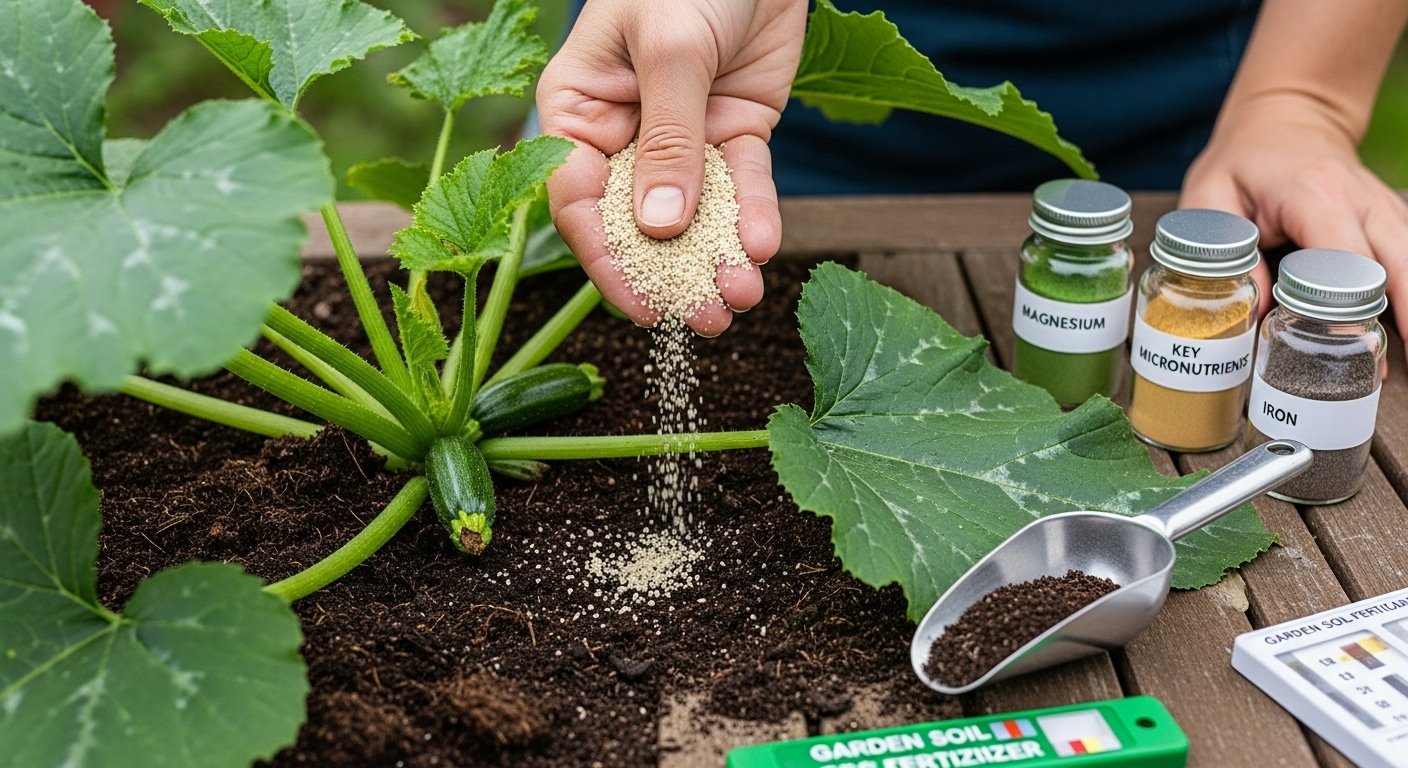
Zucchini plants thrive best when given balanced nutrition, focusing primarily on three essential macronutrients: nitrogen (N), phosphorus (P), and potassium (K). These nutrients are usually represented in fertilizers by their NPK ratio, such as 10-10-10 or 5-10-10, where the numbers indicate the percentage of each nutrient.
Nitrogen is crucial for lush, green foliage; phosphorus supports healthy root and flower development; and potassium boosts disease resistance and overall plant vigor. During early growth, using a balanced NPK or a slightly higher nitrogen ratio encourages leafy growth. As zucchini begins flowering, switching to a fertilizer with less nitrogen and higher phosphorus and potassium (like 5-10-10) helps promote fruit production.
Besides these macronutrients, zucchini also relies on key micronutrients such as magnesium (essential for chlorophyll production), calcium (for strong cell walls and fruit integrity), and iron (important for enzymatic functions and leaf color).
Recognizing Nutrient Deficiencies
Deficiency symptoms serve as important signals to watch for:
- Yellowing leaves or stunted growth usually indicate a lack of nitrogen.
- Purple or reddish leaves may suggest phosphorus deficiency.
- Leaves with brown edges or weak stems can point to low potassium.
- Blossom end rot—a common zucchini issue—often signals a calcium shortfall.
Regularly checking leaf color and plant vigor can help catch deficiencies early. If you notice unusual changes, conducting a soil test is a practical next step.
Tips for Healthy Zucchini Growth
To keep your zucchini healthy, use a well-balanced fertilizer tailored to the plant’s growth stages, supplement with micronutrients as needed, and avoid over-fertilizing, which can harm roots or inhibit fruiting. Simple practices like adding compost or well-rotted manure provide a steady nutrient boost and improve soil structure, helping your zucchini yield plenty of delicious fruits throughout the season.
Choosing the Right Fertilizer for Zucchini
When growing zucchini, picking the right fertilizer can make all the difference between spindly plants and a bountiful harvest. Organic fertilizers, like composted manure, worm castings, or homemade compost, enrich the soil with nutrients and improve its texture, supporting healthy zucchini growth over time. They release nutrients slowly, reducing the risk of burning plants, but may require more frequent applications and careful soil preparation.
Synthetic fertilizers, on the other hand, deliver a precise nutrient boost—often in a concentrated, fast-acting form. They’re convenient for a quick fix if your zucchini is struggling, but overuse can harm beneficial soil microbes and lead to nutrient run-off.
Can You Use Tomato Fertilizer for Zucchini?
Many gardeners wonder if they can use tomato fertilizer for zucchini. While these products often have similar nutrient profiles (look for a balanced N-P-K ratio close to 10-10-10 or 5-10-10), it’s essential to read labels carefully. Avoid tomato fertilizers high in phosphorus unless your soil test shows a need, since zucchinis generally prefer a balance that encourages both leafy and fruit growth—not just flowering.
Best Practices for Fertilizing Zucchini
For best results, choose a fertilizer—commercial or homemade—that offers good nitrogen for leafy growth but isn’t overloaded with any one nutrient. Homemade options, like compost tea or diluted fish emulsion, are gentle and sustainable, especially when combined with regular mulching.
If buying commercial blends, select those formulated for fruiting vegetables and always follow application instructions to avoid over-fertilizing. A little label reading and consideration of your garden’s specific needs go a long way toward healthy, productive zucchini plants.
When and How Often to Fertilize Zucchini
Fertilizing your zucchini at the right times can make a big difference in your harvest. Start by mixing a balanced, slow-release fertilizer into the soil a few days before planting—this gives young roots the nutrients they need to start strong.
As the plants begin to flower, side-dress with a nitrogen-rich fertilizer to support healthy leaf and blossom growth. When zucchinis start to form, switch to a fertilizer higher in potassium and phosphorus to encourage bigger, tastier fruits.
If you’re growing zucchini in the ground, fertilize once before planting, then again at flowering and early fruit set. For raised beds, follow the same three-stage schedule, but check more frequently for signs of nutrient deficiency since nutrients can wash out faster.
Container-grown zucchini need more attentive care; use a liquid fertilizer every two weeks during active growth, as container soil loses nutrients quickly.
Be careful not to over-fertilize—too much nitrogen can lead to big leafy plants but fewer fruits, and excessive salts may burn roots. Conversely, under-fertilized zucchini may have pale leaves, stunted growth, and sluggish fruit production.
Keep an eye out for yellowing leaves, which could signal a nitrogen shortage, or blossom-end rot, often caused by a calcium imbalance. Adjust your schedule if you see these signs, always watering thoroughly after feeding to help nutrients reach the roots.
By staying attentive and adjusting as your zucchini plants develop, you’ll set yourself up for a bountiful season.
Applying Fertilizer: Methods and Placement Tips
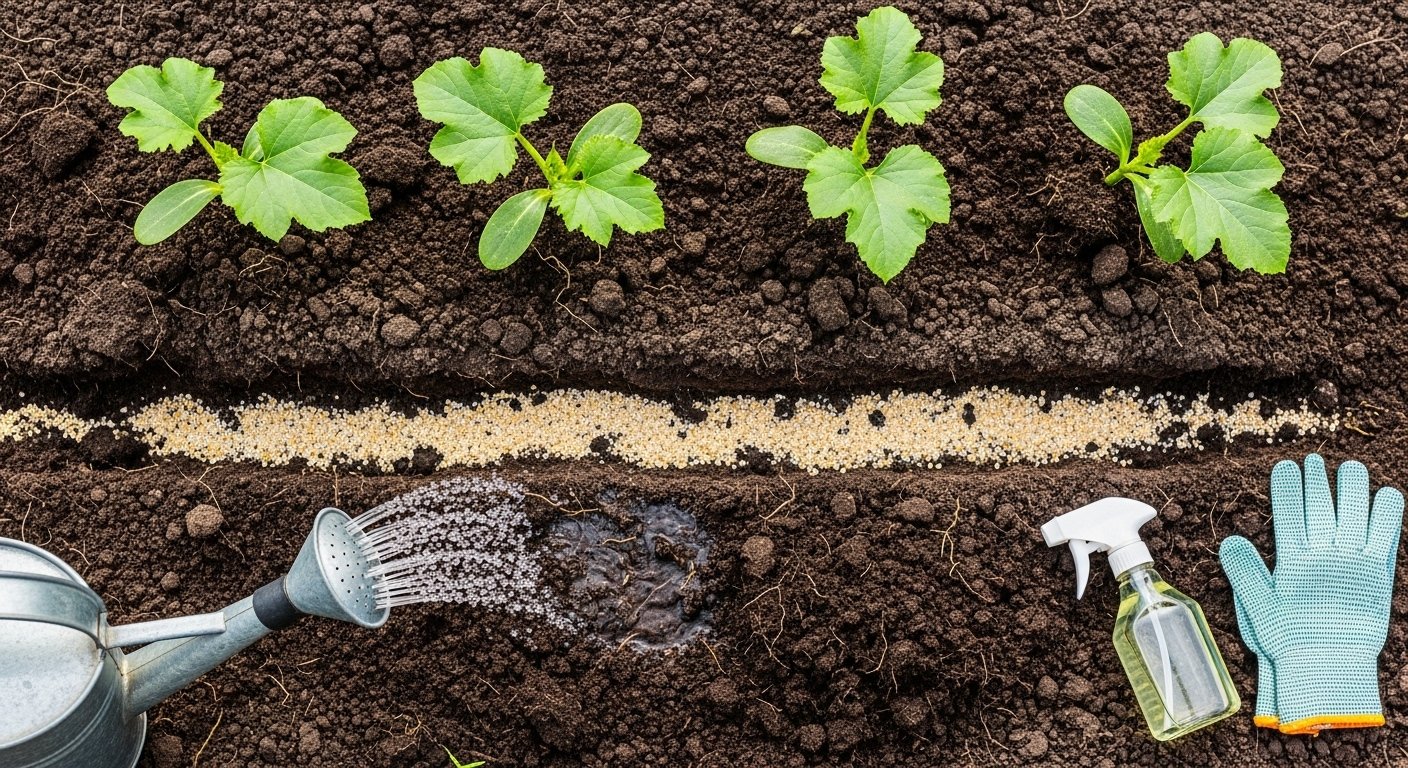
Choosing the right method for applying fertilizer can make a big difference in your garden’s growth and harvest. Granular fertilizers are a popular choice because they’re easy to measure and spread; simply scatter them around the root zone and gently work them into the top inch of soil for even coverage.
Liquid fertilizers, on the other hand, are mixed with water and applied directly to the soil or around plants. They act quickly and are ideal for giving stressed or fast-growing plants an immediate nutrient boost.
For crops that need extra nutrition during the growing season, side-dressing is a handy technique: create a shallow trench a few inches from the plant’s stem, add fertilizer, and cover it back up. This keeps nutrients close to the roots without risking burns.
Foliar feeding, which involves spraying diluted fertilizer directly onto the leaves, allows plants to quickly absorb nutrients through their foliage—perfect for a fast fix during critical growth stages.
No matter which method you choose, one crucial rule is to never apply fertilizer to dry soil, as this can scorch roots and waste product. Always water your garden thoroughly before and after application to help nutrients soak into the soil.
Careful fertilizer placement—keeping it a few inches from stems and not piled directly on roots—prevents root burn and ensures nutrients aren’t washed away before plants can use them.
By combining the right application method with mindful watering and precise placement, you’ll help your plants thrive while protecting their sensitive root systems.
Common Fertilizer Mistakes and How to Avoid Them
Many gardeners unintentionally make common fertilizer mistakes that can harm plants instead of helping them thrive. Overfeeding is a frequent issue—using too much fertilizer can burn roots, cause salt buildup, and lead to yellowing leaves or stunted growth. Always follow the application instructions on the package, and opt for a “less is more” approach; if in doubt, start with half the recommended dose.
Applying fertilizers at the wrong time is another pitfall—avoid feeding during extreme heat or before heavy rains, as nutrients can wash away or stress plants. Instead, fertilize early in the morning or late afternoon, and target the growing season when plants can best use the nutrients.
Choosing an inappropriate fertilizer, such as using a high-nitrogen type for flowering plants, can result in lush foliage but poor fruit or blooms. Select fertilizers specifically formulated for your plant types (e.g., tomato food for fruiting crops or balanced blends for lawns).
If your plants develop yellow leaves, check for improper watering or compacted soil first, but also consider if it’s a sign of nutrient deficiency—switch to a slow-release or organic fertilizer to provide steady nutrition. For poor fruit development, ensure your fertilizer isn’t too high in nitrogen, and look for formulas with more phosphorus and potassium.
When troubleshooting, test your soil every year to detect imbalances before problems arise, and adjust your fertilizing practices accordingly. Remember, observing your plants and making gradual corrections is the best path to healthy, productive growth.
Boosting Yields: Extra Tips for Flowering and Fruit Production
To get the most flowers and fruit from your garden, timing and the type of fertilizer matter. During the flowering and fruiting stage, switch from high-nitrogen feeds to fertilizers rich in phosphorus and potassium—this encourages more blossoms and bigger, tastier fruit. For example, tomato and pepper plants flourish with a 5-10-10 or similar N-P-K ratio.
Always follow package instructions and avoid over-fertilizing, as it can damage roots and stunt growth.
Companion planting offers an easy, natural boost too—growing basil near tomatoes, for example, not only repels some pests but can enhance nutrient uptake for healthier plants. Consider marigolds to suppress harmful nematodes and attract pollinators.
Healthy soil is your garden’s foundation: add well-rotted compost or worm castings each season to keep soil alive and full of beneficial microbes, which help plants access nutrients more effectively.
Watch your garden closely throughout the growing season. If leaves yellow or growth slows, it’s a sign to retest your soil and adjust your feeding schedule.
Every garden is unique, so make small, regular changes, observe results, and keep a journal. This way, you can fine-tune your approach for a maximum harvest year after year.
Conclusion & Quick Reference
- Test your soil before adding fertilizer to tailor nutrients for zucchini.
- Use a balanced, slow-release fertilizer at planting, then switch to a higher potassium fertilizer once fruits start forming.
- Water after fertilizing to help nutrients reach the roots effectively.
- Avoid over-fertilizing, which can lead to lush leaves but fewer zucchinis.
Growing healthy zucchini is a learning process—regularly check your plants for signs of nutrient deficiency or excess, such as yellowing leaves or stunted growth. Adjust your approach as needed, and you’ll set yourself up for a rewarding, bountiful harvest season.