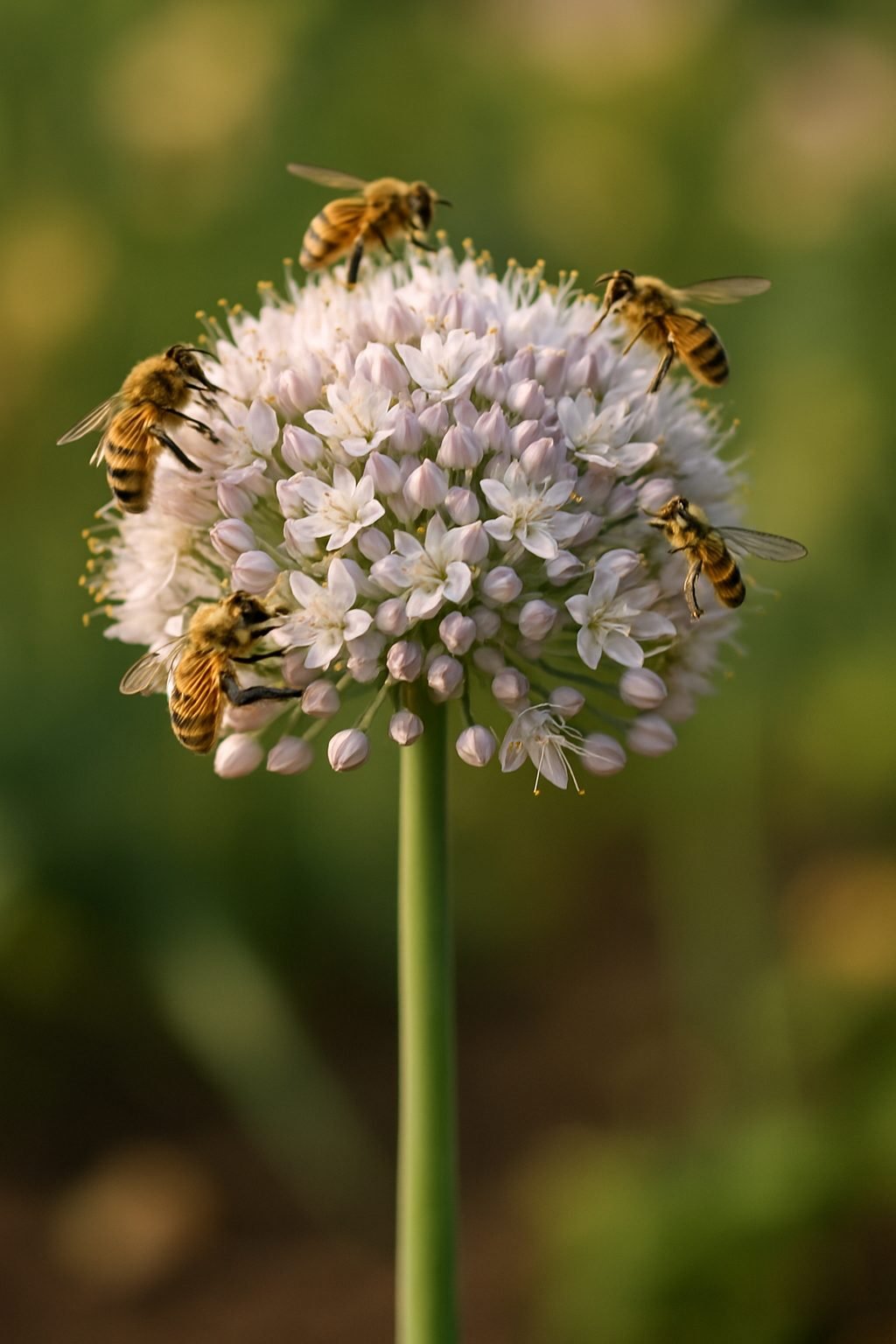
Understanding Onion Flower Structure and Pollination Basics
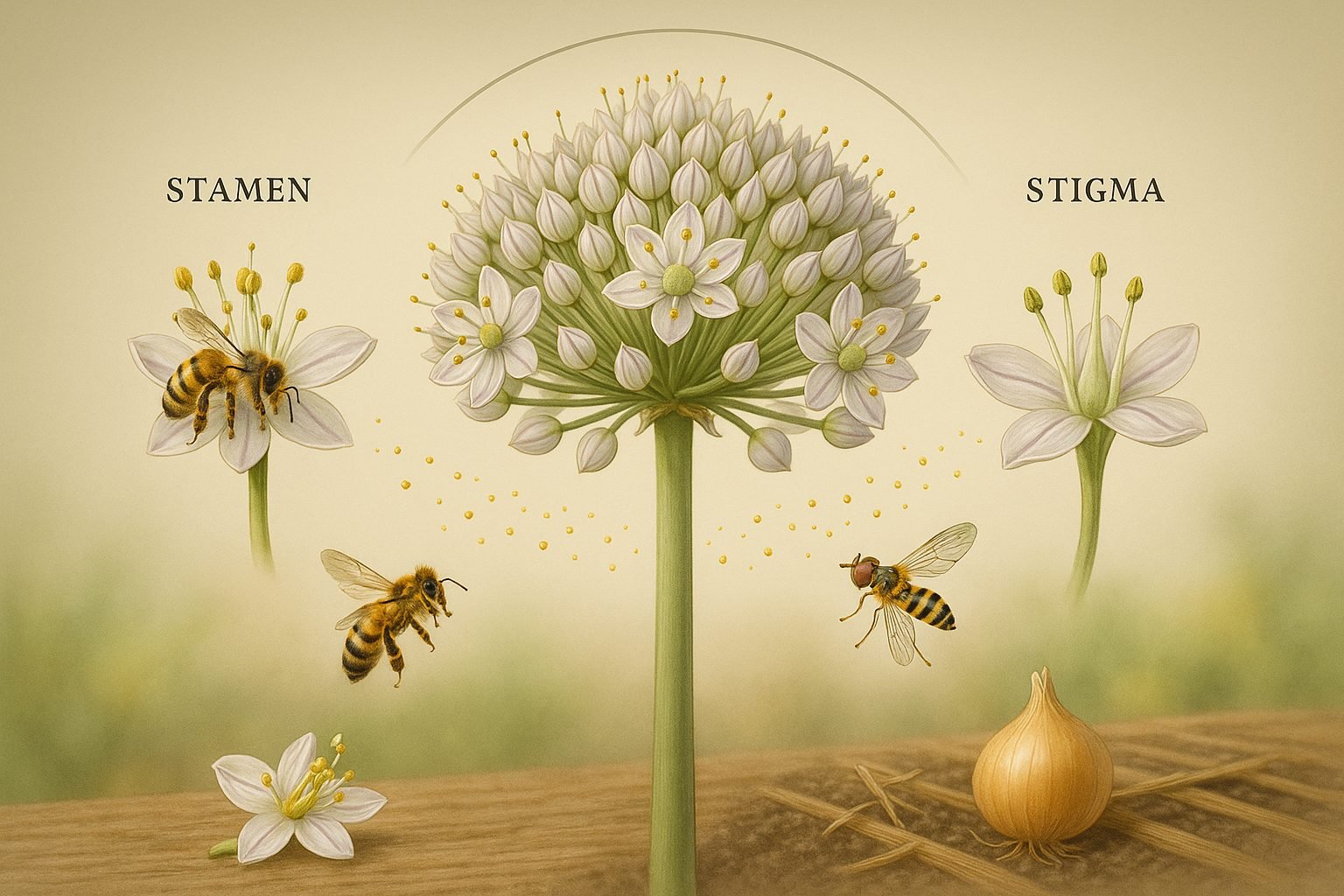
Onions and pollinators have a surprisingly close relationship, especially when you look at how the structure of onion flowers is designed for successful pollination. Onion plants produce umbrella-shaped clusters of small, star-like white or pale purple flowers called umbels, which gather together at the top of a tall, leafless stalk.
Each tiny flower in the umbel has both male and female reproductive parts, making it possible for an individual flower to both give and receive pollen. When these flowers bloom, they release a mild, sweet scent and visibly display their pollen, attracting various types of pollinators, particularly bees and flies.
As these pollinators move from one blossom to another in search of nectar and pollen, they effortlessly carry pollen grains from the stamens (male part) of one flower to the stigma (female part) of another—sometimes even between different plants. This transfer of pollen enables fertilization, where the male genetic material merges with the female ovules inside the flower.
Fertilization triggers the development of seeds, ensuring the next generation of onions. Without pollinators to help move pollen between flowers, onions would struggle to reproduce effectively. That’s why understanding their flower structure and relationship with pollinators is essential for both gardeners and farmers looking to grow onions from seed.
Key Pollinators of Onions: Who’s Doing the Work?
When it comes to onion pollination, honey bees are the undisputed MVPs, responsible for most of the seed set in commercial onion fields. However, flies—especially hoverflies and blowflies—also contribute significantly, sometimes outperforming bees in cool or windy weather when bee activity drops.
Onion flowers may not be showy, but they use a clever combination of strategies to attract their tiny workforce. Unlike brightly colored blossoms, onion blooms cluster into large, globe-shaped umbels that create a noticeable landing pad. Their nectar is rich, though the scent is often described as faintly onion-like—a trait that surprisingly draws in bees and flies searching for an accessible meal.
Not all insects are equally effective: honey bees visit more methodically and transfer more pollen per visit, while some flies tend to flit between flowers within the same umbel, limiting cross-pollination.
To make a field more appealing to pollinators, growers often place hives nearby or allow flowering weeds to entice a broader range of insect visitors.
Practical Tip for Home Gardeners
Encouraging a mix of pollinators through pesticide-free practices and diverse flowering plants around onion rows can boost pollinator numbers and, ultimately, seed yield.
The Importance of Pollination in Onion Yield and Seed Quality
Effective pollination is essential for optimal onion yield and seed quality, making it a key factor for both commercial growers and home gardeners. Onions rely on insects, mainly bees, to transfer pollen between flowers, which directly affects the number of seeds set per umbel and the overall seed yield per acre.
When pollination is robust, farmers see fields full of well-developed bulbs and plump, viable seeds. This translates into better germination rates and healthier, more uniform crops in the next planting season. Conversely, poor pollination leads to patchy seed set, lower yields, and poor seed quality—issues that cause variability in bulb size and reduce marketable produce.
From an economic perspective, effective pollination can increase profit margins by boosting both the quantity and quality of seed harvested per hectare. Inadequate pollination, on the other hand, may force additional plantings, increase labor costs, and cause potential crop losses.
In regions producing onion bulbs for consumption, insufficient pollination can also reduce bulb formation, since seed set is related to the plant’s overall vigor and reproductive success. Simple strategies like introducing bee hives during flowering or preserving wild pollinator habitats near fields can make a substantial difference, ensuring both higher yields and a better bottom line for growers.
Challenges Facing Onion Pollination Today
Onion pollination faces several modern-day challenges that threaten both yields and farmer livelihoods. One major issue is the decline of pollinator populations, including bees, due to habitat loss as wildflower meadows are converted into farmland or urban areas. Pesticides, especially those used to control pests in nearby crops, can be toxic to pollinators, either killing them outright or impairing their ability to find and visit flowers. Diseases like the varroa mite weaken honeybee hives, reducing their numbers and efficiency just when onions need them most.
Onion flowers add a layer of difficulty: they are less attractive to many pollinators compared to other crops, largely because they offer less nectar. This makes it harder to lure enough bees or flies for effective pollination. Unpredictable weather—such as high winds or unusual heat during flowering—can further hinder pollinator activity.
When these challenges add up, the result is poor pollination, leading to fewer and lower-quality onion seeds. For onion growers, this means lower revenues, difficulty meeting contracts, and sometimes the need to purchase expensive, imported seed. The entire supply chain, from farm to table, feels the impact when pollination falls short.
How to Support and Enhance Pollinators in Onion Fields
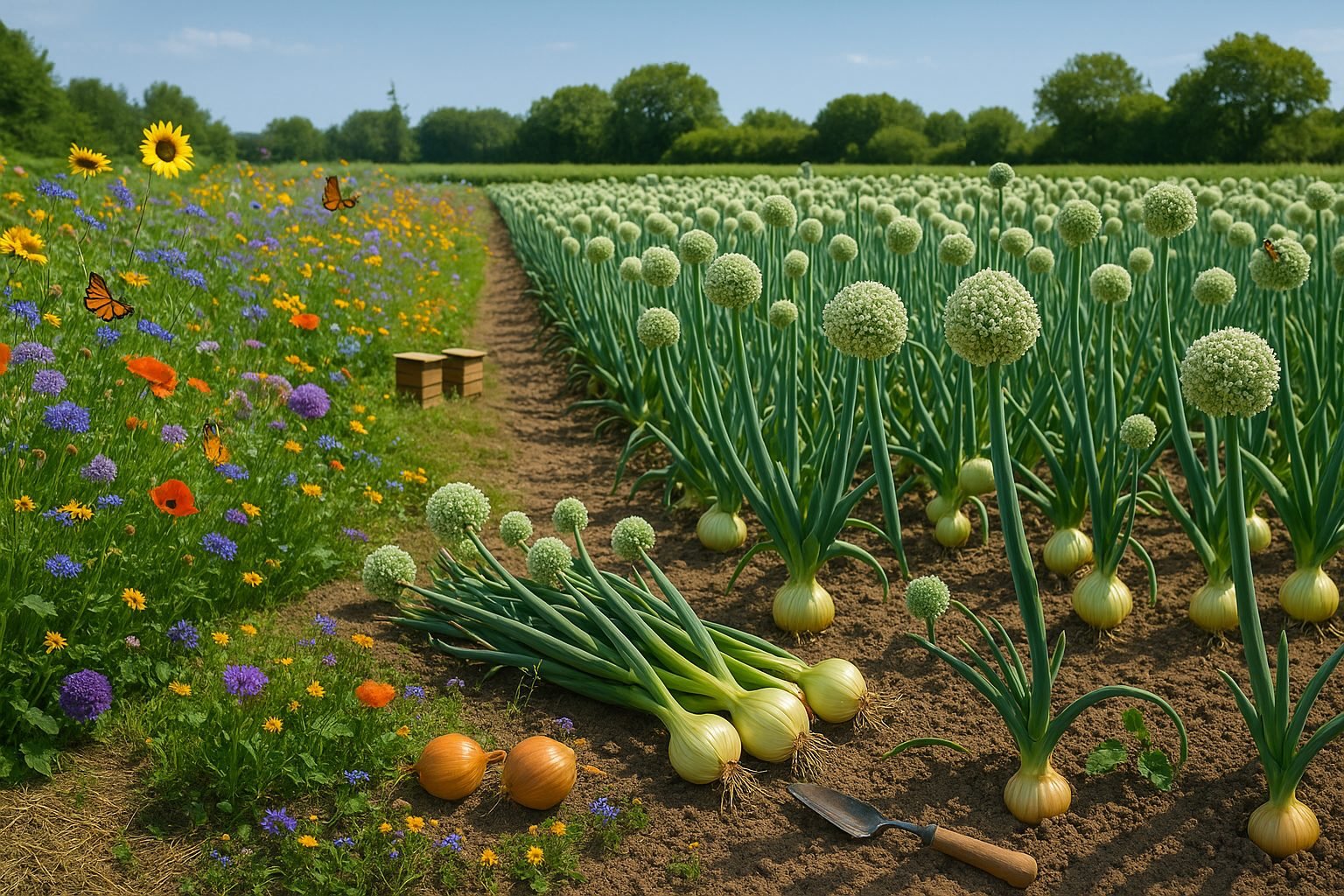
Supporting pollinators in onion fields starts with creating a welcoming habitat—planting flower strips around crop borders is one of the most effective strategies. These strips attract bees and other beneficial insects by providing a steady supply of nectar and pollen, even when onions aren’t blooming. Choose a diverse mix of native wildflowers that bloom at different times to keep pollinators coming back all season.
Along with flower strips, reduce pesticide use by adopting integrated pest management (IPM) practices. Monitor fields regularly for pests, only applying targeted treatments when absolutely necessary, and opt for bee-safe products applied outside of peak pollinator activity hours (usually early mornings or evenings).
If natural pollinator activity is too low—perhaps after a bout of bad weather or in areas with limited bee populations—consider hand pollination. Using a soft paintbrush to transfer pollen between onion flowers can help ensure a good seed set, though it is labor-intensive and best reserved for small plots or high-value crops.
The best results often come from combining these strategies: support wild pollinators with habitat and careful chemical use, and supplement with manual pollination only when needed. This integrated approach protects pollinator health, improves onion yields, and helps maintain a balanced farm ecosystem in real, practical ways.
Looking Ahead: The Future of Onion Pollination
As the demand for onions grows, emerging research and technology are reshaping how farmers approach pollination. Scientists are developing pollinator-friendly onion varieties and experimenting with habitat strips—rows of flowering plants alongside crops—to attract bees and flies, which are vital for onion seed production.
Precision agriculture tools allow growers to monitor and respond to field conditions, optimizing pollinator visits and minimizing pesticide impact. Across communities, farmers and educators are teaming up to spread awareness about the crucial link between pollinator health and crop yields, hosting workshops and school programs that highlight conservation efforts.
Innovative farming techniques, like rotational planting and organic pest management, further support pollinator diversity. By staying informed and prioritizing both education and conservation, the onion industry is well-equipped to sustain robust yields while nurturing pollinator populations, offering hope for a more resilient and mutually beneficial agricultural future.