Introduction to Kale Pests
kale pests can quickly turn a thriving home garden into a battleground, making it essential to know what you’re up against. Kale is a favorite among home gardeners for good reason—this leafy green is packed with vitamins, minerals, and antioxidants that support a healthy diet. However, its popularity on dinner plates also makes it a target for a wide array of garden pests.
Left unchecked, these unwelcome visitors can damage crops, ruin harvests, and discourage even the most enthusiastic growers. By understanding the causes and consequences of kale pests, gardeners can better protect their plants. This article will help you identify common threats and explore natural remedies, so you can enjoy a hearty, pest-free kale crop.
Identifying Common Kale Pests
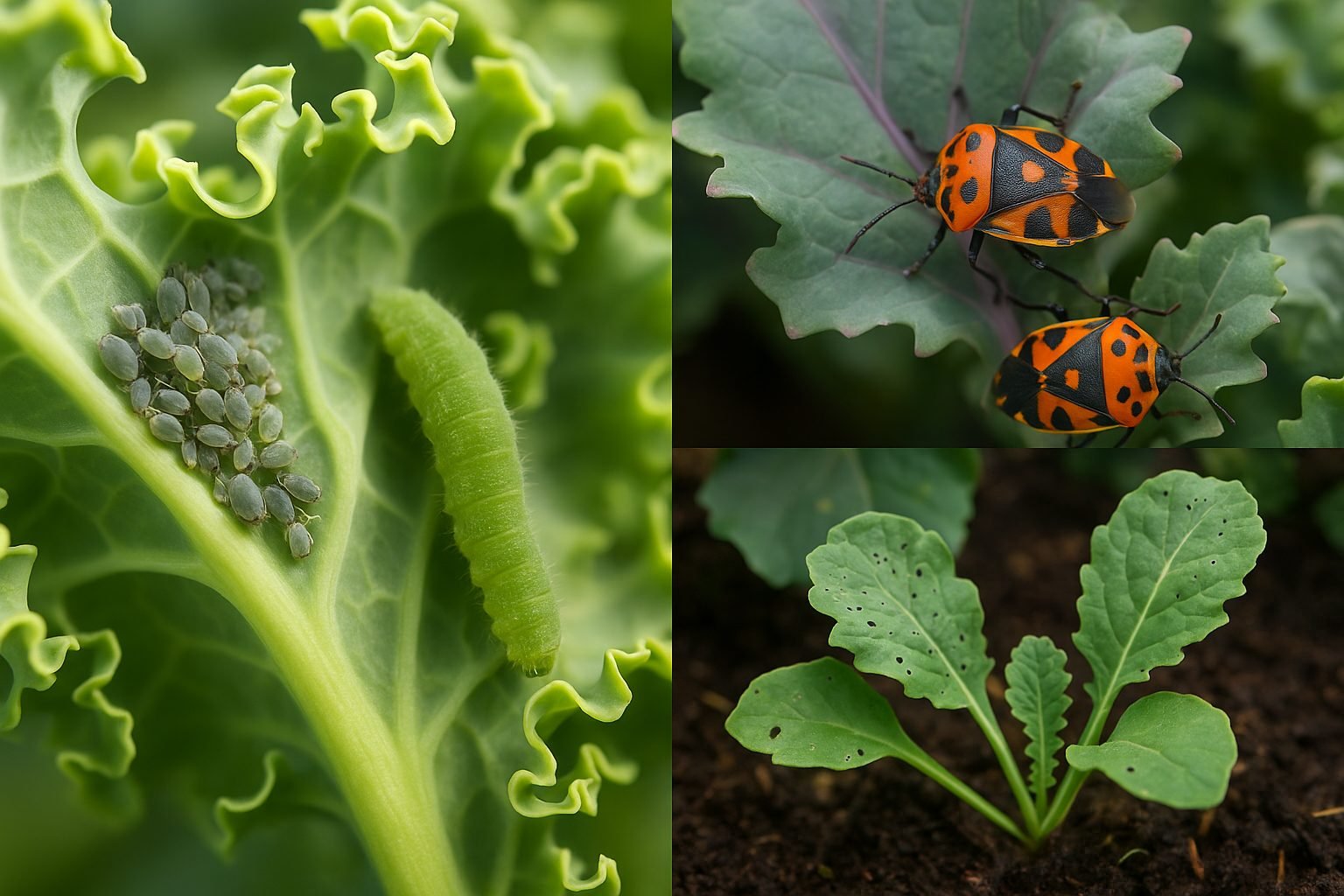
Kale is a hardy crop, but it’s not immune to pests. Watch for cabbage aphids, which often cluster on the undersides of leaves and leave behind a sticky residue and curled foliage.
Imported cabbageworms are small green caterpillars that chew irregular holes through leaves, often leaving behind dark droppings and skeletonized leaf sections.
Harlequin bugs, easily spotted by their bright orange and black markings, cause white or yellow blotches and wilting by sucking the sap out of leaves.
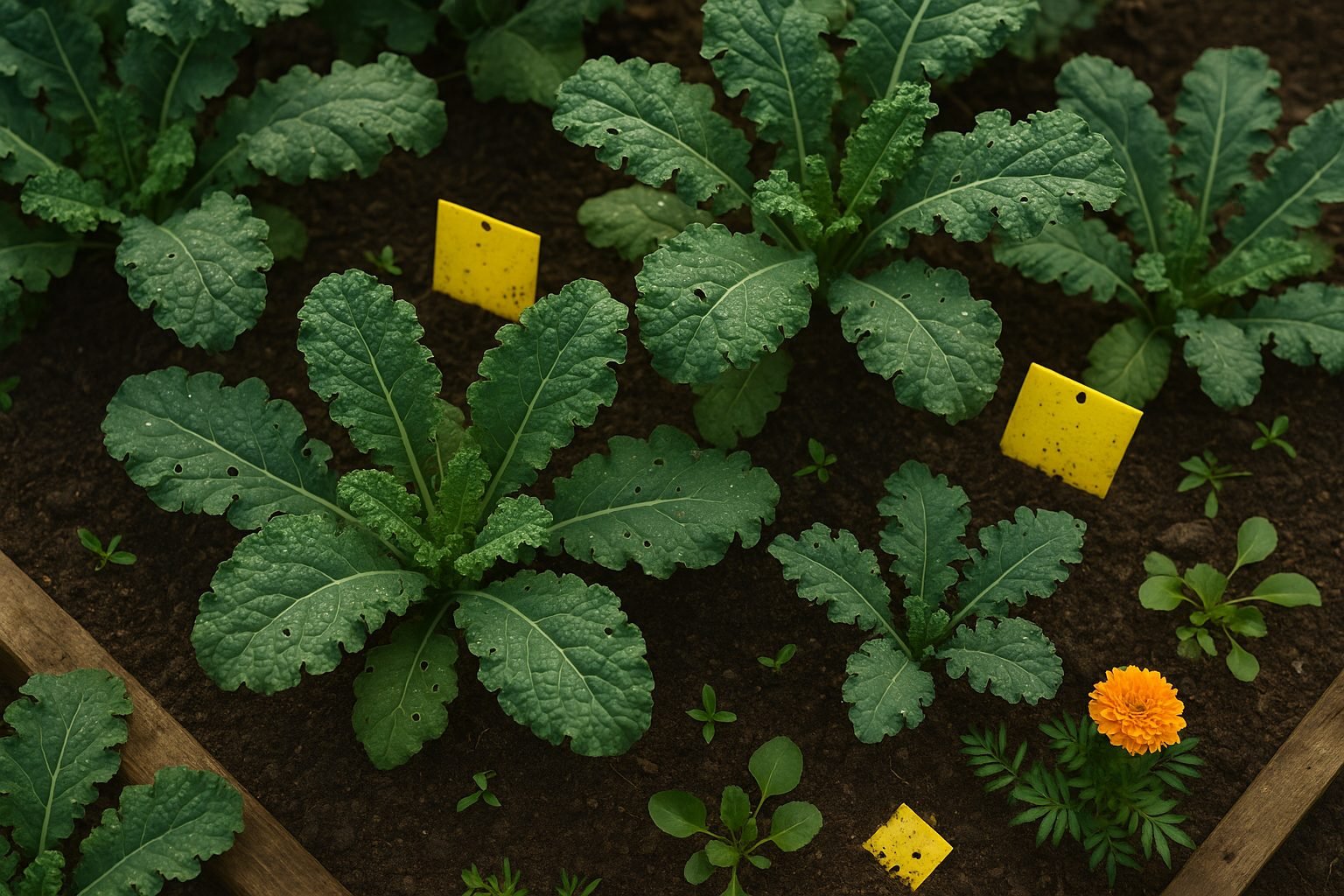
Flea beetles create tiny round holes that pepper the leaves, giving them a shot-hole appearance, especially on young seedlings.
Slugs and snails come out at night or during wet conditions and leave behind large ragged holes along the edges of leaves with their tell-tale slimy trails.
Early Detection Tips
- Check the undersides of leaves regularly.
- Look for signs like unusual patterns or holes.
- Run your fingers gently across the leaves to feel for hidden pests.
- Place yellow sticky traps or cardboard on the soil at night to catch active pests.
- Use a flashlight after dusk to spot slugs and snails.
Early intervention helps keep infestations under control and your kale thriving.
Effective Natural Pest Management Strategies
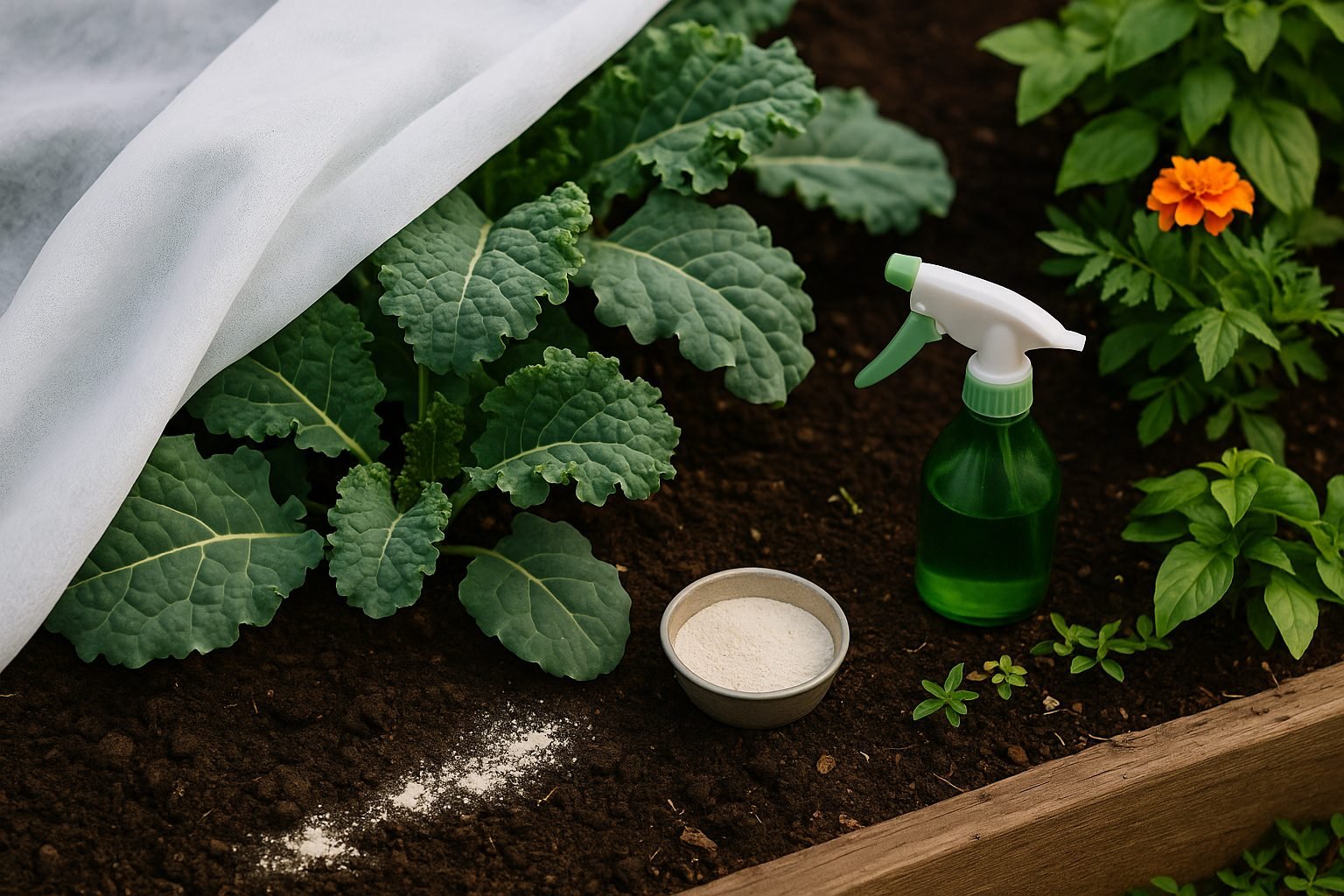
Natural pest management offers a safe and sustainable way to protect your garden without resorting to harsh chemicals. Start with hands-on methods—regularly inspecting plants lets you spot early signs of trouble, and often you can remove caterpillars, beetles, or eggs by hand.
Physical barriers like row covers are another effective approach; these lightweight fabrics shield plants from insects while still allowing light and water to reach them.
Companion planting also plays a big role: for instance, planting marigolds near tomatoes can deter nematodes and aphids, while basil can help repel mosquitoes and flies.
Beyond these strategies, natural deterrents like neem oil and diatomaceous earth provide added protection. Neem oil disrupts pests’ life cycles without harming beneficial insects, and diatomaceous earth, a fine powder made from fossilized algae, damages insects’ exoskeletons, causing them to dehydrate.
For best results, combine these methods and make plant inspection part of your routine. Acting quickly at the first sign of pests prevents full-blown infestations and minimizes crop loss.
By using these non-chemical approaches, you not only keep your garden healthy but also foster a safer environment for pollinators, pets, and people.
Preventing Kale Diseases and Stress
Keeping your kale healthy is one of the best defenses against pests and diseases. Aim for consistent watering—too much or too little can stress your plants and make them more vulnerable. Use nutrient-rich, well-drained soil, and give each plant enough space to allow good airflow, which helps reduce dampness and deter pests.
Sometimes, kale diseases like downy mildew or black rot can look very similar to pest damage, so be sure to inspect leaves carefully before treating. To keep these problems at bay, rotate your crops each season to prevent disease buildup in the soil. Also, clean up plant debris and weeds regularly to minimize hiding spots for both pests and disease spores.
With these simple habits, your kale will be stronger and less likely to attract trouble.
Eating Kale with Pest Damage: Is It Safe?
Finding small holes or nibbled edges on your garden kale can be off-putting, but it’s generally safe to eat kale with minor insect damage. The main concern isn’t the holes themselves, but the possibility of dirt, bacteria, or tiny bugs lingering on the leaves.
To stay safe, wash kale thoroughly under running water, gently rubbing each leaf to remove debris or pests. Trim away any visibly damaged or slimy areas, as these might harbor more bacteria.
If the leaf feels mushy, has mold, or smells off, it’s best to discard it. Otherwise, slightly damaged but fresh-looking kale is perfectly fine to enjoy in your salads, smoothies, or sautés.
Keeping Your Kale Patch Pest-Free Long-Term
Maintaining a healthy kale patch isn’t a one-time effort—it requires ongoing vigilance and seasonal care to keep pests in check. Regularly inspect your plants for signs of trouble and promptly remove any affected leaves.
Advanced strategies can make a real difference:
- Plant trap crops like nasturtiums nearby to lure pests away.
- Attract beneficial insects such as ladybugs and lacewings by growing flowers like dill and alyssum.
- Rotate your plant families each year to prevent pests from building up in the same spot.
With consistency and the right techniques, you can enjoy thriving kale all season long. For more organic pest management tips, explore resources from local extensions or trusted gardening websites.