The Best Pepper Companion Plants: What To Plant & What To Avoid
When planning your garden, knowing which crops to avoid near hot peppers can make all the difference between a thriving harvest and a struggling patch. Hot peppers are notorious for being selective about their neighbors, and pairing them with the wrong plants can invite pests, stunt growth, or even ruin the flavor of your peppers.
For example, beans and brassicas are often a poor match, while herbs like basil can actually give your peppers a boost. Whether you’re a seasoned gardener or just getting started, mastering these companion planting guidelines will help you cultivate healthier plants, repel pests naturally, and get the most out of your pepper patch this season.
Introduction
Companion planting is a gardening technique where you grow certain plants together to help each other thrive. For peppers, choosing the right companions can make a big difference in your harvest. By carefully matching peppers with compatible neighbors, you can naturally protect them from pests—think basil warding off aphids—or boost their growth and flavor through shared nutrients and healthy soil.
Companion planting also means your garden beds are used more efficiently, saving valuable space while encouraging bigger yields and stronger, happier plants. Many gardeners notice, for example, that surrounding peppers with herbs or flowers like marigolds leads to greener leaves and fewer bug problems, without the need for chemical sprays.
In this post, you’ll discover which plants are best to grow alongside peppers, which combinations to avoid, and practical tips to help you plan your garden for a healthier, more productive pepper patch. Whether you’re working with raised beds, container gardens, or a small plot, understanding the basics of companion planting can transform the way you grow peppers—and the results you see at harvest time.
The Benefits of Companion Planting for Peppers
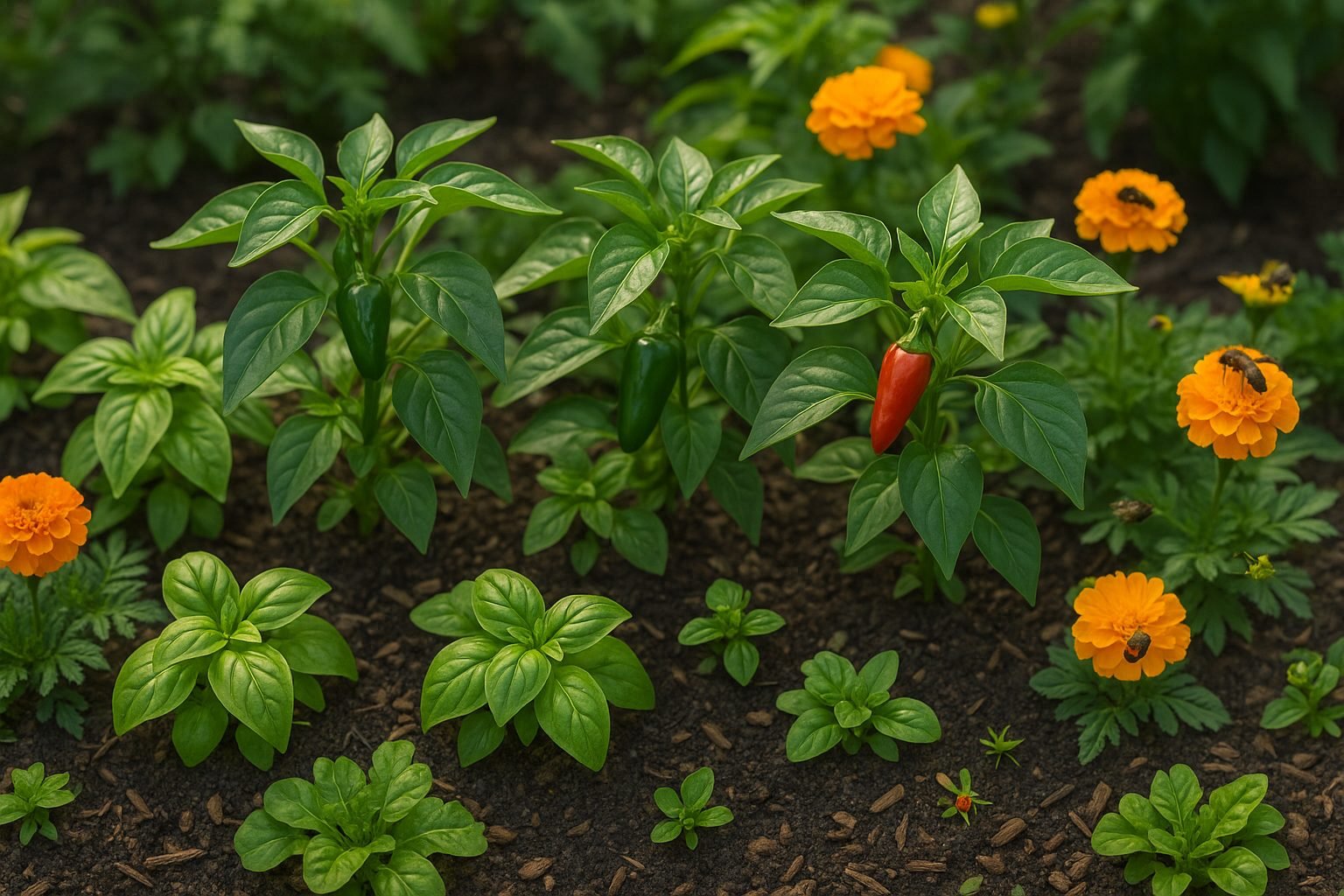
Companion planting offers pepper gardeners a natural way to boost yield and plant health with minimal chemicals. One key advantage is natural pest deterrence—certain plants emit scents or chemicals that repel pests harmful to peppers.
For example, basil is known to help ward off aphids, spider mites, and thrips, common pepper foes, while also enhancing pepper flavor; this has been supported by both experienced gardeners and Cornell Cooperative Extension studies. Marigolds are another classic companion, proven in research to reduce nematode populations in soil, creating a healthier environment for pepper roots.
Companion planting can also attract pollinators and beneficial insects. Flowering herbs like cilantro, dill, and nasturtium bring in bees and ladybugs, which not only pollinate nearby blooms but also help manage pests like aphids organically.
In crowded urban gardens or small backyard plots, maximizing space is another boon—low-growing lettuce or spinach beneath taller pepper plants keeps soil cool and moist, suppresses weeds, and makes full use of vertical layers. This microclimate can reduce watering needs and stress on your peppers, which tend to prefer consistent soil moisture.
Neighboring onions or garlic further discourage pests with their pungent aroma, with anecdotal reports—and some extension services—suggesting fewer issues with beetles and slugs.
All these effects combined form a holistic, resilient system where pepper plants thrive alongside natural allies, reducing the need for synthetic pesticides and fertilizers. By mixing and matching companions based on season and local pest pressures, gardeners can create healthier pepper beds and enjoy a more varied, productive harvest.
Top Companion Plants for Peppers
Companion planting can supercharge your pepper patch by boosting growth, deterring pests, and increasing yields with thoughtful plant neighbors. Basil is a classic partner—plant it near peppers to repel aphids, spider mites, and whiteflies. Plus, it’s said to enhance pepper flavor.
Marigolds are a gardener’s secret weapon: their roots emit a natural chemical that deters nematodes, and their bright blooms attract pollinators as well as predatory insects that eat pests. Nasturtiums act as a “trap crop,” luring aphids and other harmful bugs away from your peppers, and their sprawling habit shades the soil, suppressing weeds.
Carrots can be sown between pepper rows; their deep taproots naturally loosen soil, improving drainage while not competing much for nutrients. Onions, along with other alliums like chives, release compounds that drive away aphids, beetles, and other common pepper pests.
Sunflowers stand tall at the northern edge of pepper beds, where they won’t shade out sunlight but will break strong winds—protecting delicate pepper stems while drawing in beneficial pollinators. Borage thrives around peppers too: its star-shaped flowers pull in bees, and its leaves add minerals to the soil when chopped as mulch.
Oregano and rosemary are fragrant herbs that ward off insects. Tuck them in at the garden’s edges or between pepper plants, but keep woody herbs like rosemary from crowding peppers by giving them space to spread.
Spinach and cilantro can fill in gaps as low-growing companions early in the season; they help keep weeds down, and their shorter life cycles mean they’re harvested before peppers need the extra room.
Plant these companions in clusters or small groups for the best effect. Alternate rows of marigolds and basil among your peppers, interplant carrots in gaps, and nestle nasturtiums at row ends to spill over edges. By integrating these companion plants thoughtfully, you’ll cultivate a vibrant, healthy pepper patch with less need for pesticides and more support from nature.
Common Companion Plant Combos: Practical Examples
One popular companion planting combination is tomatoes, basil, and marigolds. When grown together, tomatoes and basil are thought to help each other thrive—basil can enhance tomato flavor and possibly repel pests like aphids or hornworms, while marigolds add bright color and release natural chemicals that deter nematodes and whiteflies.
Try planting tomato seedlings 18–24 inches apart to allow for airflow and healthy growth, tucking basil plants about 12 inches from each tomato base. In the same bed, plant marigolds along the edges as a cheerful border; space them 8–10 inches apart.
Another easy combo is carrots mixed with onions and lettuce. Onions deter carrot flies, and the lettuce provides shade, keeping carrot roots cool and moist. Alternate carrot and onion rows, leaving 6–8 inches between plants. Scatter lettuce in gaps to maximize bed space and reduce weeds.
Rotate these beds yearly with legumes (like beans or peas), which help restore nitrogen to the soil after heavy feeders such as tomatoes and onions.
Always leave enough room for each plant to grow—crowding can stress plants and make them prone to disease.
For a compact raised bed, group peppers, basil, and marigolds—position peppers 18 inches apart, basil between them, and marigolds along the border.
Ultimately, companion combos not only maximize yield and pest control but also make your garden more visually appealing and productive. Start simple with two or three compatible crops, pay attention to each plant’s spacing, and rotate your crops between seasons to keep soil and plants healthy year after year.
Plants to Avoid Planting Near Peppers
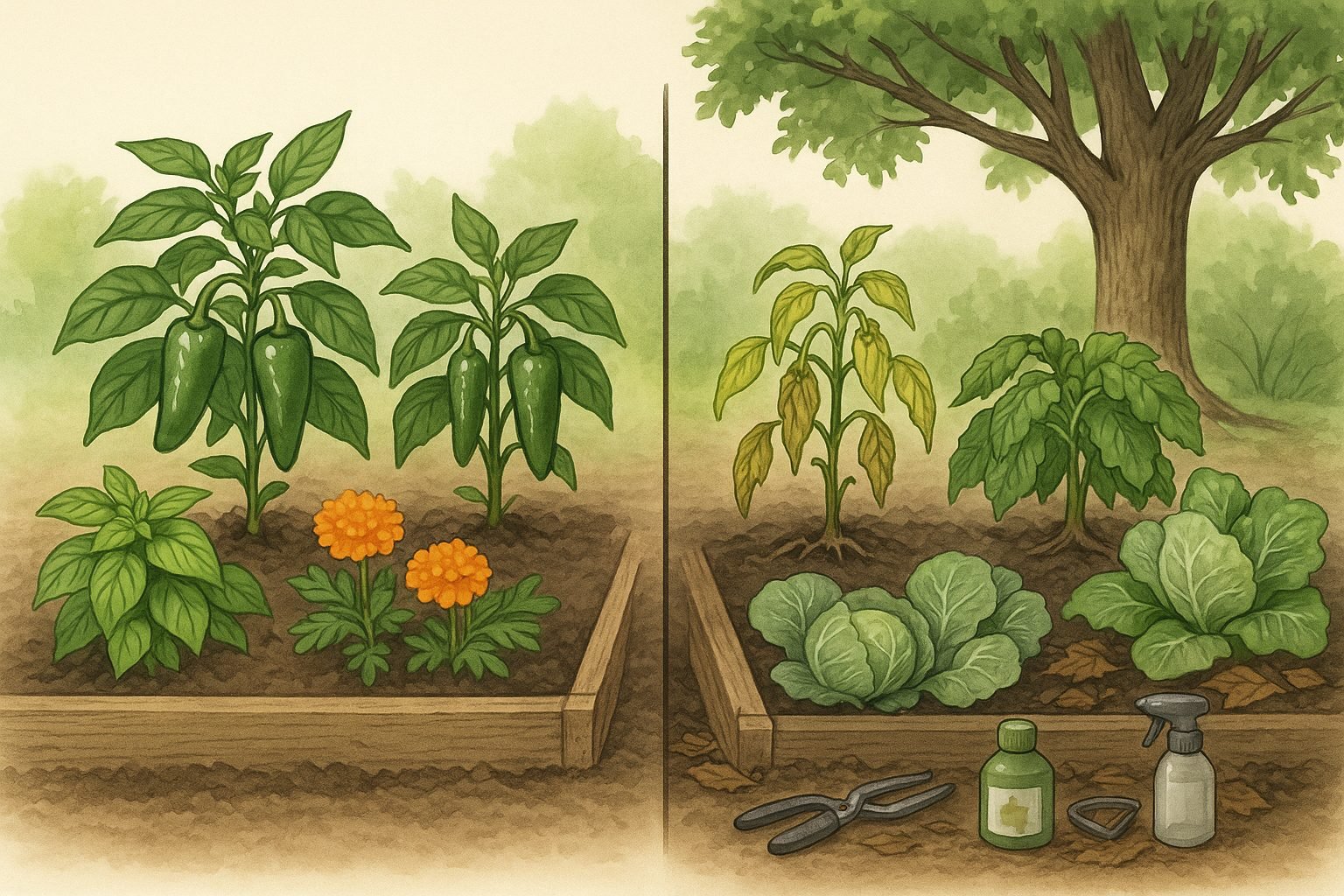
When planning your pepper patch, it’s essential to be mindful of neighboring plants that might sabotage your harvest. Certain vegetables and trees—like fennel, potatoes, brassicas (cabbage, broccoli, Brussels sprouts), black walnut, some beans, and corn—can stunt pepper growth or increase disease risk.
Fennel, for instance, produces allelopathic chemicals that inhibit peppers’ root development and germination. Planting peppers near potatoes is risky because both are nightshades and susceptible to similar diseases such as blight, which can spread quickly between them. Brassicas compete aggressively for nutrients and soil space, often leaving peppers undernourished. Beans, especially pole beans, may attract aphids and beetles that feast on pepper plants. Corn, while providing shade, also steals moisture and nutrients from peppers’ roots, resulting in weaker plants. The black walnut tree is particularly troublesome: its roots emit juglone, a toxin capable of stunting or even killing nearby peppers.
If you’re limited on space and can’t avoid these plants entirely, simple strategies can help:
- Use raised beds to separate root systems.
- Rotate crops each season to reduce disease pressure.
- Introduce beneficial companion plants like basil or marigolds, which deter pests without harming your peppers.
- Mulch and provide consistent watering to reduce competition for resources.
By understanding plant relationships and planning your garden layout strategically, you’ll give your peppers the best shot at a bountiful, healthy season.
Tips for Planning and Planting a Pepper-Friendly Garden
When planning a garden that’s friendly to peppers, start by choosing a spot with full sun—these heat-loving plants thrive best with at least six to eight hours of direct sunlight daily. Prepare loose, well-draining soil and enrich it with compost, as peppers dislike soggy feet or compacted ground.
Space pepper plants at least 18–24 inches apart for good air circulation, which helps prevent diseases like powdery mildew. Avoid the temptation to crowd them, even if your seeds seem small at first. Raised beds are especially effective, warming up faster in spring and offering excellent drainage. Plus, you can mix in organic material for boosted fertility.
Use the principle of crop rotation by moving peppers to different areas each year—replanting in the same spot can lead to a buildup of soil-borne pests and diseases. Incorporate succession planting by staggering your seed starting: begin indoor transplants a few weeks apart, or add new seedlings midseason to maximize harvests.
Choosing Companion Plants
When selecting companions, opt for carrots, onions, or basil, which can enhance growth and deter pests. However, skip planting peppers near fennel or kohlrabi, as these can stunt their development.
Avoiding Common Mistakes
- Don’t plant water-hogging neighbors, which compete with peppers for moisture.
- Avoid planting peppers too closely, as crowded conditions create breeding grounds for pests and fungal issues.
- If you notice yellowing leaves or weak plants, check that drainage and spacing are adequate.
- Make adjustments by thinning out crowded patches or adding mulch to maintain even soil moisture.
By staying attentive to these foundational details, you’ll create a thriving, pepper-friendly garden that rewards you with healthy plants and abundant harvests.
Frequently Asked Questions: Companion Planting for Peppers
Companion planting for peppers often raises many questions, especially for new gardeners eager to maximize their harvest and minimize pests. One common question is whether peppers can be grown alongside tomatoes.
Since both peppers and tomatoes belong to the nightshade family, they share similar soil and watering needs, so planting them together is generally safe and convenient. Just be mindful that planting too many nightshades in one spot year after year can increase disease risk, so rotate crops and amend your soil regularly.
When it comes to spacing, give your peppers at least 18 to 24 inches between plants; this airflow helps prevent fungal issues and makes it easier to spot pests.
Speaking of pests, certain companion plants like basil, marigold, and onions are excellent choices near peppers because they help repel common insects such as aphids and spider mites. Marigolds, for example, release compounds that can deter nematodes and beetles, while basil is thought to improve pepper growth and flavor.
Avoid planting peppers too close to beans or brassicas (like cabbage and broccoli), as these can compete for nutrients and stunt growth.
If you’re hoping to keep your garden organic, try interplanting peppers with herbs like oregano or thyme, which not only deter pests but can also be harvested for the kitchen.
Lastly, a common misconception is that all plants help each other when planted together—this isn’t always true. Use tested pairings for your pepper beds, give each plant enough room to thrive, and don’t forget to watch for signs of overcrowding or disease.
With these simple practices, you’ll set your pepper plants up for a healthy, productive season.
Final Thoughts & Next Steps
Companion planting for peppers isn’t just a time-honored gardening tradition—it’s a strategic way to boost your harvest, cut down on pests, and create a thriving, diverse garden ecosystem. By pairing peppers with friendly neighbors like basil, onions, or carrots, you can improve soil health, attract beneficial insects, and deter common pests without relying on harsh chemicals.
Remember, the most successful companion gardens come from trying out different plant combinations and carefully observing which setups work best in your climate and soil. If you’re new to companion planting, start with one or two pairings and keep notes on what you notice throughout the season. Don’t be afraid to tweak your approach each year—gardening is all about learning and adapting.
We’d love to hear about your experiments and favorite combinations in the comments! And once you see the benefits in your pepper patch, try companion planting with other crops like tomatoes or beans. The more you explore, the more you’ll discover how interconnected your garden ecosystem can be.
Happy planting, and here’s to a bountiful harvest!