Introduction
Transplanting green onions is one of the easiest ways to start a home gardening journey, especially for busy people looking for quick results. Green onions, also known as scallions, thrive in small spaces and can even regrow from store-bought scraps! In this guide, we’ll cover everything you need to know—from planting and daily care to regrowing from kitchen leftovers, harvesting tips, and managing common pests—so you can enjoy a steady supply of fresh green onions right from your windowsill or backyard.
What Are Green Onions (Scallions)?
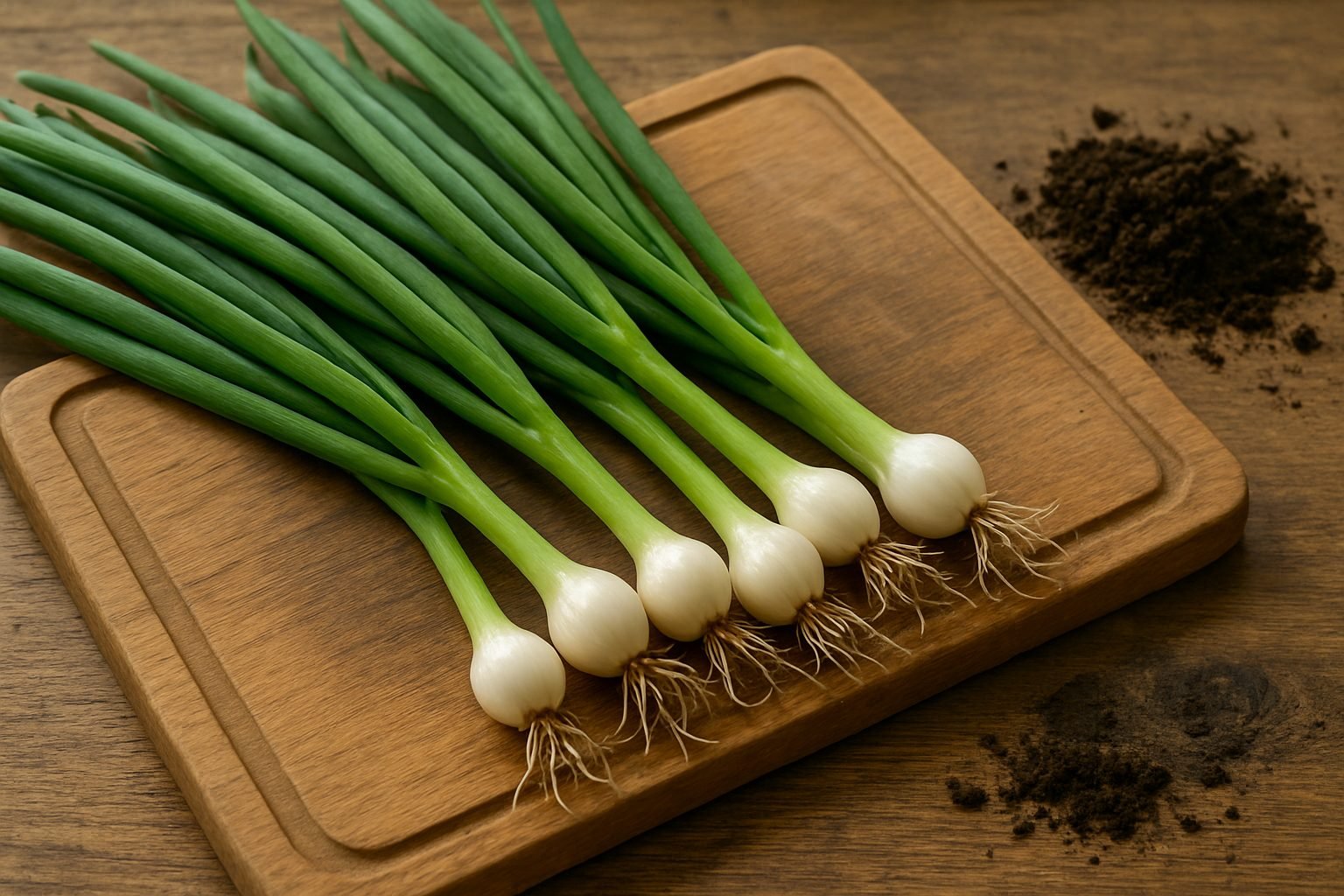
Green onions, also known as scallions, are a type of allium featuring long, slender green stalks and small white bulbs. They have a milder flavor than regular bulb onions and are quite different from the pungent cloves of garlic. Unlike bulb onions, scallions don’t develop large, rounded bulbs; instead, both the green tops and white bottoms are edible, making them versatile for salads, stir-fries, soups, and garnishes.
Their delicate flavor adds a fresh, crisp bite without overpowering other ingredients. Because they grow quickly and don’t require much space, green onions are a favorite for home gardens—even thriving in kitchen windowsills or containers. This accessibility and ease make them a staple for cooks looking for a burst of onion flavor without the intensity of stronger varieties.
Planting Green Onions
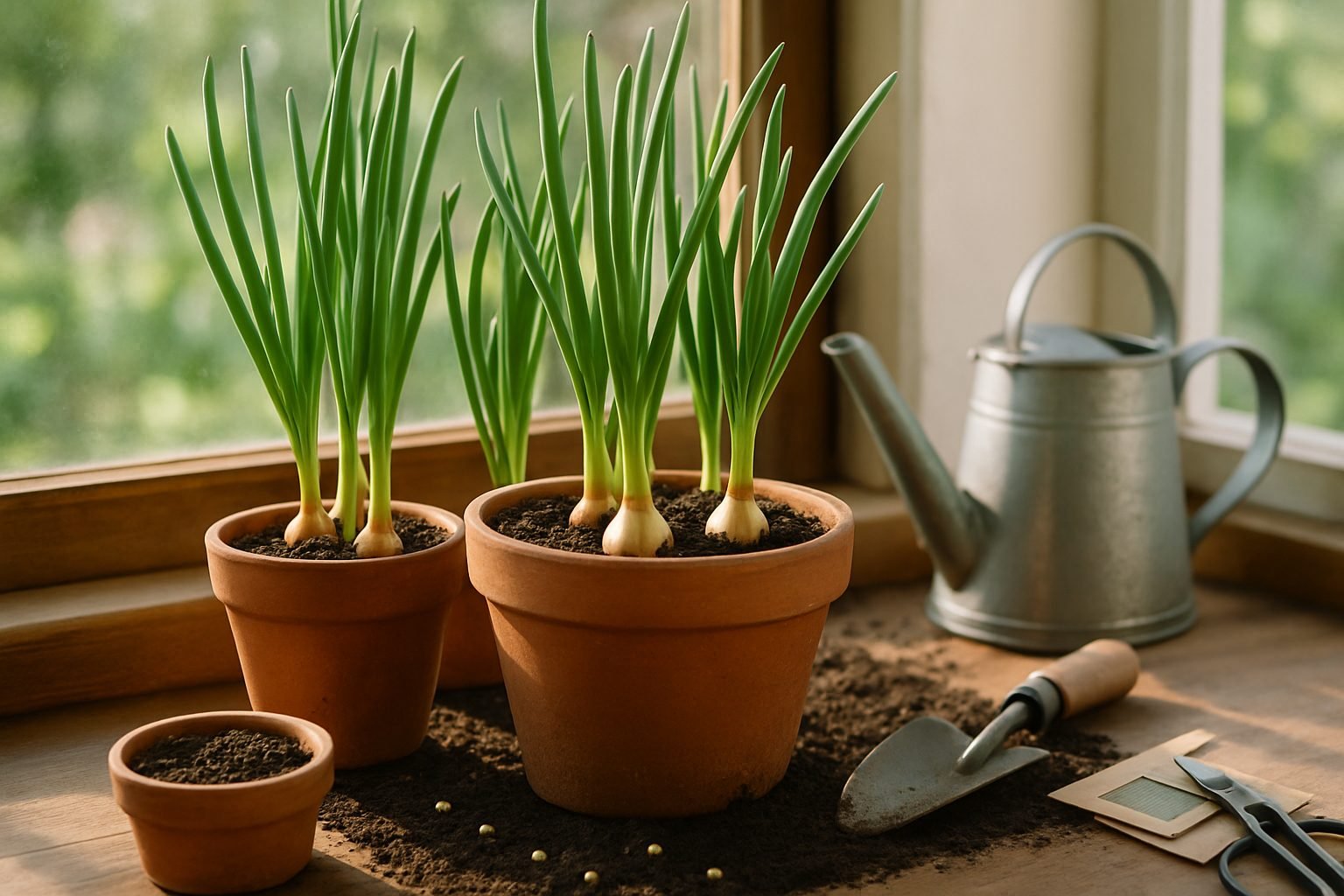
Growing green onions is simple, whether you start from seeds, sets (small bulbs), or even leftover roots from grocery store bunches. Seeds should be sown about a quarter-inch deep in fertile, well-draining soil—adding compost improves texture and nutrients.
Sets can be gently pressed into the soil or container, spaced about 2–3 inches apart for healthy growth. If using grocery store cuttings, keep the root ends and place them upright in moist soil, half-buried. They’ll re-sprout quickly.
Green onions thrive in full sun but will tolerate partial shade, making them perfect for sunny garden beds or windowsill containers. Use pots at least 6 inches deep, and don’t crowd the plants—proper airflow keeps them healthy.
Water regularly but avoid soggy soil, and you’ll have fresh onions to snip in a few weeks.
Caring for Your Green Onion Crop
Green onions, or scallions, need consistently moist but not soggy soil. Water deeply whenever the top inch feels dry, usually two to three times a week, depending on the weather. Mulch can help retain soil moisture and reduce weeds.
Feed your green onions every three to four weeks with a balanced, water-soluble fertilizer to encourage lush growth; avoid over-fertilizing, which can cause floppy leaves. Remove any yellow or damaged leaves to promote healthy new shoots.
To keep your scallions productive, harvest the outer stems as needed, leaving the innermost stalks in place so the plant continues growing. This “cut-and-come-again” approach will extend your harvest throughout the season and keep your green onions thriving.
How to Regrow Green Onions from Kitchen Scraps
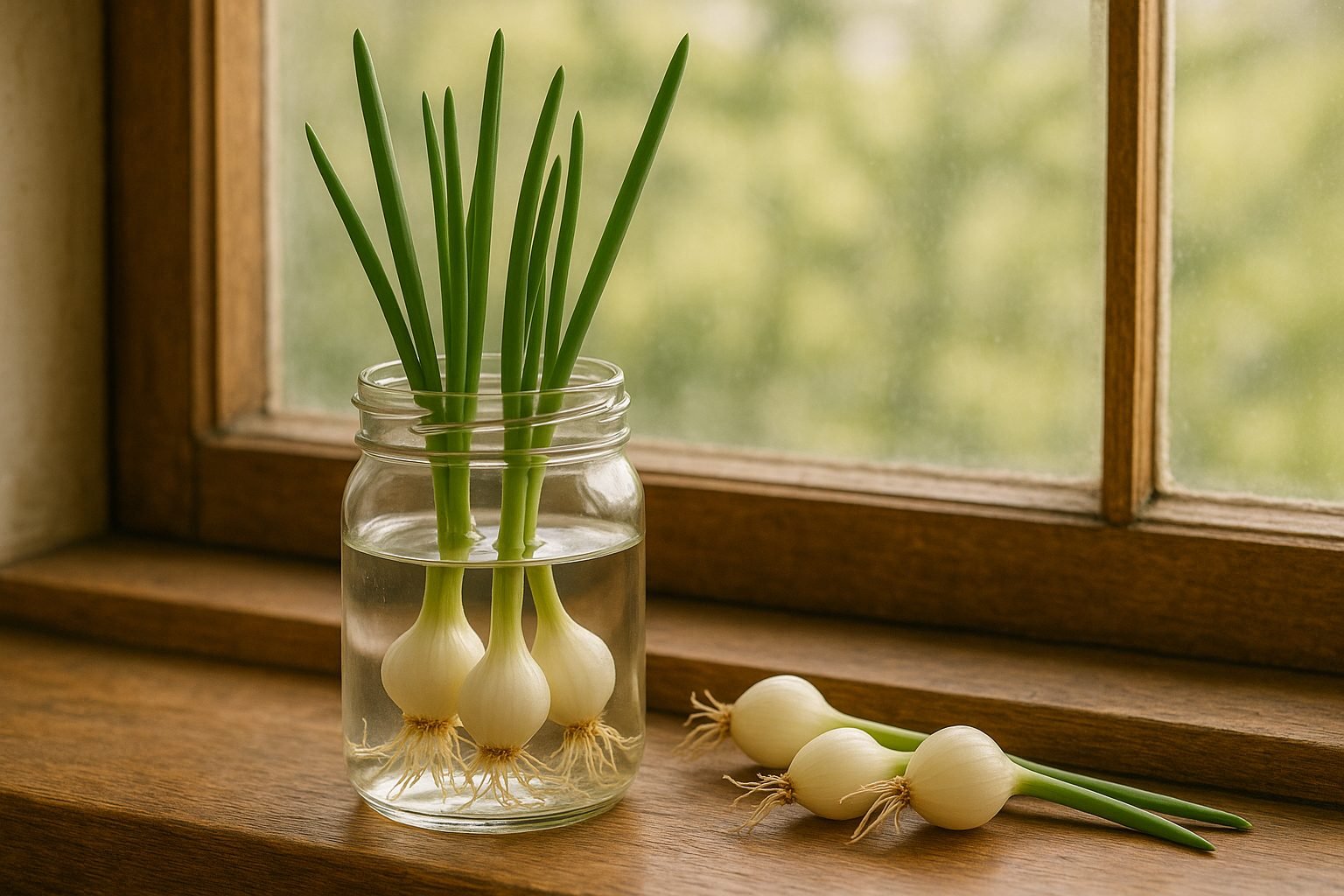
Regrowing green onions from kitchen scraps is surprisingly easy and rewarding. Start by saving the white bulbs with roots after using the green tops.
Place these bulbs root-side down in a glass of water, making sure the roots are submerged while the tops stay above water. Set the glass on a sunny windowsill and change the water every couple of days to keep it fresh.
In less than a week, you’ll notice new green shoots sprouting. Once the stalks reach about 5-6 inches, you can snip what you need or transplant the bulbs into soil for a continuous supply.
If growth slows or the bulbs become mushy, simply start fresh with new scraps for ongoing harvests.
Harvesting and Using Green Onions
Green onions are ready to harvest when their stalks reach about six to eight inches tall and appear full and vibrant. If the bulbs just peek above the soil, that’s a good sign they’re mature. To harvest without harming the plant and encourage regrowth, use clean scissors to snip the green tops about an inch above the white base, leaving the roots and a bit of the stalk in the ground.
After harvesting, store green onions unwashed in a sealed bag in the fridge for up to a week. Freshly snipped green onions add a mild, zesty crunch to salads, stir-fries, omelets, or even serve as a colorful garnish on soups and baked potatoes.
Dealing with Pests and Common Problems
Green onions can fall prey to pests like onion maggots, thrips, and aphids, as well as diseases such as downy mildew and botrytis leaf blight. To keep problems at bay, rotate crops yearly and avoid overcrowding plants. Water at the base to reduce moisture on the leaves, and remove diseased plants promptly.
If you spot pests, try spraying with insecticidal soap or neem oil. Floating row covers can also help shield plants from insects early on.
Conclusion
Enjoy the ease and rewards of growing green onions at home—it’s a simple, sustainable way to boost your kitchen creativity and garden, no matter your skill level.