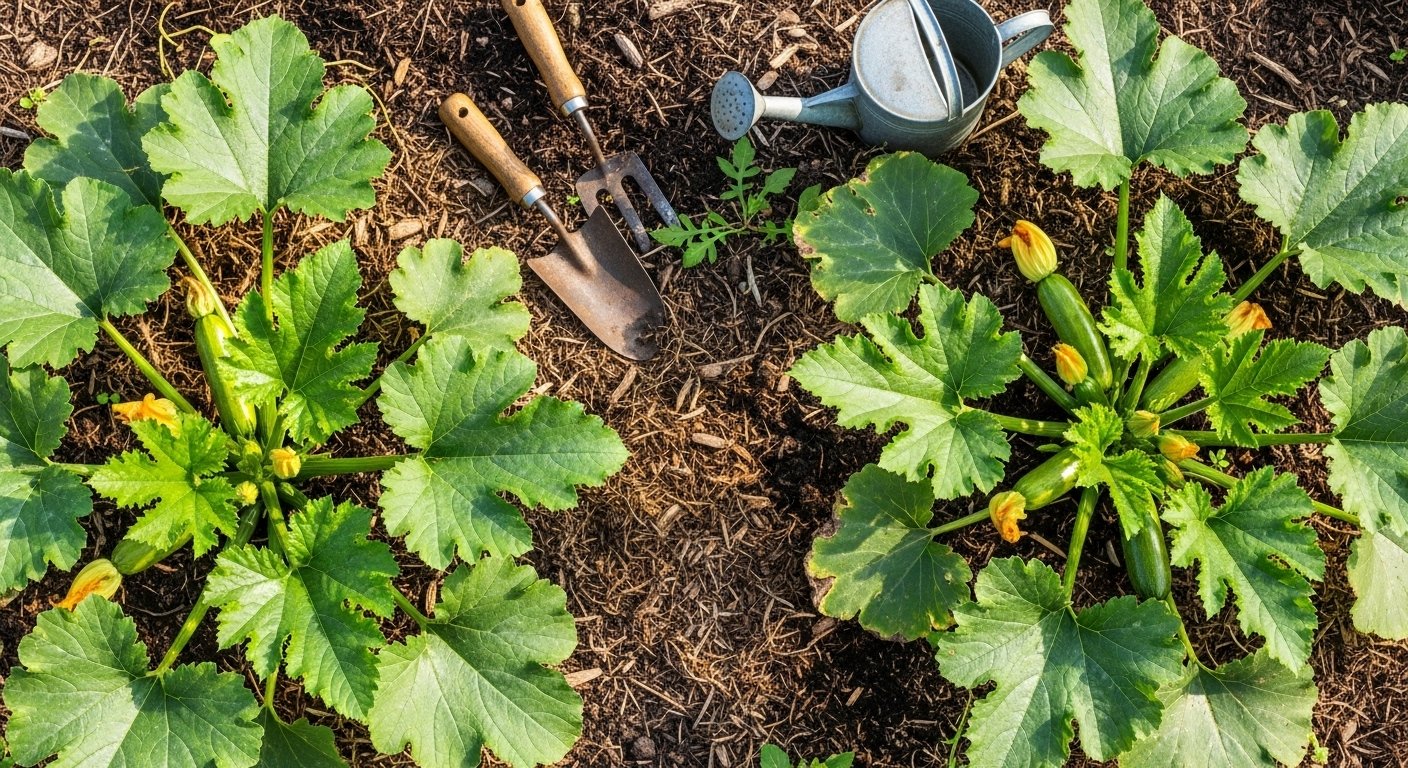
Understanding Zucchini Nutritional Needs
Unlocking the secret to vibrant, productive harvests starts with the right homemade zucchini fertilizer. Fertilizing zucchini is crucial if you’re aiming for lush leaves, vigorous growth, and a bounty of delicious fruits from your backyard garden. Zucchini, like most thriving vegetables, is a heavy feeder—meaning it soaks up nutrients quickly and benefits from a steady supply of all the essentials.
To get the best out of your zucchini, it’s important to understand the three primary macronutrients. First, Nitrogen (N) is the powerhouse behind leafy greens and healthy stem growth. Without enough nitrogen, your zucchini may develop pale, yellowing leaves and look generally weak. Second comes Phosphorus (P), which fuels root development and flower production—a must for setting lots of fruit. A lack of phosphorus can cause stunted plants and dull, purplish leaves. Third is Potassium (K), playing an essential role in overall plant health, disease resistance, and impressive fruit size. Potassium deficiency might show up as browning and curling of leaf edges, or poorly developed fruits.
Don’t stop at the basics though. Micronutrients matter just as much for hearty zucchini. Calcium helps maintain strong cell walls, preventing blossom end rot—a common zucchini woe where fruit tips turn brown and soft. Magnesium, meanwhile, aids in photosynthesis to keep those leaves a rich, healthy green. If your plants start showing yellow between veins (chlorosis), it could be a magnesium shortage.
Symptoms of nutrient deficiencies are your plants’ way of waving a red flag. Watch for slow growth, discolored or curling leaves, fewer flowers, and misshapen fruits. With the right homemade zucchini fertilizer, tailored to suit these needs, you’ll find your zucchini patch thriving in no time. And best of all, you can craft these nutrient-rich blends from everyday kitchen scraps or garden waste, making them both effective and eco-friendly.
Choosing the Best Fertilizer for Zucchini
To help your zucchini plants thrive, it’s important to tailor fertilizer choices to their unique growth stages. In the early stages, zucchini benefit from a balanced NPK (Nitrogen, Phosphorus, Potassium) ratio, such as 10-10-10, which encourages strong root and leaf development.
Once the plants begin flowering and fruiting, shift to a fertilizer higher in phosphorus and potassium—look for ratios like 5-10-10 or 4-6-8, since these nutrients support blossoms and healthy fruit.
When deciding between organic and synthetic fertilizers, consider both their pros and cons:
- Synthetic fertilizers, such as Miracle-Gro Water Soluble All Purpose Plant Food, provide fast, predictable nutrient boosts but can contribute to runoff and soil health decline if overused.
- Organic options, including Dr. Earth Organic Vegetable Fertilizer or compost teas, release nutrients more slowly, improve soil structure, and promote beneficial microbes, though their results may take longer to appear.
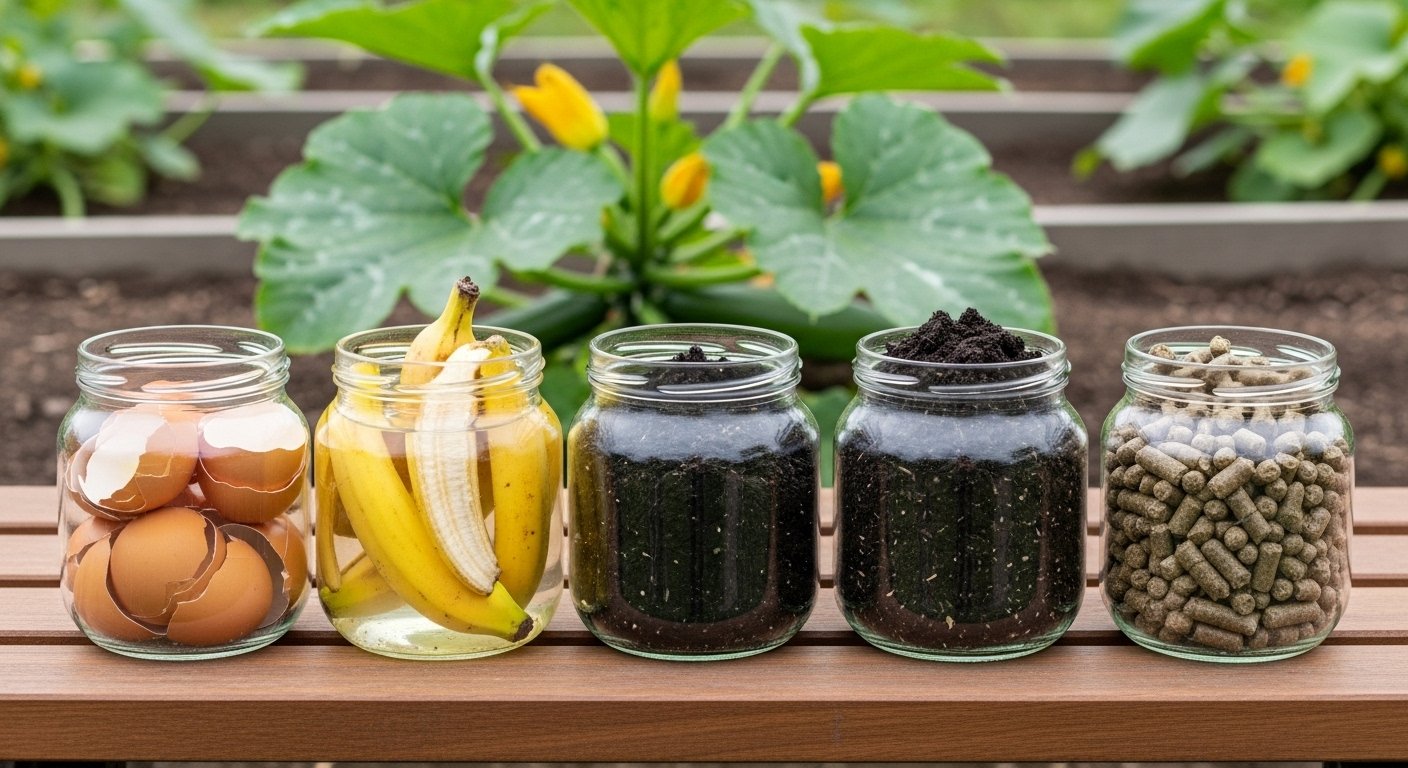
For homemade alternatives, consider adding composted manure, soaking banana peels to create a potassium-rich “tea,” or using crushed eggshells for calcium—a great DIY approach that reduces household waste.
If sustainability is a priority, focus on slow-release organic blends, fish emulsion, or locally sourced compost, all of which nurture your garden in a way that’s kinder to the environment.
Regardless of your choice, always follow label directions and avoid over-fertilizing, which can damage your plants and disrupt the natural ecosystem.
Ultimately, the best fertilizer for your zucchini isn’t about brand or ingredient alone, but about matching nutrient needs to growth stages while making choices that align with your gardening values.
When and How to Fertilize Zucchini Plants
Fertilizing zucchini plants at the right times and using the right methods can make a big difference in your harvest. Start by mixing a balanced, slow-release fertilizer into the soil when planting seeds or transplanting seedlings—this gives young plants steady nutrients as they begin growing.
Once your zucchini plants are established, usually about two weeks after sprouting, start feeding them every 3–4 weeks with a fertilizer high in nitrogen, which supports leafy growth. As flower buds appear and fruit starts to set, switch to a formula with more potassium and phosphorus to encourage healthy blooms and fruit development.
Keep an eye out for pale leaves (a sign of nitrogen deficiency) or poor flowering (which could indicate a need for more phosphorus).
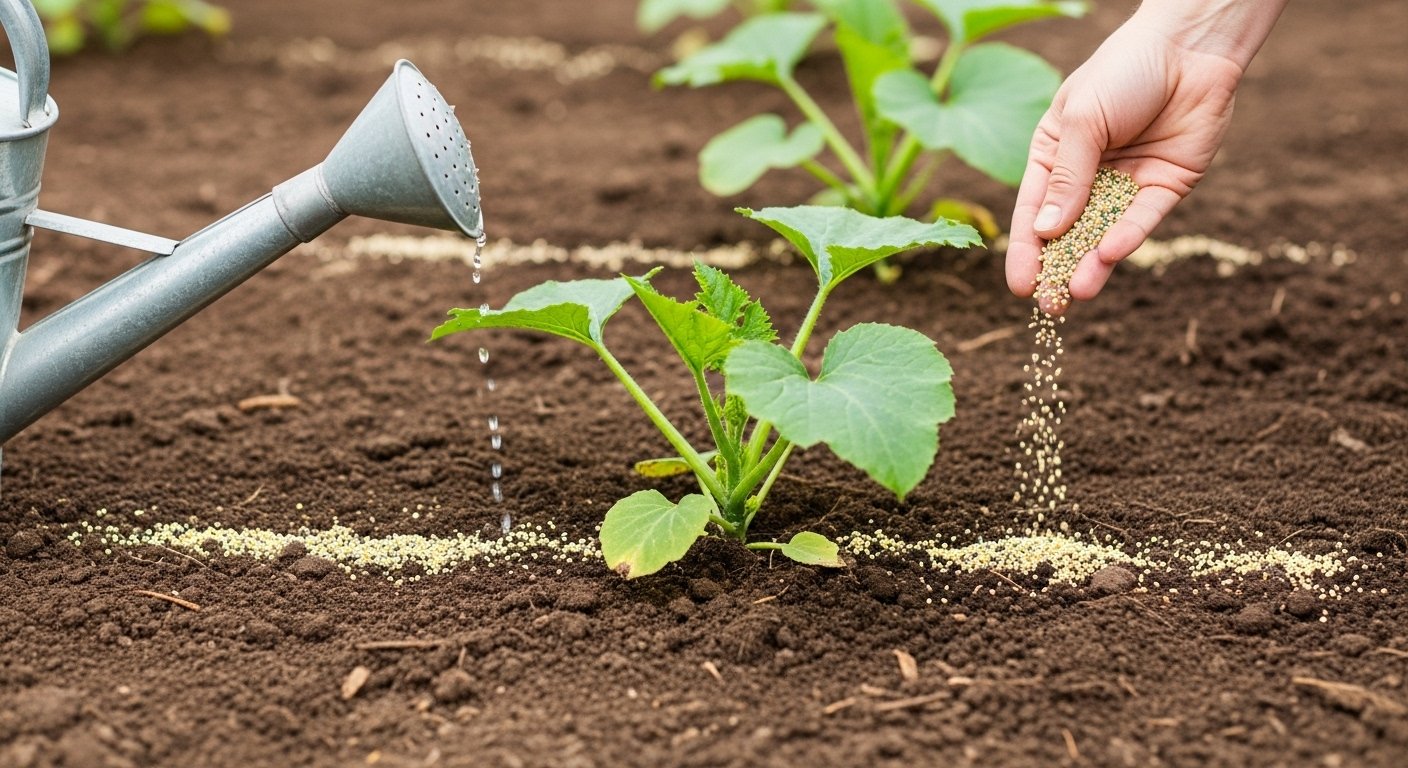
Apply fertilizer using side dressing—sprinkling granules a few inches away from the base of the plant and gently mixing them into the topsoil—or opt for liquid feed, which can be watered in weekly for fast results. Foliar sprays, applied directly to the leaves, help if plants need a quick nutrient boost, especially during fruit set.
Always water your zucchinis thoroughly before and after fertilizing to protect roots from burns and ensure nutrients are absorbed efficiently. Avoid adding fertilizer to dry soil, as this can stress the plants and lead to damage rather than growth.
With these simple steps, you’ll support your zucchini plants from seed to harvest and enjoy healthier, more productive crops.
Watering and Fertilizer: Getting the Balance Right
Water and fertilizer work hand in hand when it comes to growing healthy zucchini, as water helps transport nutrients from the soil to the plant roots. If zucchini plants are overwatered, the excess water can flush valuable nutrients away from the root zone before the plants absorb them, making your fertilizer less effective and even leading to nutrient deficiencies. Conversely, underwatering can leave nutrients inaccessible, as there isn’t enough moisture to dissolve them for uptake.
To strike the right balance, water your zucchini plants deeply and consistently, aiming for about one inch of water per week, either from rainfall or supplemental watering. The best time to water is early in the morning, which allows leaves to dry quickly and reduces disease risk.
Always water at the base of the plant, not over the foliage, to ensure moisture and fertilizer reach where they’re needed most. Avoid shallow, frequent watering sessions, which encourage weak roots and waste both water and fertilizer. After applying fertilizer, use gentle, slow watering to help nutrients move into the soil — but don’t drench the area, or you’ll risk runoff.
Mulching around your zucchini can also help maintain soil moisture and discourage nutrients from washing away during rain or irrigation. By paying close attention to your watering practices, you make sure every drop of fertilizer counts, supporting vigorous growth and a bountiful harvest.
Common Fertilizing Mistakes to Avoid
Many gardeners run into trouble with fertilizer by applying too much, too little, or using the wrong kind. Overfeeding is a classic mistake—adding more fertilizer than plants can use often leads to yellowing leaves, stunted growth, or even root burn.
Another pitfall is placing fertilizer too close to stems or leaves; concentrated nutrients in direct contact with plant tissue can cause scorching, disease, or rot. Always follow package directions and keep a safe distance of a few inches between fertilizer and the base of the plant.
Using “hot” manures like fresh chicken or cow manure is another frequent error, as these release ammonia and excess salts that can burn roots and upset soil balance. Instead, let manure compost well before application.
Many gardeners also make the mistake of not mixing fertilizer properly into the soil, causing uneven nutrient distribution and patchy plant growth. Over-reliance on synthetic fertilizers may throw soil nutrients out of balance, leading to problems like blossom end rot in tomatoes (from calcium deficiency) or poor fruit set.
Watch for warning signs such as yellow leaves (which may indicate nitrogen problems), brown leaf edges (possible salt buildup), or flowers that drop before fruiting. When these symptoms pop up, double-check your fertilizer type, timing, and application method.
Consider conducting a soil test to get an accurate picture of what your garden truly needs rather than guessing and risking further issues.
Encouraging Flowering and Fruit Production
When plants enter their flowering and fruiting stages, their nutrient needs change dramatically—especially for potassium and phosphorus. These elements support robust bloom production and help set healthy, plentiful fruit. To give your plants what they crave, switch to a bloom-boosting fertilizer with higher phosphorus (the middle number in NPK ratios) and potassium (the third number) content once buds start forming.
Liquid feeds or water-soluble fertilizers make it easy to deliver nutrients precisely when and where plants need them. Feeding every two weeks can encourage more blossoms and a stronger fruit set, but always follow the product’s directions to avoid overfeeding.
Besides nutrition, pollination plays a key role in whether flowers turn into fruit. For vegetables like tomatoes or zucchinis, gently shaking the plants or brushing flowers with a small paintbrush can help transfer pollen, especially indoors or in still air. Outdoors, attracting pollinators like bees and butterflies with flowering companion plants ensures more successful pollination.
If you notice blossoms dropping without setting fruit, inadequate pollination or environmental stress (heat, water fluctuations) might be the cause. Try watering your garden consistently to prevent stress, and avoid applying too much nitrogen during flowering, as lush leaves can come at the expense of blooms.
For slow fruiting, double-check the variety’s pollination requirements—some, like squash, need pollen from different flowers to set fruit. Providing the right nutrients, facilitating pollination, and managing stressors will set your plants up for a longer, more productive harvest season.
Fertilizer Tips for Sustainable and Healthy Zucchini Harvests
To grow robust, healthy zucchinis year after year, start by rotating your crops—avoid planting zucchinis or other squash family members in the same spot each season. This simple practice reduces the buildup of pests and diseases, meaning you’ll need less fertilizer and fewer chemicals.
Pairing zucchinis with friendly companions like beans or nasturtiums can further boost growth and resiliency; beans, for example, naturally add nitrogen to the soil, reducing your fertilizer needs.
Mulching around your zucchini plants does double duty by keeping weeds at bay and slowing water evaporation, so soil nutrients stay right where your plants need them.
When choosing fertilizers, opt for balanced, organic options like well-composted manure or certified organic blends. Always follow application instructions—too much can harm your plants and the environment.
Consider using slow-release fertilizers or side-dressing with compost as the season progresses to keep soil healthy for the long term.
Don’t be afraid to experiment: try different organic amendments or companion plants, and observe how your zucchinis respond. Share your successes (and lessons learned) with fellow gardeners—you might inspire the next great tip for sustainable harvests!