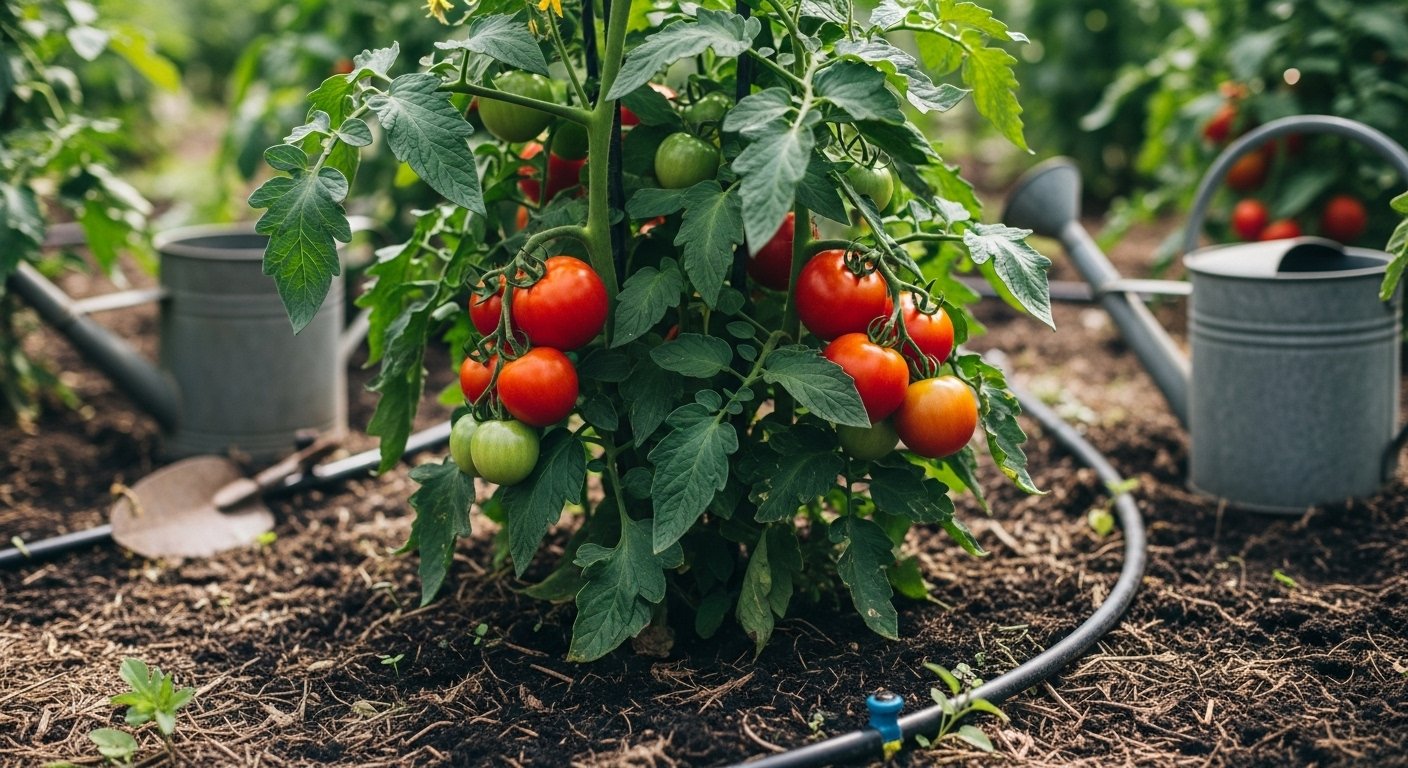
Why Watering Matters for Tomato Plants
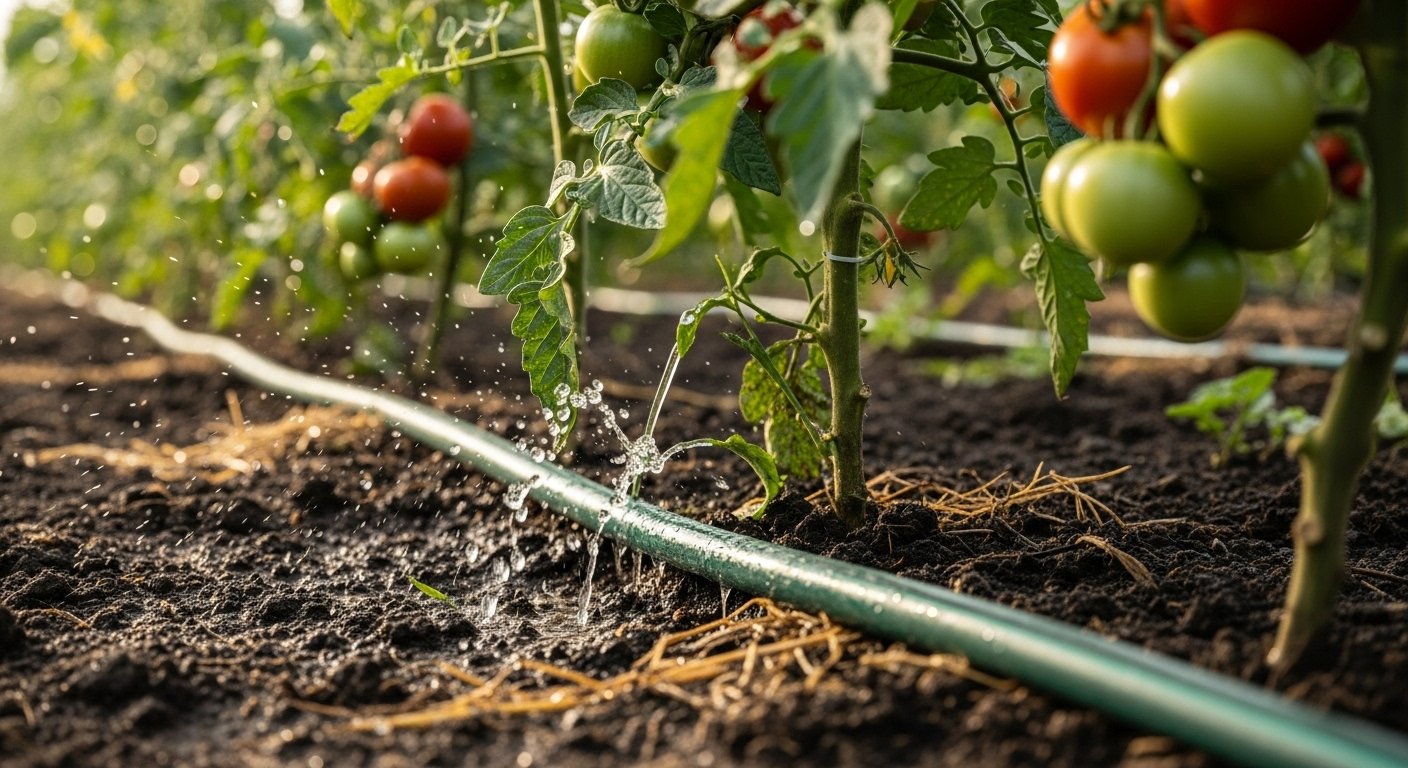
Watering tomatoes might seem straightforward, but getting it right can be the difference between a bumper crop and disappointing results. Tomato plants are thirsty, high-energy growers that rely heavily on a steady supply of moisture to thrive and produce juicy, flavorful fruit.
Proper watering is fundamental to their health: when tomatoes receive consistent moisture, they develop deep, expansive roots, lush foliage, and robust vines capable of supporting heavy clusters of fruit. Well-watered tomatoes are also more likely to fend off common diseases because their roots are strong and their leaves don’t experience the stress that comes from drought.
On the other hand, underwatering can quickly lead to drooping leaves, blossom drop, and underdeveloped or cracked fruit. If you’ve ever bitten into a bland, mealy tomato, inconsistent watering could be to blame. However, overwatering creates its own set of headaches—the soggy soil suffocates roots, discourages nutrient uptake, and encourages soil-borne diseases like root rot and fungal infections.
This is why finding the right watering balance is essential for both plant vigor and fruiting success. Pay attention to the weather, soil moisture, and the specific needs of your tomato variety—a deep, infrequent watering schedule often works best, helping encourage roots to reach deep for water and nutrients.
Remember, a little extra attention to watering tomatoes can mean healthier plants and a more rewarding harvest, so don’t underestimate this simple, yet vitally important step.
Recognizing When Your Tomato Plants Need Water
Knowing when your tomato plants need water can make the difference between a vigorous harvest and struggling vines. One of the clearest signs that your tomatoes need a drink is wilted or drooping leaves, especially during the hottest part of the day. If the leaves perk back up in the evening, your plants are just reacting to heat, but if they stay limp, it’s a sure sign they’re thirsty.
Brown, crispy leaf edges, dry patches on the plant, or soil that feels dusty and tight around the roots also signal that water is needed. To be confident, try the simple finger test: stick your finger about an inch into the soil next to the plant. If it feels dry at your fingertip, it’s time to water. For more precision, a basic soil moisture meter can be a handy and affordable tool.
While it’s important to avoid drought, overwatering can be just as damaging. Watch out for yellowing leaves, particularly if they are soft or mushy, and for slowed plant growth—these may be signs that roots are drowning or developing rot. Overwatered soil often feels soggy even an inch below the surface and may smell sour.
Remember, tomatoes do better with deep, infrequent soakings rather than daily sprinkles. Consistently monitor these clues, and you’ll help your tomatoes thrive all season long.
How Often to Water Tomatoes (Soil Type, Stage, and Weather)
Watering tomatoes requires a bit of observation and adjustment because their needs change depending on where and how they’re growing, the soil around them, and the weather. If you’re growing tomatoes in traditional garden beds or raised beds with loamy soil, aim to water deeply about 2–3 times a week, adjusting based on rainfall and temperature. Loamy soil holds moisture well, so check the top few inches; if it feels dry, it’s time to water.
In sandy soil, water drains quickly, so you might need to water every other day, especially during hot spells. Clay soils, on the other hand, hold onto water longer but can become compacted—water more slowly, less often, and monitor for sogginess to avoid root rot.
If your tomatoes are in containers, they tend to dry out fastest; check them daily during summer, sometimes needing water both morning and evening when it’s blazing hot.
At the seedling stage, keep soil consistently moist but not soaked to encourage steady root development—a gentle daily drink often does the trick. Once your plants start flowering and setting fruit, their water needs spike; this is the most critical time, as uneven watering here can cause issues like blossom end rot or cracked fruit.
During persistent rain, stop watering entirely and watch for signs of excess moisture. Conversely, during heat waves or windy days, increase watering frequency, even for in-ground beds. Humidity also plays a role; dry air causes soil moisture to evaporate faster, while humid weather means the soil will stay damp longer, so adjust watering accordingly.
In practice, stick your finger in the soil up to the first knuckle—if it’s dry, water; if it’s damp, wait a bit. Using mulch helps retain moisture and keeps things more consistent, reducing both over- and under-watering risks.
With a bit of routine checking and adapting, you’ll find the right rhythm for your setup and climate, leading to stronger, healthier tomato plants and better harvests.
Best Practices for Watering Tomatoes
Watering tomatoes correctly can make a huge difference in the size, flavor, and health of your crop. The ideal time to water is in the early morning, around sunrise. This lets the plants absorb moisture before the heat of the day causes rapid evaporation and helps foliage dry quickly, which lowers the risk of fungal diseases like blight.
When watering, aim for deep irrigation at soil level rather than simply sprinkling the surface or wetting the leaves. Shallow watering encourages small, weak root systems and disease. Utilizing techniques like drip irrigation or soaker hoses delivers water right to the roots where it’s needed most, reduces waste, and keeps the leaves dry.
If you water by hand, use a gentle flow and direct it near the plant’s base, soaking the roots without splashing dirt onto the foliage. Avoid common mistakes like watering the leaves, which can invite disease, or sticking to a haphazard schedule; tomatoes prefer consistent moisture.
Always check the soil first—poke your finger an inch deep, and if it’s dry, it’s time to water. Remember, over-watering is just as harmful as under-watering, leading to root rot or split tomatoes. By sticking to a regular routine and focusing on deep, targeted watering during the cooler parts of the day, you’ll give your tomato plants the best chance to thrive.
Troubleshooting Watering Problems
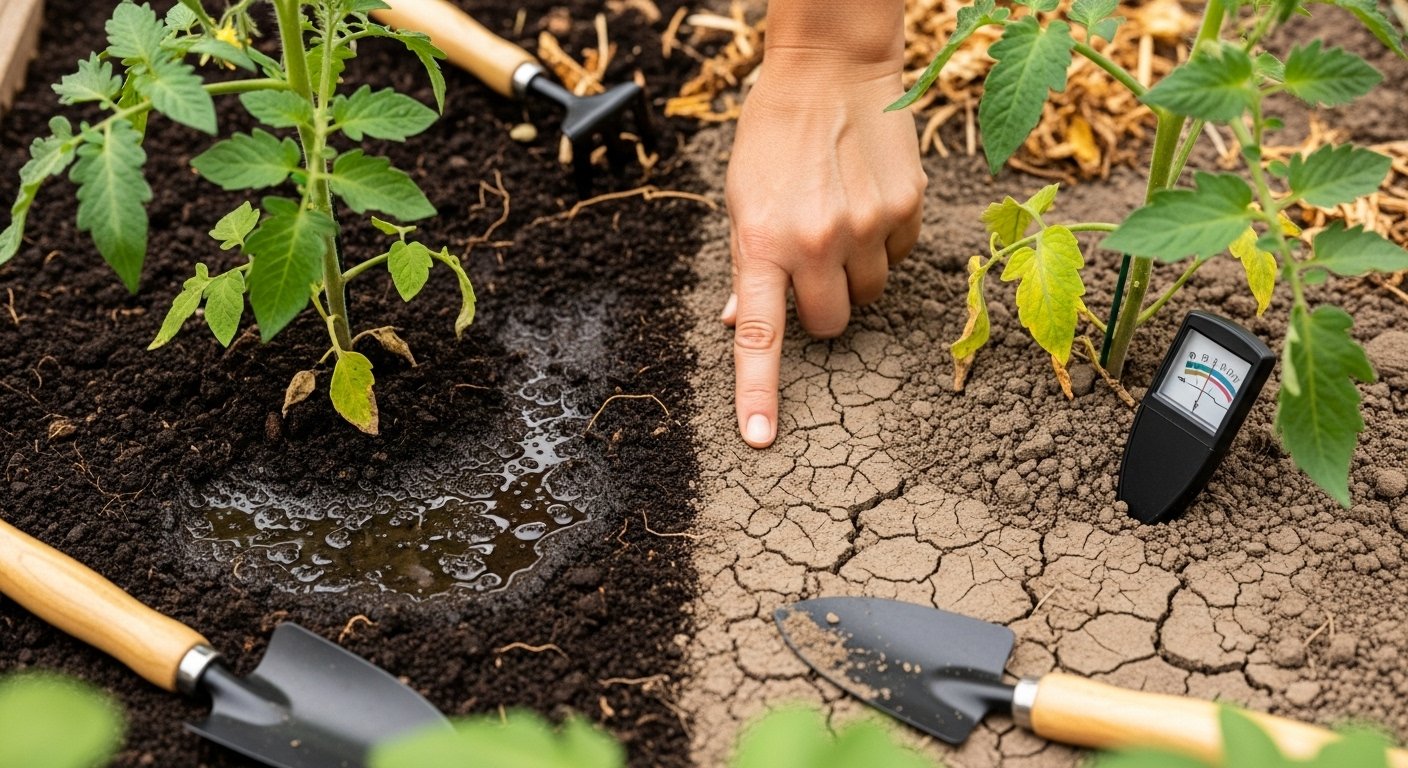
If your tomato plants are struggling, watering issues are often to blame. The good news is that most problems are fixable with a few quick changes.
For overwatering, check soil moisture by sticking your finger about an inch deep. If it feels soggy, wait until it dries before watering again. Consider adding mulch or improving soil drainage to help prevent excess moisture.
Underwatered plants will look wilted, and their leaves may curl. Try watering thoroughly at the base in the morning, and check soil moisture daily during hot spells. Using a drip hose can help keep watering consistent.
Uneven watering, which can show as cracked fruit or yellowing lower leaves, can be solved by watering at the same time each day and ensuring the soil is evenly soaked—but not flooded.
During drought, use mulch to help the soil retain moisture and water deeply but less often to encourage strong roots. If you’re dealing with a lot of rain, improve drainage with raised beds or add compost to prevent root rot.
To revive stressed or damaged tomato plants, prune away dead or yellowing leaves, support drooping stems, and add a diluted liquid fertilizer to give them a gentle boost.
Keeping a simple watering schedule and observing your plants regularly will help you spot and fix issues early, leading to healthier and more productive tomatoes.
Extra Tips for Healthier Tomato Plants
Mulching is a simple yet powerful way to keep your tomato plants thriving all season. By spreading a two- to three-inch layer of organic mulch—like straw, shredded leaves, or grass clippings—around your tomatoes, you create a natural barrier that locks moisture into the soil, keeps roots cool, and reduces the need for frequent watering. Mulch also suppresses weeds that compete for water and nutrients, and as it breaks down, it improves the soil’s structure and fertility.
In addition to mulching, companion planting can help maintain soil health and moisture. Pairing tomatoes with basil or marigolds, for example, not only deters pests but also creates shade at the soil level, helping to prevent evaporation and enrich the soil. Some companion plants add organic matter back into the earth when pruned or at the end of the season.
For watering, eco-friendly approaches make a noticeable difference. Collecting rainwater in barrels gives you a free, chlorine-free source that’s gentle on tomato roots. When it comes to delivery, a soaker hose is a gardener’s best friend—it drips slowly at the base, delivering water right to the roots and avoiding waste from evaporation or runoff. Watering early in the morning reduces loss to heat and helps leaves dry quickly, which means less risk of fungus.
By combining mulching, smart plant pairings, and eco-friendly watering habits, you’re building a healthier, more resilient tomato patch with less effort and a smaller environmental footprint.