
Introduction to Purple & Okinawan Sweet Potatoes
If you’re looking to grow purple sweet potatoes at home, especially the Okinawan variety, you’re in for a treat. These vibrant tubers are famous for their deep purple flesh and unique sweet, nutty flavor that stands out in any dish.
Not only do they bring a pop of color to your table, but purple sweet potatoes are also loaded with antioxidants and essential vitamins, offering a healthy boost with every bite. Ready to try something deliciously different in your garden?
Choosing the Right Variety
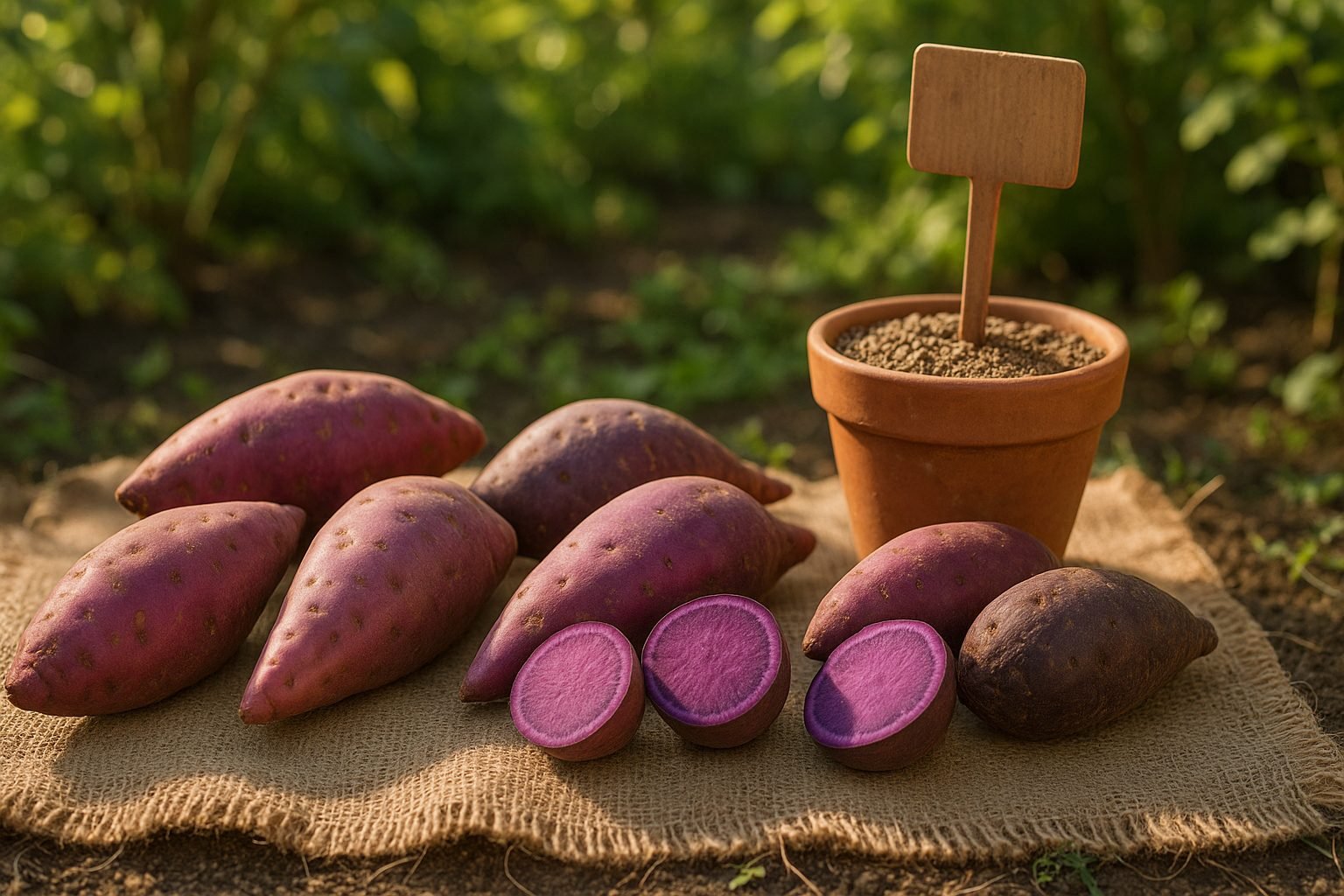
When picking a purple sweet potato variety, consider your needs and growing environment. The Okinawan type, with deep purple flesh and a creamy texture, offers a mildly sweet, almost nutty flavor. Others—like Stokes Purple—are earthier and denser, featuring a vibrant, bold color.
Okinawan potatoes thrive in warmer climates and sandy, well-draining soils, while Stokes can tolerate slightly cooler temperatures. For best results, select slips or tubers that are firm, free from blemishes, and have healthy sprouts—avoid anything soft or shriveled to ensure a strong, productive start.
Planting and Growing Basics
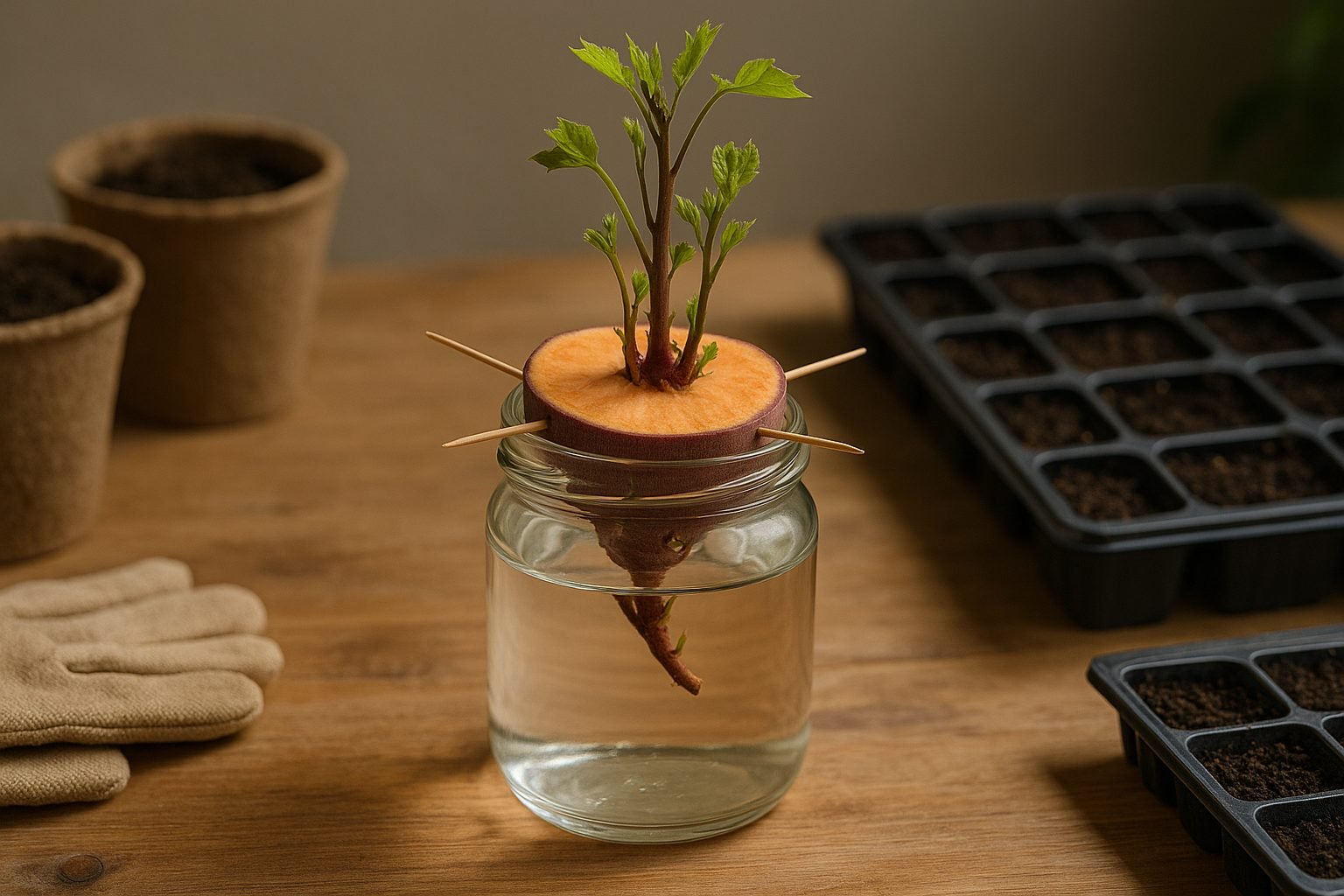
To start sweet potato slips, cut a mature tuber in half and suspend it partly in water using toothpicks, making sure the bottom stays moist. Sprouts should appear in about two weeks.
Once the slips reach 6-8 inches, break them off and plant them after the last frost date for your region, since sweet potatoes thrive in warm, frost-free conditions.
Choose a sunny spot and prepare loose, well-drained soil enriched with compost to encourage tuber development. Space the slips about 12-18 inches apart in raised rows or ridges to improve drainage.
Cover young plants with row covers early on to deter pests like flea beetles, and provide steady moisture without waterlogging to promote strong root growth.
Caring for Your Sweet Potato Patch
Caring for your sweet potato patch involves a few key routines to encourage healthy growth all season long. Water consistently, keeping the soil moist but not soggy, especially during dry spells. Fertilize monthly with an organic, balanced fertilizer to support strong vines and tuber development.
Adding a thick layer of mulch—such as straw or grass clippings—helps retain moisture, suppress weeds, and keep the soil cool. Watch for common pests like sweet potato weevils or leaf-eating beetles, and consider using neem oil, hand-picking, or beneficial insects as natural controls.
Stay alert for fungal diseases too—good airflow and drip irrigation minimize risk. Regular, gentle care rewards you with a delicious, bountiful harvest.
Harvesting & Storage
To know when purple sweet potatoes are ready to harvest, look for the leaves to start yellowing and dying back about 100 to 120 days after planting. Use a garden fork or your hands to gently loosen the soil, being careful not to jab or cut the tubers, as they bruise easily.
Once harvested, cure the sweet potatoes by laying them out in a warm (85°F), humid spot with good airflow for 7 to 10 days. This process improves their sweetness and helps toughen the skins for storage.
After curing, store the sweet potatoes in a cool, dark place (55–60°F) with moderate humidity to keep them flavorful for months.
Culinary Uses & Nutritional Benefits
Purple sweet potatoes are packed with antioxidants, especially anthocyanins, which give them their vibrant color and help fight cell damage. They’re also a great source of fiber, vitamin C, and potassium, making them a nutritious addition to any meal.
For a quick side, simply roast slices with a drizzle of olive oil and a sprinkle of sea salt. You can mash them, add them to soups, or swap them into your favorite baked goods for a beautiful purple twist.
In Hawaii, they star in poi, while Japanese cuisine features them in tempura and desserts. Try them in smoothie bowls or even homemade gnocchi for a fun twist.
Conclusion & Inspiration
Growing purple sweet potatoes provides a rewarding harvest and adds a delicious, nutrient-rich touch to your meals. Don’t hesitate to experiment with new growing techniques or creative recipes like purple mash or baked fries. Explore local gardening groups, online forums, or YouTube tutorials for more tips, and embark on your colorful sweet potato journey today!