Introduction
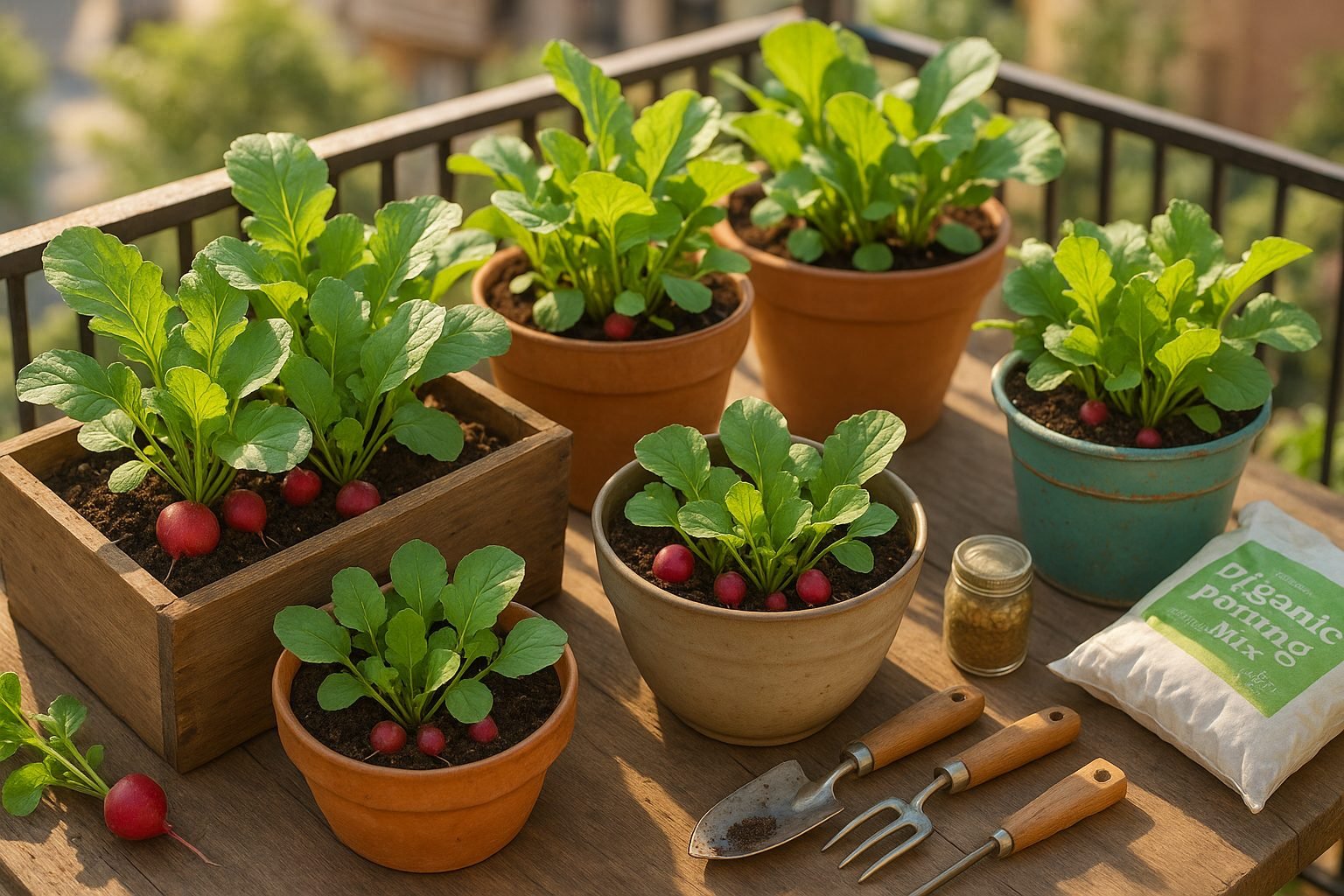
If you’re looking for a quick and rewarding gardening project, growing radishes in pots could be your perfect match. Radishes are fast-growing vegetables that thrive in containers, even when space is limited, making them ideal for balconies, patios, or windowsills. Their speedy harvest—sometimes in as little as three weeks—means you’ll see results and enjoy fresh, crunchy radishes faster than almost any other crop.
Plus, these hardy root veggies are resilient and beginner-friendly, requiring only a few simple steps to get started, even if you don’t have much gardening experience. In this guide, we’ll cover everything you need to know about growing radishes in pots: from choosing the right variety and soil, to watering tips, sunlight needs, troubleshooting common issues, and harvesting your crop for the best flavor.
If you’re eager to turn even the smallest space into a productive little garden, read on!
Choosing the Right Radish Varieties for Pots
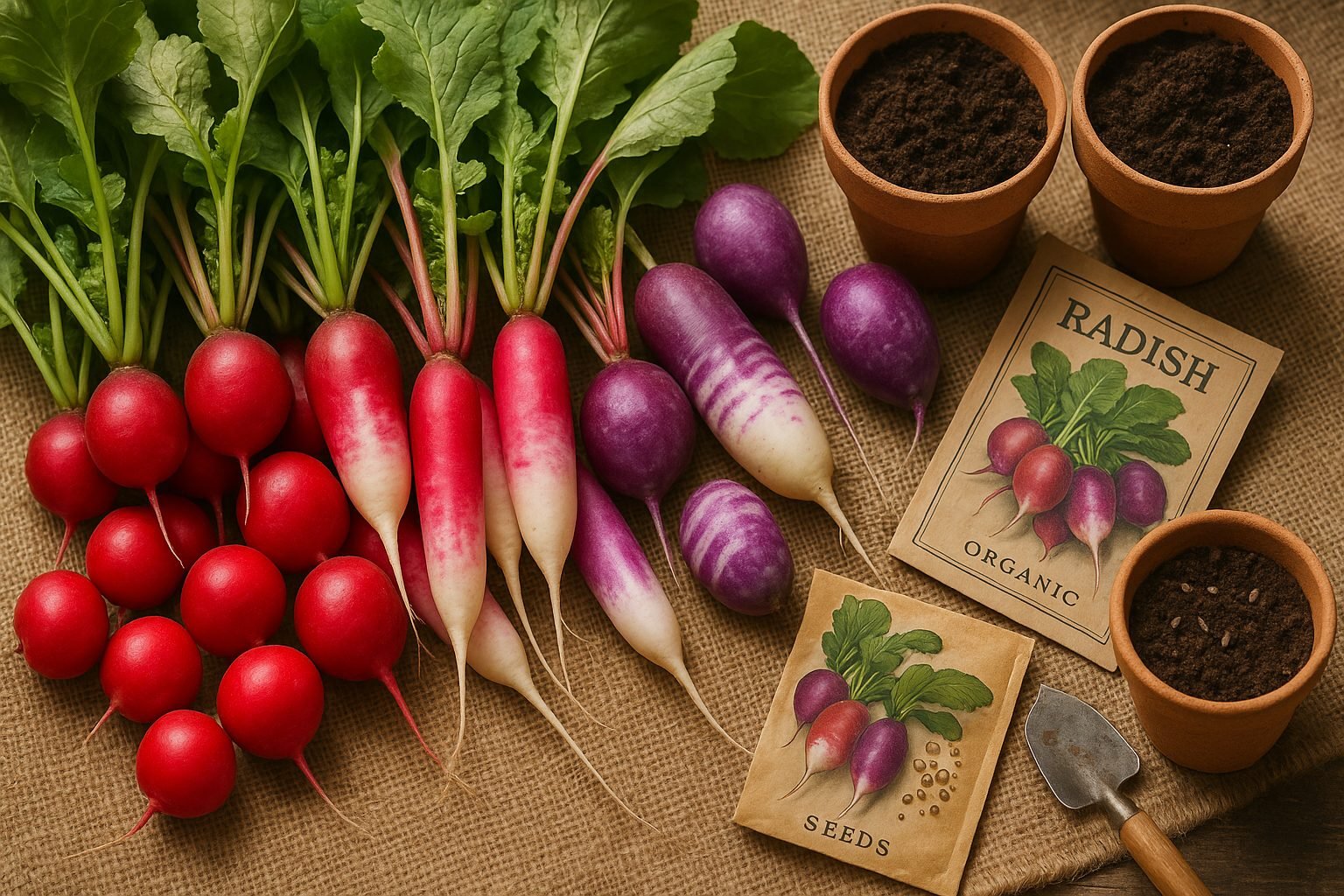
Selecting the right radish variety is key to success when growing them in pots, as not all types thrive in confined spaces. Compact, quick-maturing varieties like Cherry Belle and French Breakfast are favorites for container gardeners.
Cherry Belle produces crisp, round roots with a mild, slightly peppery flavor and matures in as little as 22 days, perfect for impatient growers. French Breakfast offers an elongated shape and tender texture, with a subtle sweetness that makes it popular in salads; it’s also fast, ready in about 25 days.
Smaller radish types are ideal for pots because they don’t need deep soil and can be sown closely together for a plentiful harvest. When sourcing seeds, look for reputable brands online or at local nurseries, and always check the packaging date to ensure freshness—old seeds can result in poor germination. Also, consider organic or heirloom options if you want unique flavors or colors.
Don’t be afraid to mix varieties for a colorful crop, but make sure all your chosen types mature around the same time to simplify harvesting. Quality seeds and the right variety choices can turn even a small balcony container into a surprisingly productive radish patch.
Essential Supplies and Preparing Your Container
Starting your radish container garden is simple with a few essentials: a pot, high-quality potting soil, radish seeds, water, and a balanced fertilizer. When choosing your container, aim for one that’s at least 6 to 8 inches deep to give radish roots enough space to grow. A window box, wide planter, or even a repurposed food-grade bucket works well.
Make sure your pot has ample drainage holes to prevent waterlogged soil, as standing water can quickly rot radish roots. For soil, opt for a loose, well-draining mix—look for bagged potting soils labeled for vegetables or make your own by mixing equal parts compost, peat moss, and perlite. Avoid using plain garden soil, which often compacts in containers and hampers root growth.
Sprinkle a slow-release vegetable fertilizer into the soil before planting to give your radishes a healthy head start. Place your container somewhere that receives at least six hours of direct sunlight each day—think patios, balconies, or a sunny spot near a south-facing window. Not enough light results in leggy plants and small, bitter radishes, so adjust as needed.
Remember to keep your soil evenly moist, checking daily, especially as seedlings emerge. With the right setup, you’ll be harvesting crisp, homegrown radishes in no time.
Step-by-Step Guide to Sowing and Growing Radishes in Pots
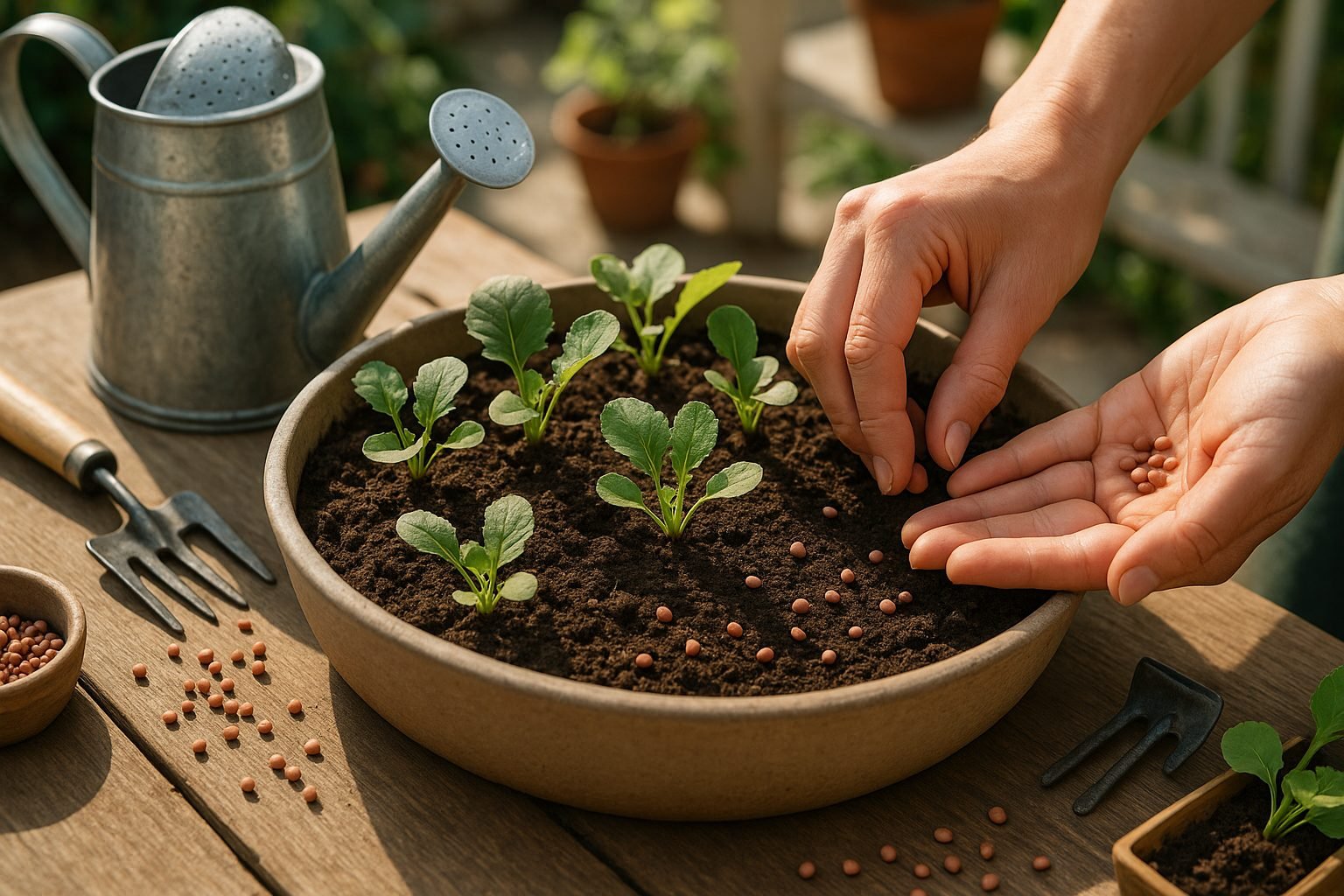
Growing radishes in pots is a quick and rewarding way to enjoy crisp, homegrown veggies—even if you have limited space. Start by choosing a shallow, wide container about 6–8 inches deep, since radishes don’t need much root room.
Fill the pot with a loose, well-draining potting mix, and sow seeds about ½ inch deep. Space them an inch apart for smaller varieties (like Cherry Belle) or about 2 inches apart for larger types.
Spring and fall are ideal times to plant, as radishes prefer cooler weather. Aim to sow seeds two to three weeks before the last expected frost for spring crops or in late summer for fall harvests.
Keep the soil consistently moist, but not soggy. Water lightly every day or every other day, especially once seedlings emerge.
Radishes thrive with 6+ hours of sunlight daily, so place pots on a sunny patio or balcony.
When seedlings are about two inches tall, thin them so the strongest remain spaced 2 inches apart. Crowded plants will form small or misshapen roots.
Because nutrients leach quickly from container soil, feed your radishes every two weeks with a diluted, balanced liquid fertilizer. Avoid too much nitrogen, which encourages leafy tops at the expense of roots.
Monitor growth regularly—radishes mature fast, often in just 25–35 days. Check their progress by gently brushing back soil near one root; harvest as soon as bulbs reach about an inch across for the best flavor and texture.
With prompt harvesting and attentive care, you’ll enjoy crunchy, peppery radishes straight from your own potted garden in no time.
Common Issues and How to Avoid Them
Growing radishes can be easy, but beginners often face a few common problems like overcrowding, bolting (when plants flower too soon), pest damage, and poor seed germination.
To avoid overcrowding, always follow seed packet instructions—thin seedlings to around two inches apart once they sprout. This gives each plant space to develop round, crunchy roots instead of stunted, misshapen ones.
Bolting happens most often in hot weather or when radishes get too little water. Plant them in cooler months and keep the soil evenly moist to help prevent this.
Watch for pests like flea beetles or root maggots, which chew holes in leaves or roots. Using row covers and rotating crops each season can keep these pests at bay.
If your seeds won’t sprout or the seedlings look sparse, check that the soil stays moist but not soggy and that you’re not planting too deep; radishes like to be about half an inch below the surface.
Healthy radish plants have perky, dark green leaves and develop round, firm bulbs. Stressed plants look wilted, yellow, holey, or bolt prematurely with small, stringy roots.
For quick troubleshooting, ask yourself these questions:
- Did I thin my seedlings?
- Are leaves green and unchewed?
- Is the soil moist but well-drained?
- Am I planting in the right season?
Addressing these simple checks often leads to a rewarding radish harvest, even for complete beginners.
Radish Companion Plants and Maximizing Space
Companion planting is a smart strategy for making the most of your container garden, especially if space is tight. By growing radishes alongside compatible plants like lettuce, spinach, or a mix of herbs such as cilantro and chives, you can boost both your harvest and the health of your mini garden.
For example, radishes and lettuce have different root depths—radishes grow down while lettuce spreads its roots closer to the surface—so they don’t compete for resources. Herbs like chives and cilantro not only tuck easily into small pockets of soil but also help deter pests that commonly bother radishes, such as aphids.
By mixing these plants together, you’ll fill every inch of the soil, shade out weeds, and discourage pests naturally—no chemicals needed. Try sowing quick-growing radish seeds between slower crops like lettuce, so you can harvest the radishes before the lettuce matures, making room for both without overcrowding.
This layered approach turns a single pot or box into a mini food forest, giving you more variety and better yields in even the smallest spaces.
Harvesting and Enjoying Your Radishes
Radishes are ready to harvest when their shoulders—those colorful tops—peek just above the soil line and measure about one inch across. If you wait too long, radishes can become woody and lose their crisp flavor, so check them regularly 3–4 weeks after sowing, especially with fast-growing varieties.
To pick without disturbing nearby plants, gently loosen the surrounding soil with a hand fork or trowel, then grasp the radish tops near the root and pull straight up. If you’re growing in rows, harvest the biggest radishes first, allowing smaller ones more time to mature.
Once harvested, give radishes a quick rinse and enjoy them in simple meals—try slicing them into salads, pairing them with butter and sea salt, or layering them on avocado toast for extra crunch. For a tangy kick, pickle them in vinegar with a pinch of sugar and your favorite herbs.
To keep the radish harvest going, sow a fresh batch every couple of weeks throughout the cooler months; this way, you can enjoy crisp, spicy radishes all season long with minimal effort. Happy gardening and happy snacking!
Conclusion
Growing radishes in pots is surprisingly easy and rewarding—perfect even for beginners or those with limited space. With just a container, quality soil, and a sunny spot, you can enjoy crisp, fresh radishes in a matter of weeks.
Don’t be afraid to experiment with colorful varieties like French Breakfast or Cherry Belle, and try companion planting with lettuce or herbs to maximize your harvest. The key is to simply get started; you’ll be amazed at how quickly those tiny seeds turn into something delicious right on your patio or windowsill.
Grab a pot and some seeds today—your garden adventure awaits!