Why Grow Onions From Seed
If you’ve been curious about saving onion seeds, you’re not alone. More and more gardeners are discovering the value of starting onions from seed rather than relying on sets or pre-grown seedlings. Choosing seeds opens up a world of possibilities—dozens of unique onion varieties, from sweet Walla Walla to pungent Red Torpedo, become available to you. You’ll often find seeds are far less expensive than purchasing sets, making it possible to experiment with new types each year without breaking the bank. Another major bonus? Onions grown from seed tend to develop stronger resistance to diseases often passed along through sets, reducing the risk of crop failure and ensuring healthier harvests.
Deciding whether to try growing onions from seed depends on your gardening experience and goals. For beginners, it can be a rewarding project that introduces you to seed-starting techniques, especially if you’re looking for a specific heirloom or organic variety not found in most garden centers. Experienced gardeners, on the other hand, will appreciate the control that comes with every step—from germination to harvest—and the ability to select regionally adapted or unusual onions. Although starting from seed takes a bit more time and planning (often started indoors in late winter), the payoff is worth it.
Onions are incredibly versatile in the kitchen, showing up in everything from stews and salsas to salads and curries. Whether you want to grow classic yellow, crisp white, or sweet red varieties, all are suitable for saving and planting from seed. By mastering this process, you’ll expand your garden’s flavors and enjoy more self-sufficiency season after season.
Choosing the Right Onion Varieties
When it comes to choosing the right onion varieties for your garden, understanding day-length types is key. Short-day onions, like ‘Texas Sweet’ or ‘Yellow Granex’, form bulbs when daylight lasts about 10–12 hours—making them ideal for southern climates with mild winters. Long-day onions, such as ‘Walla Walla’ or ‘Copra’, need 14–16 hours of daylight and thrive in northern regions with longer summer days. Day-neutral (or intermediate) onions, like ‘Candy’ or ‘Red Stockton’, are more flexible and can grow well almost anywhere, which is great for gardeners in central zones.
If you’re uncertain, check your USDA hardiness zone and match it to the recommended onion type. Also, consider what you’ll use the onions for—mild, sweet varieties are delicious raw in salads and sandwiches, while pungent, storage onions hold up better for cooking and last longer in the pantry.
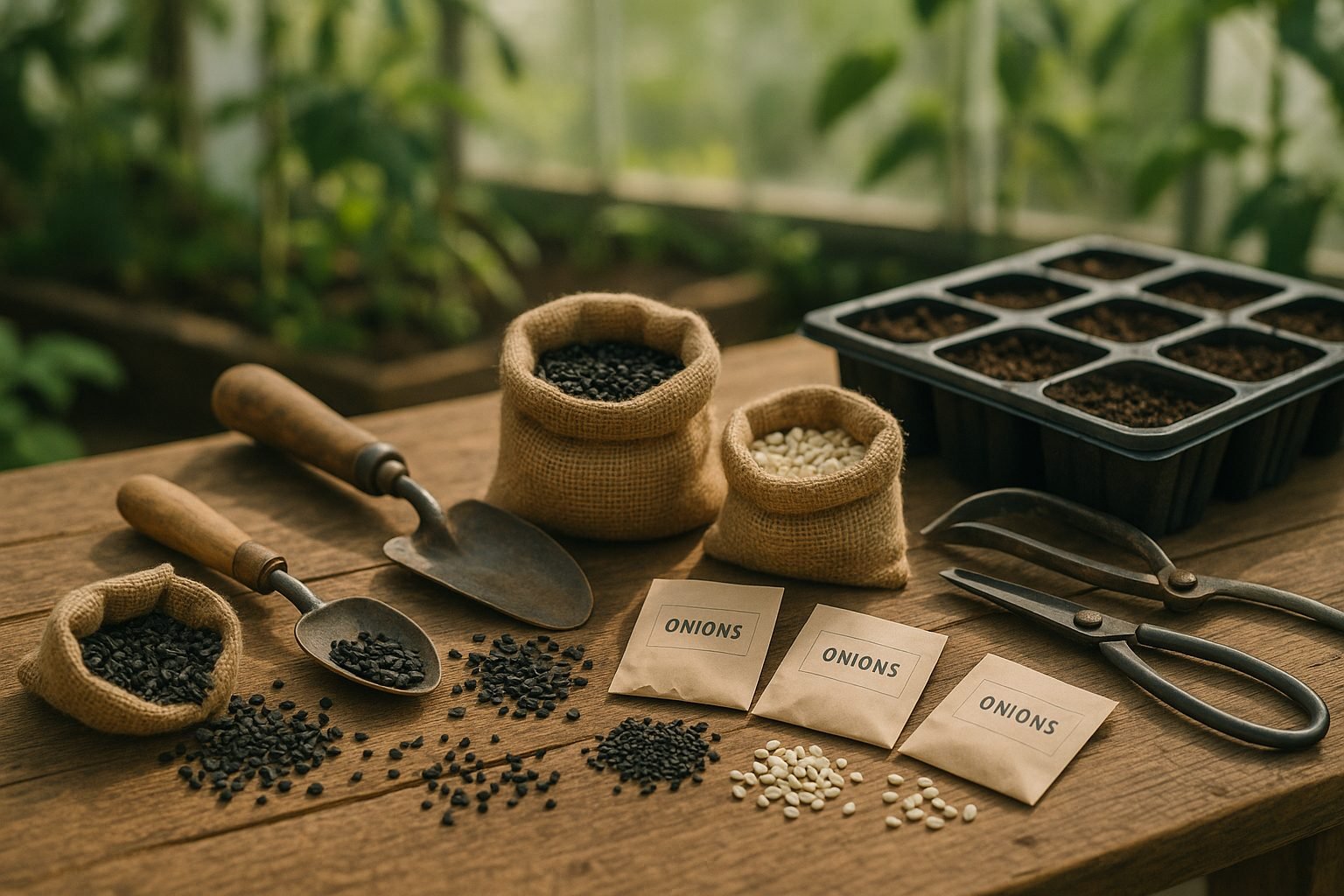
When shopping for seeds, you’ll see pelleted (coated for easier handling and sowing) or loose (uncoated) options. Pelleted seeds are handy for precise planting, especially if you have dexterity concerns. Always check the seed packet’s expiration date—old seeds have reduced germination, so fresh stock gives the best results. Following these simple steps ensures better growth and abundant, flavorful harvests.
When and How to Start Onion Seeds
Starting onion seeds at the right time is key to growing robust bulbs. In most regions with cold winters, it’s best to start seeds indoors 10 to 12 weeks before the last expected frost date—typically late January through early February. If you live in mild-winter or southern climates, you can often sow onion seeds directly outdoors in late fall or early winter, as these areas provide a longer period for onions to mature.
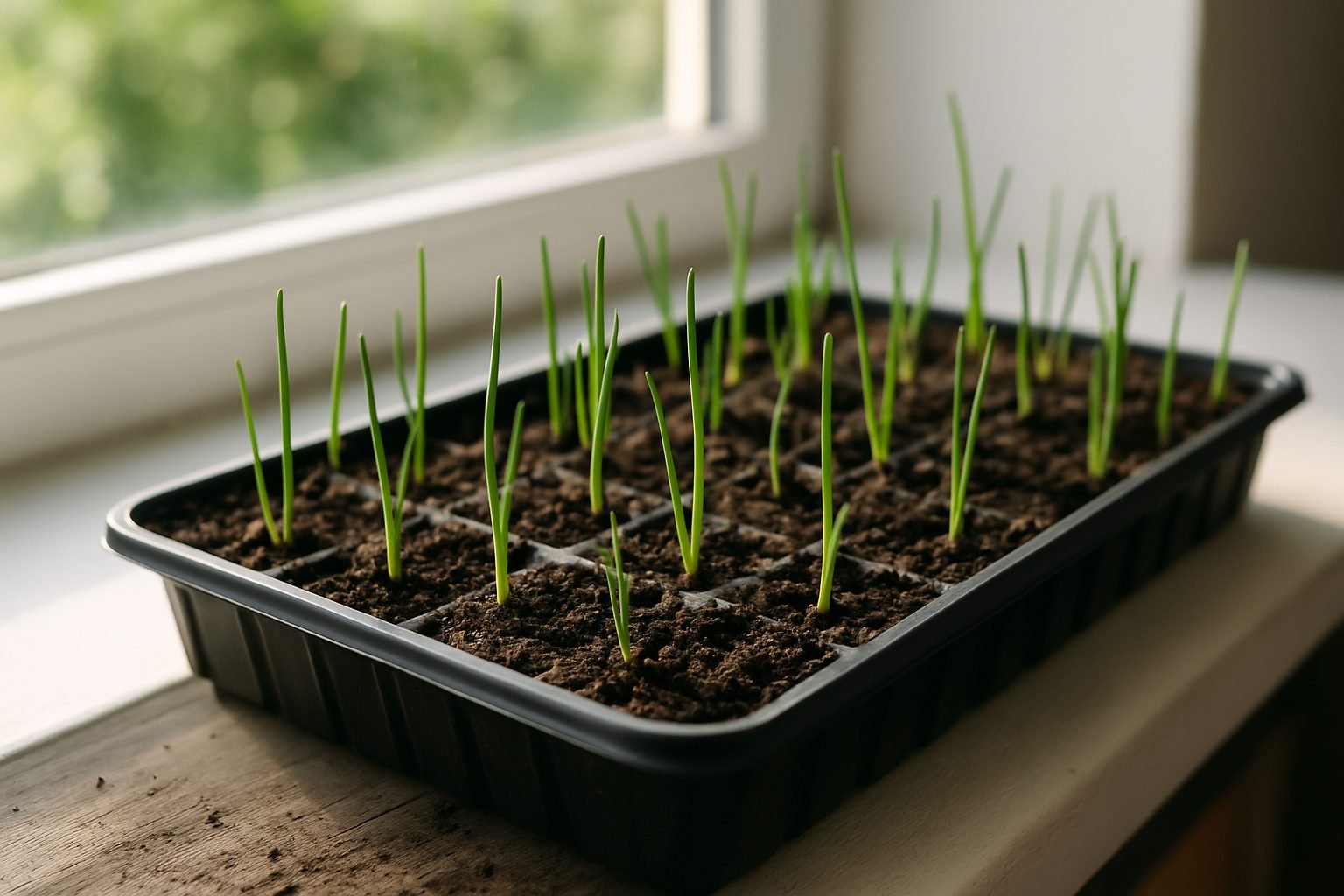
For indoor sowing, choose shallow containers or trays with drainage holes and fill them with a light, well-draining seed-starting mix. Sow seeds about a quarter-inch deep and keep the soil consistently moist but not soggy. Place containers in a bright spot—on a sunny windowsill or beneath grow lights for 12 to 14 hours a day, since onions need ample light from germination onward. Onion seeds usually sprout in 7 to 14 days. Once seedlings appear, thin them so they stand about one inch apart, allowing enough room for each to develop.
For outdoor sowing, wait until the soil is workable and at least 40°F (4°C). Protect young transplants from harsh weather early on by using row covers or cold frames. Whichever method you use, keep seedlings moist and gradually acclimate them to outdoor conditions before transplanting them into your garden.
This careful attention early on helps onions establish strong roots and ensures a healthy harvest come late spring or summer.
Transplanting Onion Seedlings
Knowing when to transplant onion seedlings is key to ensuring a healthy, productive crop. Seedlings are usually ready to move outside when they’re about six inches tall with pencil-thick stems—this typically takes 8–10 weeks after sowing.
Time your transplant for a cool, overcast day or late afternoon when frost danger has passed but before hot weather arrives; onions thrive in temperatures between 55°F and 75°F.
Preparation makes a difference—choose a sunny, well-draining spot, and mix a couple of inches of compost into the topsoil to enhance fertility.
Create shallow furrows about an inch deep and space seedlings 4 inches apart, with 12–18 inches between rows to give bulbs room to grow.
Don’t rush the process; harden off your seedlings by gradually exposing them to outdoor conditions over 7–10 days, starting with just a few hours per day in a sheltered location.
If seedlings wilt or yellow after transplanting, shade them temporarily and keep the soil consistently moist, not soggy.
Leggy or floppy plants may signal crowding or insufficient sunlight—thinning and adjusting placement helps.
A little extra care during transplant results in stronger onions and a bigger harvest.
Harvesting and Saving Onion Seeds
Onions follow a biennial lifecycle, meaning they produce seeds only in their second year of growth. In the first year, onions focus on bulb development; during the second year, they send up tall flower stalks—called scapes—that eventually bloom into clusters of small white or purple flowers.
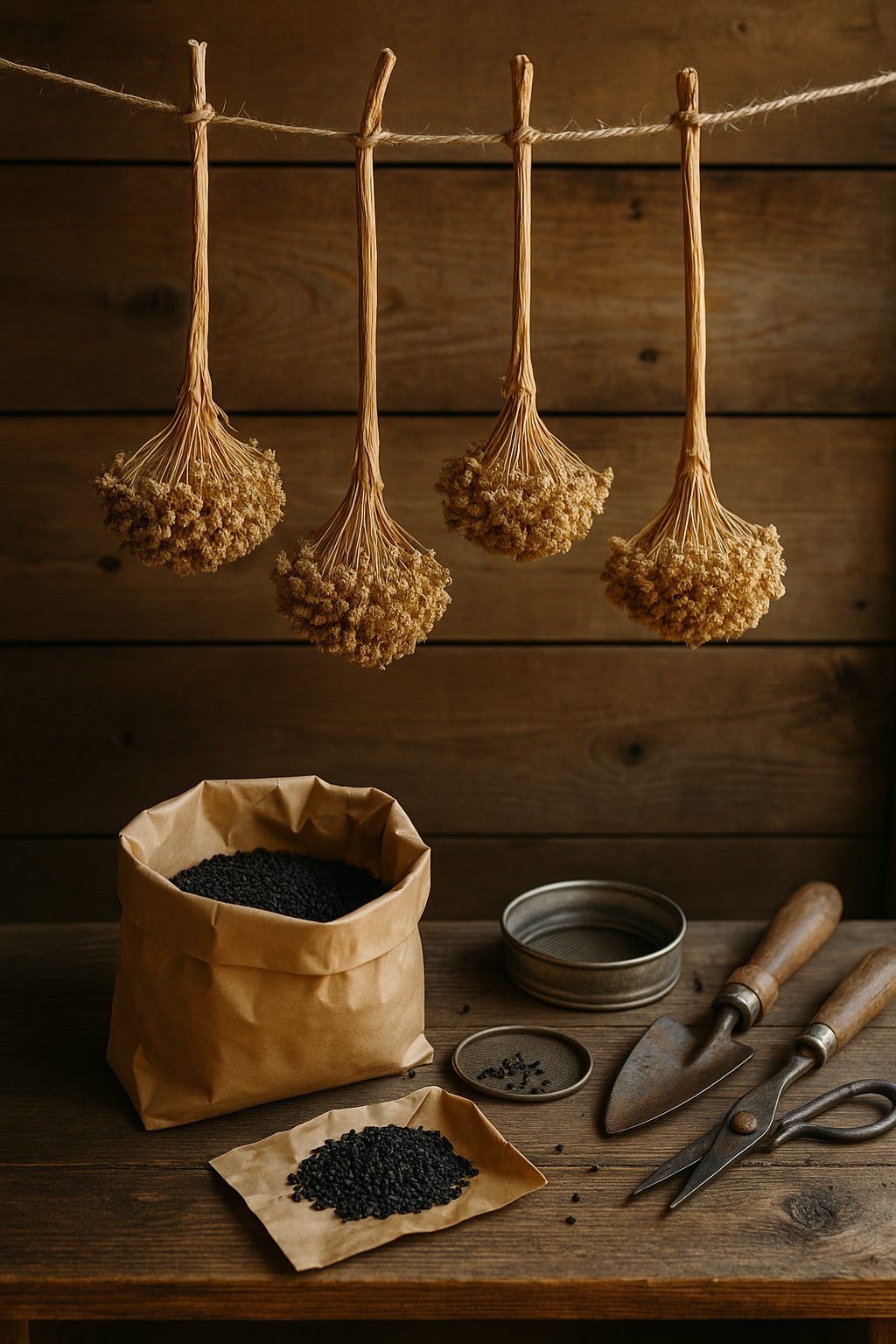
As the flowers fade, they form seed heads filled with black seeds, signaling the perfect time for seed harvesting.
To save onion seeds, start by selecting the healthiest, most vigorous, and disease-free bulbs at the end of the first growing season. These will be your “mother” onions. Replant these bulbs in early spring of the second year, giving them plenty of space for strong flowering.
When the flower heads begin to turn brown and dry, cut the stalks and place the entire head in a paper bag or hang them upside-down in a dry, well-ventilated area to finish drying for about two weeks.
Once fully dry, gently rub the heads to release the seeds, then sift out the flower debris. Store your cleaned seeds in a labeled, airtight container in a cool, dark spot to preserve their viability.
To ensure true-to-type seeds, plant only one onion variety for seed or separate flowering varieties by at least 1,500 feet, as onions readily cross-pollinate by wind or insects.
Keeping good records and using your own seeds year after year not only saves money but also helps you cultivate onions adapted to your growing conditions.
Troubleshooting & Pro Tips for Onion Success
Growing onions from seed can be tricky, but with the right strategies, you can avoid common pitfalls and enjoy a healthy crop.
Watch out for damping off—a fungal disease that wilts seedlings. To prevent it, use sterile soil, avoid overwatering, and provide good air circulation.
If you’re struggling with poor germination, make sure your seeds are fresh, sow them shallowly, and keep the soil consistently moist but not soggy.
Bolting (premature flowering) usually happens when temperatures swing dramatically or plants are stressed. To prevent this, transplant seedlings while they’re young and avoid exposing them to cold snaps.
For more robust onions, mulch around your plants to retain moisture and suppress weeds. Water deeply but let the soil dry slightly between sessions to prevent rot.
Thin seedlings so each has room to grow—crowded onions tend to stay small. Practice crop rotation by planting onions in a different spot each year to minimize disease build-up.
For high-quality seeds, check out suppliers like Johnny’s Selected Seeds, Baker Creek, or your local garden centers.
If you want more in-depth guidance, explore online resources from your regional extension office or visit specialized sites like the National Onion Association for expert tips.