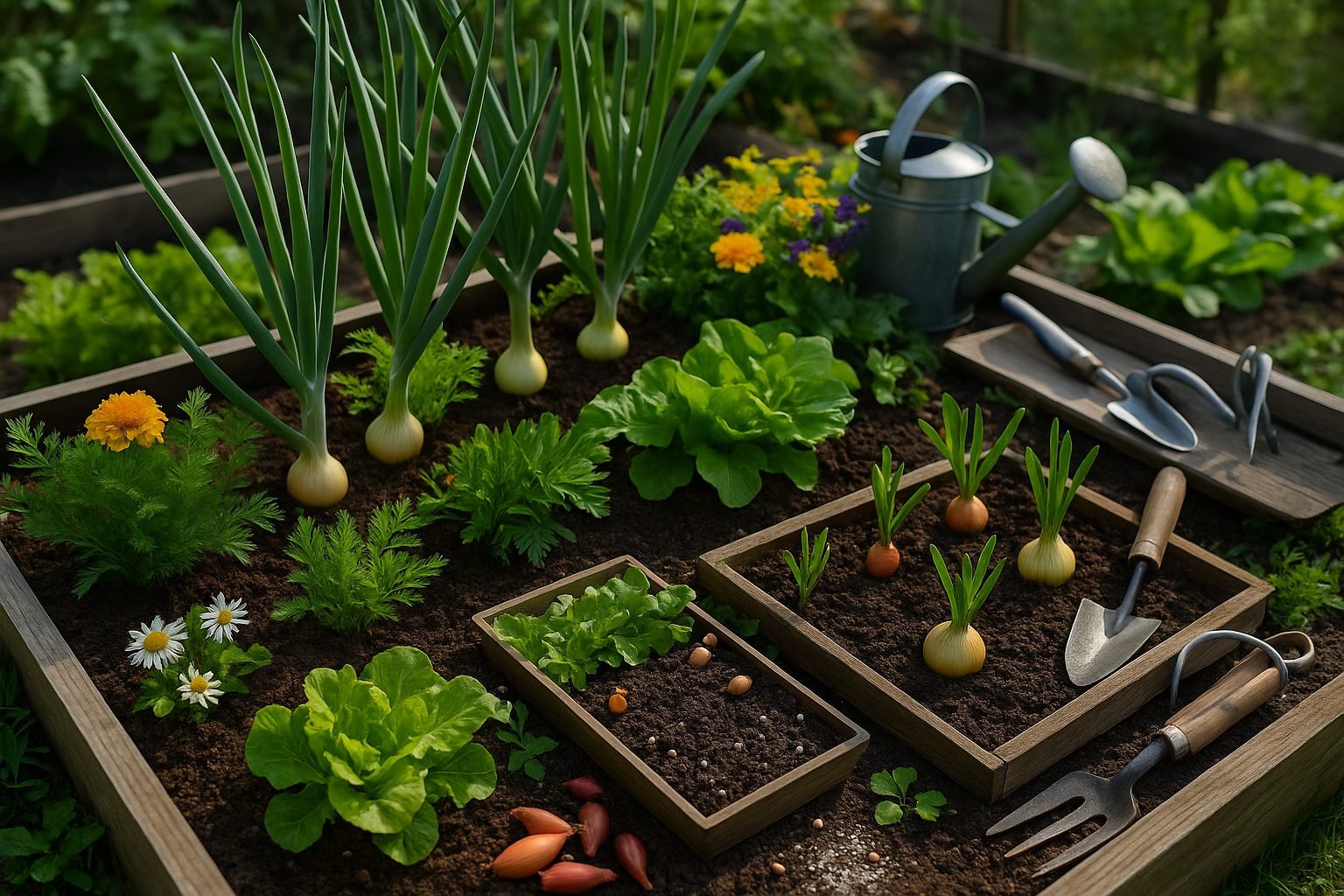
Introduction to Onion Companion Planting
onion companion plants can make a big difference in your garden’s health and harvest. Companion planting—the practice of growing different plants together for mutual benefit—has become a favorite among vegetable gardeners for boosting yields, repelling pests, and saving space.
Onions are a standout when it comes to companion planting, offering natural pest protection and enhancing the growth of certain neighbors. Whether you have a sprawling backyard plot or a compact raised bed, knowing which onion companion plants work best (and which to avoid) can set you up for a thriving, low-maintenance garden.
In this post, you’ll discover why onions are such valuable players, the best partners to plant by their side, and which combinations to steer clear of to prevent stunted growth or pest trouble. Plus, we’ll share real-world growing tips to maximize your garden’s potential—from timing your plantings to arranging beds for optimal airflow.
If you want stronger onions and tastier veggies, let’s dive into the world of companion planting and transform your garden’s success.
Understanding Companion Planting
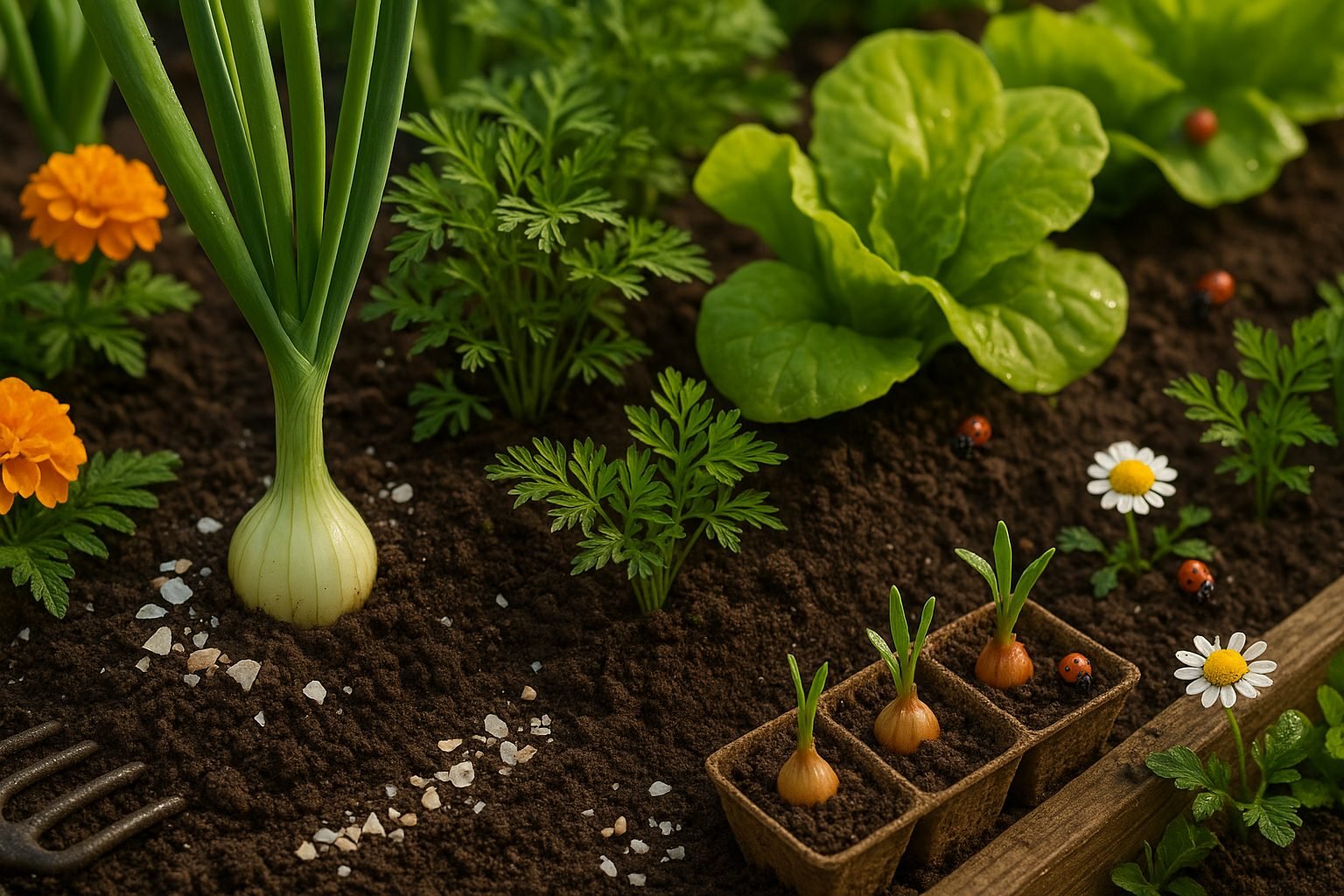
Companion planting is a smart, natural approach to gardening that groups certain plants together to help them thrive. The basic idea is that some plants have positive effects on their neighbors—whether through shading, nutrient sharing, or even warding off insects.
One classic benefit is improved growth: for instance, beans fix nitrogen in the soil, which helps leafy greens grow stronger. Pest and disease control is another major perk. Marigolds, for example, deter nematodes, while planting basil near tomatoes can boost their flavor while keeping mosquitoes at bay.
You’ll also maximize your garden space by pairing plants with different growth habits, like tall corn alongside sprawling squash. Onions are a standout companion because their pungent aroma naturally repels many common pests, such as carrot flies and aphids. They get along particularly well with carrots, beets, lettuce, and strawberries, making onions a versatile addition when planning your planting layout.
However, avoid putting onions near peas and beans, as they can inhibit growth.
By choosing the right companions, you’ll enjoy a healthier, more productive garden with less reliance on chemicals and a more harmonious use of space.
Best Companion Plants for Onions
Onions are among the most versatile vegetables for companion planting, benefiting from and helping a wide range of garden neighbors. Pairing onions with carrots is a classic choice—onions deter carrot flies with their pungent smell, while carrots help aerate the soil around onions, encouraging healthy bulb growth.
Beets and lettuce also grow well alongside onions; beets use nutrients at different soil depths without competing, and lettuce matures quickly, making it a perfect short-term partner that shades onion roots and conserves soil moisture.
Herbs like chamomile are excellent companions, as their blossoms attract helpful pollinators and predatory insects that keep pests away from onion beds. Similarly, planting marigolds near onions offers natural pest control by repelling nematodes and aphids, which can otherwise devastate crops.
Spinach and Swiss chard are additional allies—both enjoy the same growing conditions as onions, and their dense foliage shades the soil, preventing weeds that might hinder onion growth.
On the other hand, avoid planting onions near beans or peas, as these can stunt each other’s growth due to chemical incompatibilities in the soil.
By choosing companion plants wisely, you can enhance onion growth, protect them from common pests, and make your overall garden healthier. Try nestling onions between rows of carrots and beets, or ring your onion beds with a border of marigolds and chamomile for a beautiful, beneficial, and efficient garden layout.
Worst Companion Plants: What Not to Grow with Onions
While onions can be great neighbors to many vegetables, there are certain plants you’ll want to keep far away from your onion patch to ensure both thrive.
Peas and beans, for example, are known to compete with onions for vital nutrients and resources in the soil, often causing stunted growth for both crops. Legumes like these can also inhibit onion bulb formation due to their differing soil moisture and nutrient needs.
Similarly, asparagus should be avoided near onions because both plants have deep and extensive root systems—meaning they’ll end up fighting for underground space and water, which can lead to poor yields.
Herbs such as sage are another poor pairing, as they release natural chemicals into the soil that may suppress onion growth through a process called allelopathy.
To prevent these issues, it’s wise to map out your garden beds in advance, grouping onions with compatible companions—like carrots or lettuce—while planting legumes, asparagus, or sage in separate beds. Leaving even a small buffer zone of a few feet between onions and these incompatible plants can help reduce competition and ensure everyone gets the nutrients and growing space they need. By being mindful of these planting combinations, you’ll set the stage for a healthier, more productive garden.
How to Arrange Your Onion Garden with Companions
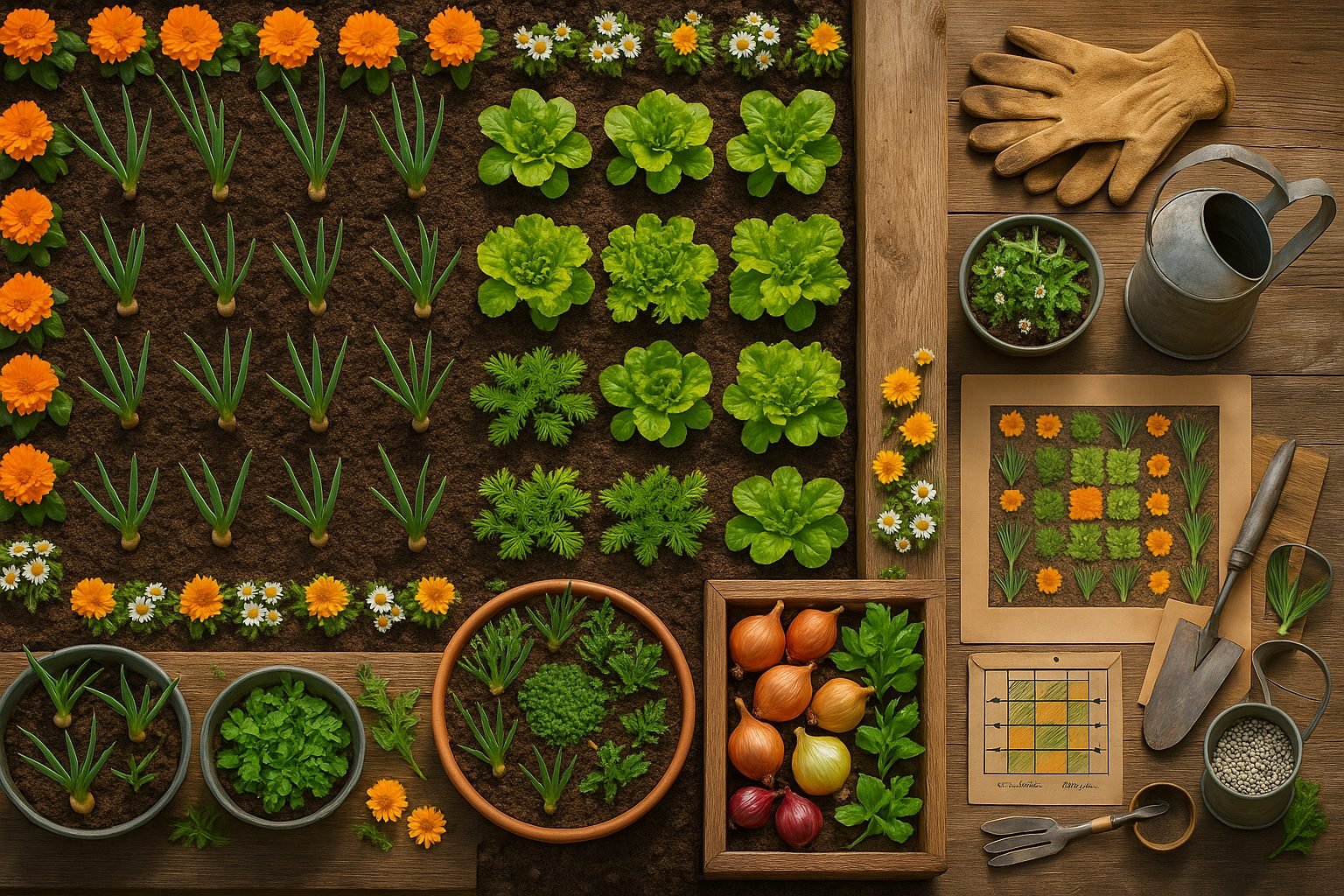
When arranging your onion garden with companions, start by picking a sunny spot—onions thrive with at least 6 hours of direct sunlight daily. Choose well-drained, loose soil enriched with compost to support the diverse needs of onions and their favorite companions, like carrots, lettuce, or beets.
For rows in the ground, plant onions about 4-6 inches apart, leaving 12 inches between rows. Use alternating rows or checkerboard patterns, such as a row of onions followed by a row of carrots, to maximize pest control and space. Notably, marigolds and chamomile interspersed between rows deter pests and enhance growth without crowding your crops.
If you’re short on space, onions also do well in deep containers; arrange them around the edge with lettuce or herbs like thyme in the center to create a micro garden that deters aphids and maximizes moisture.
When companion planting, avoid placing onions beside legumes such as beans or peas, since they compete for nutrients. Keep the soil consistently moist but never soggy, and consider using mulch to retain water, especially with thirsty companions like strawberries.
For a simple plan, try grouping onions, carrots, and lettuce in alternating rows within a 3×6-foot bed, adding marigolds at the corners. This not only makes the most of your garden real estate but also promotes healthier, tastier onions surrounded by a supportive plant community.
Common FAQs & Troubleshooting Onion Companions
Many gardeners wonder which plants work best as onion companions. A frequent question is whether onions can be planted near tomatoes—while it’s possible, onions actually thrive best with beets, carrots, lettuce, and strawberries. They can even help deter pests from these neighbors.
Avoid planting onions next to beans or peas, as they may stunt each other’s growth.
If you notice yellowing leaves or weak growth in your onion patch, check the soil moisture—onions like consistent, but not soggy, water. Overcrowding is another common mistake; give each bulb enough space (about 4 inches apart) to grow strong and healthy.
Some gardeners worry about onions attracting pests, but their sharp scent often repels hungry insects. However, watch for onion flies and consider hand-picking them or using row covers if they appear.
Remember, companion planting isn’t a one-size-fits-all solution—local soil, climate, and even the variety of onions or companion plants can change results. Don’t be afraid to experiment and tweak your pairings each season, and keep a simple journal to track what works best in your unique garden.
Pro Tips for Healthier, More Productive Onions
Growing healthier, more productive onions is easier than you think with a few pro tips. Try succession planting by sowing onion sets every few weeks, so you’ll enjoy a steady harvest instead of everything maturing at once.
Rotate your onion beds yearly to reduce the risk of disease—try planting onions where beans or lettuce grew last season.
Mulching is another game-changer: a few inches of straw or shredded leaves help onions retain moisture, suppress weeds, and keep bulbs cool when summer heats up.
Don’t forget to water consistently, especially during dry spells, since onions like even moisture but not soggy soil.
Together, these simple techniques—succession planting, crop rotation, and mulching—go a long way toward ensuring robust onions all season long.
Have you tried any of these tricks or have onion-growing questions? Share your experiences in the comments—your tips could help other gardeners thrive!