Introduction
If you’ve ever wondered which onion variety would suit your garden best, an onion color comparison is a great place to start. Onions are a kitchen staple, but with options like white, yellow, and red, choosing the right one for your needs can feel overwhelming. Each type not only adds a different look to your dishes but also offers unique flavors and growing requirements. Savvy home gardeners know that selecting the right onion can make all the difference in both recipes and garden success.
For example, maybe you love the robust, sweet flavor of caramelized yellow onions on burgers, or perhaps you prefer the crisp, mild bite of raw red onions in your salads. White onions, with their sharper zing, are favorites for salsas and quick pickles. But it’s not just about taste—each onion type has its own growth habits, preferred conditions, and storage abilities. Whether you have a sunny vegetable patch or just a few raised beds, understanding these differences can help you maximize your harvest and enjoy homegrown onions that fit your cooking style. In this guide, we’ll break down the flavor, growth, and culinary uses of each variety so you can confidently choose which onions to grow this season.
White Onions: Characteristics and Growing Needs
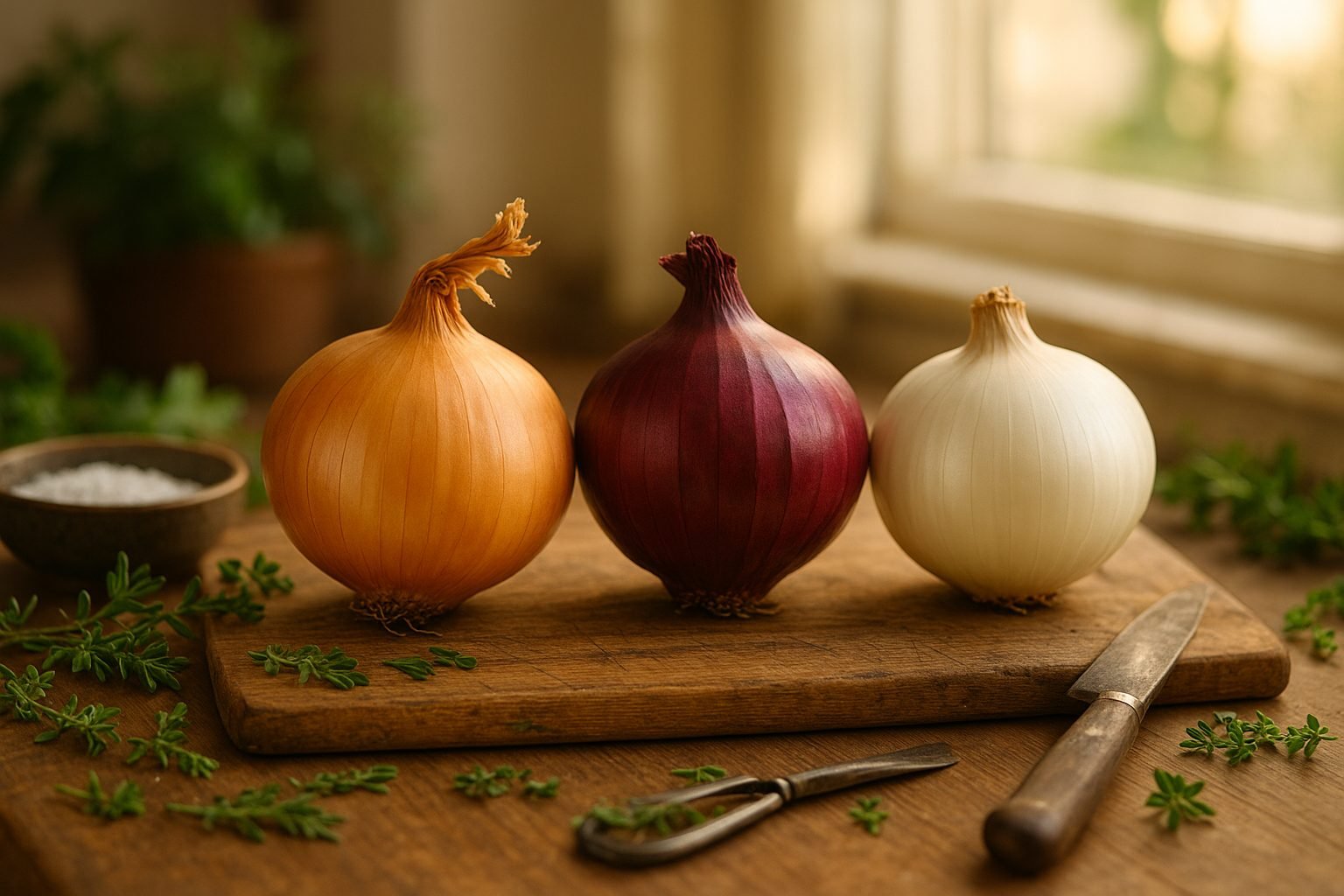
White onions are easily identified by their crisp, papery white skin and firm, shiny flesh. Among the three main onion types, they have the sharpest bite, delivering a pungent yet slightly sweet flavor that mellows when cooked. This strong taste makes white onions a staple in salsas, salads, guacamole, and many Mexican and Southwest dishes where a bold onion presence is desired. Their relatively high water content gives them a satisfying crunch, perfect for fresh preparations.
From a growing perspective, white onions thrive in well-drained, fertile soil with a slightly acidic to neutral pH (6.0–7.0). They require full sun, ideally at least 6 hours of direct sunlight daily. White onions prefer moderate climates and do well when planted in early spring in cooler areas, or in late fall in warmer zones. Most varieties take about 90 to 110 days from planting to harvest.
It’s important to space white onions 4 to 6 inches apart to promote healthy bulb development and reduce the risk of fungal issues. Like all onions, they can be vulnerable to pests such as onion maggots and thrips, as well as diseases like downy mildew and bulb rot, especially if soil conditions are too wet or airflow is poor. For home gardeners, white onions offer quick growth, relatively low maintenance, and great kitchen versatility.
However, they don’t store as long as yellow onions because of their higher moisture content, making them best suited for fresh or short-term use. If you enjoy fresh salsas and raw onion flavor, white onions are a fantastic choice, just be aware of their shorter shelf life and delicate storage needs. Regular weeding and consistent moisture—without waterlogging—will help your white onions thrive, even in a small backyard garden.
“`html
Yellow Onions: Characteristics and Growing Needs
Yellow onions are the classic kitchen staple, easily identified by their papery, golden-brown skins and round shape. Inside, they have firm, white flesh with a sharp, slightly sweet flavor that mellows and deepens when cooked. This makes yellow onions incredibly versatile—they’re the foundation for countless recipes, from savory soups and stir-fries to roasted meats and caramelized onion dishes.
When it comes to an onion color comparison, yellow onions truly shine in recipes requiring long cooking times because their flavor becomes rich without turning overpoweringly sweet or bitter. For gardeners, yellow onions are an excellent starting point due to their hardy and resilient nature. They prefer full sun and well-draining soil but are adaptable to various climates and resist many common pests and diseases.
Plant yellow onion sets or seeds in early spring once the ground is workable, spacing them a few inches apart. Keep the soil consistently moist (but not soggy) and free of weeds to ensure healthy bulb development. When the tops begin to flop over and brown, it’s a sign your onions are ready to harvest. Lay them out to cure in a dry, airy place before trimming the tops and roots—this curing process is essential for their legendary storage life.
Properly cured yellow onions can last for months in a cool, dark place, making them ideal as homegrown pantry staples. Their forgiving growth needs, culinary versatility, and impressive shelf life all combine to make yellow onions a top choice for beginner gardeners seeking reliable results and maximum kitchen impact.
“`
Red Onions: Characteristics and Growing Needs
Red onions are easy to spot thanks to their vibrant reddish-purple skins and beautifully colored rings, which add an irresistible visual pop to salads, sandwiches, and salsas. Compared to white or yellow onions, their flavor is typically milder and sweeter, with a subtle peppery bite that shines when served raw. This gentle flavor, combined with their striking color, makes red onions a favorite for fresh dishes like Greek salads, pickled onions, and burger toppings, as well as for roasting or grilling, where their natural sugars caramelize beautifully.
When it comes to cultivation, red onions prefer loose, well-drained soil rich in organic matter—compost-rich beds are ideal. The soil pH should be slightly acidic to neutral, between 6.0 and 7.0, to support optimal growth and bulb development. Red onions have moderate resistance to common onion diseases like downy mildew and pink root but can still be vulnerable to fungal issues, especially in overly wet or compacted soil. Maintaining good airflow between plants—about 4 to 6 inches apart—helps prevent disease spread.
For gardeners with limited space, red onions are a practical choice since they don’t require as much room as larger allium varieties. They can be grown in raised beds, containers, or tucked between other crops in mixed beds. One challenge is that red onion bulbs typically don’t store as long as yellow onions, so it’s best to harvest and eat them fresh or plant in small successive batches for a steady supply. On the plus side, their quick growth cycle means you can enjoy fresh, homegrown onions sooner. Choosing disease-resistant varieties suited to your local climate, rotating planting locations each season, and enriching soil with compost will set you up for a successful red onion crop.
Factors for Choosing Which Onion to Grow
When diving into an onion color comparison, it’s important to consider several practical factors before deciding which onion to grow. White onions are known for their sharp bite and crisp texture, making them perfect for salsas and raw dishes. They don’t store as long as other varieties, so they’re ideal if you plan to use your harvest quickly. Yellow onions, the classic kitchen staple, offer a savory-sweet balance and mellow beautifully when cooked—think soups, stews, and caramelized onions. They usually have the longest storage life, making them a great choice if you want a crop that can last through the winter. Red onions stand out in salads and sandwiches thanks to their vibrant color and slightly milder, subtly sweet flavor. While eye-catching, they store moderately well but generally not as long as yellow onions.
Each onion type also has different climate preferences. White onions tend to thrive in warmer, milder climates with short growing seasons, making them perfect for southern gardens. Yellow onions are adaptable and hardy, doing well in a range of climates and providing a reliable crop even in variable weather. Red onions usually prefer a steady, moderate climate. Consider your garden space, as onions need enough room to bulb properly, and check your growing season length: if it’s short, choose varieties known for quick maturity. Personal preference is key—do you cook savory dishes often, enjoy raw onions in salads, or prioritize long-term storage? For gardeners in cooler, northern areas, yellow onions are typically the safest bet, while those in southern zones might lean toward white or red. Ultimately, select based on flavor, intended use, and your growing conditions—this thoughtful approach ensures your crop suits both your kitchen and your climate.
Growing Multiple Types: Can You Mix and Match?
Growing a mix of white, yellow, and red onions is not only possible but also a great way to enjoy a longer harvest and varied flavors from your garden. When considering an onion color comparison, it’s important to keep a few key factors in mind. First, pay close attention to spacing—onions need enough room (usually 4-6 inches apart) to bulb up properly, regardless of color.
Since different varieties mature at slightly different rates, you’ll likely experience staggered harvest times. This can be an advantage, letting you enjoy fresh onions over several weeks. However, it means you’ll need to watch labels and garden markers closely to keep track of what’s ready and when.
While pollination isn’t a major concern for onions grown for bulbs (since you harvest before flowering), keep seed production plots separate if you plan to save specific varieties. Companion planting can boost onion success; onions grow well alongside carrots, lettuce, and beets but should be avoided near peas or beans.
Succession sowing—planting a new row every few weeks—can help prolong your onion harvest and make the most of your space. By mixing and matching different onion colors in your beds, you’ll enjoy a more vibrant and productive garden with relatively simple planning.
Harvesting, Storage, and Using Your Onions: An Onion Color Comparison
Timing your harvest is key to getting the most out of each onion color. White onions mature quickly, usually ready in about 90-100 days; pull them when the tops fall over and begin to dry. Yellow onions, which tend to store the longest, take a bit longer—around 100-110 days. Red onions mature slightly earlier than yellows, at about 95-105 days, but be sure to check your variety’s specifics.
For all types, gently lift bulbs with a garden fork once half the tops have collapsed. Lay the onions out in a single layer in a dry, airy place for curing—this toughens the skins for storage. After 2-3 weeks, trim tops and roots, then store onions somewhere cool (ideally between 32-40°F) and dry, with humidity around 65-70%.
When it comes to storage longevity, yellow onions are the champions, lasting up to 6-8 months. White onions have thinner skins and last about 1-2 months, while red onions fall in the middle, storing well for about 2-3 months.
Use pungent yellow onions for soups, roasts, and long-cooking dishes. White onions shine fresh in salsas and sandwiches, thanks to their crisp bite. Red onions add color and sweetness to salads, pickles, and grilled dishes—try them sliced thin atop a burger for extra flavor.
Conclusion
When it comes to onion color comparison, the best choice depends on your culinary preferences, storage needs, and local growing conditions. White onions pack a punch and are perfect for salsas or salads, while yellow onions are classic kitchen staples with a sweet, balanced flavor—ideal for cooking and long-term storage. Red onions stand out in raw dishes like salads or sandwiches, adding a pop of color and a mild zest. Don’t hesitate to try all three to see what thrives in your garden and tastes best in your kitchen. Explore our related articles for more tips and inspiration on successful home gardening.