Introduction to Preserving Garlic
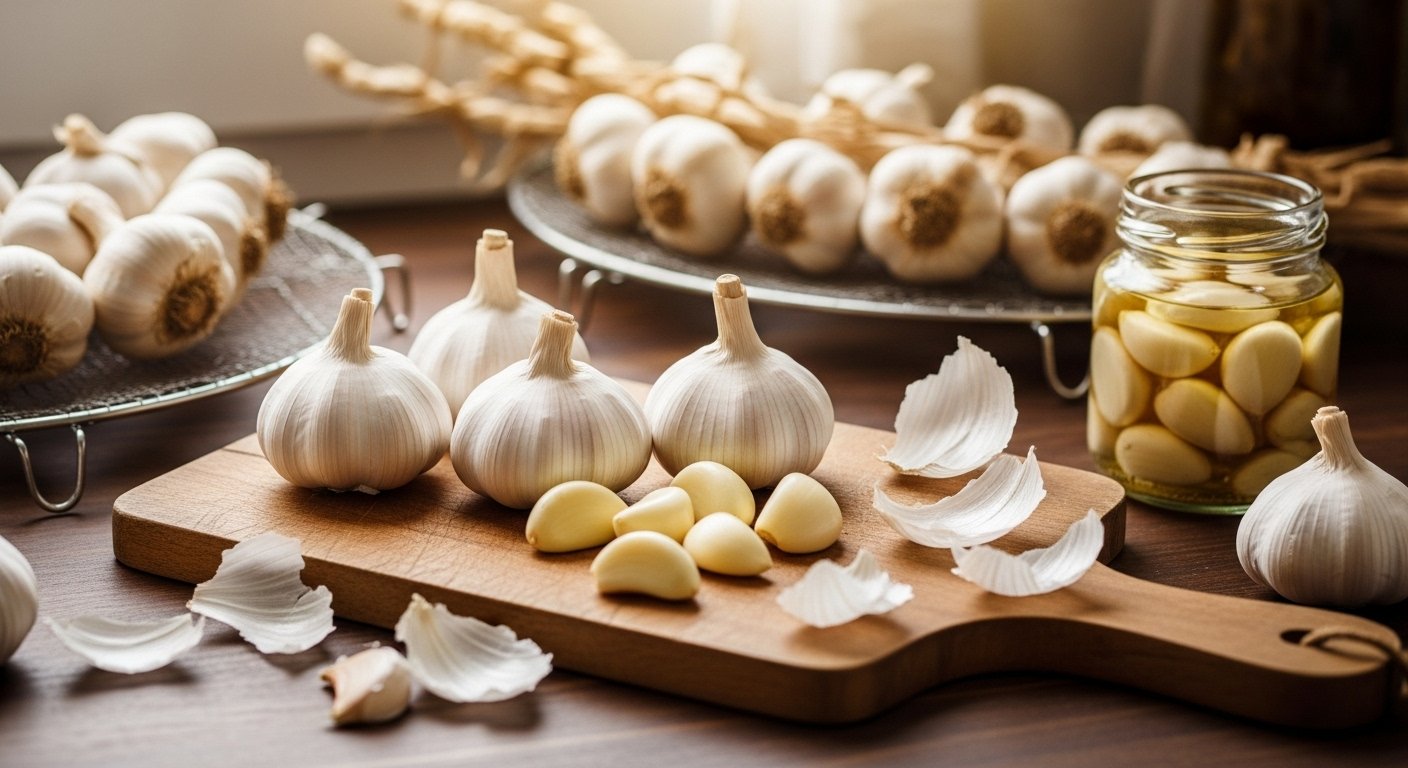
Preserving garlic is a smart way to make this flavorful kitchen staple last longer, reduce food waste, and keep your favorite recipes quick and effortless. Whether you grow garlic in the garden, buy it in bulk at the farmers market, or simply hate tossing out sprouting bulbs, preserving garlic can save both time and money. The good news? There are several easy and effective methods to keep garlic fresh and ready to use whenever you need it.
You can freeze peeled cloves, roast and store them in oil (with proper precautions), dry whole bulbs, or pickle cloves for a tangy flavor and long-lasting storage. With so many options, it’s easy to choose a preservation method that fits your space, cooking style, and how much garlic you use.
However, safety is just as important as convenience. Some popular garlic preservation methods—especially storing fresh garlic in oil—can pose serious health risks if not done carefully. Garlic in oil creates an environment where botulism bacteria can thrive, so always refrigerate oil-preserved garlic and use it within a week, or follow only well-tested, government-approved recipes for longer storage.
Be sure to label homemade garlic products with their date and adhere to trusted food safety practices. By staying informed and cautious, you can enjoy the many benefits of preserving garlic without worry, ensuring you always have fresh, flavorful garlic at your fingertips.
Choosing and Preparing Garlic for Preservation
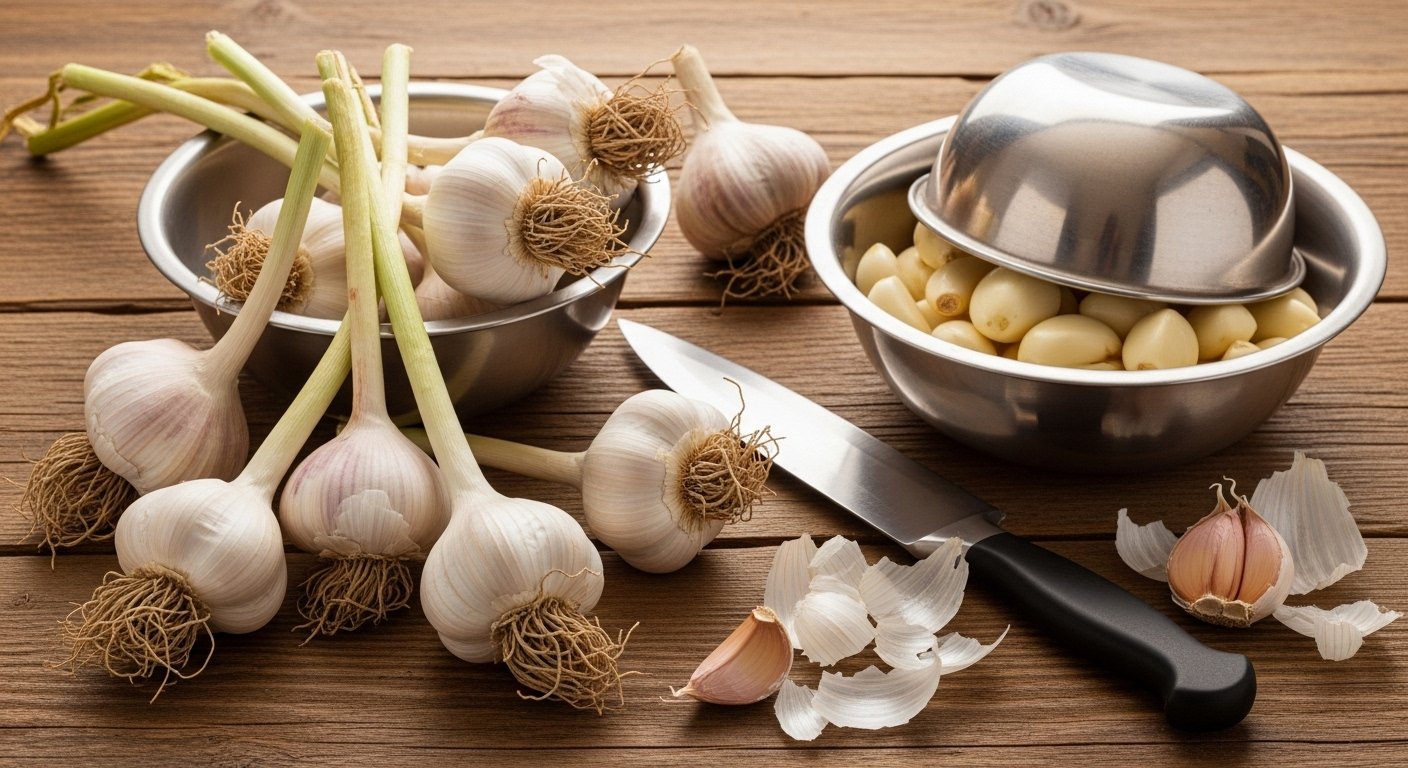
When getting ready to preserve garlic, start by picking the right variety and quality to ensure the best results. Hardneck varieties like Rocambole or Purple Stripe are favored by many home gardeners for their rich, complex flavors and easy-to-peel cloves—perfect if you plan to freeze or ferment your garlic. Softneck garlic, often found in grocery stores (like the common California White), has more cloves per bulb, stores well, and is ideal for making garlic braids.
Look for bulbs that are firm, plump, and free of mold, bruising, or soft spots; avoid any with green sprouting as this can signal age and bitterness. If you’re growing your own garlic, wait until the lower third of the leaves have turned brown but the upper leaves remain green—this balance typically means the bulbs are mature but not yet dried out, a sweet spot for both flavor and storage life. For store-bought garlic, select the freshest bulbs you can find and try to preserve them soon after purchase before they dry out.
To prep garlic for storage, gently brush off excess dirt, but avoid washing the bulbs unless you plan to use the cloves right away—moisture encourages mold and shortens shelf life. Peel cloves by crushing them lightly with the side of a knife or the flat of your hand, which loosens the skin and makes peeling easier. For batch prep, place broken-apart cloves in a metal bowl, cover with another bowl, and shake vigorously; this common kitchen trick quickly separates skins from cloves.
Whether you’re planning to dehydrate, pickle, or freeze your garlic, always use clean, undamaged cloves to prevent spoilage and off flavors. Taking a few simple steps at the selection and preparation stage can make a world of difference in the flavor, texture, and longevity of your preserved garlic, ensuring you always have potent, aromatic cloves ready for your recipes.
How to Store Fresh Garlic Properly
Storing fresh garlic correctly can help you enjoy its flavor and benefits for months. For whole bulbs, the best method is to keep them in a cool, dark, and dry spot—think a pantry or a kitchen cupboard away from direct light and heat sources.
Airflow is important too, so use mesh bags, baskets, or even a wire rack instead of sealing garlic in plastic, which can trap moisture and lead to mold. Separated cloves (with the papery skins still on) can be handled the same way, but they won’t last as long as intact bulbs—try to use them within ten days.
For short-term storage, your countertop works if it’s not too sunny or humid, but always skip airtight containers. If you want to stash garlic for several months, stick to a pantry or cellar with good circulation and moderate humidity; many people hang garlic braids or use mesh produce bags for convenience.
Refrigeration, however, is generally not recommended because the cold encourages sprouting and can alter the garlic’s texture and taste. Signs of spoilage include soft spots, mold, shriveling, or a sour smell—when in doubt, toss it out.
By following these easy tips, you’ll have delicious, fresh garlic ready whenever you need it.
Popular Garlic Preservation Methods
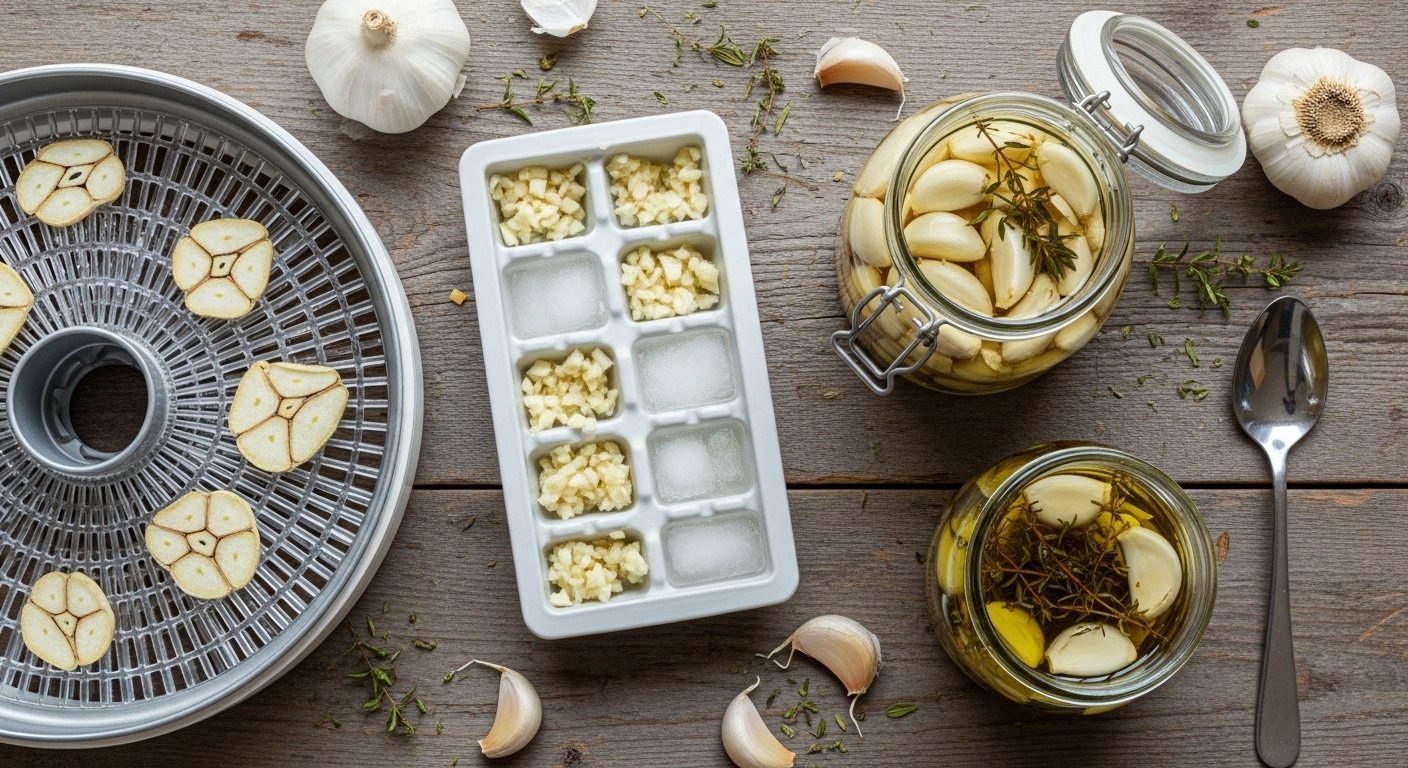
Preserving garlic at home is not only a great way to prevent waste but also lets you enjoy its bold flavor year-round.
Drying or dehydrating garlic is a classic approach—simply peel and slice the cloves, then use a food dehydrator or a low-temperature oven (about 140°F) to dry them until crisp. Store the dried garlic in airtight jars; it lasts for months and is perfect for grinding into homemade garlic powder.
For freezing, you have multiple options: stash peeled whole cloves, or chop or puree garlic and freeze it in teaspoon-sized portions using an ice cube tray, then pop the cubes into a freezer bag. Freezing keeps flavor surprisingly fresh, though texture softens, making it ideal for cooked dishes.
Garlic confit—slowly simmering peeled cloves in oil at low heat—produces sweet, mellow cloves and fragrant garlic oil. Ladle both into clean jars but refrigerate immediately; homemade confit must be used within two weeks to avoid botulism risk, so always use clean utensils and never store at room temperature. Oil-based preserves amplify richness but demand proper handling: use only sanitized containers and keep everything chilled.
Preserving garlic in vinegar or wine is both flavorful and safe, since the acid inhibits bacteria. Cover peeled cloves with vinegar or dry white wine in a sterile jar, adding herbs or spices if you like. Store in the fridge and use within three months—these tangy, crisp cloves shine in salads or antipasto.
Each technique varies in taste and shelf life:
- Drying gives robust, concentrated garlic with long storage.
- Freezing is quick with mild flavor loss.
- Confit offers a luxe, buttery soft clove.
- Pickling in acid delivers a punchy kick.
Choose your method based on how you cook—whether you want seasoning at your fingertips or a gourmet treat for special meals.
Food Safety: Preventing Botulism and Other Risks
Storing fresh garlic in oil might seem like an easy way to add instant flavor to dishes, but without the right precautions, it can actually be dangerous. Garlic is a low-acid vegetable, and when it’s submerged in oil and kept at room temperature, it creates an environment ripe for the growth of Clostridium botulinum—the bacteria responsible for botulism.
This form of food poisoning is rare but potentially fatal, often causing symptoms like blurred vision, muscle weakness, and even respiratory failure. To prevent this, you should never keep garlic-in-oil at room temperature or in homemade products unless you’re following strict guidelines.
Safe Methods for Storing Garlic in Oil
- Acidification: Adding enough vinegar or citric acid raises the acidity, making it hostile for botulism bacteria to survive.
- Freezing: After mixing garlic with oil, portion it into small, airtight containers or ice cube trays and store immediately in the freezer. This prevents the dangerous anaerobic (oxygen-free) conditions that allow Clostridium botulinum to thrive.
For best practices, only make small batches you’ll use within a week, keep them refrigerated at all times (ideally below 40°F/4°C), and label with preparation dates. If you notice any off smells, mold, or changes in color, throw the mixture out without tasting it.
Commercial Products
Commercially prepared garlic-in-oil products are generally safe since they use tested recipes and preservatives, but always check the label for storage instructions.
Final Tips
Ultimately, safe garlic preservation is about staying informed and vigilant: acidify with food-grade vinegar, freeze if unsure, don’t store at room temperature, and always err on the side of caution to protect yourself and your loved ones from serious foodborne risks.
Creative Ways to Use Preserved Garlic
Preserved garlic is a versatile ingredient that can elevate everyday dishes with minimal effort and no waste. Swap minced preserved garlic for fresh in soups—stir a spoonful into chicken noodle or tomato soup for a deep, mellow flavor that blends instantly without any bitterness.
For salad dressings, whisk preserved garlic into vinaigrettes or creamy dressings to add savory notes and a subtle, tangy kick. It dissolves more smoothly than raw garlic, creating a better texture and taste.
When marinating meats or vegetables, use the oil from preserved garlic along with the cloves—it’s already infused with rich garlicky flavor, so you’ll maximize every drop and cut down on waste.
Spread it on toast or mix it into softened butter for an instant garlic bread upgrade, or mash preserved garlic into hummus for a smoother, more nuanced dip. If a recipe calls for a raw garlic clove, remember that preserved garlic is usually milder, so you might want to use a little more—or taste as you go for the perfect balance.
Always store unused cloves in their oil and keep the jar sealed in the fridge to maintain freshness. Don’t toss the leftover oil; drizzle it over pasta, pizza, or roasted veggies for a simple, aromatic finish.
By relying on preserved garlic, you save prep time, reduce waste from unused cloves, and ensure there’s always bold, ready-to-use flavor at hand in your kitchen.
Conclusion & Quick Reference Table
Preserving garlic at home isn’t just practical—it can enhance flavor and help reduce kitchen waste. As discussed, popular methods like freezing, drying, pickling, and storing in oil each offer unique benefits, whether you want to save time on meal prep or enjoy garlic’s goodness year-round. The key to success is matching your preservation method to your cooking needs and storage habits.
Above all, always prioritize safety: use sterilized jars for pickling, never store garlic in oil at room temperature due to botulism risks, and check for mold or off odors before use. Don’t hesitate to experiment with different techniques; you may find that minced, frozen garlic saves countless weeknight dinners, or that homemade pickled cloves add a tangy twist to your dishes.
Below, you’ll find a quick reference table to help you choose the best method for your next batch.
| Method | Storage Time | Essential Safety Tips |
|---|---|---|
| Freezing | 6–12 months | Use airtight containers; avoid thawing and refreezing. |
| Drying/Dehydrating | 6–12 months | Dry thoroughly; store in a cool, dry place. |
| Pickling | Up to 6 months | Use sterilized jars; refrigerate after opening. |
| Storing in Oil | Up to 3 weeks | Always refrigerate; never store at room temperature. |