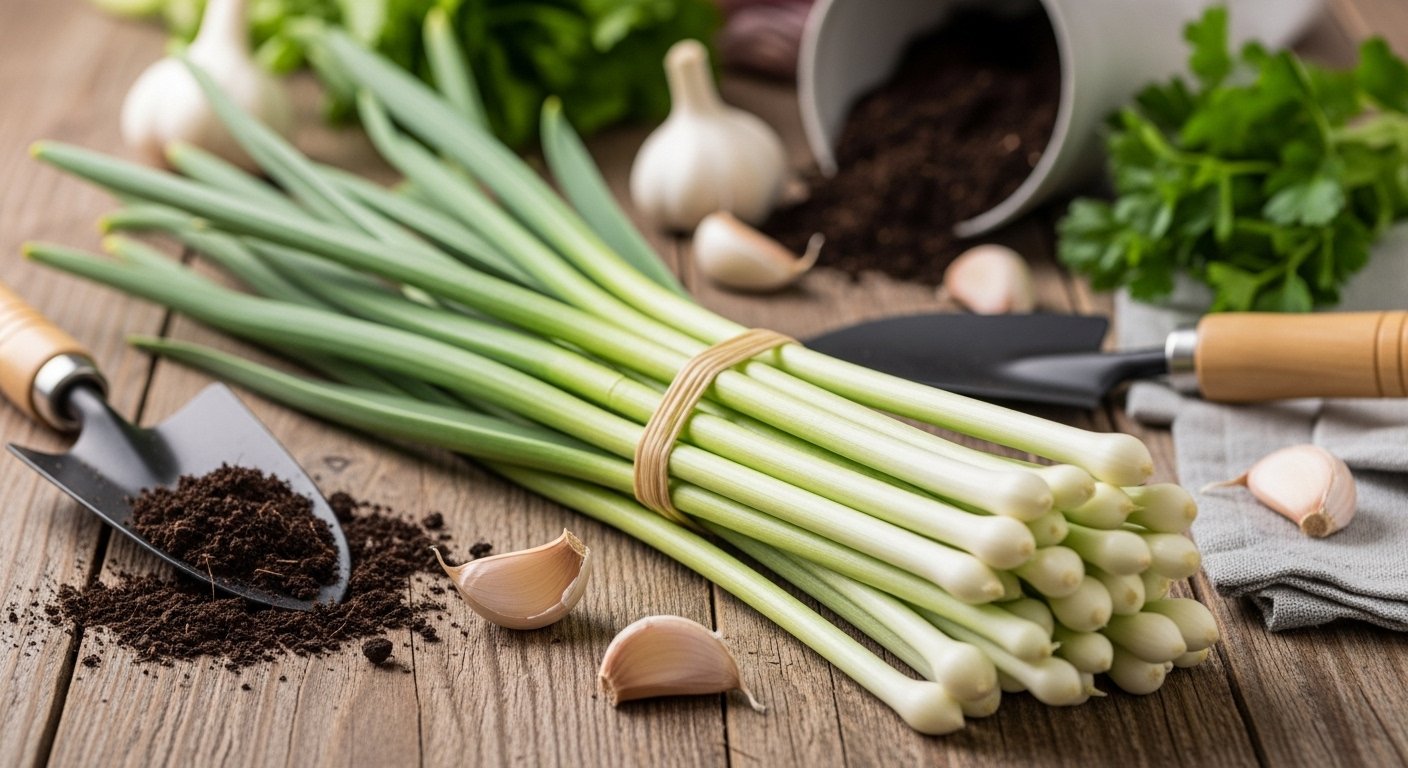
What Is Green Garlic?
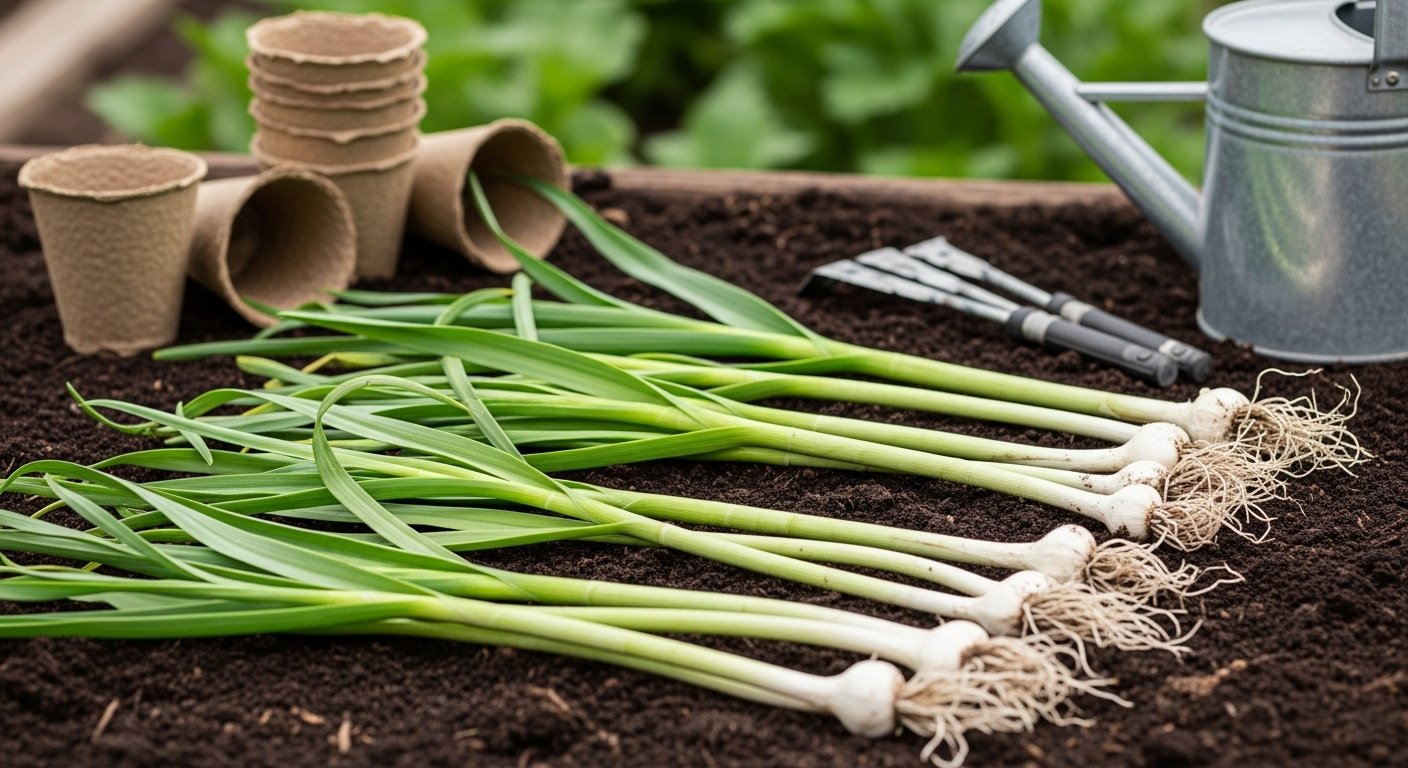
If you want to expand your garden with a delicious and versatile crop, learning how to grow green garlic is a fantastic choice. Green garlic, also known as young garlic or spring garlic, is harvested before the garlic plant matures into the typical bulb you see at the grocery store.
Instead of forming separate cloves, green garlic consists of slender, elongated stalks with a small, tender bulb at the base, much like a scallion in appearance. The entire plant is edible, from the pale roots to the vibrant green tops.
Unlike mature garlic bulbs that offer a sharp, pungent flavor, green garlic has a gentler, fresher taste with hints of mild onion and sweet garlic. It’s especially prized by chefs and home cooks in early spring, when this crop is harvested long before traditional garlic bulbs are ready—usually when the plants are about eight to twelve inches tall.
This timing makes green garlic an excellent ingredient for bridging the gap between winter’s end and summer’s bounty, adding a boost of flavor to salads, sautés, or soups.
You might see green garlic marketed as “spring garlic,” “garlic scallions,” or “baby garlic.” With its delicate flavor and tender texture, it can be sliced thin and enjoyed raw or added at the end of cooking to preserve its subtle complexity.
If you’re looking for something easy to grow that brings a bright, seasonal flair to your meals, growing green garlic is a rewarding and flavorful way to start the gardening year.
How Is Green Garlic Different from Garlic Scapes and Spring Onions?
Green garlic, garlic scapes, and spring onions might look similar at the market, but they’re distinct ingredients with their own flavors and uses. Green garlic is essentially young garlic harvested before the bulbs fully form. It looks a lot like a fat scallion, with tender, pale green stalks and a mild garlicky flavor.
In the kitchen, green garlic shines in sautés, soups, and pestos—anywhere you want a gentle garlic kick without the pungency of mature bulbs.
Garlic scapes, on the other hand, are the curly, bright green flower stems that grow from mature garlic plants around early summer. They’re firmer than green garlic, with a more pronounced garlicky taste and a unique texture that works beautifully when grilled, stir-fried, or chopped into spreads.
Spring onions are unrelated to garlic and instead are young onions pulled before their bulbs mature. They sport crisp white ends and vibrant green tops with a milder, sweeter onion flavor that’s perfect raw in salads, on tacos, or as a colorful garnish.
It’s common for grocers and even farmers’ markets to confuse or mislabel these ingredients, so remember:
- If it has a curly top, it’s a garlic scape.
- If it looks like a slender leek with a garlic aroma, it’s green garlic.
- Round bulbous ends signal spring onions.
When in doubt, give them a sniff—your nose is often the best guide.
Growing Your Own Green Garlic at Home
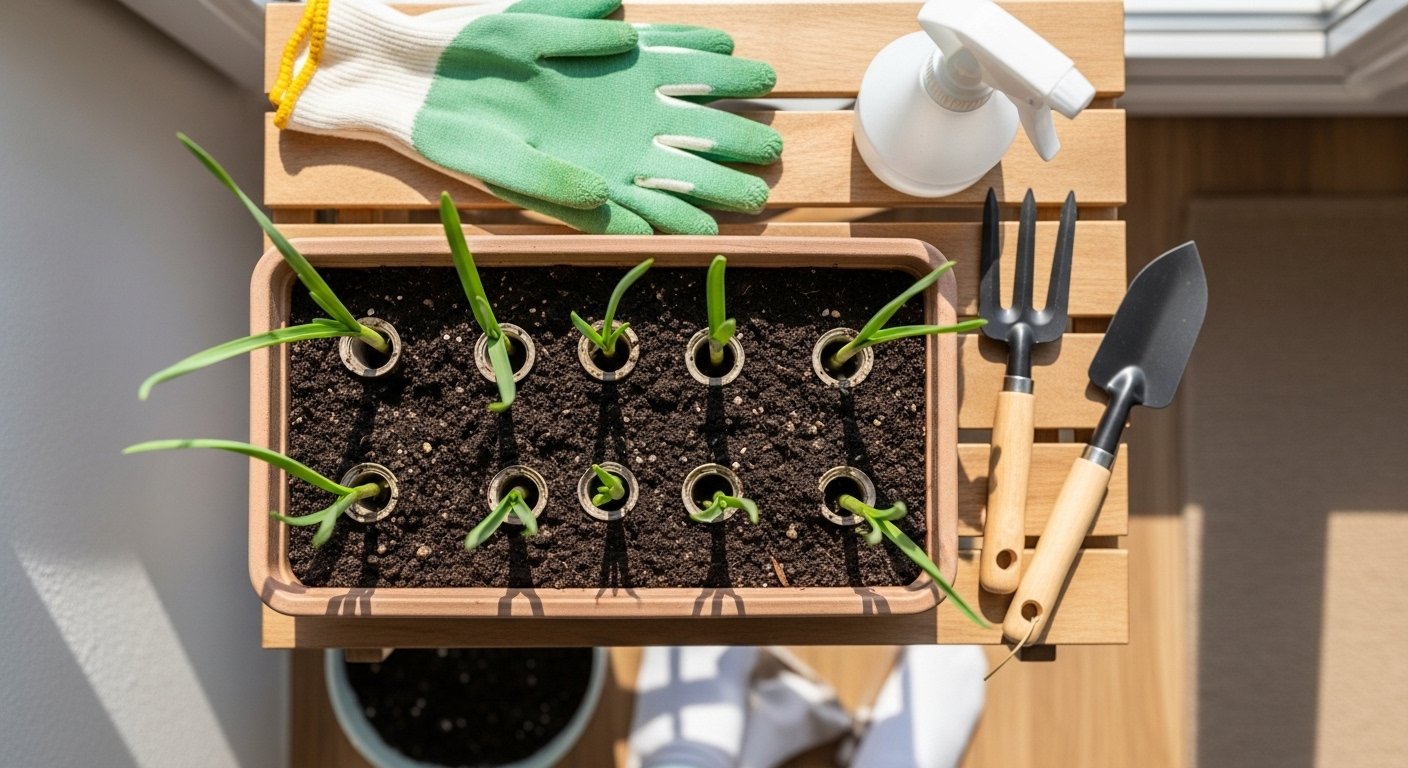
Growing your own green garlic is a rewarding and beginner-friendly gardening project, perfect for both big backyards and small balcony containers. Start by sourcing your starter cloves—look for organic garlic bulbs at your local nursery or a well-stocked grocery store. Avoid those labeled as “treated” to ensure good sprouting.
Break apart the garlic bulb into individual cloves, keeping the papery skins intact. Plant each clove upright, pointy side up, about two inches deep and four inches apart in well-draining soil. If you’re using a container, make sure it’s at least 6–8 inches deep and has drainage holes.
Green garlic loves plenty of sunlight, so choose a bright spot that gets at least six hours of sun daily. Water the soil lightly after planting and keep it evenly moist—never soggy—as the shoots develop. A light mulch layer helps retain moisture and discourages weeds.
Fertilize with a balanced, all-purpose fertilizer if your soil is poor, but most garden soil will do just fine. Green garlic grows quickly; within three to four weeks, you’ll see slender green shoots resembling oversized scallions.
Harvest once the greens reach 8–12 inches tall by loosening the soil gently and pulling up the plants, or snip greens as needed for cooking. Unlike mature garlic, green garlic is milder and perfect for spring recipes—try tossing it into stir-fries, omelets, or salads.
For a continuous supply, plant new cloves every few weeks through spring. With minimal effort, you’ll enjoy fresh green garlic that packs a flavorful punch and turns ordinary meals into something special.
Cooking with Green Garlic
Green garlic is a versatile ingredient that brings a mild, fresh garlic flavor to dishes—think of it as a springtime preview of mature garlic, but with a gentler bite and tender texture. Unlike mature garlic bulbs, green garlic looks like a scallion, and you can use both the white and pale green parts. This makes it ideal for recipes where raw, pungent garlic might overwhelm.
It shines in creamy risottos, rustic stir-fries, and savory omelets, and features prominently in Indian curries, Chinese sautés, and Mediterranean frittatas.
Preparation
To prepare, simply trim off any tough dark green tops and roots, rinse well, then slice or chop as you would a leek or scallion. Use it raw in salads for a subtle kick, or add it toward the end of cooking for the most delicate flavor.
Storage and Substitutions
Store green garlic loosely wrapped in the fridge and use within a week for peak freshness—once wilted, it can lose its punch. Can’t find green garlic? Substitute with the green tops of spring onions, young leeks, or a mix of scallions and a small amount of mature garlic for a similar effect. This easy swap ensures you can enjoy that unique mellow, herby note even when green garlic is out of season.
Favorite Green Garlic Recipes to Try
Green garlic’s mild, fresh flavor makes it a star ingredient in dishes where you want a hint of garlic without overpowering the meal.
One simple recipe is green garlic pesto: just blend chopped green garlic (both bulbs and tender greens) with olive oil, Parmesan, toasted nuts, lemon juice, and salt for a vibrant sauce to toss with pasta or drizzle over roasted veggies.
For an easy weeknight sauté, slice green garlic thin and cook it gently in butter or olive oil until softened, then add spring vegetables like asparagus or peas—this makes a bright, aromatic side for grilled fish or chicken.
Green garlic is also excellent in creamy soups; simmer chopped green garlic with potatoes and broth, then blend until smooth for a delicate, earthy soup that comes together in under an hour.
Don’t be afraid to experiment—swap green garlic wherever you’d use scallions or regular garlic for a milder, spring-fresh twist.
Whether you’re a seasoned cook or just starting out, playing with green garlic in your favorite dishes can add a unique burst of seasonal flavor.