Introduction to Cucumber Trellises
If you’re curious about cucumber trellis DIY projects, you’re in the right place. A cucumber trellis is a simple yet incredibly effective structure that supports cucumber vines as they grow. Instead of sprawling across the garden bed, your plants climb vertically, maximizing your gardening space and making the most of even small backyards or patios.
But the benefits don’t stop there—using a cucumber trellis keeps your fruit cleaner by lifting it off the soil, which means less dirt and fewer diseases transferred from the ground. Trellising also helps reduce pest problems since bugs have a tougher time reaching elevated vines, and air circulates more freely to keep leaves dry. Plus, harvesting cucumbers becomes a breeze! Instead of digging through tangled vines, you’ll find your crisp, green cucumbers hanging at eye level, ready to pick.
In this post, we’ll walk you through everything you need to know before starting your own cucumber trellis DIY adventure. You’ll learn about different trellis styles—from classic A-frames and sturdy arches to budget-friendly upcycled options—along with step-by-step instructions to build one that suits your garden.
We’ll cover tips on the best materials to use, how to train your cucumber plants for optimal growth, and simple solutions to common trellis challenges. By the end, you’ll have the inspiration and know-how to transform your cucumber patch into a tidy, productive, and beautiful space this season, whether you’re a seasoned gardener or just starting out.
Types of Cucumber Trellises
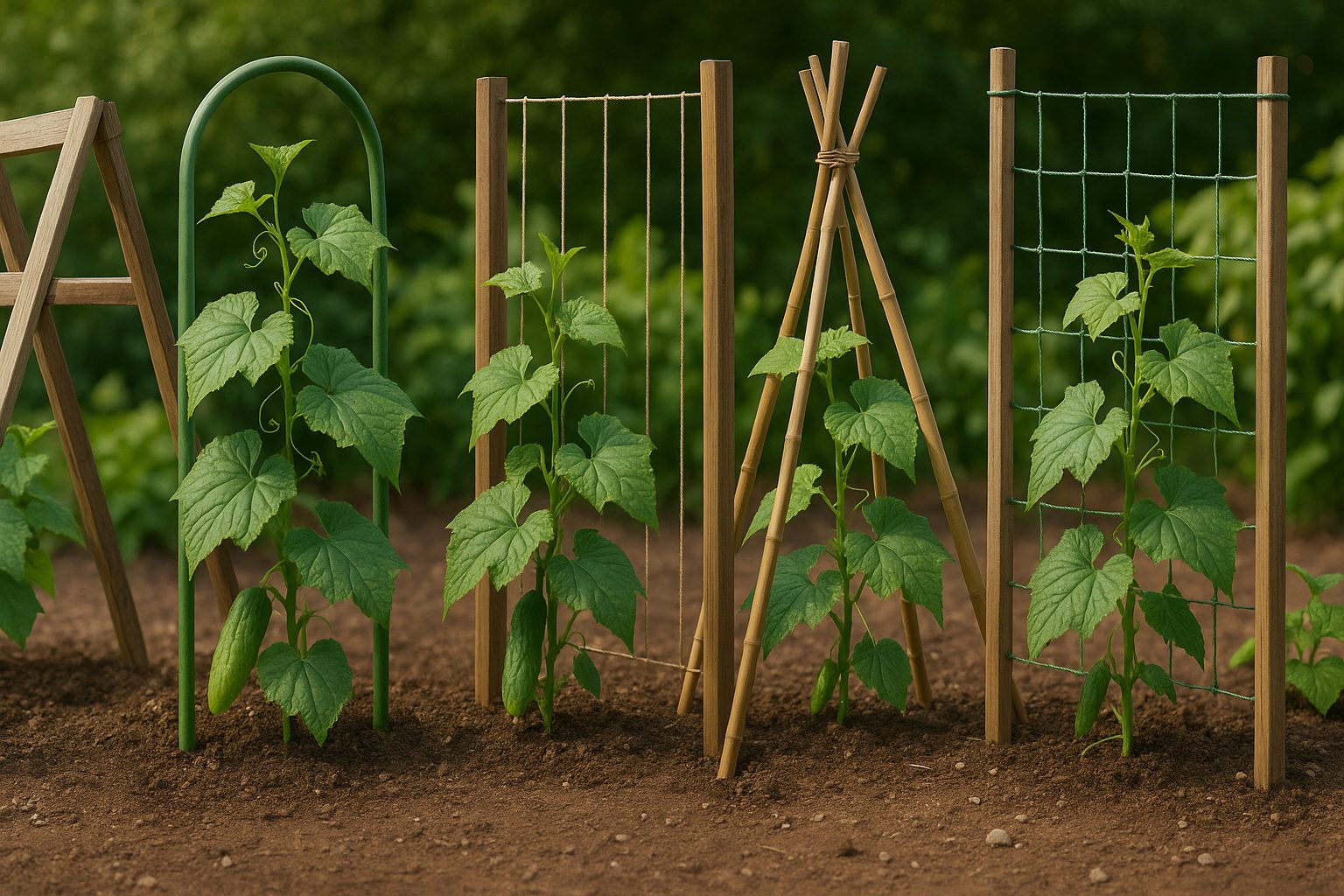
When choosing a cucumber trellis, there are several popular styles to consider, each with unique advantages and drawbacks.
A-Frame Trellises
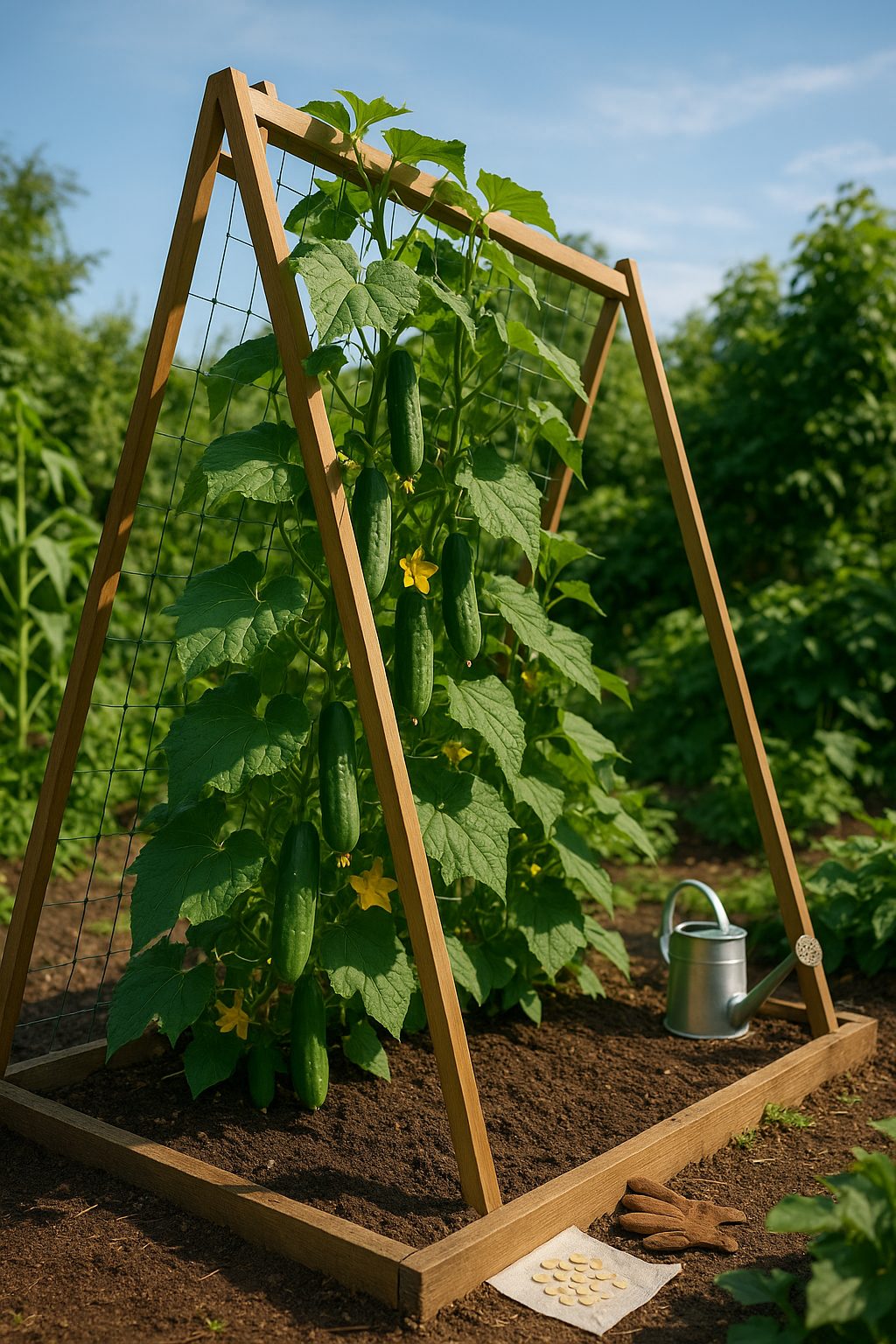
Typically made of wood or metal and shaped like an upside-down “V,” A-frame trellises are sturdy and easy to access from both sides. They are ideal for raised beds or medium-sized gardens, but their bulkiness may not suit tiny spaces.
Arched Tunnel or Hoop Trellises
Often constructed from cattle panels or flexible PVC, these trellises allow vines to sprawl overhead, saving ground space and creating shady walkways. However, they can be more expensive and require secure anchoring.
Vertical String Trellises
A favorite for container gardeners, vertical string trellises use twine or garden string attached to a pole or overhead support. They offer an affordable, scalable solution for balconies or patios, though they may not support heavy cucumber varieties well.
Netting Trellises
Made from garden net or mesh fixed to posts, netting trellises provide plenty of grip for tendrils, are easy to assemble, and work great in tight spaces or for light-fruited varieties. However, they can sag under the weight of larger crops and wear out after a season or two.
Bamboo Stakes
Arranged in teepees or lattice shapes, bamboo stakes are budget-friendly, biodegradable, and blend into any garden. On the downside, they may break down faster and offer less rigidity.
Wire Trellises
Whether using single wires or wire mesh panels, wire trellises are long-lasting and excellent for ground-planted cucumbers. They tend to be less decorative and can be tricky to set up in containers.
Wooden Trellises
Whether prefabricated or handmade, wooden trellises are highly durable and suitable for permanent beds. They can be costlier and require periodic maintenance to avoid rot.
DIY or Upcycled Options
Creative and eco-friendly, these include old ladders, pallets, or repurposed metal frames. They help save money but their durability and stability depend on the materials used.
Choosing the Right Trellis
Consider your garden’s size when selecting a trellis. Compact spaces or container gardens benefit from vertical string or netting trellises, while larger beds support the weight and footprint of A-frame or arched designs. Ultimately, choose the style that matches your available space, budget, and gardening goals for a thriving cucumber crop.
Choosing the Best Spot & Setting Up Your Trellis
Selecting the right spot for your cucumber trellis is key to a successful, bountiful harvest. Start by choosing a location that receives at least six to eight hours of full sunlight each day, as cucumbers thrive in plenty of light. Check the soil drainage, too—avoid spots where water tends to pool after rain, since waterlogged roots can lead to diseases.
If you’re planting in containers, make sure your pots are large enough (at least 5 gallons) and placed somewhere they can easily be rotated or moved to follow the sun throughout the season. When growing cucumbers in-ground, position trellises so they won’t shade other sun-loving crops and can be accessed easily from both sides for picking and maintenance.
For stable installation, use sturdy materials like weather-treated wood or galvanized metal, and drive supports at least a foot into the soil to resist wind and the weight of the plants. In containers, anchor trellises by placing their legs inside the potting mix and securing them with heavy stones or tying them to a balcony railing for extra support.
Whichever setup you choose, double-check the trellis height; cucumbers love to climb, and a structure 5–6 feet tall gives them plenty of space to thrive while keeping vines and fruit off the ground. Regularly check connections and ties, tightening or replacing them as needed, so your trellis stays strong all season long.
How to Plant & Train Cucumbers on a Trellis
Planting cucumbers at the base of a trellis is a great way to save space and keep your harvest healthy and easy to pick. Start by choosing a sunny spot and waiting until nighttime temperatures consistently stay above 55°F, which is usually a couple of weeks after your last spring frost.
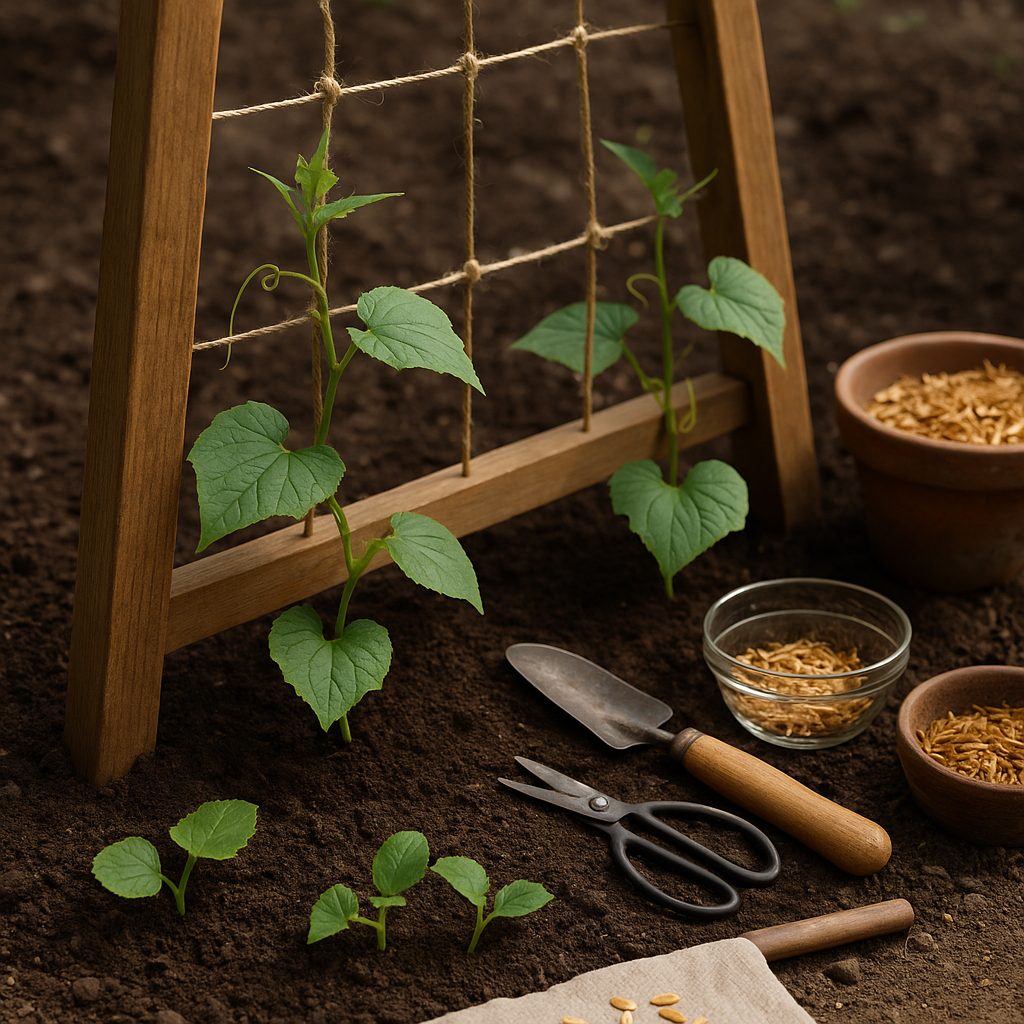
If you’re sowing seeds, plant them half an inch deep and 8-12 inches apart, directly at the foot of your trellis. For seedlings, gently transplant them with the same spacing, taking care not to disturb their fragile roots. After planting, water deeply to settle the soil and keep it evenly moist as the plants establish.
Cucumbers are thirsty but don’t like soggy roots, so aim for a regular watering schedule; consider using mulch around the base to retain moisture and discourage weeds.
Once the vines have two or three true leaves and start reaching for support, it’s time to train them upward. Gently guide young vines toward the trellis, loosely tying them with soft twine, garden tape, or even strips of old t-shirt so they don’t get damaged as they grow. Check them every few days and keep securing new growth, always tying loosely to avoid constricting the stems.
If the vine sends out side shoots away from the trellis, pinch these back to focus energy on the main stem, unless you want bushier growth.
As the cucumbers climb, their tendrils will begin to grab on naturally, but your regular guidance can prevent tangling and overloading the trellis.
By providing this simple structure and steady early care, you’ll encourage stronger plants and a cleaner, more manageable crop that’s much easier to harvest all summer long.
Caring for Trellised Cucumbers
Trellised cucumbers thrive with consistent care throughout the growing season, and a few mindful habits will keep your plants healthy and productive.
First, water cucumbers deeply and regularly—aim to keep the soil moist but never soggy, as inconsistent watering can cause bitter or misshapen fruit. Early morning is the best time to water, as it prevents evaporation and allows foliage to dry, which helps deter disease.
Mulching is a big help too: spread a 2–3 inch layer of straw, shredded leaves, or grass clippings around the base of your plants to retain moisture, control weeds, and keep fruit clean. Fertilize every 3–4 weeks with a balanced, slow-release fertilizer, or supplement with compost tea for a natural nutrient boost.
Keep an eye out for common pests like cucumber beetles and aphids—both can spread disease and stunt plant growth. Remove them by hand or use insecticidal soap, and install row covers early in the season for added protection.
Watch for signs of powdery mildew or downy mildew, such as white fuzz or yellow spots on leaves, and ensure good airflow around plants by spacing them well and pruning away excess foliage.
Trellised cucumbers especially benefit from a little grooming: regularly pinch off side shoots and old leaves that have yellowed or touched the ground. Gently guide vines up the trellis to encourage upward growth and better light exposure.
Harvest cucumbers frequently to promote new fruits and prevent plants from getting overgrown. By staying attentive and giving your trellised cucumbers a little daily check-in, you’ll ensure a steady harvest and healthy vines all season long.
Recommended Cucumber Varieties for Trellising
When choosing cucumber varieties for trellising, look for vigorous vines and slim fruit shapes that naturally climb and hang rather than spread along the ground.
For slicing, favorites like Marketmore 76, Poinsett 76, and Straight Eight grow long, sturdy vines that thrive when directed upward, allowing the fruit to hang straight and avoid misshapen growth.
Pickling types such as Chicago Pickling and Boston Pickling also perform well on trellises since their compact, slender fruit are easy to spot and harvest as they dangle at eye level.
While bush varieties like Bush Champion or Spacemaster don’t climb as high or far, they can still benefit from small trellises to lift their short vines off the soil, keeping fruit cleaner and better ventilated.
Classic vigorous vining types like Lemon cucumber and Armenian cucumber (which is technically a melon) are especially well suited for vertical gardens as they’ll easily run tall, producing great yields in small spaces.
For optimal trellising success, check seed packet descriptions for words like “vining,” “climbing,” or “suitable for staking,” and avoid strictly bush or dwarf types if you want significant vertical growth.
Hybrid varieties often offer improved disease resistance and uniform fruit shape, which is helpful when fruits hang.
Lastly, always consider your growing space—match compact varieties to small trellises, and vigorous vines to sturdy, taller supports to make the most of your garden’s vertical potential.
Harvesting & Troubleshooting Common Issues
Knowing when to harvest cucumbers is key to enjoying crisp, flavorful produce. Look for fruits that are firm, evenly green, and about six to eight inches long, depending on the variety. Overripe cucumbers may turn yellow and develop a bitter taste. Use a sharp knife or garden shears to snip cucumbers from the vine—pulling by hand can damage the delicate stems and reduce future yields.
As your trellised cucumbers grow, keep an eye out for common issues. Wilting leaves, especially in hot weather, often signal underwatering but can also indicate root problems or pests like cucumber beetles. Stunted growth might be traced to poor soil nutrition, so consider side-dressing with a balanced fertilizer every few weeks.
Sometimes, you may notice fewer fruits due to poor pollination—encourage pollinators with nearby flowering plants, or gently shake the vines to help pollen move. Regularly inspecting your plants allows you to catch and resolve these problems early, ensuring a healthier and more productive cucumber crop.
Making plant observation part of your routine helps you spot subtle changes and keeps your garden thriving all season long.