Introduction
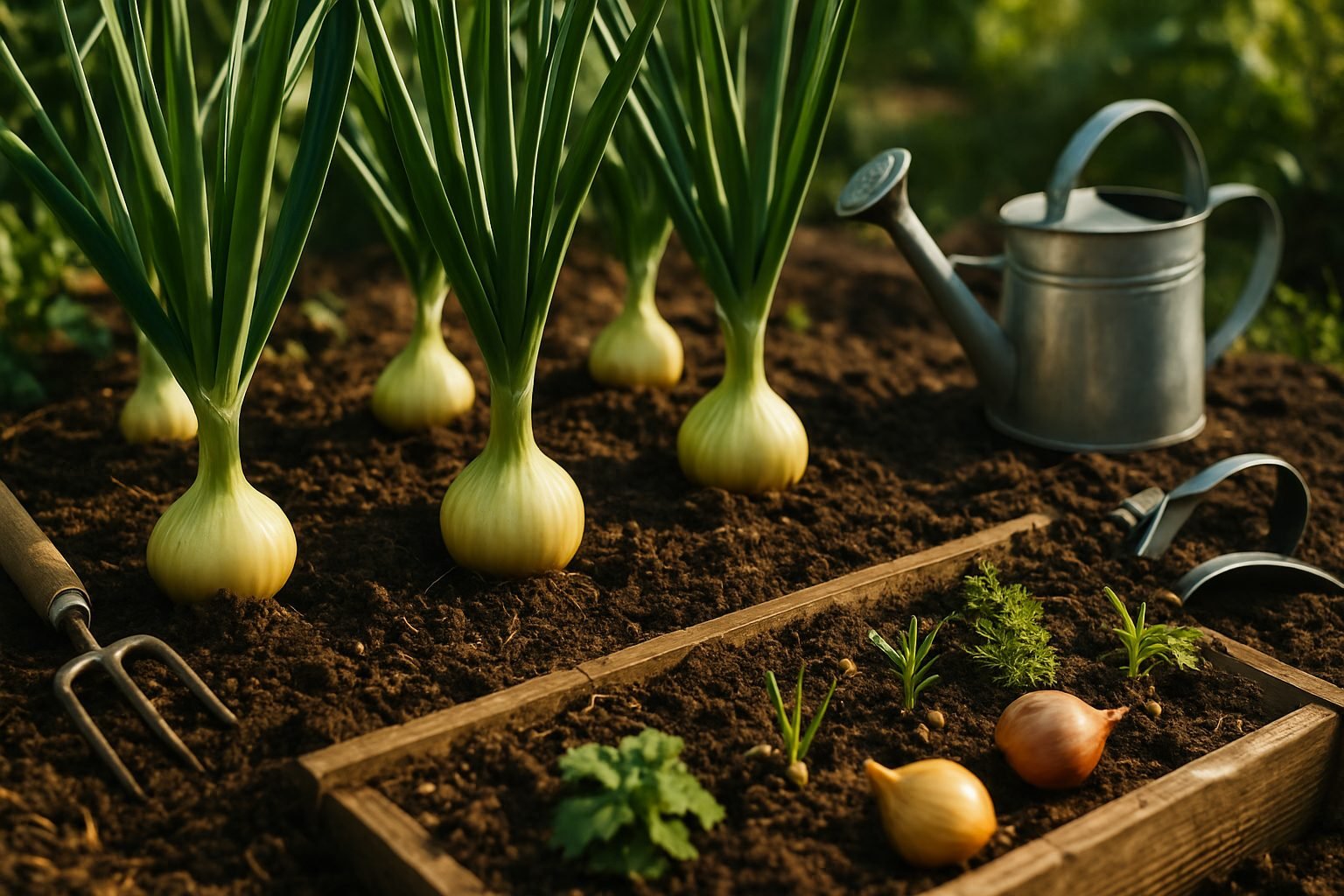
Getting the onion soil pH right can make all the difference between a thriving onion patch and a disappointing harvest. Onions are picky about their soil environment—both the pH level and the soil’s texture play a crucial role in how well the bulbs grow. If the soil is too acidic or too alkaline, onions can struggle to absorb vital nutrients, leading to stunted growth or pale, unhealthy leaves. Likewise, heavy clay soils that stay soggy can suffocate roots, while overly sandy soils might not hold enough moisture or nutrients.
Many onion growers encounter issues like yellowing leaves, slow development, or even bulbs rotting in the ground when soil conditions aren’t ideal. These problems are often linked to factors you can fix if you know what to look for. In this article, we’ll explain why onion soil pH matters, how to test and adjust it, and what to do if your soil’s texture isn’t quite right. You’ll also find practical advice on choosing amendments, improving drainage, and making your garden beds more onion-friendly. Whether you’re starting a new bed or troubleshooting an old one, you’ll learn how to create the best possible soil conditions for robust, healthy onion harvests.
Understanding Soil pH
Soil pH measures how acidic or alkaline the soil is, on a scale from 0 to 14, with 7 being neutral. For onion cultivation, getting the onion soil pH right is essential because it directly affects how well onions can access nutrients and develop healthy bulbs. The ideal onion soil pH typically ranges between 6.0 and 7.0. Staying within this slightly acidic to neutral range maximizes nutrient availability, encourages strong root growth, and reduces the risk of nutrient deficiencies.
When the soil is too acidic (below pH 6.0), onions often struggle to absorb key nutrients like phosphorus, potassium, and calcium, leading to stunted growth, purplish leaves, and weak bulbs. Conversely, if the pH is too high (above 7.0), onions may suffer from micronutrient deficiencies, which show up as yellowing leaf tips, slow growth, or poor bulb formation. Gardeners often notice poor seed germination and patchy plants when the pH falls outside the optimal range.
For example, if your onion plants have yellow, twisted, or distorted leaves—or if bulbs fail to swell properly—soil pH could be the cause. Regularly checking pH with a home test kit or pH meter helps catch problems early. Adjustments like adding lime to raise the pH or elemental sulfur to lower it can bring your soil back into the onion-friendly sweet spot, setting the stage for a bumper crop.
Soil Texture Basics for Onions
Soil texture refers to the proportion of sand, silt, and clay in your garden soil, directly influencing water drainage and how well oxygen reaches plant roots. For onions—a crop with relatively shallow roots that prefer steady, but not soggy, moisture—the right soil texture is essential. Sandy loam is considered the best soil for onions because it has a loose, crumbly structure that prevents compaction and provides excellent drainage.
This texture allows onion bulbs to grow freely without resistance while still retaining enough moisture and nutrients for steady development. In contrast, heavy clay soils hold too much water and can suffocate roots, leading to rot, while sandy soils dry out too quickly, stressing the plants.
To check your soil texture at home, try the “feel test”: moisten a handful of soil and rub it between your fingers. Sandy soil feels gritty, silt feels smooth and silky, and clay feels sticky. Another simple method is the “jar test”: place a soil sample in a clear jar with water, shake it well, and let it settle for 24 hours. Sand settles at the bottom, followed by silt and then clay, showing the proportions visually.
By understanding and adjusting your garden soil texture, you ensure the ideal onion soil pH and environment for healthy root systems, robust bulbs, and a bountiful harvest.
Testing and Adjusting Soil pH
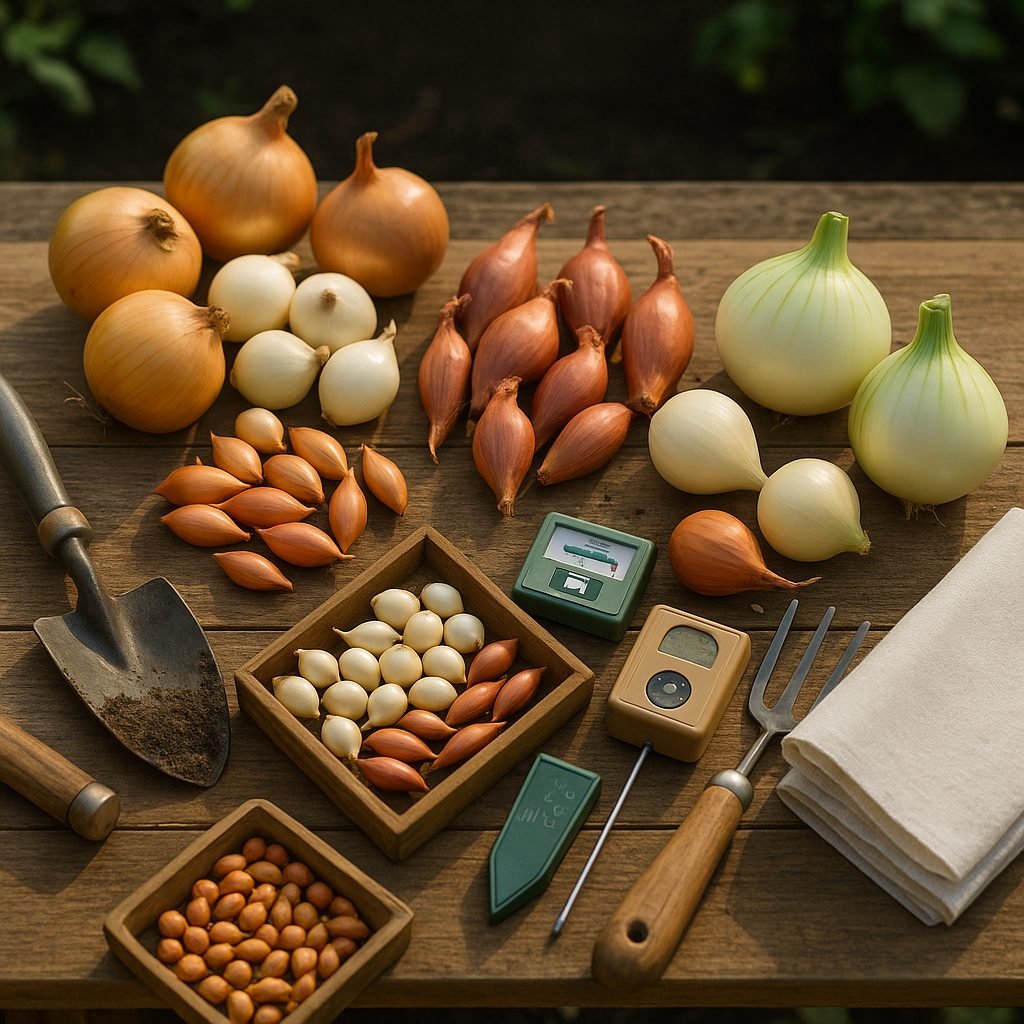
To grow healthy onions, maintaining your soil’s pH in the ideal range—between 6.0 and 7.0—is essential. Great results start with proper testing. Home gardeners can use simple DIY soil pH test kits, which are affordable and available at most garden centers. These kits usually involve mixing a small soil sample with water and a test solution, then comparing the color change to a chart.
For more accurate results, consider sending a soil sample to your local cooperative extension service or agricultural lab. Professional tests provide detailed pH readings along with guidance on other soil fertility factors. Whether you opt for DIY or lab testing, sample several spots in your garden at root depth to get a representative reading.
If your onion soil pH is too low (acidic), adding ground agricultural lime can gradually raise it. Work the lime thoroughly into the top 6 inches of soil a few months before planting, as it takes time to adjust the pH. Conversely, if your soil is too alkaline, elemental sulfur or soil acidifiers can help lower the pH. Apply these amendments based on your soil test recommendations, and allow a couple of months for the changes to take full effect.
Aim to test and amend your soil at least three months before planting onions—typically in late fall for spring planting—so the soil has time to rebalance. Once your soil is in the target pH range, monitor it with quick tests at least once a year, or more often if your onions show signs of nutrient deficiency or poor growth.
Adding organic matter like compost can help stabilize pH and promote ongoing soil health. However, apply amendments gradually and monitor regularly to avoid overshooting your goal. Routine observation, timely adjustments, and annual testing will ensure your onions thrive in optimal conditions year after year.
Improving Soil Texture for Onions
Improving your soil’s texture is essential for healthy onions, as they thrive in loose, well-drained beds where their bulbs can expand easily. If your garden has heavy clay soil, mix in organic amendments like well-rotted compost, peat moss, or leaf mold. These will break up dense clumps and boost moisture retention without making the bed soggy. Sand works well as an inorganic amendment for compacted soils; use sharp builder’s sand (not play sand) at a one-to-four ratio with your native clay to improve drainage and aeration.
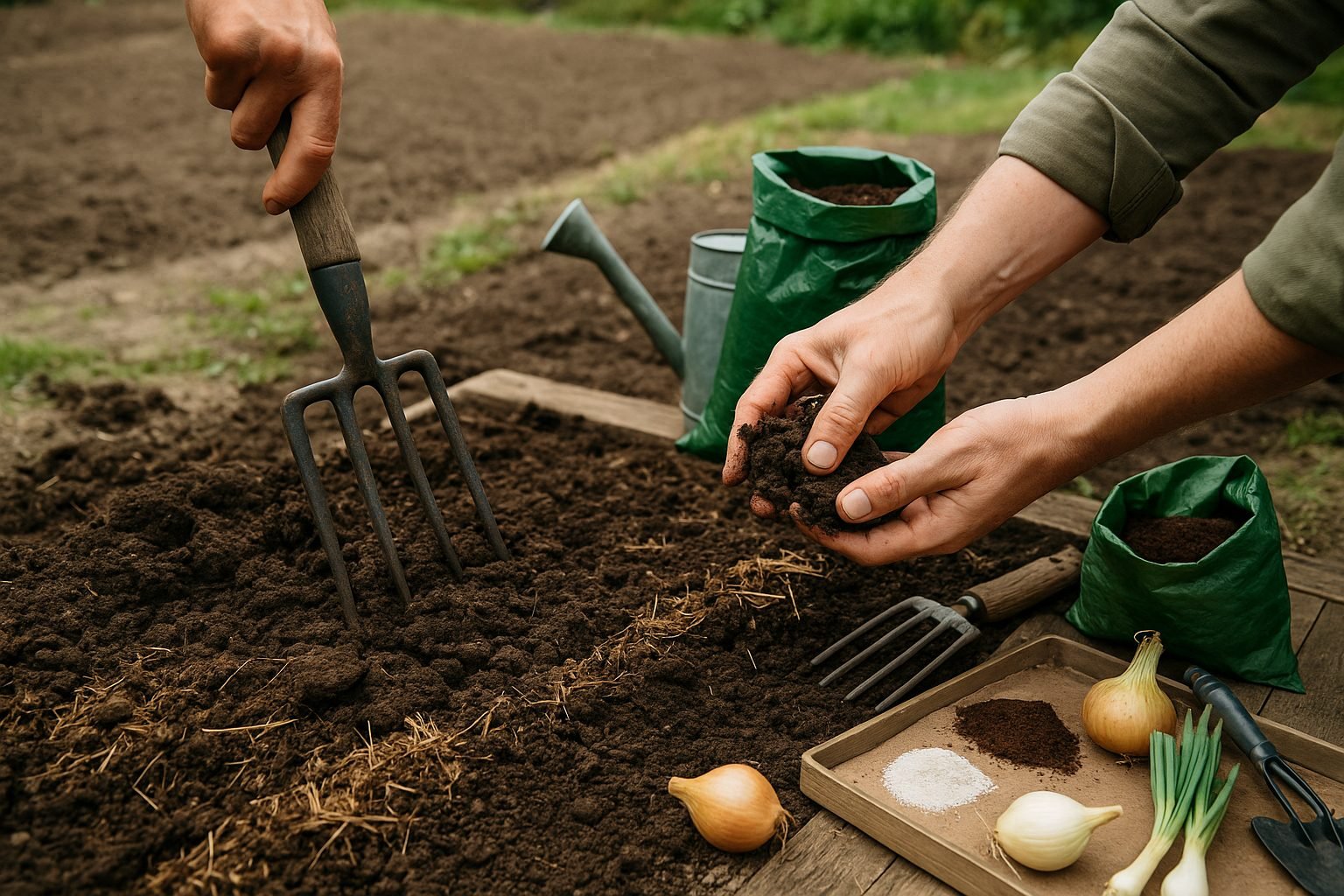
For sandy soils that dry out too quickly, add organic materials such as aged manure or coconut coir to increase water-holding capacity. To prepare your onion bed, start by clearing weeds and debris, then loosen the soil to at least 8–12 inches deep using a garden fork or broadfork. Spread 2–3 inches of your chosen amendments evenly across the surface and mix them thoroughly into the soil.
Next, rake the soil into low, wide ridges or raised rows—onions grow best when their roots are elevated above poorly draining spots. After planting, apply an organic mulch layer such as straw, shredded leaves, or grass clippings, keeping it a few inches away from the onion stems. Mulching helps stabilize moisture levels, preventing your onions from drying out or becoming waterlogged. It also suppresses weeds and helps maintain the soil structure you’ve improved.
Over time, the organic mulch breaks down, enriching soil texture further by feeding beneficial microbes and creating a crumbly, easy-to-work medium. By combining thoughtful amendments, proper bed preparation, and consistent mulching, you’ll give your onions the best soil foundation—loose, airy, fertile, and balanced in moisture—all of which are key factors in optimizing your onion soil pH and overall growth.
Common Soil Issues and How to Fix Them
Growing healthy onions depends heavily on getting both soil pH and texture just right, but several common soil issues can hinder their success. Heavy clay soils tend to retain too much water, which can suffocate onion roots and lead to stunted bulbs or increased risk of fungal diseases. To fix this, work in plenty of organic matter like well-rotted compost or aged manure to loosen the texture and improve drainage.
On the other hand, sandy soils drain too quickly and struggle to hold nutrients, leaving onions hungry and prone to poor growth. Mixing in organic matter can help sandy soils retain moisture and nutrients, giving onions a more stable environment.
Compacted soil is another frequent problem, especially in beds that haven’t been turned regularly or are subject to foot traffic. Onions need loose, crumbly soil for their roots to expand and bulbs to form properly; use a garden fork to gently aerate, and avoid walking on onion beds.
Surface crusting—a hard layer that forms after rain or irrigation—can also hinder seedling emergence and root oxygenation. Prevent crusting by mulching beds with a thin layer of straw or lightly raking the surface after watering.
Any of these issues, if left unresolved, can result in poor onion development, smaller bulbs, and greater susceptibility to diseases such as root rot or downy mildew. Regular soil testing—especially monitoring onion soil pH—along with these proactive measures will keep your soil healthy and your onions thriving.
Maintaining Healthy Soil for Onions
One of the best ways to maintain healthy soil for onions is by practicing crop rotation and cover cropping in your gardening routine. Crop rotation means alternating onion plantings with non-allium crops each year, which helps reduce pests and diseases specific to onions while allowing the soil to replenish nutrients. For instance, after harvesting onions, try planting legumes or leafy greens—their different nutrient needs help balance soil fertility.
Adding cover crops, like clover or winter rye, during off-seasons prevents erosion, boosts organic matter, and improves soil structure. When these crops are tilled into the ground, they decompose and enrich the soil, creating a loose, well-aerated texture that onions love.
To support soil fertility further, regularly incorporate compost or well-rotted manure into your beds. These organic amendments provide a slow-release source of essential nutrients and promote a crumbly soil structure ideal for onion root growth. If additional nutrients are needed, use a balanced fertilizer with moderate nitrogen—too much nitrogen encourages leafy tops at the expense of bulb development.
It’s also important to monitor onion soil pH throughout the season. Onions thrive best in a pH range of 6.0 to 7.0. Use a simple soil test kit to check your soil’s pH and adjust it by adding garden lime to raise pH or elemental sulfur to lower it as necessary. Avoid compacting the soil by staying off garden beds, and mulch around onion plants to retain moisture, regulate temperature, and reduce weed competition.
Combining these practices creates a stable, fertile, and well-textured environment that onions need to grow healthy and strong.
Conclusion
Proper onion soil pH and texture are the foundation for healthy growth, sweet bulbs, and a bountiful harvest. Taking the time to test your soil’s pH and adjust it as needed—usually aiming for a slightly acidic to neutral range—can make a big difference in your onion crop. Don’t forget about soil texture; loose, well-draining soils help onions develop smooth, well-shaped bulbs. Amending your soil and regularly testing it are simple steps that pay off quickly. Have you tackled soil issues in your own onion patch? Share your experiences or questions in the comments below—we’d love to hear from you!