Introduction
Drying cucumbers is becoming an increasingly popular method for preserving your summer bounty and creating healthy snacks. Unlike traditional pickling or freezing, dehydration removes moisture, making cucumbers not only shelf-stable but also turning them into a satisfyingly crunchy treat. Cucumbers are especially well-suited for dehydration since they are naturally hydrating, low in calories, and absorb flavors easily—perfect for making homemade cucumber chips that are healthy, customizable, low-carb, and have that addictive crunch many of us crave in a snack.
But does drying cucumbers really work, and is it worth trying at home? In this guide, we’ll explore the science behind dehydrating cucumbers, the best techniques and equipment to use, and tips for maximizing flavor and crunchiness. We’ll also answer common questions about storage, seasoning, and the nutritional benefits of homemade cucumber chips compared to store-bought snacks.
Ready to transform your cucumbers into a delicious, guilt-free snack? Let’s dive into the simple steps and secrets of drying cucumbers so you can enjoy their refreshing taste all year round!
Choosing Cucumbers & Prep Basics
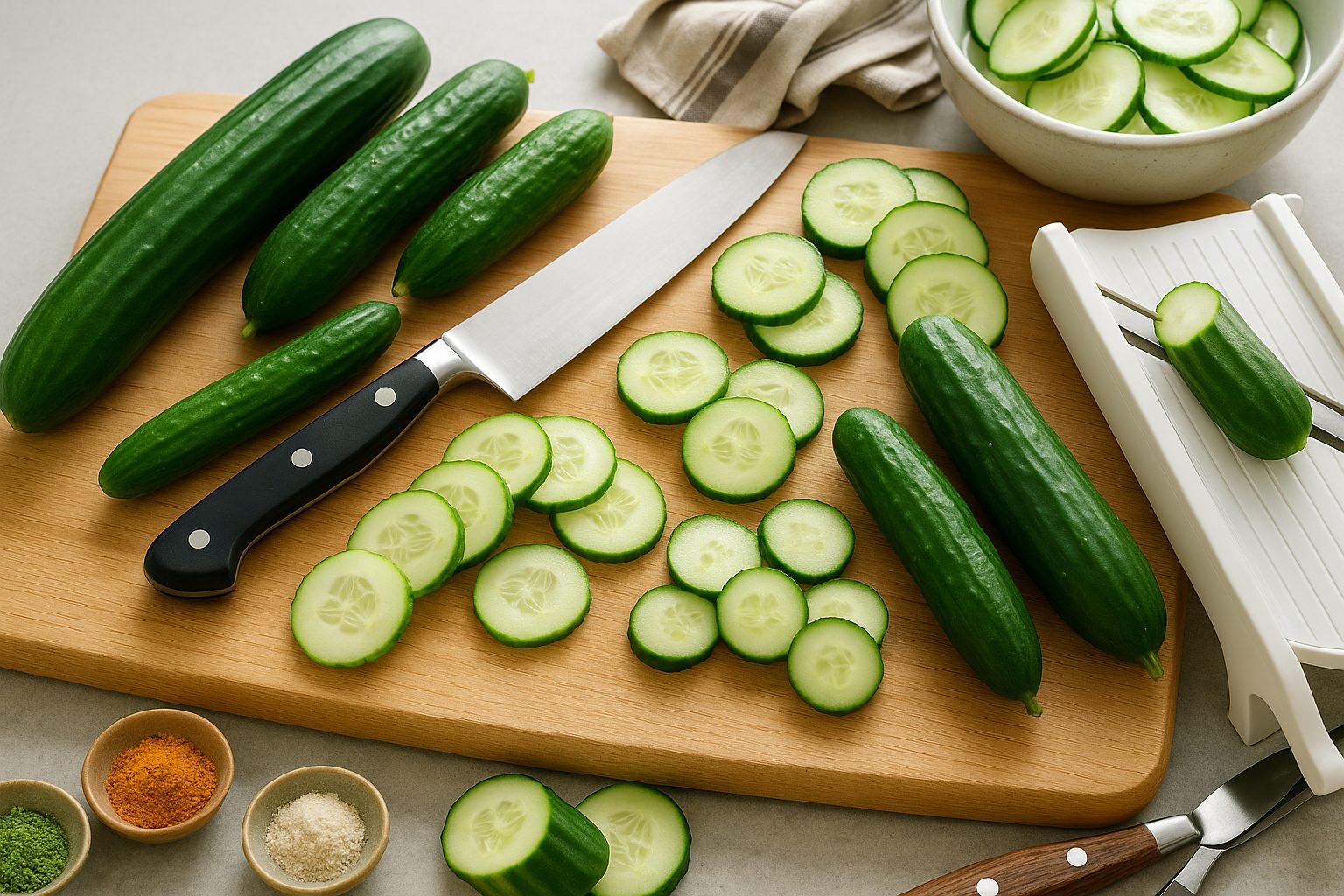
When it comes to dehydrating cucumbers, variety matters more than you might think. English cucumbers and Persian cucumbers are top picks because they have thin skins, fewer seeds, and a mild flavor that intensifies nicely when dried. If you’re working with standard slicing cucumbers, they can be used too, but you may want to peel the thicker skin for better texture.
Always select cucumbers that feel firm when gently squeezed; avoid any with wrinkled skin, soft spots, or blemishes, as these are signs of over-ripeness or decay. Look for a vibrant green color and a slight glossy sheen to ensure maximum freshness.
Before you start, wash each cucumber thoroughly under cool running water to remove dirt and possible pesticides. Pat them dry with a clean towel. Trim off both ends with a sharp knife; the blossom end can sometimes have a lingering bitterness.
Peeling is optional—the peel adds fiber and a pleasant chew, but can be tougher on larger or older cucumbers, so consider your preference and intended use for your dehydrated slices.
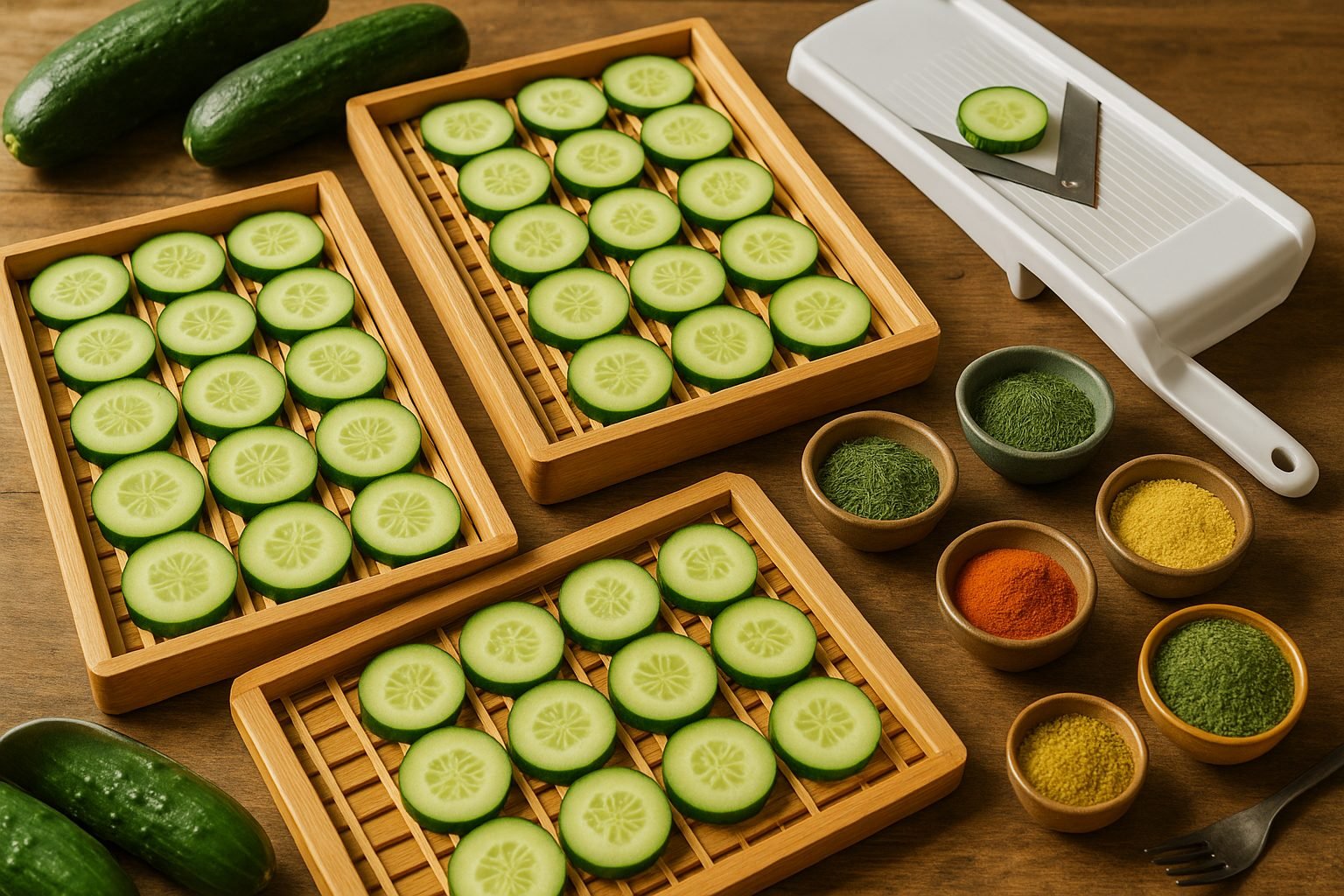
For slicing, a mandoline slicer is a kitchen game-changer, offering uniform, super-thin cuts (ideally 1/8 inch thick or less) and saving plenty of time and effort compared to using a knife. If you use a knife, aim for consistent thickness so your cucumbers dehydrate evenly—uneven slices can lead to tough or chewy results.
In a pinch, a sharp chef’s knife works, but go slowly and check your slices for uniformity. Thin, even slices not only speed up the dehydration process but also produce those satisfyingly crisp cucumber chips you’ll want for snacks and salads.
By starting with the right variety and following these basics, you set yourself up for success with every batch.
Dehydrator vs. Oven vs. Air Fryer: Which Method Works Best?
When it comes to drying foods at home, the best method—dehydrator, oven, or air fryer—depends on your needs and kitchen setup.
Dehydrators are purpose-built for removing moisture slowly and evenly, offering consistent results for everything from fruit slices to jerky. They operate at low temperatures (typically 125°F–140°F) and may take 6–12 hours, but the payoff is optimal texture and flavor. While dehydrators free up your oven and guarantee even airflow, they’re an added appliance that takes up counter space and can be a bit of an investment.
Ovens are the most accessible option, as nearly every kitchen has one, and can be set on low (around 170°F or on the “warm” setting). Propping the door open with a wooden spoon improves air circulation, but watch closely—ovens can dry foods in 2–6 hours, though thin slices may cook or burn if left unattended. Ovens also use more energy, and uneven heat can make results less consistent.
Air fryers are a popular shortcut; many now have dehydration functions that operate around 120°F–150°F. Thanks to powerful fans, they speed up the process, often drying fruits and vegetables in just 2–5 hours. However, air fryer baskets are typically smaller, so you’ll likely need to work in batches.
If you regularly preserve large harvests, a dehydrator is the most convenient, but for occasional snacks or testing recipes, an oven or air fryer is a quick, easy choice. Ultimately, consider how much you plan to dry, your available equipment, and how much time you can spend monitoring the process to pick your best fit.
Step-by-Step: How to Dehydrate Cucumbers (With Flavor Options)
Start by selecting fresh, firm cucumbers—English or Persian varieties work best because of their thin skins and few seeds. Wash them thoroughly and slice evenly into thin rounds, about 1/8-inch thick, for consistent drying; a mandoline slicer makes this quick and uniform.
Lay the slices on a paper towel and lightly salt them to draw out excess moisture. Let them rest for 10 to 15 minutes, then pat dry with another paper towel to speed up dehydration.
If you want to boost the flavor, consider marinating the slices for 30 minutes in a mix of olive oil, vinegar, or your favorite seasoning blend. Just be sure to drain and pat dry again so the slices aren’t too wet when they go into the dehydrator or oven.
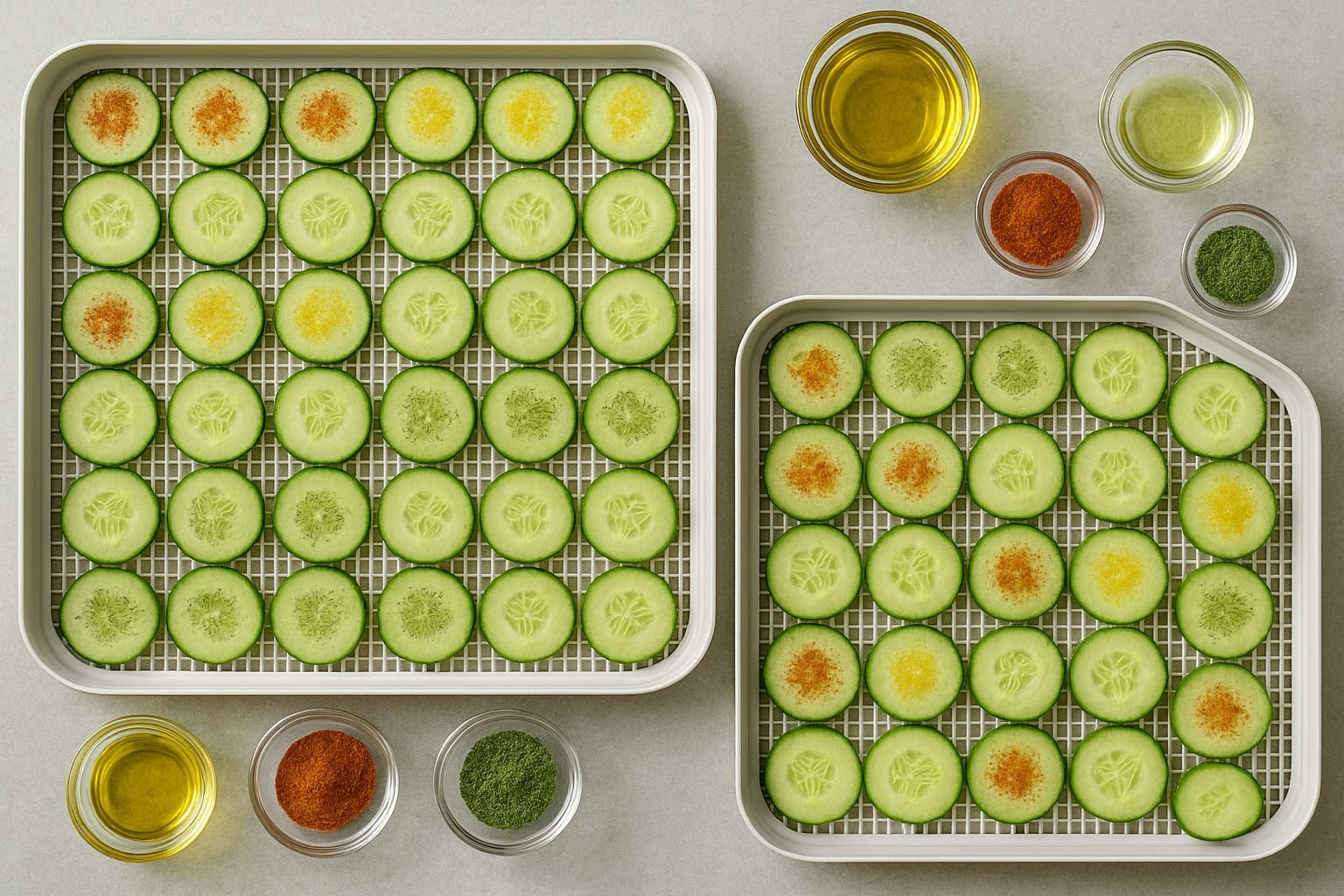
Next, arrange the slices in a single layer on your dehydrator trays, baking sheet, or air fryer rack. Make sure they don’t overlap for even airflow and crispiness; crowded trays lead to soggy, uneven chips.
Drying Instructions
- Dehydrator: Set to 135°F (57°C) and expect drying to take 6–10 hours, depending on humidity and thickness.
- Oven: Use the lowest setting (usually 170–175°F / 77–79°C) and bake for 2–4 hours, checking and flipping halfway through.
- Air fryer: Work in small batches at 135–150°F (57–66°C) for about 2 hours.
Flavor Options
Sprinkle wet or pre-marinated slices with seasoning before drying:
- Classic salt and vinegar (brush with vinegar, then sprinkle salt)
- Spicy (chili powder, cayenne, or Tajín)
- Zesty dill (dried dill and garlic powder)
- Cheesy (nutritional yeast with a touch of smoked paprika)
Testing for Doneness
Let a chip cool for a minute—if it’s brittle and snaps cleanly, it’s ready. If it’s leathery or bends, keep drying and check every 30 minutes.
Once done, let the chips cool completely before sealing in airtight containers with a silica gel pack for maximum crunch.
Pro Tips
- Moisture is the enemy of crispiness, so store in a dry place.
- If chips lose crispness, briefly re-crisp them in the oven or air fryer.
With these steps, you’ll have healthy, customizable cucumber chips perfect for snacking anytime.
Storage & Shelf Life: Keeping Your Chips Crisp
After dehydrating your chips, don’t rush to store them—first, use the conditioning process to ensure they’re truly moisture-free. Place your cooled chips loosely in a large jar, seal the lid, and shake gently once a day for about a week. If you see condensation, return the chips to your dehydrator for extra time; any leftover moisture can lead to spoilage.
Once you’re confident they’re dry, store chips in airtight containers like glass jars or vacuum-sealed bags to prevent air and humidity from getting in. Keep the containers in a cool, dark, and dry place such as a pantry or cupboard, away from heat sources or sinks. Humidity can quickly undo your hard work, making chips go limp or moldy—so avoid the fridge, damp basements, and any spot prone to temperature swings.
Properly dehydrated and stored, most chips stay crisp for six months to a year—longer if you use moisture-absorbing packets. Always check for off smells, discoloration, or any signs of softness and mold before snacking, as these mean it’s time to toss them.
If your chips lose their crunch, try re-crisping them in a 250°F (120°C) oven for 10–15 minutes—just let them cool completely before resealing. For a quick fix, a few minutes in a dry skillet over low heat can also revive their signature snap, letting you enjoy your healthy homemade chips a little longer.
Creative Uses for Dehydrated Cucumbers: Beyond Snacking
Dehydrated cucumbers aren’t just a crisp, guilt-free snack—they’re a surprisingly versatile ingredient that can jazz up your kitchen routine. Besides munching on the slices straight from the jar, try crushing them over salads for a tangy crunch or stirring them into yogurt-based dips like tzatziki for an extra layer of texture and fresh flavor.
To take things further, blend those crispy cucumber slices into a fine powder with a food processor or spice grinder. Cucumber powder adds a refreshing twist to homemade seasoning blends—just mix it with a pinch of salt, garlic powder, and dill for a zesty salad sprinkle—or stir it into soups and smoothies when you want a pop of cool, garden-fresh taste.
Lunchboxes also benefit from this pantry staple: tuck a handful of dehydrated cucumber chips into bento boxes alongside pita chips and hummus, or use them as a clever—and mess-free—addition to wraps and sandwiches in place of traditional cucumber slices.
For creative family meals, toss dehydrated cucumbers into grain bowls, add them to couscous or quinoa for texture, or sprinkle them on avocado toast for a hint of crunch and flavor. These simple swaps and additions mean that with a batch of dehydrated cucumbers (or cucumber powder) on hand, upgrading everyday meals is not only easy—it’s also deliciously different.
Troubleshooting & FAQs: Common Issues Solved
Running into problems with your homemade cucumber chips is common, but most issues have quick fixes. If your chips turn out chewy instead of crispy, chances are they either need more drying time or your slices are too thick.
Try using a mandoline to achieve even, thin slices (about 1/8 inch is ideal) and dry them until they snap. Uneven drying often happens when trays are overcrowded or chips overlap—space them out in a single layer and rotate your trays halfway through the process to ensure all chips dry evenly.
If chips stick to the tray, lightly spray your drying surface with nonstick spray or use parchment paper; just avoid wax paper, as it can get mushy.
Wondering if you can use large cucumbers? Absolutely, but peel them first and scoop out seeds if they’re especially watery, as excess moisture can cause sogginess.
For bland chips, try tossing your cucumber slices in a little olive oil and your favorite seasonings or spice blends before drying—garlic powder, paprika, or even everything bagel seasoning work well.
To prevent waste and perfect your process, make a small test batch initially. Adjust slicing thickness, seasoning, or drying time as needed before scaling up.
Remember, every dehydrator or oven is a bit different, so don’t be afraid to experiment until you find what works best for you.
Conclusion
Dehydrating cucumbers is a simple, rewarding process that transforms fresh slices into crispy, tasty snacks you can enjoy anytime. This method not only helps cut down on food waste but also gives you a healthy, portable treat.
Don’t be afraid to experiment with different seasonings or try both oven and dehydrator methods to see what you like best. Your unique flavor combinations could become a new favorite!
We’d love to hear about your experiences and creative twists—share your results, tips, or favorite seasoning mixes in the comments below. Happy dehydrating!