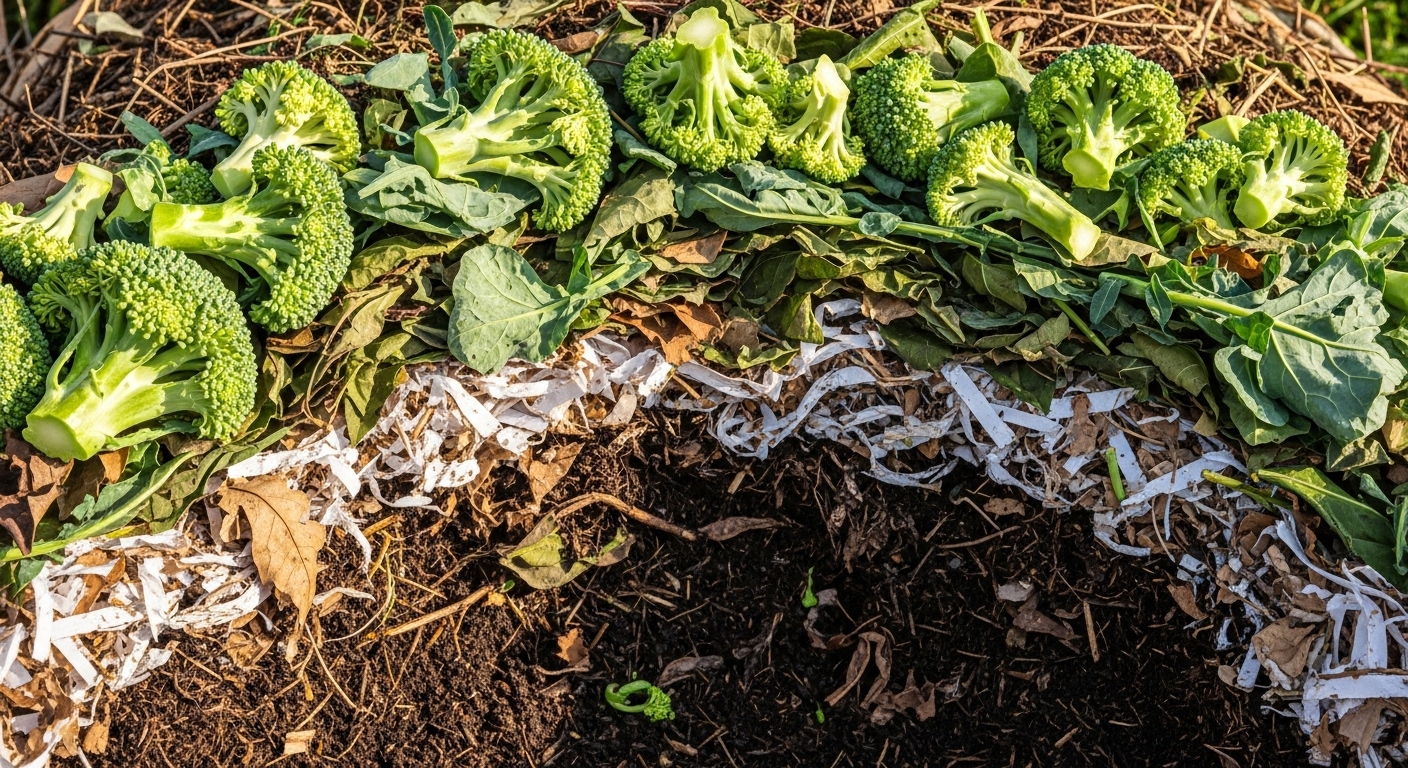
The Benefits of Composting Broccoli
Composting broccoli is an easy and effective way to turn kitchen scraps into nutrient-rich soil, starting with the parts most people throw away: stems and scraps. Broccoli, often celebrated for its health benefits in the kitchen, is just as valuable for your compost pile thanks to its high nitrogen content and essential minerals.
These nutrients help fuel the decomposition process, making your compost break down faster and resulting in a rich, dark finished product. Tossing broccoli stems, leaves, and florets into your compost bin—not the trash—does more than just clear kitchen clutter. It actively reduces food waste, diverts biodegradable material from landfills, and helps cut methane emissions, all of which support environmental sustainability.
Gardeners who compost broccoli notice healthier, more fertile soil that retains moisture and supports robust plant growth. The minerals in broccoli, like potassium and magnesium, enrich compost, leading to stronger roots, vibrant foliage, and bigger harvests throughout your garden.
Not sure what to do with those tough stalks after dinner? Rinse off any sauces or oils and drop them right into your compost—your garden (and the planet) will thank you.
How to Prepare Broccoli for Composting
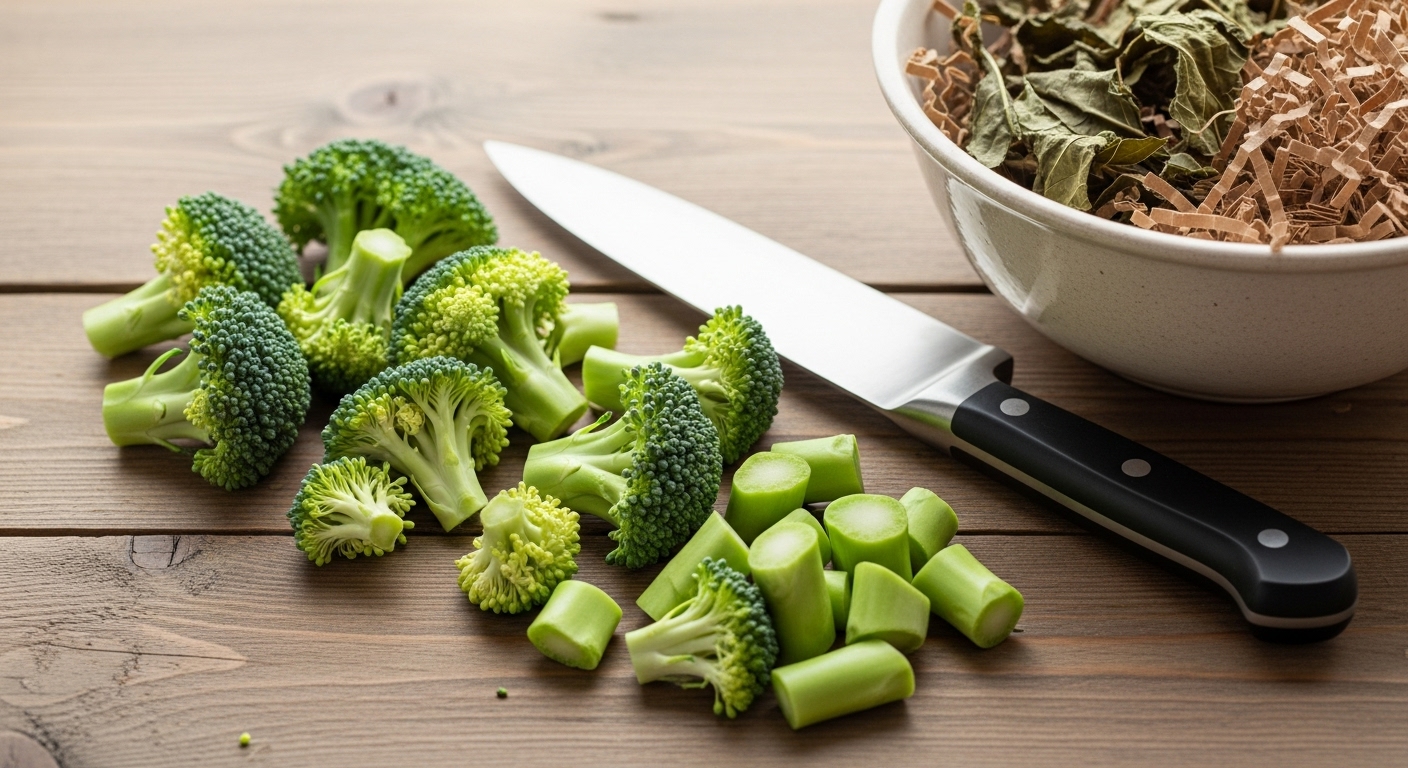
Preparing broccoli for composting is straightforward but benefits from a few key steps to maximize its breakdown. Start by cutting both raw and cooked broccoli into small pieces, as smaller chunks decompose much faster than bulky florets or thick stalks.
For cooked broccoli, make sure to remove any sauces, butter, cheese, or oils—these not only slow down composting but can also attract pests and cause odors.
Broccoli stalks, in particular, are tough and fibrous, so chop them into one-inch or smaller segments to help beneficial microbes do their job more efficiently.
Don’t add too much broccoli at once, as this can create a dense, compact layer that traps moisture and restricts airflow. Instead, mix the chopped broccoli thoroughly with a variety of “browns” like dry leaves, cardboard, or straw.
This balance of moist “greens” (like broccoli) and dry “browns” helps maintain a healthy carbon-to-nitrogen ratio and encourages faster, odor-free composting.
If possible, turn your compost pile every week or two to boost oxygen flow and further accelerate the process.
By following these tips—chopping, removing additives, mixing well, and aerating—you’ll turn leftover broccoli into rich, garden-ready compost in no time.
Balancing Greens and Browns When Composting Broccoli
In composting, “greens” are materials high in nitrogen—think fruit and vegetable scraps, coffee grounds, and fresh grass clippings—while “browns” are rich in carbon, such as dry leaves, straw, shredded paper, and cardboard.
Broccoli, like most fresh vegetable waste, counts as a green because it’s moist and full of nitrogen that helps feed the microorganisms breaking everything down. However, too much green material on its own can make your compost smelly and slimy, as excess nitrogen reduces oxygen and slows decomposition.
That’s why it’s important to always balance your broccoli with plenty of browns, which give the pile structure and help everything decompose more efficiently. A common rule of thumb is to aim for about three parts browns to one part greens by volume.
An easy visual cue: if your pile looks wet or smells sour, add more browns; if it’s dry and decomposition seems slow, toss in a bit more green.
Whenever you add chopped-up broccoli stems or florets, simply cover them with a generous layer of dry leaves or shredded newspaper. This habit not only keeps your compost pile healthy and odor-free, but also produces rich, crumbly compost much faster.
Troubleshooting: Preventing Odors and Pests
Improper composting of broccoli can lead to lingering odors and unwelcome visits from pests like rodents or fruit flies, especially if the vegetable scraps are left uncovered or too wet. Broccoli is high in nitrogen and moisture, which, if not balanced correctly with carbon-rich materials like dried leaves or shredded paper, can break down anaerobically and release a strong, sulfurous smell.
To prevent this, always cover fresh broccoli scraps with a generous layer of “browns”—think dried leaves, cardboard, or straw—to mask the smell and promote healthy decomposition. Regularly turning your compost pile (once every week or two) brings in oxygen, which speeds up decomposition and discourages flies and rodents by keeping things less appealing for them.
Managing moisture is equally important: your compost should feel like a wrung-out sponge—moist but not soggy. If the pile is too wet, add dry materials and mix thoroughly.
When composting broccoli in worm bins, chop it into small pieces and only add a handful at a time, mixing it in beneath bedding to deter odors and fruit flies. Too much broccoli can overwhelm worms with moisture and smell, so rotate with other vegetable scraps and monitor moisture levels closely.
For indoor composters, be sure to bury broccoli well and maintain a good green-to-brown ratio; if odors arise, add extra bedding and turn the contents more frequently.
By staying on top of covering, turning, and moisture, you’ll keep your compost—and your home—fresh and pest-free.
Speeding Up Broccoli Decomposition
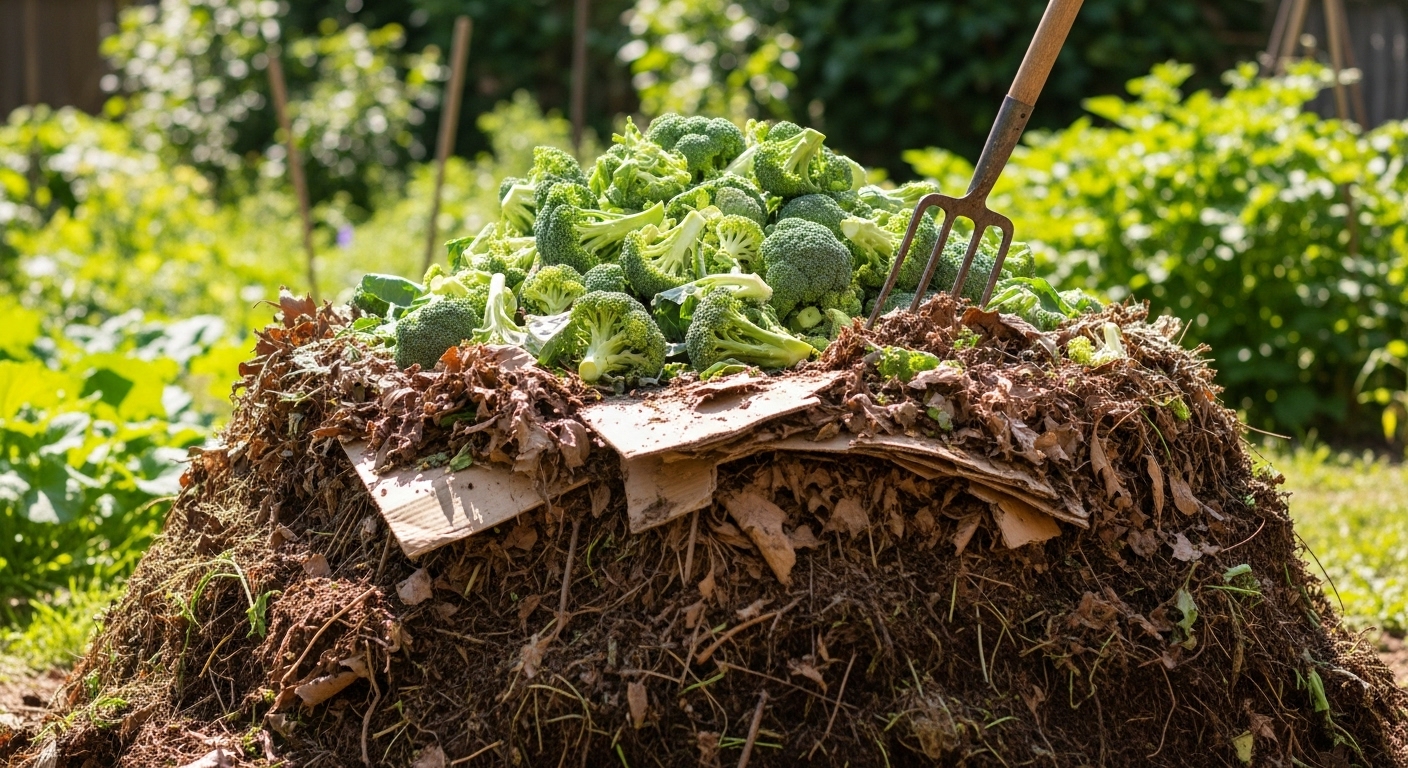
To speed up broccoli decomposition, start by chopping it into small pieces; exposing more surface area lets bacteria and fungi work faster. Next, be mindful of airflow—aeration is crucial, so turn your compost pile every few days or use a bin designed for aeration.
Keeping your compost moist, but not soggy (think wrung-out sponge), helps microbes thrive; too little moisture slows decay, while too much causes odor and rot.
For even faster results, try “hot” composting, which involves creating the right balance of “greens” (like broccoli and other fresh food scraps) and “browns” (dried leaves, cardboard, or paper). A basic rule is two to three parts browns to one part greens.
Heap your materials in a pile at least three feet high and wide to retain heat, and the temperature in the center should rise to between 130–160°F—a sign your compost is cooking! These hot conditions accelerate decomposition, turning broccoli into finished compost in as little as four to six weeks.
If you need an extra boost, sprinkle in a compost activator (commercial blends available at garden stores) or a shovel of finished compost or garden soil to introduce beneficial microbes. Even using spent coffee grounds can add nitrogen and encourage microbes without adding much volume.
Remember, quick decomposition is all about providing a balanced diet of carbon and nitrogen, moist conditions, and regular oxygen—follow these tips, and your broccoli scraps will vanish into rich soil in no time.
Using Finished Compost in the Garden
Knowing when your broccoli-rich compost is ready to use is key to reaping its full benefits in your garden. Mature compost typically has an earthy, almost sweet smell, a crumbly dark texture, and no visible food scraps or broccoli stems. If you spot leftover bits or notice a sour smell, give it more time to decompose.
Once it’s ready, gently fork an inch or two of compost into your garden beds in the spring or fall, or side-dress plants mid-season to boost nutrients. For containers, blend compost with potting soil at a rate of about 20-30% to give potted plants a gentle, consistent feed.
On lawns, sift finished compost to remove any lumps and spread a thin quarter-inch layer evenly with a rake; water well to help it filter down to the roots.
Always be cautious if disease was present in the original broccoli scraps—high composting temperatures usually kill most pathogens, but if you’re unsure, avoid using the finished compost around sensitive crops like tomatoes or young seedlings that might pick up soil-borne diseases.
When first introducing compost, especially near delicate plants, start with small amounts and monitor for any signs of stress or unusual growth, adjusting your approach as needed for a healthy, thriving garden.
Frequently Asked Questions About Composting Broccoli
Many people wonder if broccoli can go into the compost, and the answer is yes—both raw and cooked broccoli can be composted at home. However, cooked broccoli may contain oils, seasoning, or dairy if it’s been prepared, which can attract pests or slow down the composting process. It’s best to compost plain cooked broccoli rather than dishes like cheesy casseroles.
Broccoli stems and florets break down quickly but can sometimes give off a stronger odor than other veggies. This might attract fruit flies or rodents, especially in outdoor bins. To minimize smells and pests, bury broccoli scraps in the center of your compost pile and mix them with dry materials like leaves or shredded paper.
If you’re using a worm bin (vermicomposting), broccoli is suitable in small amounts. Worms will eat it, but too much can make the bin acidic or smelly. It’s important to balance broccoli with a mix of other veggie scraps and bedding.
Not everyone has the space or tools to compost at home, but many cities offer municipal compost programs or local drop-off centers for food scraps. By composting broccoli, you reduce landfill waste and create nutrient-rich soil for gardens. This closes the loop in your food’s journey and makes a positive environmental impact.
Even small steps, like composting your broccoli stems, add up over time and help build a more sustainable future.