Introduction
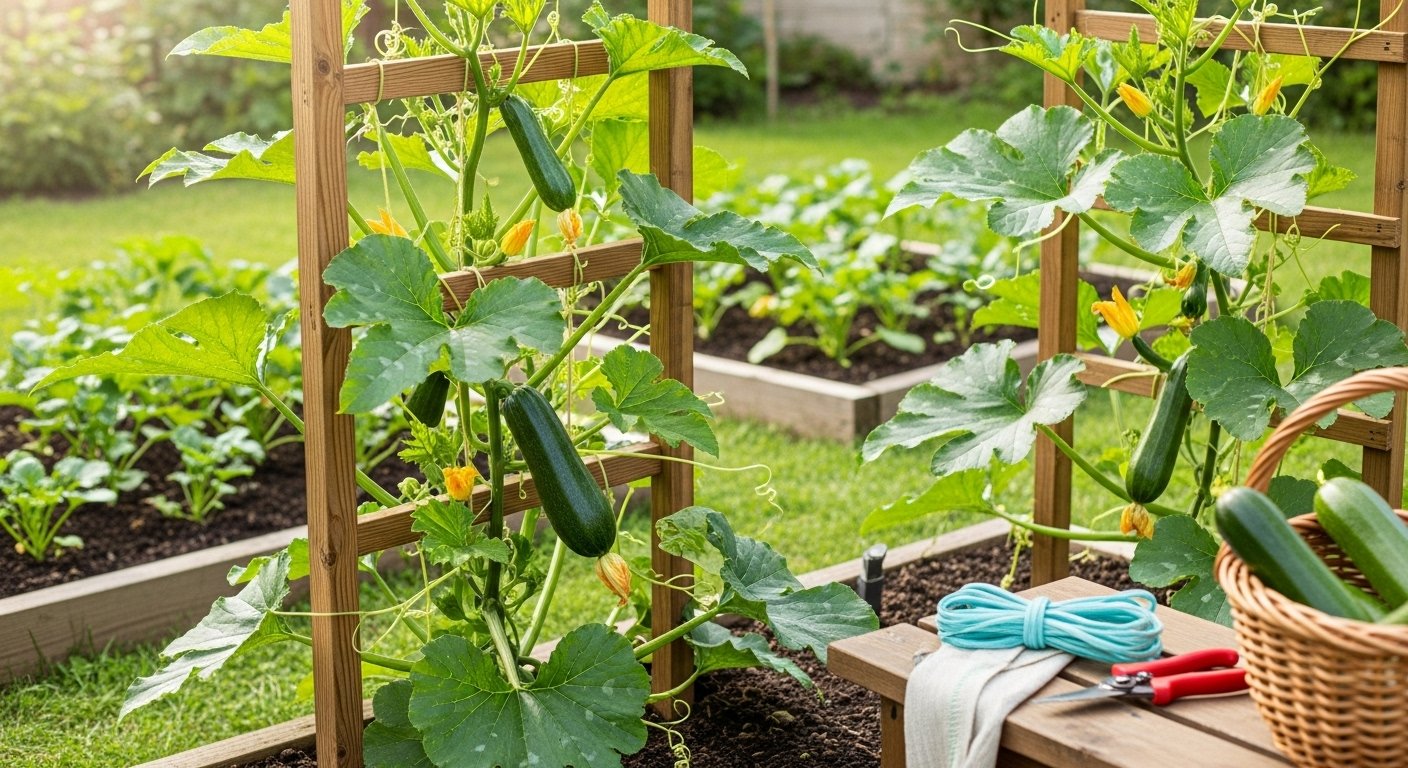
The debate between trellised vs. ground-grown zucchini is gaining momentum among gardeners, especially as vertical gardening becomes more popular for space-hungry crops like zucchini. More people are discovering that growing zucchini vertically on trellises, instead of letting the sprawling vines spread across the ground, not only saves valuable garden space but often leads to healthier, more productive plants.
Vertical growing improves air circulation, reduces disease, and makes harvesting easier. Meanwhile, traditional ground gardening remains a trusted method, favored for its simplicity and lower setup cost.
In this article, we’ll explore the key differences between trellised and ground-grown zucchini, highlight which zucchini varieties thrive best with each method, and compare various support structures—from simple wooden frames to sturdy fencing. You’ll also get step-by-step guidance on planting, pruning, and maintaining your zucchini, whether you have a small patio or a sprawling backyard.
Plus, we’ll share expert troubleshooting tips for common issues like pests, powdery mildew, and fruit rot. If you’re weighing the pros and cons for this year’s garden, you’ll find all the practical details you need to choose the best growing method for your space and goals.
Why Grow Zucchini Vertically?
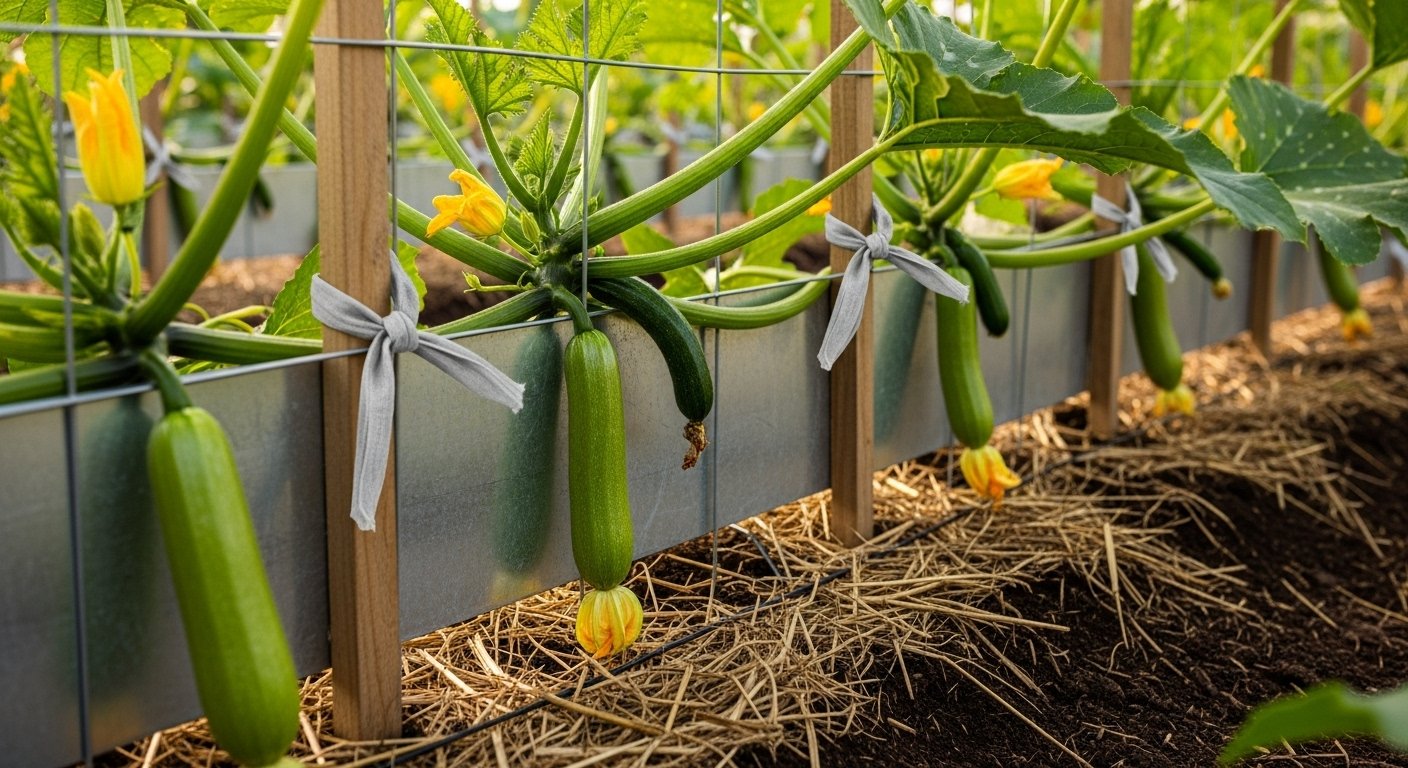
Growing zucchini vertically is a smart solution for gardeners with limited space or anyone looking to maximize a small area. Unlike traditional horizontal methods, vertical growing uses sturdy trellises or cages, allowing zucchini vines to climb upward instead of sprawling across the ground. This space-saving strategy is perfect for patios, balconies, and compact gardens, where every square foot counts—it means you can enjoy healthy, homegrown vegetables without sacrificing your valuable outdoor living area.
Beyond saving space, vertical growing encourages better air circulation around the plants, helping leaves dry faster after rain or watering. This simple change can significantly reduce the risk of common diseases like powdery mildew.
Many new gardeners worry that zucchinis might be too heavy or that the vines won’t climb. In reality, zucchini plants have thick, sturdy stems that adapt well to being supported on trellises when gently tied with soft garden ties. Upright growth also lifts the fruits off the soil, keeping them cleaner and less vulnerable to pests like slugs, while making it easier for you to spot zucchinis when they’re at the perfect size for harvesting.
Harvesting at eye or waist height saves your back from bending and helps you avoid missing hidden fruits that can quickly become oversized and tough. If you’re concerned about whether vertical zucchini will really yield enough, rest assured: many gardeners report equal or even greater harvests, thanks to excellent pollination and healthier plants.
Whether you have a tiny balcony or a slim garden bed, training your zucchini up instead of out can transform your growing season and bring fresh produce right to your fingertips.
Best Zucchini Varieties for Vertical Growing
When it comes to vertical gardening, choosing the right zucchini variety is key—some types naturally lend themselves to thriving on a trellis, while others are better suited for traditional beds. Look for vining, or “runner,” zucchini varieties rather than the more compact “bush” types.
Vining zucchinis, such as ‘Tromboncino’ (also called ‘Zucchetta Rampicante’) and ‘Black Forest,’ develop long, climbing stems that eagerly twist and climb support structures. These varieties use tendrils or long stems to latch onto trellises and fences, which not only saves ground space but also encourages better air circulation around the plants, reducing the risk of fungal diseases common in tight garden plots.
In contrast, classic bush varieties like ‘Raven’ or ‘Eight Ball’ have thick, short stems and stay more compact, making them trickier to coax upward. However, adventurous gardeners have had some success training bush varieties vertically when space is at a premium, though the results are less reliable and usually require more frequent tying.
For optimal growth, choose zucchini varieties labeled “vining,” “climber,” or “runner” on seed packets or nursery tags. Many reputable seed companies, such as Baker Creek or Johnny’s Selected Seeds, offer these types and can ship them right to your door.
When picking seedlings from a local nursery, look for healthy, un-stressed young plants with long, flexible stems—these are more likely to adapt well to climbing.
Finally, whether starting from seed or seedling, give your zucchini plenty of vertical support early on. Use sturdy trellises made of metal panels or wood, and gently tie the vines as they grow, guiding them upward for a productive, space-saving harvest.
Choosing the Right Vertical Supports
When it comes to vertical supports for your garden, options like trellises, tomato cages, fences, and DIY structures each offer unique perks and drawbacks.
Trellises are great for vining plants like peas and cucumbers, providing plenty of vertical growth and saving precious ground space. They’re usually stable when anchored well and enable easy plant access for harvesting. However, they can require a bit of assembly and may not suit heavier crops.
Tomato cages are user-friendly and specifically built for bushy or indeterminate tomato varieties, giving sturdy support against wind and fruit weight. They’re space-efficient for single plants but can get crowded in small beds, and low-cost versions sometimes bend in storms.
Fences work wonders as multi-use supports—simply plant beans or squash along the base and let them climb—but they’re best for perimeter placement, which can limit access for maintenance and picking.
DIY solutions like bamboo teepees, string grids, or upcycled ladders let you match supports to your available space and plant needs. These can be super affordable and easily customized, though their stability depends on your construction skills and materials.
Sizing and Placement Tips
As for sizing, aim for supports at least a foot taller than your plant’s expected height. Medium to tall trellises (5-7 feet) work for most climbers, while tomato cages should be 4-5 feet high and about 18 inches wide. Place supports before planting to avoid root disturbance, spacing them at least a foot apart to ensure good air flow. Try to orient trellises north-south for even sun exposure.
With the right support choice and placement, your garden will grow upwards beautifully while staying organized and accessible.
Step-by-Step: Training and Supporting Zucchini Plants
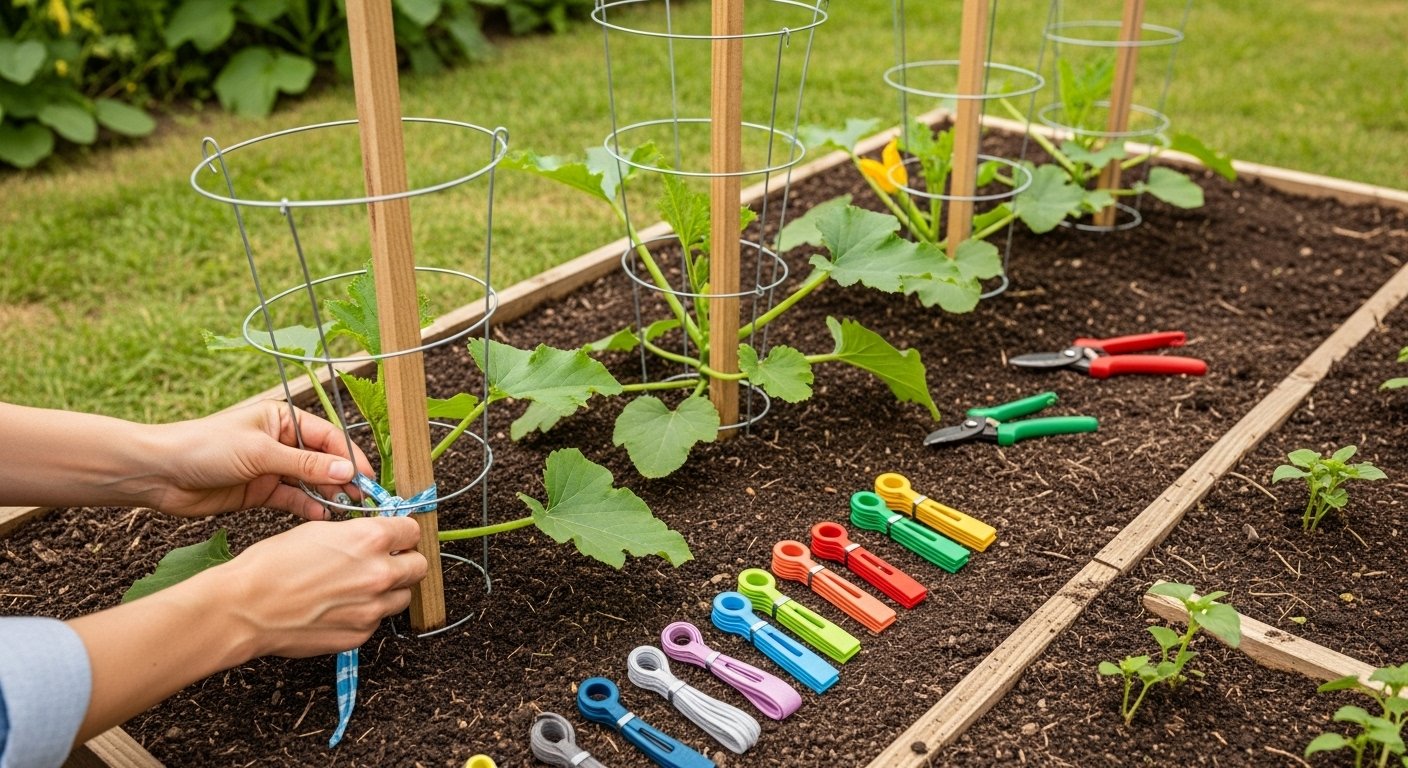
Starting strong with zucchini begins by planting seeds or healthy seedlings about two feet apart in fertile, well-drained soil, somewhere that gets plenty of sunlight. Right from the beginning, it’s smart to install your support system—try using sturdy stakes, wire tomato cages, or a simple trellis, pushing supports into the ground a few inches from where you plant.
As the vines start to lengthen, gently encourage them to climb or lean onto your supports. For delicate stems, use soft garden ties like strips of cloth, plant tape, or Velcro ties, looping loosely around the stem and the support to avoid damage—never tie too tight. Some gardeners prefer plastic clips, which snap on quickly and are reusable, or a weaving technique where stems are gently tucked behind wires or strings as they grow.
Early season growth can be fast, so check your zucchini every week, adjusting ties and supports to keep pace with expanding stems and swelling fruits. Pruning is helpful for airflow and to prevent overcrowding—snip off any yellowing or crowded leaves with clean shears, especially the older ones near the plant’s base.
As the season progresses, continue to guide new growth into your support, retie stems as needed, and remove excess leaves or side shoots that block light or compete for nutrients. This hands-on approach not only keeps your zucchini plants healthier and more productive but also makes harvesting much easier, with fruits hanging cleanly off the ground instead of getting lost in a tangled mess.
With a little extra care in supporting and training your plants, you’ll enjoy a cleaner garden and a bigger, more manageable zucchini harvest.
Zucchini Care and Maintenance When Growing Vertically
Caring for zucchini plants grown vertically is straightforward, but a few smart tweaks make all the difference. Keep the soil consistently moist but not soggy—containers tend to dry out quicker than garden beds, so check moisture daily, especially during hot spells.
Use a balanced liquid fertilizer every couple of weeks once flowers appear, as vertical setups often drain nutrients faster. For a healthy fruit set, hand-pollinate your zucchini if you notice few bees on your balcony; simply use a small paintbrush to transfer pollen from male to female flowers.
Watch out for squash bugs and powdery mildew, both of which thrive in tight spaces—regularly inspect leaves and remove any pests or damaged foliage promptly. Give your zucchini six or more hours of sun, but if you’re on a hot balcony, use shade cloth during peak afternoon heat to protect the leaves from scorching.
Use a lightweight potting mix enriched with compost to support root health, and make sure containers have good drainage holes—zucchini hate soggy roots. Train vines up sturdy trellises or tomato cages, spacing supports a few inches out from walls to encourage airflow and limit disease.
Finally, rotate pots every week if light is uneven, and don’t crowd plants together; even on a small patio, leaving space between containers improves air circulation and keeps mildew in check. With these simple adjustments, your vertical zucchini can thrive even in the smallest urban spaces.
Common Questions and Troubleshooting
One of the most common issues with vertical gardening is plant flopping, where vining stems or heavy branches lose support and droop. To combat this, use soft ties or Velcro strips to gently secure stems to your trellis, and check supports regularly, especially after storms or rapid growth spurts.
If you’re growing heavy-fruited plants like tomatoes, melons, or cucumbers, add horizontal supports or nets beneath the fruit to cradle their weight—a simple mesh produce bag tied to the trellis makes a great DIY sling.
A solid trellis is essential for stability, so anchor the base deeply into the ground or containers, and avoid flimsy plastic or thin bamboo, which bend under pressure.
Dealing with Powdery Mildew
Powdery mildew is another frequent challenge; improve air circulation by spacing plants properly and pruning excess foliage, and treat outbreaks quickly with a homemade spray of 1 tablespoon baking soda to 1 gallon of water.
Improving Pollination and Fruit Set
Poor pollination and fruit set are common in vertical systems, especially with indoor or balcony gardens where natural pollinators may be scarce. Hand-pollinate blossoms using a small paintbrush, gently brushing pollen from male to female flowers, and plant bee-attracting flowers nearby to boost visits.
General Care Tips
- Water deeply but not too often to prevent root stress.
- Fertilize regularly with a balanced plant food.
- Rotate vining crops annually to prevent soil disease buildup.
- Avoid crowding too many plants onto one trellis to prevent competition for light and moisture.
- Monitor regularly for pests like aphids or spider mites.
By staying attentive, providing sturdy support, and intervening early with common issues, vertical gardens can be incredibly productive and rewarding.
Conclusion
Vertical zucchini growing offers a smart, space-saving solution for gardeners of all experience levels, turning even the smallest yard, balcony, or patio into a highly productive vegetable patch. By training zucchini to climb upward on sturdy trellises or cages, you’ll not only save valuable ground space but also promote better airflow, minimize pests, and make harvesting a breeze.
Successful vertical zucchini gardens rely on strong supports, consistent watering, and regular pruning—a combination that yields healthy plants and abundant crops. Don’t be afraid to experiment, even if you’re working with limited outdoor space or container gardens; vertical gardening fits just about anywhere and can help you grow more with less.
If you’re inspired by your vertical zucchinis, consider trying this method with pole beans, cucumbers, tomatoes, or even peas, which all thrive when given a bit of upward encouragement.
Have you tried growing zucchini or other veggies vertically? Share your results, tips, or obstacles in the comments below, and let’s learn from each other’s experiences—every garden, big or small, has a story worth telling!