Introduction to Sweet Potato Pests
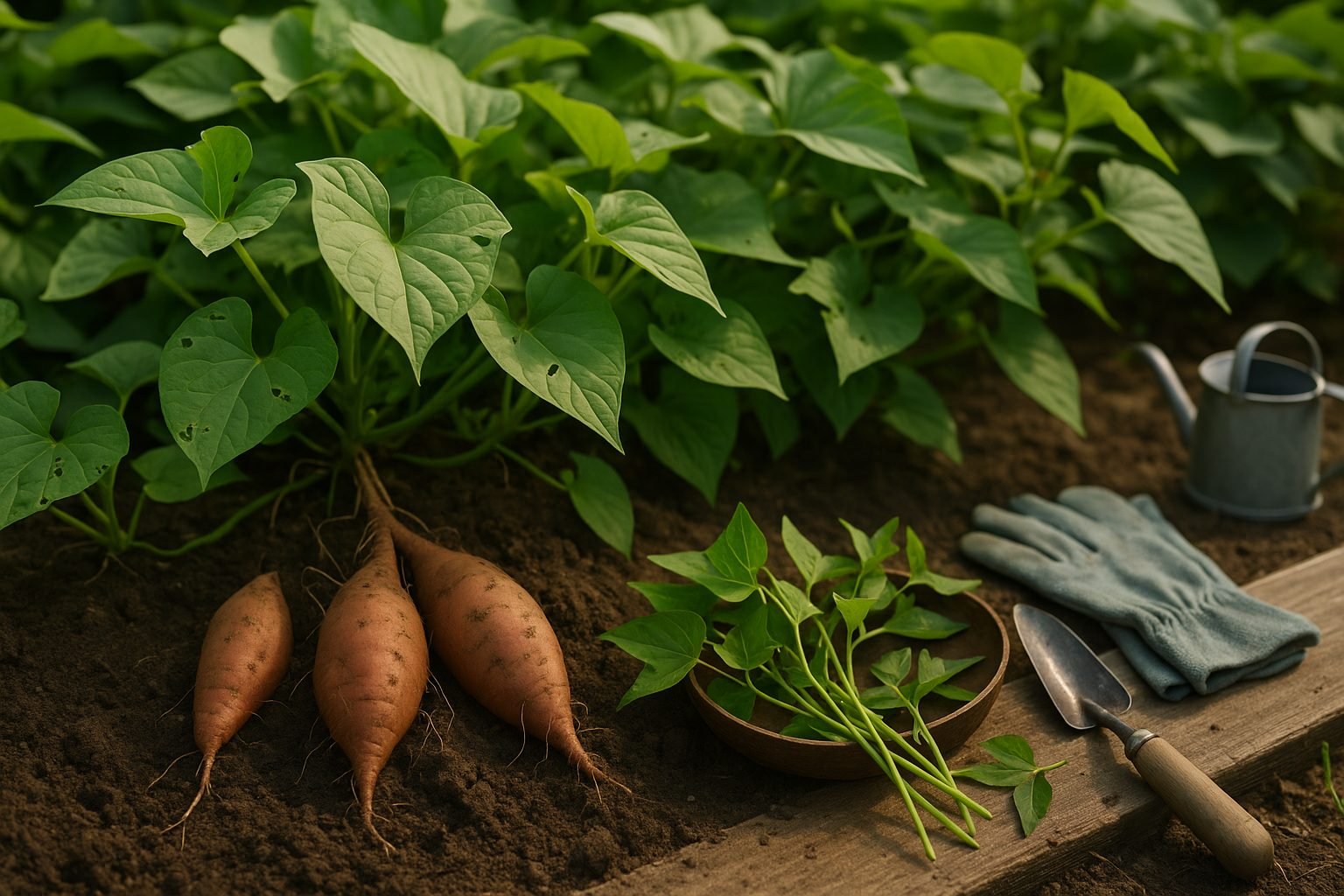
Sweet potato pests are a common concern for anyone growing this versatile crop, whether you’re a home gardener tending a backyard patch or a commercial producer managing acres of farmland. Sweet potatoes are celebrated for their nutritional value and adaptability, but their appeal also attracts a wide range of insect and animal pests eager to enjoy the harvest before you do.
Without proper pest management, these invaders can significantly reduce both the yield and quality of sweet potatoes, leading to frustrating losses, diminished profits, or a disappointing home harvest. The vulnerability of sweet potatoes lies in their sweet, starchy roots and lush foliage, which attract everything from soil-dwelling insects to hungry mammals.
Common culprits include wireworms, white grubs, sweet potato weevils, and nematodes, each causing different types of damage—some burrowing through roots and others feeding on leaves or tubers. Rodents and deer may also target sweet potato crops, especially in vulnerable garden borders.
Early identification is crucial: spotting signs of pests before they become a full-blown infestation can make the difference between a healthy crop and a ruined one. Learning to recognize key warning signs, such as chewed leaves or scarred roots, allows growers to act quickly with the right preventative or control measures.
In this guide, you’ll discover the most common sweet potato pests threatening your harvest and learn practical strategies—ranging from natural controls to targeted interventions—to keep your crop healthy from planting to harvest.
Major Pests Affecting Sweet Potatoes
Several major pests can cause significant damage to sweet potatoes, making early identification and management crucial for healthy crops.
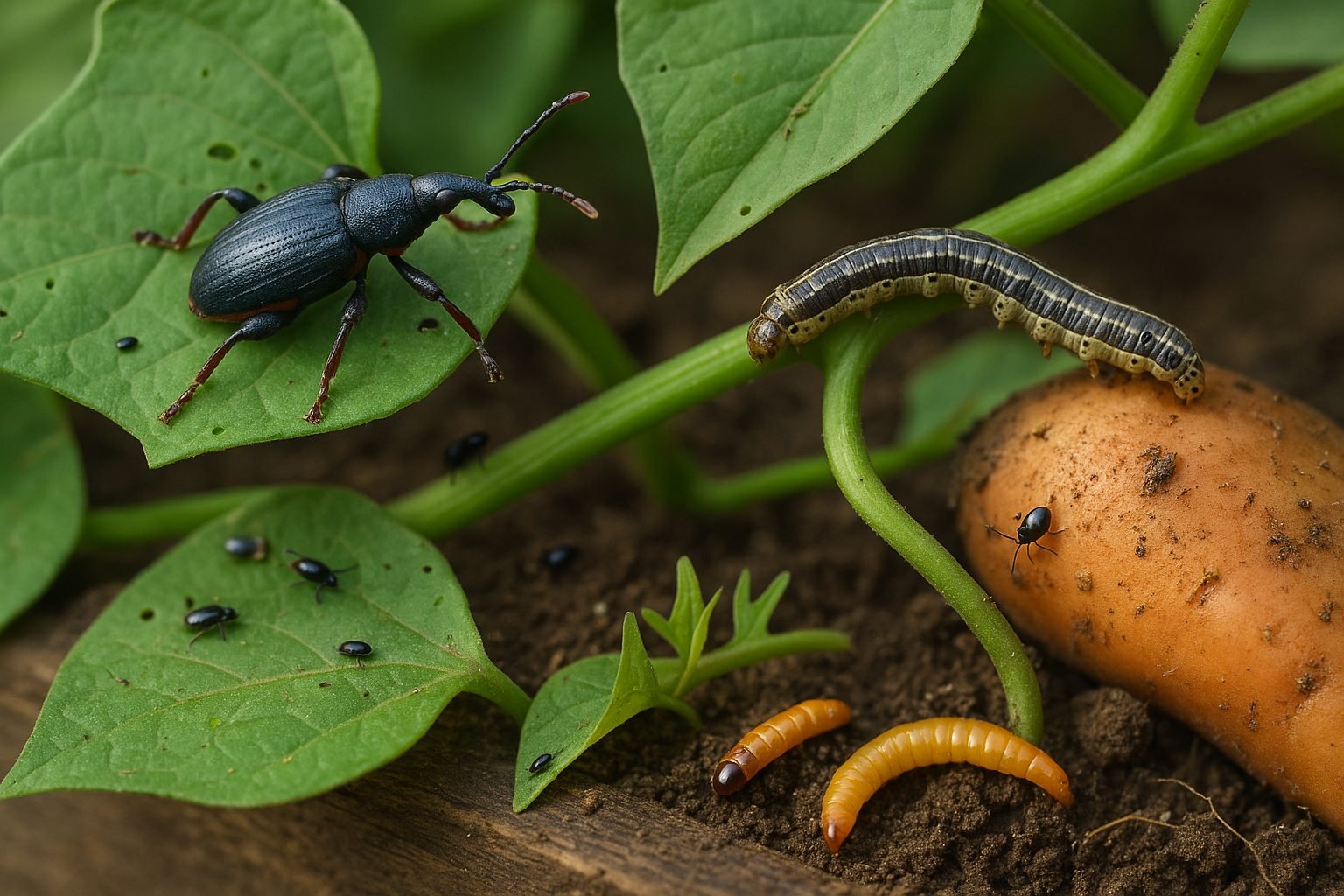
The sweetpotato weevil is one of the most notorious threats, especially in warmer regions like the southeastern United States, Africa, and Asia. Adult weevils are small, dark blue and orange beetles with elongated snouts, while their creamy-white larvae tunnel into tubers and stems, ruining roots and vines.
Flea beetles, found worldwide, are shiny, black or bronze insects about 1/10 inch long with powerful jumping legs. They leave small round holes in sweet potato leaves, stunting growth.
Wireworms, the slender, shiny yellow to brown larvae of click beetles, thrive in fields previously planted with grasses or corn. They burrow into roots, making irregular holes and causing decay.
Armyworms, particularly the fall armyworm, are plump caterpillars with a distinctive inverted “Y” shape on the head and stripes along the body. These pests travel in groups and feast on leaves and vines, quickly stripping foliage, especially after rainy weather.
Whiteflies, tiny insects with powdery white wings, cluster on the undersides of leaves to suck sap, causing yellowing, curling, and stunted plant growth. They are especially common in warm, humid climates.
For growers in the South and tropics, monitoring for these pests is even more vital, as infestations often intensify in areas with long warm seasons. Regular scouting—looking for signs like wilting vines, chewed leaves, or entry holes in tubers—helps catch problems early.
Installing yellow sticky traps for whiteflies, rotating crops to avoid wireworm buildup, and destroying crop residues can all reduce pest pressure.
For gardeners and farmers alike, knowing what to look for and which plant parts are at risk can make a big difference in protecting the sweet potato harvest.
Understanding Pest Life Cycles and Damage
Pests like aphids, caterpillars, and beetles each have unique life cycles that greatly influence how they damage plants and crops. For example, many insects begin as eggs laid on the undersides of leaves or in the soil near roots, making them hard to spot initially.
Once hatched, larvae—such as caterpillars and root maggots—are often the most voracious feeders. They chew holes in leaves, tunnel through stems, or scar roots underground. Adults, like beetles, might munch on foliage or lay new eggs, restarting the cycle.
The impact of these feeding stages varies: larvae create visible holes in leaves, skeletonize plant surfaces, or cause root scarring that weakens young plants. Over time, this damage can lead to yellowed leaves, stunted growth, dropping fruit, and lower overall yield.
For storage crops like potatoes or carrots, hidden infestations can leave unseen root injuries that quickly spoil entire batches during storage. Because eggs and larvae are often tiny and well-hidden, infestations can escalate rapidly before growers realize there’s a problem—especially in warm, humid conditions where pests reproduce faster.
A few missed eggs can become hundreds of feeding pests within a week, overwhelming plants and making recovery difficult. Vigilant monitoring—such as checking leaf undersides, using sticky traps, or inspecting roots at transplanting—can help spot problems early before populations explode, ultimately protecting both the quality and quantity of your harvest.
Natural and Cultural Pest Management Methods
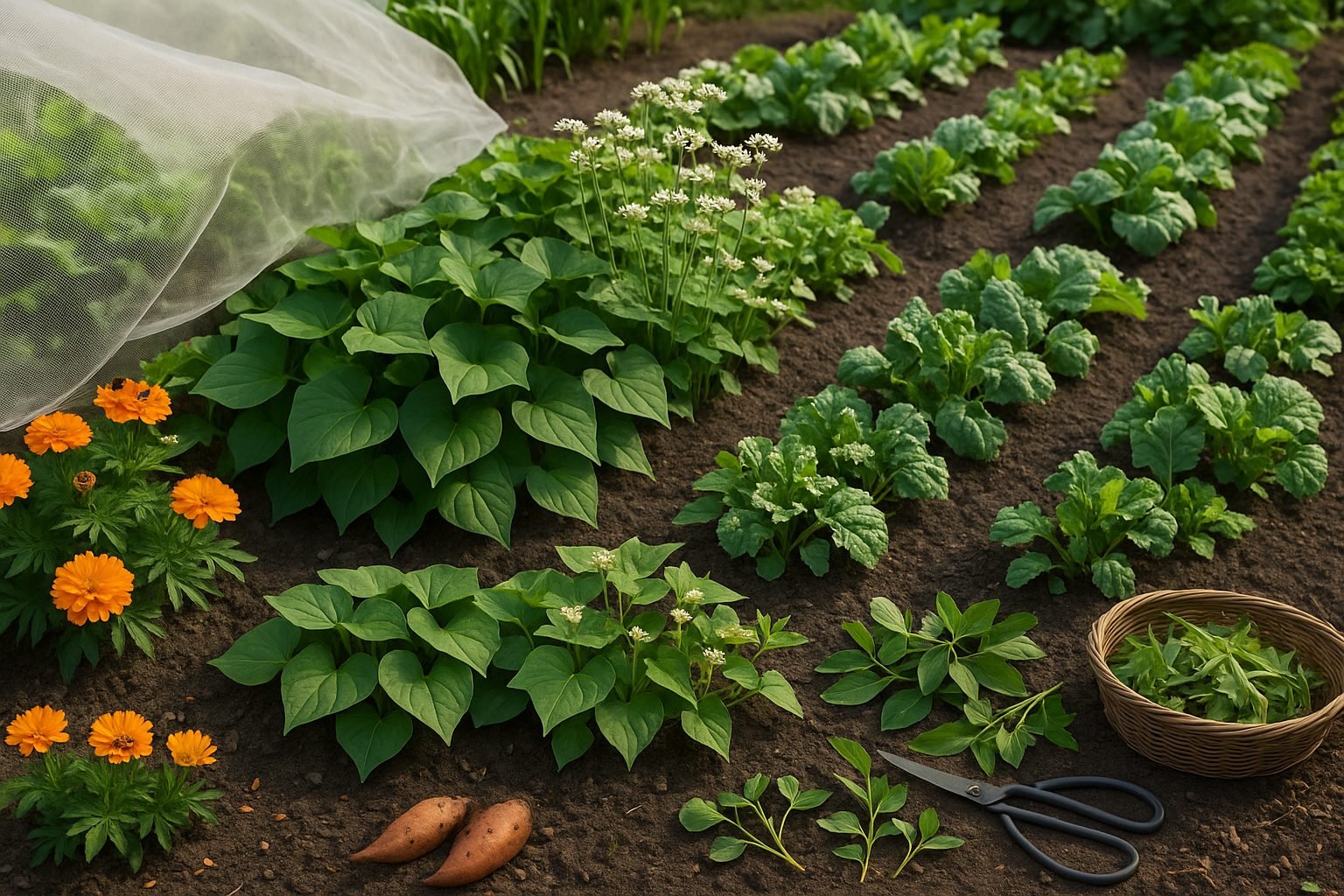
Adopting natural and cultural pest management methods offers effective and sustainable options for protecting sweet potato crops. One simple approach is crop rotation—regularly changing the types of crops planted in a field—to interrupt pest life cycles and reduce their buildup over time.
Field sanitation is equally vital; by removing plant debris, old vines, and weeds, you eliminate places where pests can hide or breed, which lowers the risk of infestation. Choosing sweet potato varieties that are naturally resistant to common pests like the sweet potato weevil can also make a big difference, lessening the need for chemical controls.
Another practical strategy is trap cropping, where you plant a preferred host species near your main crop to lure pests away and then treat or remove the trap crop, effectively reducing pest pressure. Supporting natural enemies such as lady beetles, lacewings, or parasitoid wasps helps keep pest populations in check.
This can be achieved by growing plants that provide pollen, nectar, or shelter for these beneficial insects—think marigolds or buckwheat interplanted with your sweet potatoes. Pest management strategies might need tweaking depending on your growing setup: in fields, large-scale rotations and habitat plantings are feasible, while in containers, focus on strict sanitation, regular monitoring, and introducing beneficial insects or using barriers like insect netting.
By combining these methods, growers can foster a balanced ecosystem, maintain healthier crops, and reduce reliance on synthetic pesticides.
Chemical and Integrated Pest Control Options
When dealing with pests in your sweet potato crop, it’s important to choose insecticides specifically labeled for use on sweet potatoes, as these products have been tested for both safety and effectiveness. Always read the label carefully and follow the manufacturer’s instructions when mixing and applying any chemical. Overuse or misuse can lead to resistance problems or leave harmful residues on your crops.
Integrated Pest Management (IPM) is a smart approach that combines chemical, cultural, and biological methods for more sustainable pest control. Begin with regular field monitoring—scout for signs of common pests like wireworms and sweet potato weevils, and keep records of what you find. Rather than spraying on a set schedule, use economic thresholds to decide when action is truly needed; this minimizes costs and environmental impact.
When chemical intervention is justified, spot-treat only the affected areas instead of blanket spraying the whole field. To protect pollinators and beneficial insects such as bees and ladybugs, spray insecticides in the late afternoon or early evening when these helpful creatures are less active. Avoid applying chemicals during bloom when pollinator activity peaks, and consider using selective products that target pests while sparing beneficials.
- Wear appropriate protective gear.
- Mix chemicals away from water sources.
- Clean equipment thoroughly after each use.
By carefully timing applications and integrating non-chemical tactics—such as using pest-resistant varieties, encouraging natural predators, and employing crop rotation—you can keep pest populations in check while supporting a healthier farm ecosystem.
Monitoring and Early Detection of Pests
Regular crop inspections are one of the most effective ways to catch pest problems before they get out of hand. Walk your fields at least once a week, or more frequently during vulnerable growth stages. Pay close attention to the undersides of leaves, young shoots, and the soil around plant bases—these are popular hiding spots for insects and larvae.
Look for warning signs like discolored leaves, chewed edges, small holes, unusual spotting, or sticky residue left by pests like aphids. To improve your monitoring, consider using sticky traps hung just above the crop canopy to catch flying insects such as whiteflies and thrips. Check these traps regularly to spot pest spikes early.
Pheromone lures are another great tool to attract and track specific insect species and their activity, making it easier to act before infestations escalate. Visual inspections combined with these detection tools provide a comprehensive view of your pest situation.
Keep detailed records of pest sightings, weather conditions, and any control actions you take. This log will help you identify recurring issues, pinpoint hotspots in your field, and time preventive actions more effectively each season—ultimately saving you time and reducing crop losses.
Consistent monitoring and thorough recordkeeping turn early detection into a powerful ally in integrated pest management.
Conclusion and Further Resources
Successfully managing pests in sweet potato crops requires a proactive and integrated approach. Using a combination of cultural, biological, and chemical strategies helps prevent infestations before they become severe and minimizes long-term damage. Don’t wait for problems to escalate—regular monitoring and early intervention make all the difference.
For tailored advice, consult your local cooperative extension service or agricultural advisor, as they understand the pests and solutions specific to your region. Additionally, resources like the Integrated Pest Management (IPM) databases, the National Sweetpotato Collaborators Group, and university agricultural websites frequently offer updated guidelines and pest alerts. Staying informed through these reputable channels will ensure you have the latest tools and knowledge to protect your sweet potato fields season after season.