Introduction
Growing eggplant indoors is an exciting way to bring a nutritious and delicious vegetable right into your own home, even if you don’t have outdoor garden space. Eggplants are packed with vitamins, fiber, and antioxidants, and cultivating them in a controlled environment lets you enjoy their rich flavor and health benefits year-round.
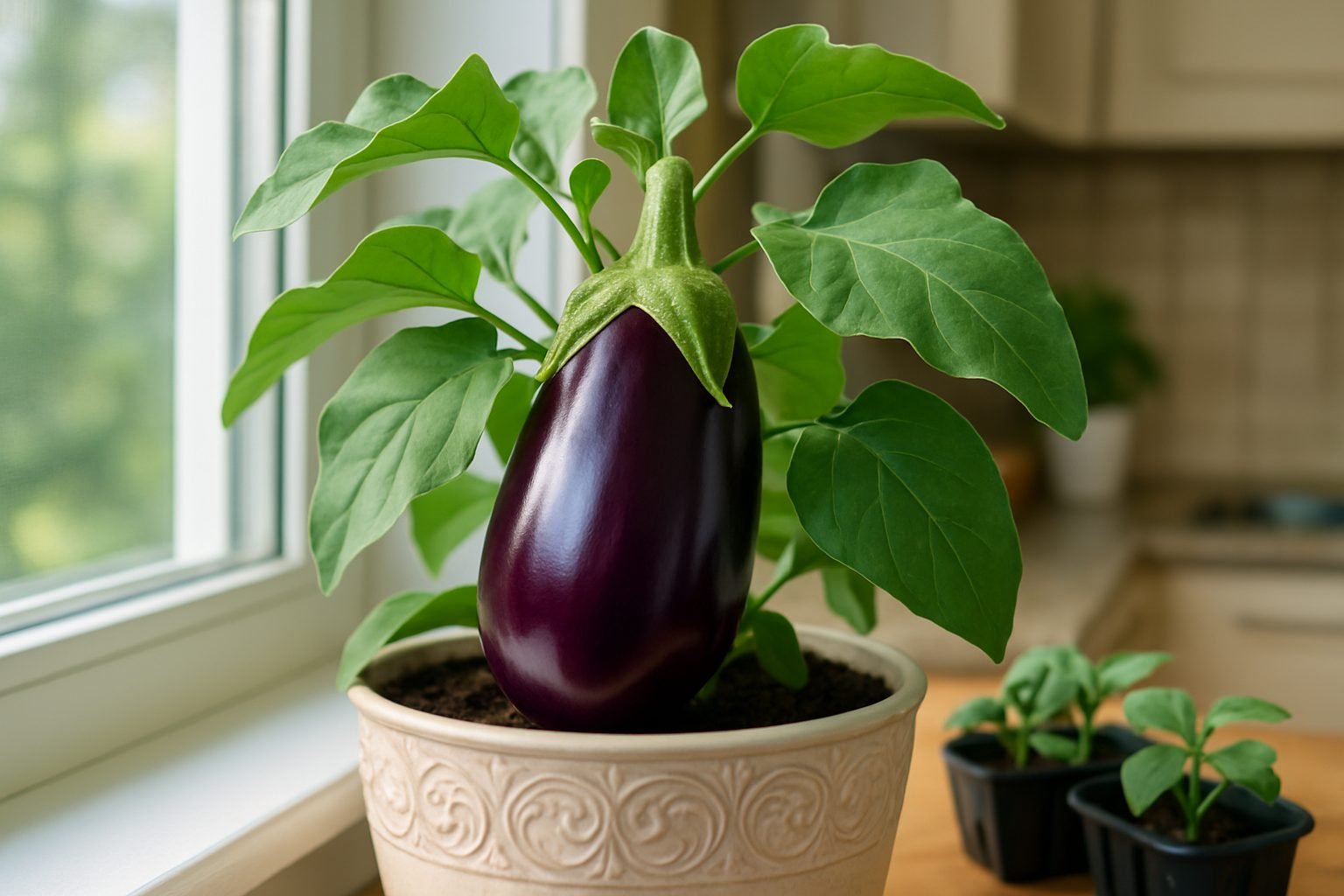
One of the best perks of growing eggplant indoors is the ability to control conditions for continuous freshness—imagine picking a glossy, purple fruit from your living room windowsill! Plus, indoor gardening helps you sidestep common garden pests and diseases, making it easier to raise a healthy crop with fewer chemicals or hassles.
Whether you’re a busy urbanite or just looking for a fun new horticultural adventure, growing eggplant indoors offers unmatched convenience and satisfaction. In this beginner’s guide, we’ll walk you through selecting the right eggplant variety, setting up an ideal space for growth, creating the perfect soil mix, and managing light, water, and pollination indoors.
You’ll learn real-world tips to keep your plants thriving, how to spot and solve common indoor gardening issues, and when to harvest for the best taste. If you’re ready to enjoy homegrown eggplant, let’s get started!
Choosing the Right Eggplant Variety
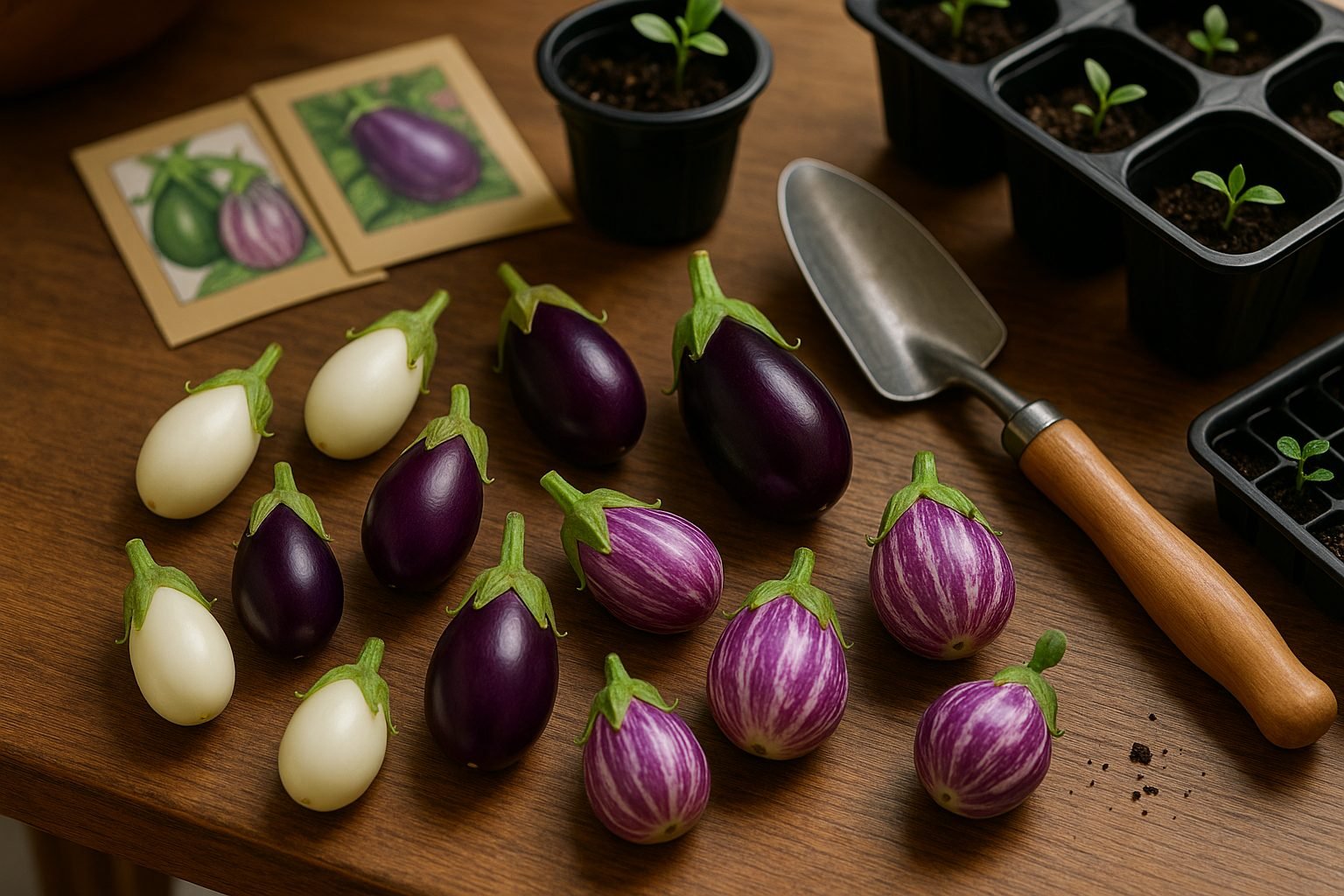
When selecting an eggplant variety for indoor growing, it’s important to focus on compact types that thrive in containers and don’t need a lot of space to flourish. Varieties like Miniature White, Fairy Tale, Patio Baby, and Little Fingers are popular choices—they’re bred to stay small, mature quickly, and produce abundant fruit on bushy plants that fit perfectly on a sunny windowsill or under grow lights.
When browsing for seeds, check each variety’s days to maturity; most container-friendly eggplants are ready to harvest in 50–70 days, so you won’t be waiting all season for a crop. Flavor profiles also matter—some, like Fairy Tale, produce slender, tender fruits ideal for roasting or grilling, while Miniature White offers a mildly sweet taste perfect for salads and stir-fries.
To source seeds, look for reputable online retailers that specialize in container gardening, or visit local garden centers in early spring when seasonal seeds and starter plants appear. Choosing starter plants can give you a head start, but make sure they’re disease-free and suited for indoor environments. If growing from seed, start them in small pots or trays indoors 8–10 weeks before your desired transplant date, providing plenty of warmth and bright light from the beginning.
By prioritizing compact, fast-maturing varieties and sourcing healthy seeds or young plants, you’ll set yourself up for a successful and productive indoor eggplant harvest.
Getting Started: Setting Up Your Indoor Eggplant Garden
Starting your indoor eggplant garden is simpler than you might think, as long as you get a few basics right from the start. First, choose a container that’s at least 12 inches deep and wide—eggplants need room for their roots to spread. Go for sturdy pots with drainage holes to prevent soggy soil, which can quickly lead to root rot.
For potting mix, use a high-quality blend specifically made for vegetables or container gardening; this will ensure your plants get the nutrients they crave while keeping soil loose and well-drained.
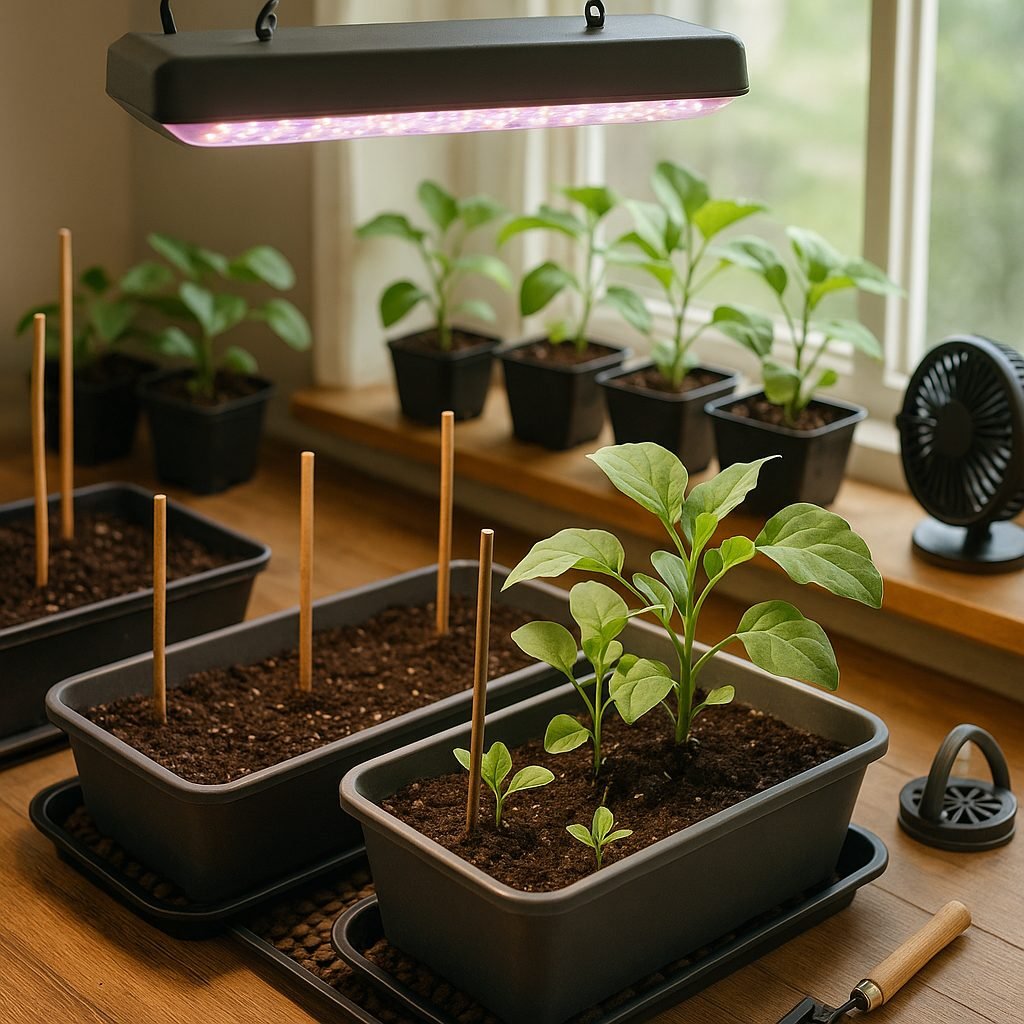
Next, pick a spot in your home that gets at least six hours of sunlight each day, such as a south-facing window or a sunroom. If natural light is limited (a common challenge for urban gardeners), supplement with full-spectrum LED grow lights, placing them a few inches above the plant tops and adjusting as they grow. These lights mimic the sun and can even be set on a timer for consistent growth.
Make sure to leave enough space between pots—about 18 to 24 inches—so that each eggplant has airflow and light on all sides, which helps prevent pests and diseases. If your space is tight, consider compact or dwarf eggplant varieties that thrive in containers and won’t outgrow your setup.
With the right container, soil, light, and a bit of planning, you’ll set the stage for lush foliage and glossy purple fruit right from your windowsill or kitchen counter.
Sowing and Planting Eggplant Indoors
Starting eggplant seeds indoors sets you up for a thriving summer harvest, especially in climates with short growing seasons. Begin sowing seeds about 8–10 weeks before your area’s last expected frost date—this gives your young plants a strong head start.
Use a seed-starting mix in trays or small pots, gently pressing seeds about ¼ inch deep and covering them with a light layer of soil. For best results, keep the trays in a warm spot (75–85°F if you can manage it), since eggplants sprout fastest in heat.
Mist the soil lightly until it’s evenly moist, then cover trays with a humidity dome or clear plastic until you see tiny seedlings, usually in 7–14 days.
After the seedlings develop two sets of true leaves, transplant them into individual pots at least 3–4 inches wide to allow roots room to grow. To do this, carefully lift each seedling, keeping as much of its root system and surrounding soil intact as possible, then plant it at the same depth as it grew before.
Provide ample spacing: if you’re using larger trays or pots, leave at least 2 inches between seedlings to ensure good airflow. When transplanting outside or into larger containers, set plants 18–24 inches apart to help prevent competition and disease.
Always water your newly transplanted seedlings immediately using lukewarm water, which encourages gentle root growth and minimizes transplant shock. Remember to water at the base of the plant, not overhead, to keep leaves dry and reduce the risk of disease.
If you’re growing under lights, keep them a few inches above the plants and adjust as they grow to avoid legginess. Sturdy, well-watered seedlings make for strong, healthy eggplants later on.
Caring for Your Indoor Eggplants
When it comes to nurturing indoor eggplants, consistency is key—especially with your watering routine. Eggplants thrive in slightly moist, but never soggy, soil. Aim to water them whenever the top inch of the potting mix feels dry to the touch. Using the finger test helps avoid overwatering, which can lead to root rot.
Consider using self-watering pots or placing your container on a shallow tray filled with pebbles and water to keep the roots happy without excess moisture buildup. Fertilizing is just as important; feed your plants every two to three weeks with a balanced liquid fertilizer, preferably one that’s higher in potassium and phosphorus once flowers appear. Dilute the fertilizer to half the recommended strength to prevent salt buildup, and always fertilize directly onto moist soil to avoid shocking the roots.
Supporting and Pruning Your Plant
Since indoor eggplants can get top-heavy as they grow, use small stakes or tomato cages for support, securing stems loosely with soft ties. Regular pruning also helps—snip off any yellowing leaves and pinch off growing tips when your plant is about 10–12 inches tall to encourage bushier growth and more fruit.
Maintaining Humidity and Temperature
Because eggplants love humidity, consider running a small humidifier or occasionally misting your plant, especially in winter when indoor air tends to be dry. Keeping your eggplant in a warm spot is critical; aim for daytime temperatures between 70°F and 85°F (21°C–29°C), and avoid placing the plant near drafts or heating vents, which can cause temperature fluctuations. If your room is too cool, a heated propagation mat placed under the pot can provide gentle warmth.
With regular care—attentive watering, mindful feeding, proper support, and stable environmental conditions—you’ll set the stage for flourishing indoor eggplants that reward your efforts with glossy, delicious fruit.
Preventing and Solving Common Eggplant Problems
Growing eggplant indoors can be rewarding, but you might encounter a few common challenges along the way—especially when it comes to pests, diseases, and fruit production.
Pests
Spider mites and aphids are two frequent culprits in indoor settings, often arriving on new plants or through open windows. If you spot tiny webs or sticky residue on the leaves, gently wash the foliage with a mix of mild soap and water, or wipe down leaves with a damp cloth. For ongoing issues, try introducing beneficial insects like ladybugs if practical, or use neem oil—just make sure the area is well-ventilated.
Diseases
Root rot and powdery mildew can develop in overly damp, poorly ventilated environments. Prevent these by watering only when the top inch of soil feels dry and ensuring your plant gets plenty of airflow, perhaps by using a small fan nearby.
Fruit Production
Fruit production can also be tricky indoors; insufficient light is the primary cause. Eggplants need at least 6–8 hours of strong light daily, so invest in a quality grow light positioned a few inches above the plants. If flowers appear but fruit doesn’t set, gently shake the plant or use a small paintbrush to mimic pollinator activity and help transfer pollen.
Additional Tips
- Provide a balanced fertilizer every few weeks.
- Avoid overcrowding your plants, which can increase disease risk and stunt growth.
With a mix of observation, good hygiene, and proper lighting, you can enjoy healthy, fruiting eggplants right from your indoor garden.
Harvesting Your Indoor Eggplants
Knowing when to harvest your indoor eggplants is key for both flavor and plant health. Look for eggplants with glossy, unblemished skin and a firm feel—dull color or soft spots mean they’re overripe. Most varieties are ready when they’re about six to eight inches long, but be sure to check your seed packet for specific size guidelines.
To pick them, use clean, sharp garden scissors or pruners to cut the stem about an inch above the cap. Avoid pulling or twisting, which can break branches and stress the plant. After harvesting, store your eggplants in a cool, dry place—ideally in the vegetable drawer of your fridge, where they’ll keep for up to a week. For best taste, try to use them fresh.
Eggplants are incredibly versatile:
- Slice them into rounds for oven roasting with olive oil and herbs
- Dice them for a quick stovetop stir-fry
- Stuff them with your favorite grains and veggies for a hearty meal
Homegrown eggplants tend to have thinner skin and fewer seeds, making them especially great for simple grilling or pan-frying. With a little care in harvesting and storing, you’ll enjoy tender, flavorful eggplants straight from your indoor garden.
Conclusion and Next Steps
Growing eggplant indoors offers a rewarding mix of fresh harvests, creative exploration, and newfound gardening confidence. Tending your own plants means you’ll enjoy flavorful, pesticide-free eggplants right at your fingertips, even without outdoor space.
Once you’ve mastered the basics, try branching out—experiment with miniature or colorful eggplant varieties for extra visual and culinary appeal. Don’t hesitate to test new recipes, from smoky baba ganoush to crispy eggplant fries, making the most of your homegrown bounty.
For even more inspiration, join online indoor gardening communities where members share troubleshooting tips, showcase unique setups, and celebrate each other’s harvests. You’ll find support, gather fresh ideas, and share your own successes along the way.
With a little curiosity and connection, your indoor garden can become a thriving source of delicious produce and continual learning.