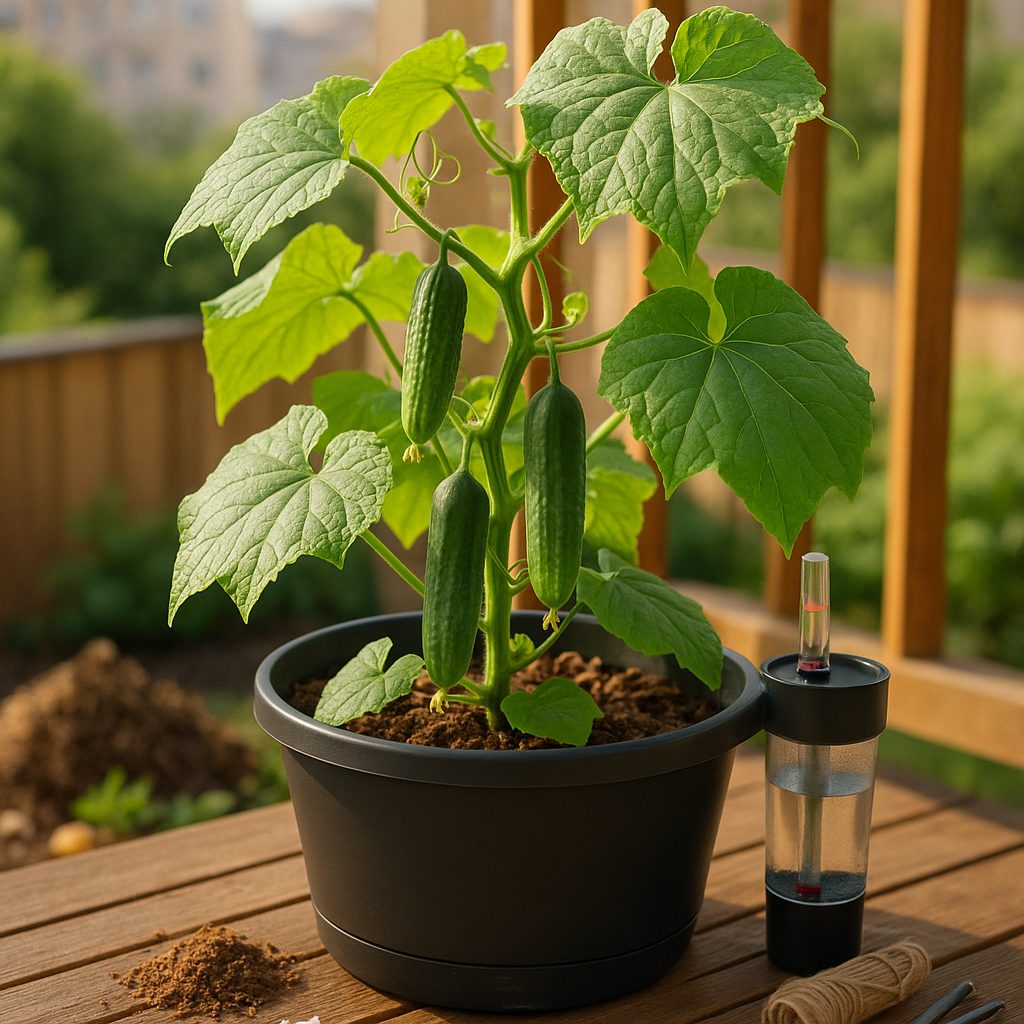
Why Grow Cucumbers in Self-Watering Pots?
Growing cucumbers in self-watering pots is one of the smartest ways to enjoy fresh, home-grown produce—even if your garden is just a sunny balcony or a corner of your patio. With space-saving container gardening, cucumbers can flourish in pots rather than sprawling over garden beds, making them perfect for urban dwellers or anyone with limited space.
But growing cucumbers in containers does come with a challenge: these plants are thirsty, and the soil in pots can dry out quickly. This often leads to wilted leaves, bitter fruit, or stunted growth. That’s where self-watering systems come in. By using a self-watering pot or a simple DIY setup, you can keep your cucumbers consistently hydrated without any guesswork.
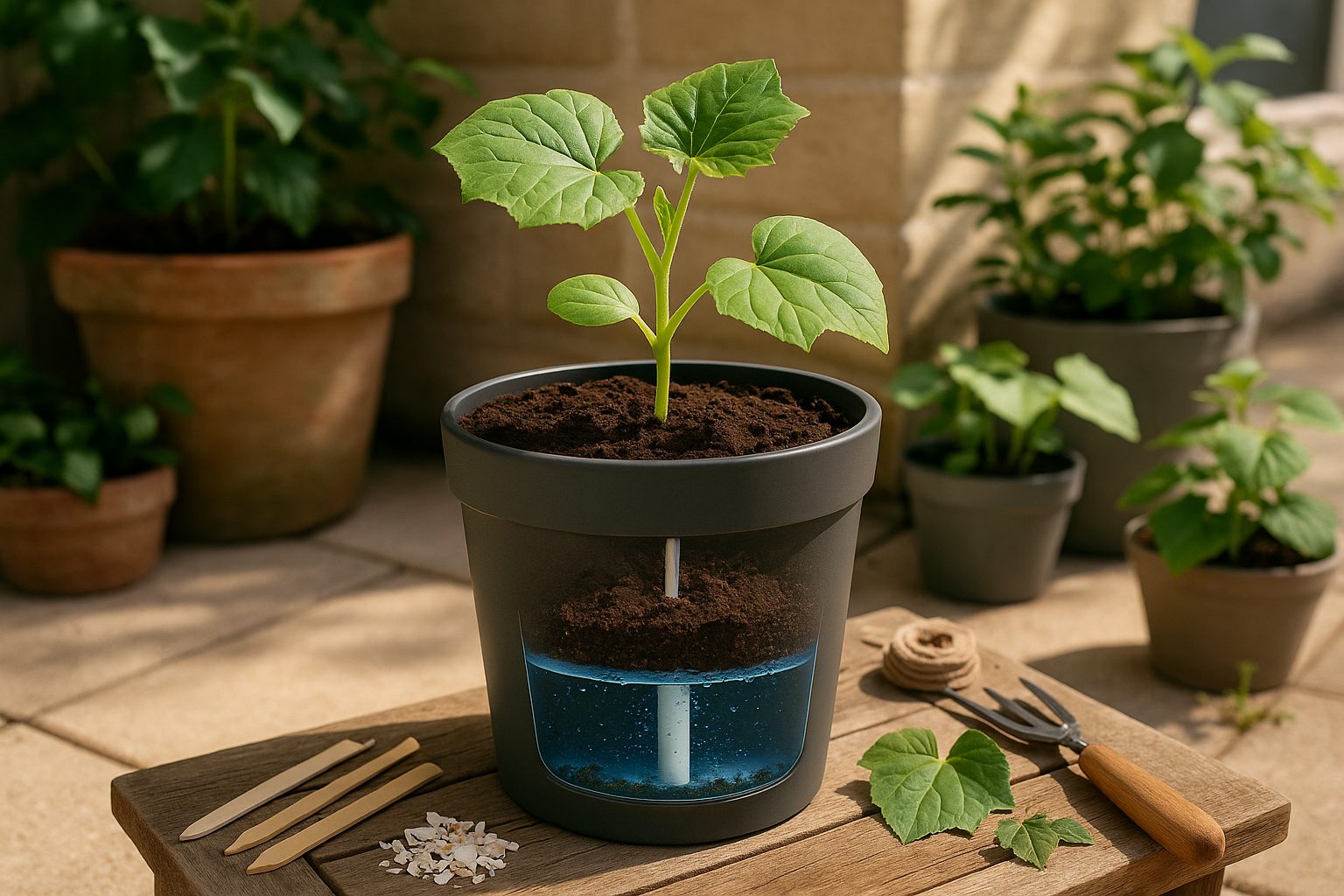
These pots feature a water reservoir that supplies moisture right at the roots, preventing common watering mistakes like overwatering or letting the soil dry out completely. The result? Less daily maintenance for you and happier, healthier plants that are less prone to stress and disease.
Consistent moisture is crucial for cucumbers: it leads to stronger vines, fewer deformed fruits, and the juicy, crisp cucumbers everyone loves. Plus, with self-watering cucumbers, you’ll spend less time tending and more time enjoying your harvest—whether that means tossing slices into a salad or sharing a bumper crop with neighbors.
This simple upgrade can turn even the smallest outdoor space into a productive, hassle-free vegetable garden.
How Self-Watering Pots Work
Self-watering pots are cleverly designed to make plant care simpler and more efficient, thanks to three main components: the water reservoir, the wicking system, and thoughtful airflow design.
The water reservoir sits beneath the plant’s root zone and holds extra water, so you don’t have to water the plant as often. The wicking system, usually a cotton rope or a mesh barrier, draws water up from the reservoir as the soil dries out—imagine it like a straw that gives the plant just what it needs, when it needs it. Good self-watering pots also include ventilation holes or dedicated airflow channels so oxygen can reach the roots, which is vital to healthy plant growth.
The big advantages are hard to ignore. These pots drastically cut down on how often you need to water and help prevent both overwatering and underwatering, making them ideal for busy people or frequent travelers. Because the soil stays consistently moist—but not soggy—plants are less likely to suffer from root rot and fungal diseases that thrive in excessive moisture. Plus, self-watering pots use water more efficiently, which can be a real bonus if you’re trying to be eco-friendly.
However, they’re not a one-size-fits-all solution. Very thirsty plants, like ferns or certain vegetables, might outpace the wicking system and end up too dry. Likewise, in very humid environments, the soil may stay too moist, leading to potential root issues. For these reasons, it’s smart to match your self-watering pot to the specific moisture needs of your plant and always check for signs of water stress, especially during seasonal changes.
Overall, self-watering pots offer outstanding convenience and healthy growth for most common houseplants, but a little thoughtful plant selection will help you get the best results.
Setting Up for Success: Choosing the Right Pot and Soil
Choosing the right pot and soil is a game-changer when it comes to growing healthy cucumbers at home. Start with a container that’s at least 12–16 inches deep and 12 inches wide—cucumbers have big root systems that thrive with room to stretch.
Opt for pots made of sturdy materials like plastic, ceramic, or fabric grow bags; just be sure they have drainage holes to prevent soggy roots. Since cucumber vines need support, select a container that’s stable enough to hold a trellis or tomato cage. You can easily insert these when planting and secure them with garden ties for added stability.
For soil, go with a high-quality container mix blended with compost or well-rotted manure for extra nutrients—cucumbers love rich, fertile earth that drains well. Never use plain garden soil, as it can get compacted and slow drainage. Before planting, fluff up the soil and moisten it slightly, mixing in a slow-release vegetable fertilizer to give your seedlings a head start.
When setting up the pot, place it in a spot that gets at least six hours of direct sun every day—balconies, patios, or sunny decks are perfect options. If space is tight, train the vines upward onto a trellis to maximize yields and keep fruit off the ground. Remember to rotate the container now and then to ensure even sun exposure, and monitor soil moisture daily—cucumbers in pots dry out faster, especially during hot weather.
With a little preparation up front, your cucumber plants will have the perfect environment to produce crisp, delicious harvests all season long.
Best Cucumber Varieties for Containers
When growing cucumbers in containers, choosing compact or bush varieties is key. Patio Pickle is a standout choice, bred specifically for small spaces and producing crisp, petite cucumbers perfect for snacking or pickling. Bush Slicer is another top performer, offering excellent flavor and high yields on vines that stay tidy and manageable, making it ideal for balcony or patio pots.
For those seeking disease resistance, Salad Bush stands out—it resists common foes like powdery mildew and cucumber mosaic virus, ensuring a reliable harvest even in more challenging conditions. Another versatile option is Spacemaster 80, favored for its compact habit and productive nature, often praised by urban gardeners for container culture.
Patio Snacker and Fanfare are also popular choices, delivering tasty cucumbers without sprawling vines, so you won’t need extra space or trellises.
Starting Your Container Cucumbers
When starting your container cucumbers, you’ll need to decide between seeds and transplants. Direct-sowing seeds is often preferred, as cucumbers dislike root disturbance. Simply plant a few seeds per pot after all danger of frost has passed and soil temperatures reach at least 60°F (16°C).
If beginning with transplants—especially helpful for a head start in short seasons—choose young, healthy seedlings and handle their roots with care when moving them into containers.
Aim to plant in late spring or early summer for the best results. Remember, container soil warms up quickly, allowing for earlier planting than in-ground beds.
By choosing the right variety and timing your planting carefully, you can enjoy a prolific cucumber harvest right from your patio or balcony.
Caring for Cucumbers in Self-Watering Pots
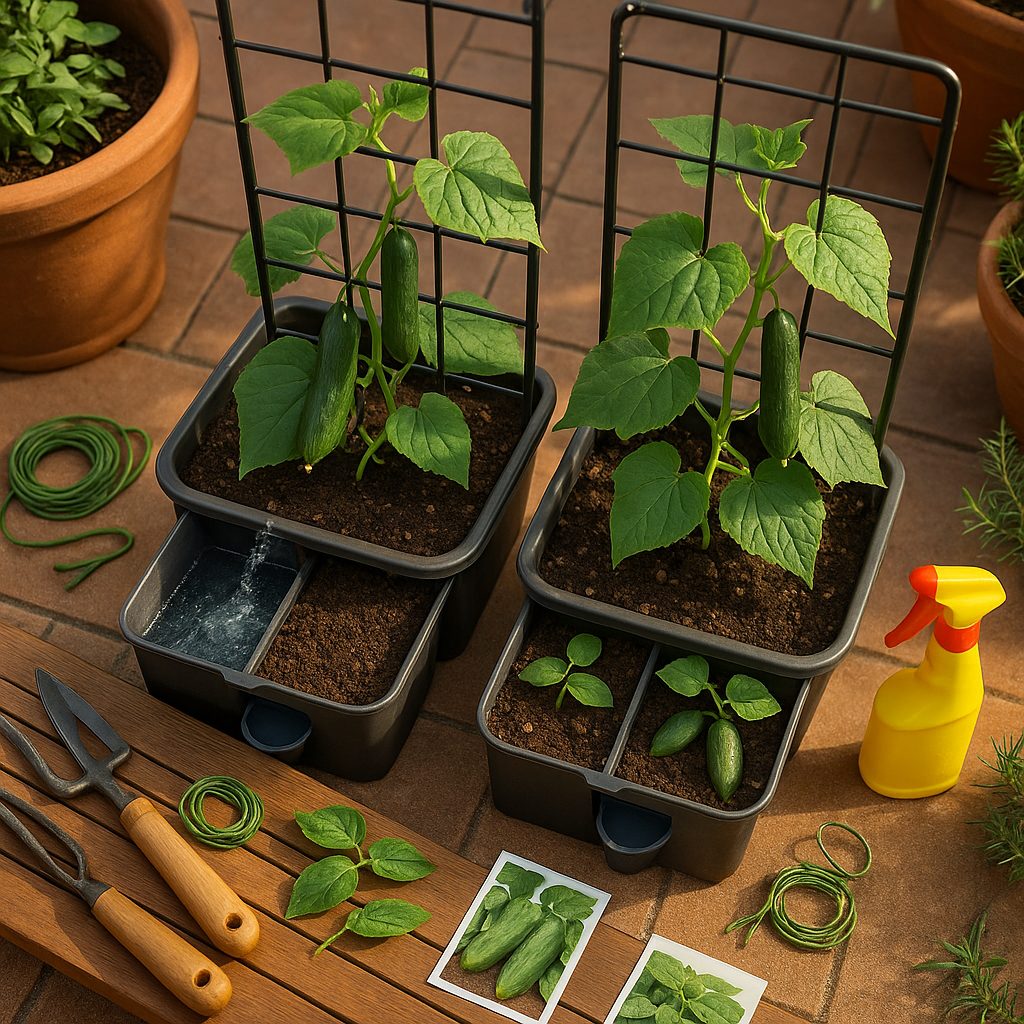
Caring for cucumbers in self-watering pots is surprisingly hands-off, but paying attention to a few key routines makes all the difference. Start by keeping the reservoir filled—check it every couple of days during hot weather since cucumbers are thirsty, fast-growing plants. Even with a self-watering system, it’s a good idea to occasionally water the top layer of soil when seedlings are young or during a heatwave; this ensures roots access moisture before they stretch downward.
Feeding your plants is just as important: container-grown cucumbers benefit from diluted liquid fertilizer every two weeks, starting once flowers appear. Look for formulas rich in potassium, which helps maximize flowering and fruiting—just mix your fertilizer into the reservoir or water it in from the top.
Since many cucumber varieties are natural climbers, provide a sturdy trellis or tomato cage soon after planting. Vertical support not only saves space but also keeps fruits clean and easier to spot. Tie stems loosely as they grow to avoid breakage, and check weekly to redirect wandering vines onto the support.
Throughout the season, watch your plants for yellowing leaves (which could signal nutrient shortages), wilting (usually a watering issue), or pests like aphids and cucumber beetles. Inspect under leaves and along stems, removing any pests by hand or spraying with insecticidal soap if needed.
Harvest fruits promptly as they ripen to encourage continual production. With a proactive approach—topping off the reservoir, fertilizing regularly, managing vines, and keeping an eye out for trouble—cucumbers in self-watering pots will reward you with crisp, homegrown produce all summer long.
Dealing with Common Pests and Problems
Growing cucumbers in containers, especially with self-watering systems, makes pest and disease management a bit easier, but some common problems can still pop up. Aphids, for example, are tiny bugs that cluster on leaves and stems, sucking sap and weakening the plant—they thrive in moist, sheltered environments like those provided by dense container plantings.
Cucumber beetles are another nuisance; these small yellow-and-black insects chew holes in leaves and can spread bacterial wilt, leaving plants wilted and unproductive. Powdery mildew, a fungal disease that looks like a white powder on leaves, also loves the humid microclimate around self-watering systems.
To prevent these issues, start with high-quality, disease-resistant cucumber varieties and give plants plenty of airflow by not crowding containers. Place your pots where they get good morning sun and routinely check undersides of leaves for early signs of trouble. Remove any weeds or debris that can harbor pests, and encourage beneficial insects like ladybugs by planting companion herbs such as dill or nasturtium nearby.
If aphids show up, spray them off with a strong jet of water or use neem oil—an organic, container-safe solution. For cucumber beetles, hand-pick them in the early morning when they are slow, and consider yellow sticky traps if the problem persists.
To manage or prevent powdery mildew, water only at the base to keep foliage dry, and use a homemade spray of diluted baking soda (one teaspoon per quart of water) as a safe, preventative fungicide. By combining good hygiene, regular monitoring, and organic treatments, you can keep container-grown cucumbers healthy and productive all season long without resorting to harsh chemicals.
Harvesting and Enjoying Your Cucumbers
Knowing the right time to harvest cucumbers is key to enjoying their crisp, refreshing taste. Check the variety’s seed packet or tag for guidance, but most cucumbers are ready when they’re a rich green color, feel firm, and reach about 6–8 inches long for slicing types—though pickling varieties can be picked smaller, around 3–4 inches. Avoid letting them get oversized or turn yellow, as this can cause a bitter flavor.
To harvest, use clean garden shears or a sharp knife to cut the stem about a half-inch above the fruit; avoid pulling or twisting, which can damage the plant and reduce future yields. After picking, rinse cucumbers gently and dry them before storing.
For maximum freshness, wrap them in a paper towel to absorb humidity, place them in a loose plastic bag, and keep them in the fridge’s crisper drawer—this helps them stay crisp for up to a week.
Enjoy your fresh cucumbers simply by slicing them with a sprinkle of salt, or add them to salads for a cool crunch. They make quick pickles: just cover sliced cucumbers with vinegar, a bit of sugar, and dill in a jar, then refrigerate for a few hours. For a refreshing snack, try slicing cucumbers and tossing them with yogurt, mint, and a dash of lemon. Your homegrown cucumbers will shine in sandwiches, sushi rolls, or even as a hydrating addition to water.