
Spinach Leaf Problems

Noticing unusual spots or discoloration on your spinach leaves? Spinach diseases often show up as yellow, brown, or white patches, which can be unsettling for any gardener. These issues don’t just appear out of nowhere—it takes a sharp eye to spot early signs, as the symptoms might be caused by a variety of factors including fungal infections, pest infestations, or even nutrient deficiencies in your soil.
For example, downy mildew appears as yellow spots on the upper side of leaves with a fuzzy growth underneath, while leaf miners chew winding trails that leave the foliage pale or brown. Sometimes, a simple lack of magnesium or nitrogen results in patchy, faded leaves.
Knowing what to look for is half the battle; quick action can mean the difference between rescuing your crop and watching it decline. In this article, you’ll learn how to distinguish between common spinach leaf problems, uncover their underlying causes, and pick up practical techniques to both treat and prevent spinach diseases—helping your garden thrive season after season.
Common Spinach Leaf Symptoms and What They Mean
When growing spinach, it’s important to watch for common leaf symptoms that can signal something’s wrong. Yellowing leaves often hint at nutrient deficiencies, especially a lack of nitrogen, and can slow down growth if not addressed quickly.
Browning edges or tips may mean your plant is experiencing water stress or possible salt buildup in the soil. Small white spots could indicate a fungal disease like downy mildew, which thrives in damp, crowded conditions. Prompt removal of affected leaves and improved airflow can help.
If you notice drooping or wilting, consider whether the roots are too wet, too dry, or suffering from root rot. Lastly, holes in spinach leaves are telltale signs of insect pests such as flea beetles or caterpillars munching away.
To keep your spinach healthy, check leaves regularly for these symptoms and diagnose early. Taking quick action—adjusting watering habits, feeding with balanced fertilizer, or using safe pest controls—can mean the difference between a thriving crop and a disappointing harvest.
Observing your plants closely each week helps you react promptly, limiting damage and protecting your spinach throughout the season.
Nutritional Issues Behind Yellowing Leaves
Yellowing leaves in spinach often signal that your plants are lacking essential nutrients, most commonly nitrogen or magnesium. If the yellowing starts from the older leaves and progresses upwards, while the leaf veins remain somewhat green, a magnesium deficiency is likely the culprit. In contrast, if the entire leaf—especially the lower and older ones—turns pale or yellow, nitrogen might be lacking.
Unlike nutrient deficiencies, problems like overwatering or poor soil drainage usually cause the entire plant to look limp, with leaves turning soft or developing dark spots from rot rather than just yellowing.
To address nutrient deficiencies, work well-rotted compost into the soil to boost organic matter and improve overall soil health. You can also use a balanced, slow-release fertilizer to ensure your spinach gets a consistent supply of both nitrogen and magnesium. Regularly checking soil moisture and drainage will further help keep your spinach vibrant and healthy.
Pest and Insect Damage on Spinach
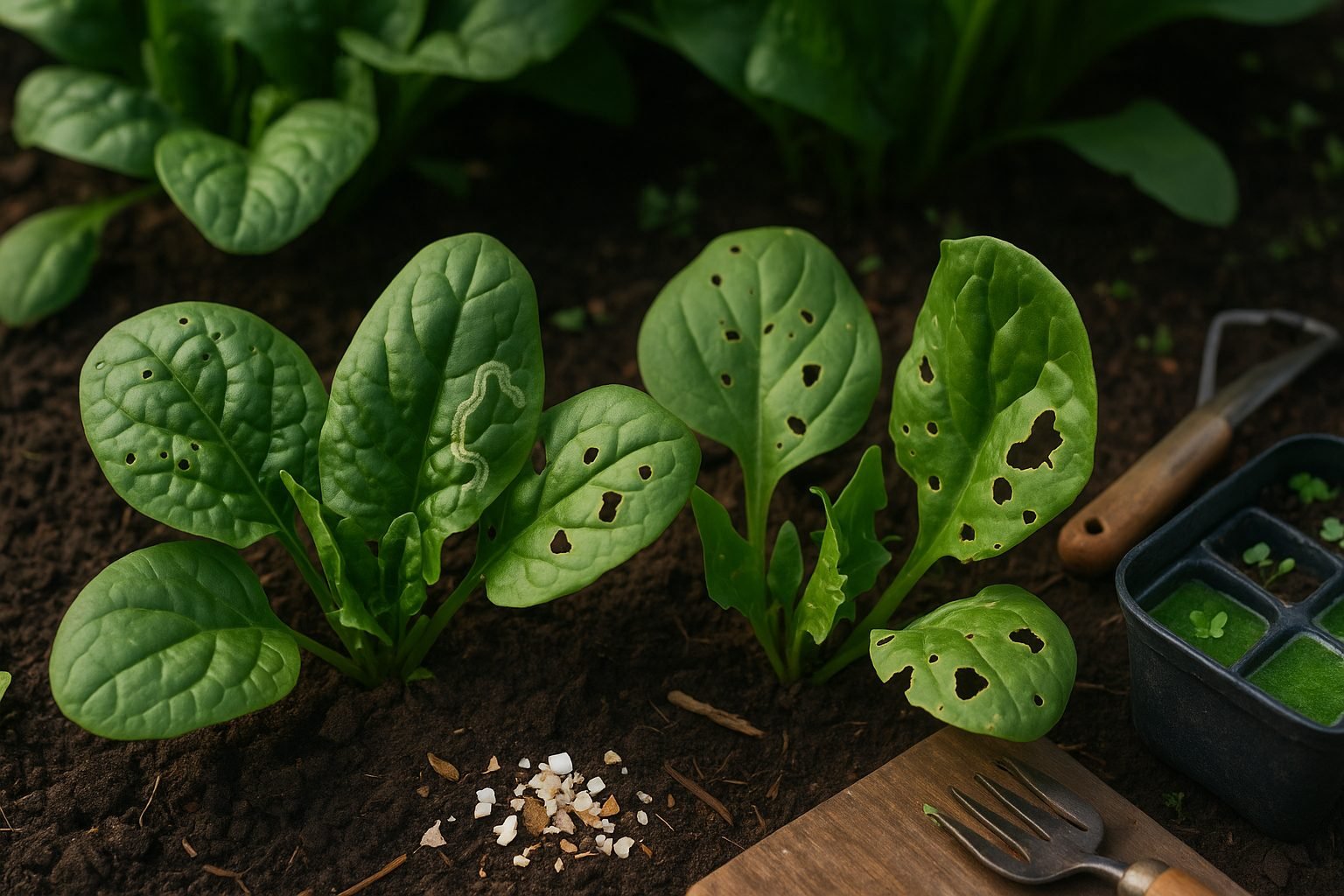
Spinach is a favorite target for several common pests, including aphids, leafminers, slugs, and flea beetles. If you spot holes or ragged edges on your spinach leaves, you might be dealing with slugs or flea beetles—slugs leave irregular chew marks and sometimes a slimy trail, while flea beetles create tiny shot holes.
Aphids are small, soft-bodied insects that cluster underneath leaves, often leaving behind shiny, sticky residue known as honeydew and causing leaves to curl or distort. Leafminers are trickier; they burrow between leaf layers, producing winding, light-colored tunnels.
To reduce pest problems organically, keep your garden tidy by removing plant debris and weeds where insects hide. Encourage natural predators like ladybugs and lacewings to keep aphid numbers in check. You can use floating row covers to physically block flea beetles and leafminers from reaching young spinach plants.
For slugs, sprinkle diatomaceous earth or crushed eggshells around the base of your plants, or set beer traps to lure them away. If aphids become a big problem, spray infested leaves with a gentle mix of water and a few drops of dish soap.
With consistent monitoring and simple, organic defenses, you can enjoy a healthy spinach harvest free from pest damage.
Diseases Affecting Spinach Leaves
Spinach leaves are prone to several common diseases that can quickly impact crop health and yield. Blight often appears as yellow halos around water-soaked spots, which eventually turn brown and cause the leaves to die back.
Downy mildew is identifiable by yellow patches on the upper leaf surface and grayish, fuzzy mold underneath—especially during cool, damp weather. White rust manifests as white blisters or pustules on the undersides of leaves; these can merge, causing the leaves to become badly distorted.
Leaf spot fungi show up as small tan or brown lesions that may expand over time, making the leaves unsightly and less marketable.
Preventive Measures
To protect your spinach from these diseases, consider the following tips:
- Practice crop rotation—avoid planting spinach or related greens in the same spot more than once every three years.
- Use disease-resistant spinach varieties when available.
- Space your plants well apart to ensure good air circulation, which helps keep foliage dry and less attractive to fungal pathogens.
- Water early in the morning so leaves can dry by midday.
- Promptly remove any infected leaves to prevent disease from spreading.
By following these tips, your spinach patch will have a better chance of staying healthy throughout the season.
Quick Fixes and Prevention Tips
Taking care of your plants doesn’t have to be complicated—simple actions can make a big difference.
Water your plants at soil level early in the day to keep leaves dry and reduce disease risk. Make sure your soil drains well and refresh the top inch regularly to discourage pests and mold.
If you spot infected or yellowing leaves, remove them right away and dispose of them in the trash—not your compost pile—to stop diseases from spreading. Check your plants often; catching problems early is the best way to prevent bigger issues later on.
Rotate your crops each season and avoid overcrowding to improve airflow. If a plant stays sickly or infested despite your best efforts, it might be time to pull it out and start over with healthy seedlings.
Being proactive pays off and helps your garden stay strong all season long.
When to Worry and When to Wait
It’s natural to spot a few yellow spots or small holes on your spinach leaves—don’t panic! Minor blemishes are common and often just cosmetic, not a threat to your crop. However, you should take action if you notice widespread wilting, slimy patches, or fast-spreading brown lesions, as these could indicate pests or disease.
Otherwise, trust your plant’s resilience. Spinach often bounces back on its own with consistent watering, good air circulation, and regular checks. Avoid overreacting to every imperfection; instead, give your garden steady care and a little patience—most healthy plants will thrive with time.