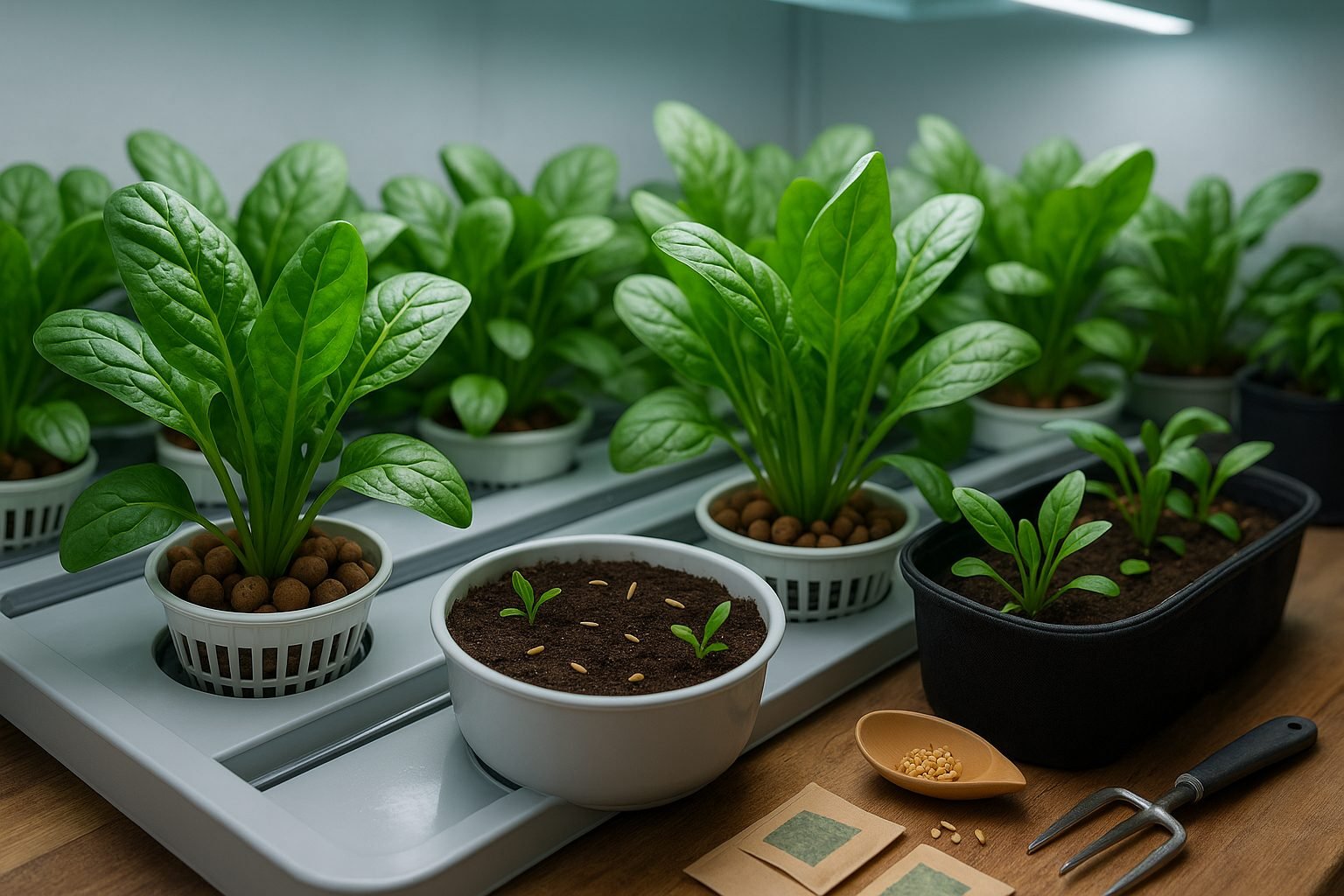
Introduction to Hydroponic Spinach
Hydroponic spinach is spinach grown without traditional soil, using a water-based nutrient solution to deliver everything the plants need directly to their roots. Unlike soil-grown spinach, which depends on the quality and condition of garden beds or fields, hydroponic systems offer complete control over growing conditions. This means faster, more reliable growth and a crop that’s cleaner, fresher, and often more nutritious.
One major benefit of growing spinach hydroponically is speed—plants mature quickly due to optimized nutrients and constant access to water, letting you enjoy homegrown spinach much sooner than with traditional gardening methods. Plus, hydroponic spinach can be grown indoors year-round, letting you harvest crisp, leafy greens even in the depths of winter or in places where outdoor gardening is limited by space or climate.
Say goodbye to weeding, soil-borne pests, and unpredictable harvests. Hydroponics eliminates common garden headaches, ensuring each crop is abundant and healthy. This method isn’t just a win for commercial growers aiming for maximum yield and consistent quality; it’s also ideal for home gardeners eager to produce their own food with minimal mess or for urban farmers who are short on space but big on green ambitions.
Whether you’re setting up a countertop garden in your apartment or launching a small urban farm, hydroponic spinach offers a practical, rewarding way to grow food sustainably—no green thumb or farmland required.
Optimal Growing Conditions for Hydroponic Spinach
To achieve lush, healthy spinach in a hydroponic setup, paying attention to environmental conditions is crucial. Spinach thrives at cooler temperatures, ideally between 60-72°F (15-22°C); temperatures above 75°F (24°C) can cause bolting or bitter leaves.
For humidity, aim for 50-70%—high humidity prevents wilting, but be careful not to exceed 80% to avoid fungal diseases.
In terms of light, spinach prefers 10-14 hours daily—use bright but indirect sunlight if growing near windows, or opt for full-spectrum LED grow lights if sunlight is limited. LEDs are energy-efficient and can be kept about 12-18 inches above the plants.
Choosing a Hydroponic System
When picking a hydroponic system, you have several options:
- Kratky Method: Beginner-friendly and low-maintenance, relying on passive nutrient uptake with no need for pumps. This method suits small-scale or home growers.
- Nutrient Film Technique (NFT): Constantly circulates water and nutrients across plant roots, ideal for maximizing yield in limited space but more technical and sensitive to power outages.
- Deep Water Culture (DWC): Submerges roots in oxygenated nutrient solution; it offers fast growth but requires vigilant monitoring of water temperature and oxygenation.
Water Quality and Nutrient Management
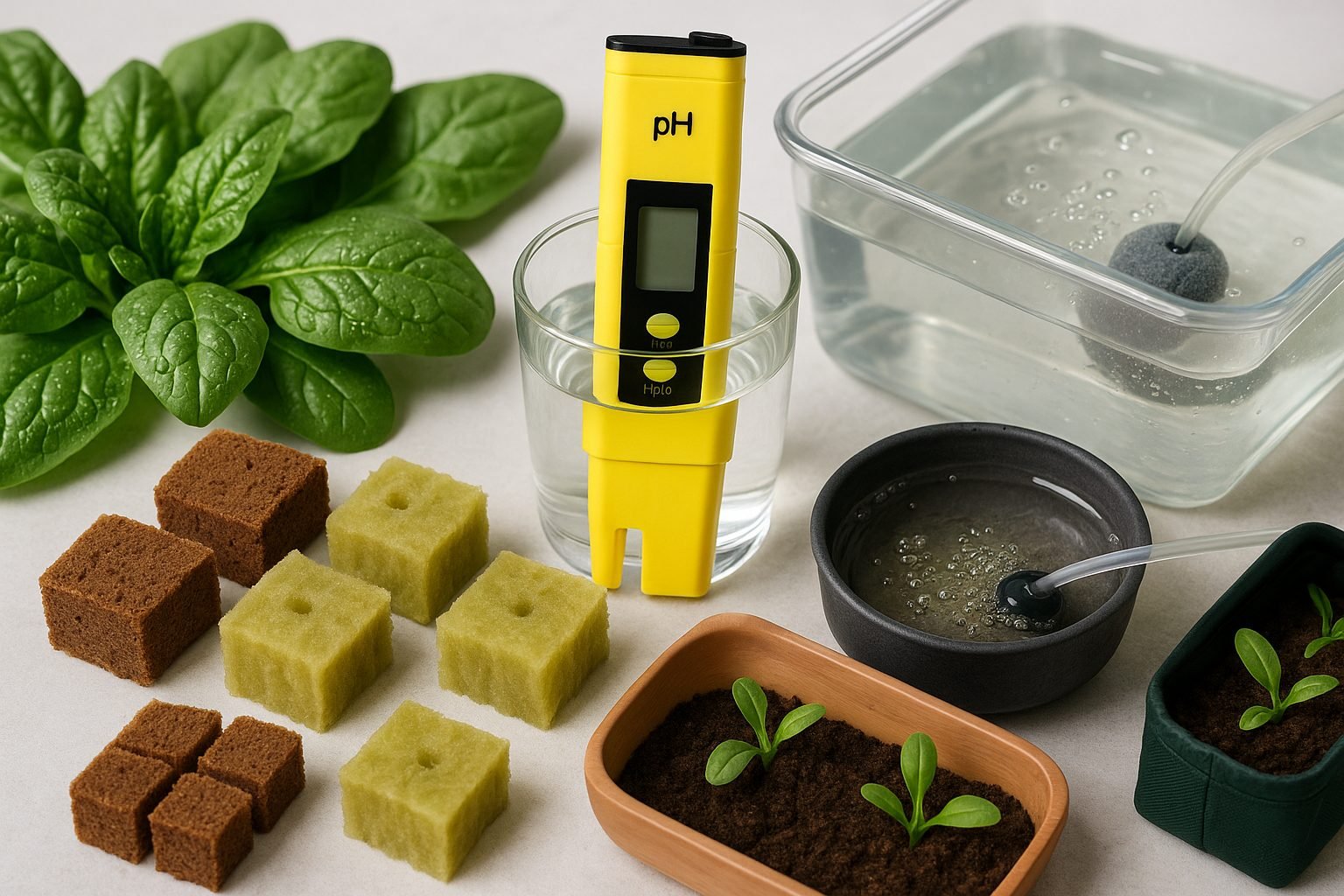
Proper water quality is essential—use filtered or distilled water to avoid chlorine and mineral buildup. Keep the pH level between 5.8 and 6.2 for the best nutrient absorption; a digital pH meter makes monitoring easy.
Electrical conductivity (EC) measures solution strength; for spinach, a range of 1.8-2.3 mS/cm works well. Going higher can stress the plants, while too low starves them. Adjust EC and pH as your plants grow, since young seedlings prefer weaker solutions.
Regularly top off reservoirs and change the nutrient solution every two to three weeks to keep nutrient levels balanced and prevent disease.
By carefully tuning these factors, you’ll be rewarded with crisp, vibrant spinach harvests year-round, regardless of climate or season.
Seed Germination and Early Growth
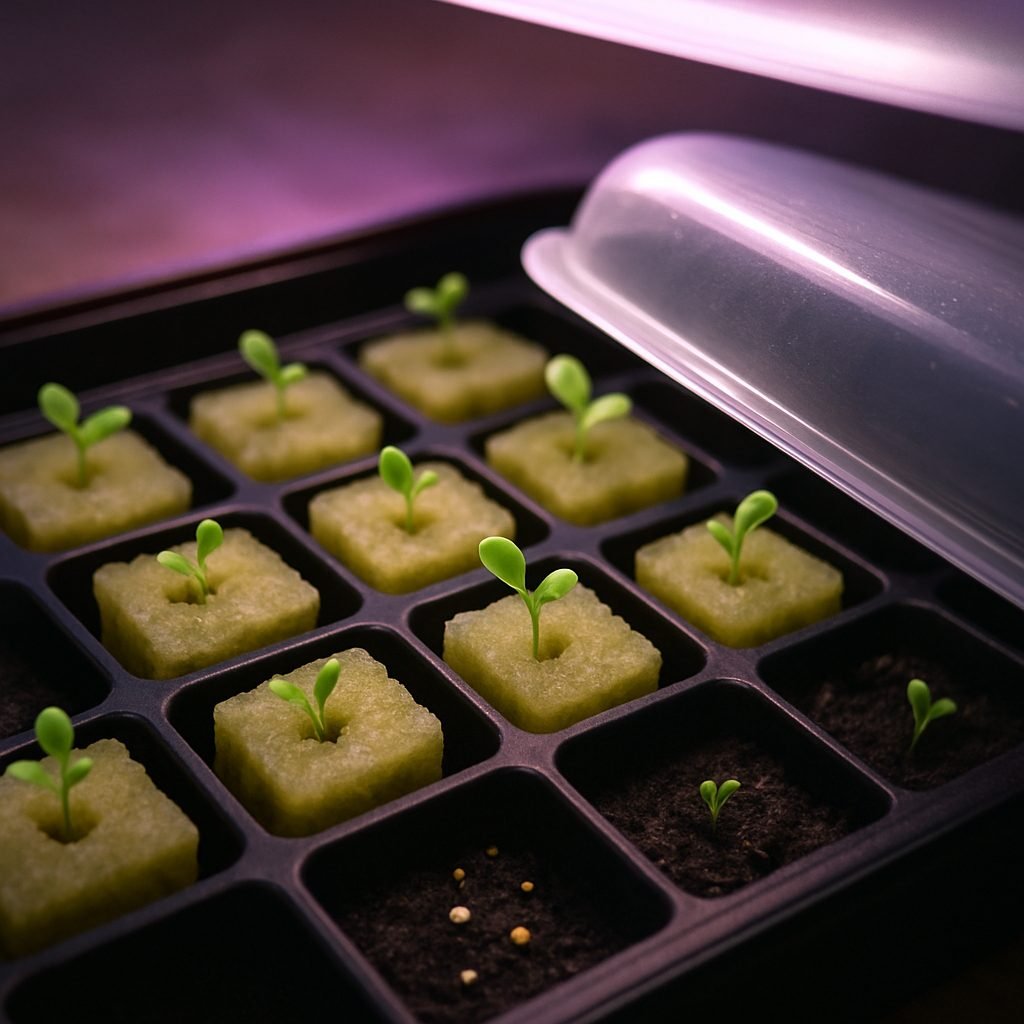
Starting spinach seeds for a hydroponic setup is straightforward with a few key steps. First, choose your germination medium—popular options include rockwool cubes, coconut coir plugs, or peat pellets, all of which hold moisture well without suffocating seeds. Moisten your chosen medium with pH-balanced water (ideally between 5.5 and 6.5), ensuring it’s damp but not soaking wet—too much moisture can cause mold or rot.
Place one or two spinach seeds about 1/4 inch deep in each cube or plug. To improve germination rates, you can pre-soak seeds in room temperature water for 8-12 hours before planting; this helps soften the seed coat and encourages faster sprouting. Cover trays with a lid or plastic wrap to maintain humidity, but make sure to lift it daily for airflow.
Keep seeds in a warm location (around 68-75°F or 20-24°C) and provide gentle light—low-intensity LED grow lights or indirect sunlight work well, but don’t use intense light at this stage. Check media moisture daily and mist if needed, without letting it get soggy, as excess water can lead to damping off or mold. If mold develops, increase ventilation or sprinkle a bit of cinnamon as a natural fungicide.
You should see sprouts within 5-10 days; as soon as tiny roots and stems appear, remove the cover. At this stage, strengthen young seedlings by gradually exposing them to longer hours of direct light (10-14 hours) and gentle airflow, such as a fan on low, to prevent legginess and encourage strong stems.
Before transplanting into your main hydroponic system, expect spinach seedlings to develop two to three true leaves and a healthy root base—a sign they’re robust enough for the next stage of growth. This usually takes 2-3 weeks from sowing.
With these tips, you’ll set your spinach up for success right from the start.
Nutrient Management and Plant Care
Hydroponic spinach thrives on a balanced supply of key nutrients, including nitrogen (N), phosphorus (P), potassium (K), calcium (Ca), magnesium (Mg), and trace elements like iron (Fe) and manganese (Mn). An ideal nutrient solution for spinach typically has an N-P-K ratio of around 8-15-36, with electrical conductivity (EC) kept between 1.8 and 2.2 mS/cm and pH levels maintained at 6.0 to 6.5 for optimal nutrient uptake.
Popular commercial nutrient blends, like General Hydroponics Flora Series or Masterblend, can be easily mixed for consistent results—simply follow the manufacturer’s instructions, always adding nutrients to water rather than vice versa, and stir thoroughly to avoid nutrient lockout. When preparing your nutrient solution, use filtered or distilled water to prevent unwanted mineral buildup, and test both EC and pH with reliable meters to ensure accuracy.
Check and adjust your solution weekly, topping up with fresh water as needed to avoid salt accumulation. Monitor your spinach for deficiency symptoms, such as yellowing leaves (nitrogen or magnesium shortage), curled new leaves (calcium deficiency), or poor root growth (phosphorus shortage). When problems appear, address them swiftly by adjusting nutrient concentrations or adding specific supplements—Epsom salt for magnesium, calcium nitrate for calcium, or a chelated iron formula for chlorosis.
Even though hydroponic systems reduce many traditional pest and disease risks, they’re not immune; inspect your plants regularly for signs of aphids, spider mites, or fungal issues like powdery mildew, particularly around leaf undersides and roots. Good airflow, moderate humidity, and regular cleaning of reservoirs and equipment help keep diseases and pests at bay. Remove dead or damaged leaves promptly to prevent disease spread.
Consistency is key—maintain a regular care schedule for checking nutrients, monitoring plant health, and keeping your system clean. With attentive management, your hydroponic spinach will flourish, producing tender, healthy leaves all season long.
Harvesting Hydroponic Spinach
Knowing when to harvest hydroponic spinach is key to enjoying tender, flavorful greens at their peak. Look for leaves that are about 4–6 inches long—large enough for good texture but still young and sweet. Color matters, too: vibrant green leaves indicate healthy maturity, while yellowing may signal over-maturity or nutrient issues.
For the first harvest, focus on snipping the outermost leaves with clean scissors about an inch above the base, leaving the inner leaves and crown intact. This “cut-and-come-again” technique lets the plant refocus its energy and continue producing new foliage. It’s important to avoid cutting more than a third of the plant at once, as this helps maintain overall vigor and prevents unnecessary stress.
To maximize your spinach yield, harvest regularly every 5–7 days—steady picking keeps the plant in productive mode and prevents bolting, which can make leaves bitter and tough. For the best flavor, cut spinach early in the morning when conditions are cool; this locks in moisture and crispness.
Immediately place harvested leaves in a bowl of cold water to keep them fresh, lightly pat dry, and store in the fridge in a loosely closed bag or container with a paper towel to absorb extra moisture. By following these steps, you’ll enjoy a steady supply of delicious hydroponic spinach, packed with flavor and nutrition, all season long.
Troubleshooting and Common Issues
Hydroponic spinach growers often face issues such as wilting plants, yellowing leaves, stunted growth, and root rot.
Wilting is typically caused by root oxygen deficiencies or high temperatures. Ensure your water has enough dissolved oxygen by using an air stone, and keep growing room temperatures between 65-75°F.
Yellowing leaves usually indicate a nutrient imbalance, often low nitrogen or iron. Check your nutrient solution’s levels and adjust as needed. If yellowing continues, flush the system with clean water and start fresh with a balanced formula.
Stunted growth may result from low light exposure or improper pH. Spinach needs at least 12-14 hours of light daily and a pH level between 6.0 and 7.0, so check your lighting schedule and calibrate pH regularly.
Root rot can develop quickly in overwatered systems. Keep your water moving with adequate pumps and avoid letting roots sit submerged without aeration.
Prevent problems by monitoring water quality, cleaning your system every few weeks, and inspecting plants for pests like aphids or fungus gnats.
If you encounter persistent or confusing symptoms, resources like the r/hydro subreddit or the Hydroponics section on GardenWeb are great places to connect with experienced growers for troubleshooting.
For advanced challenges or commercial-sized setups, consider consulting local hydroponic extension agents or professional agronomists for tailored advice to keep your spinach thriving.
FAQs About Growing Hydroponic Spinach
Many beginners wonder which spinach varieties work best for hydroponics. Generally, smooth-leaf types like ‘Bloomsdale’ or ‘Space’ adapt well to nutrient solutions and offer fast, tender growth.
Water changes are a crucial part of maintenance—plan to refresh your reservoir every one to two weeks, or sooner if the water turns cloudy or smells off. This helps prevent disease and keeps nutrient levels balanced.
As for growing conditions, spinach loves cool temperatures, ideally between 60–70°F (15–21°C). Keep your grow lights on for around 10–12 hours daily, and avoid letting the roots get too warm, as this can trigger premature bolting.
Many beginners also ask about preventing issues like leaf yellowing: check your nutrient mix to ensure sufficient nitrogen, and keep pH between 6.0 and 7.0 for the best nutrient absorption.
Starting with a small-scale system using net pots and clay pebbles can make it easier to monitor everything as you learn. With careful attention to these basics, hydroponic spinach can thrive year-round, giving you fresh greens even in limited space.
Conclusion & Next Steps
Growing spinach hydroponically is a smart choice for anyone looking to enjoy fresh, nutritious greens year-round with minimal fuss. By focusing on the basics—selecting the right variety, maintaining proper water and nutrient levels, and ensuring adequate light—you’ll set yourself up for a successful harvest.
Remember, even beginners can achieve great results by starting small and adjusting their setup as they gain experience. Don’t hesitate to experiment with different systems, like deep water culture or nutrient film technique, to find what works best in your space.
If you’re curious to learn more, consider branching out into hydroponic lettuce, herbs, or even strawberries for greater variety and fun. You might also explore more advanced techniques, such as automated nutrient delivery or vertical farming, to further optimize your indoor garden.
Wherever you go from here, each experiment will add to your knowledge and confidence, bringing fresh produce to your table and turning gardening into an enjoyable, year-round hobby.