Introduction to Vertical Pumpkin Growing
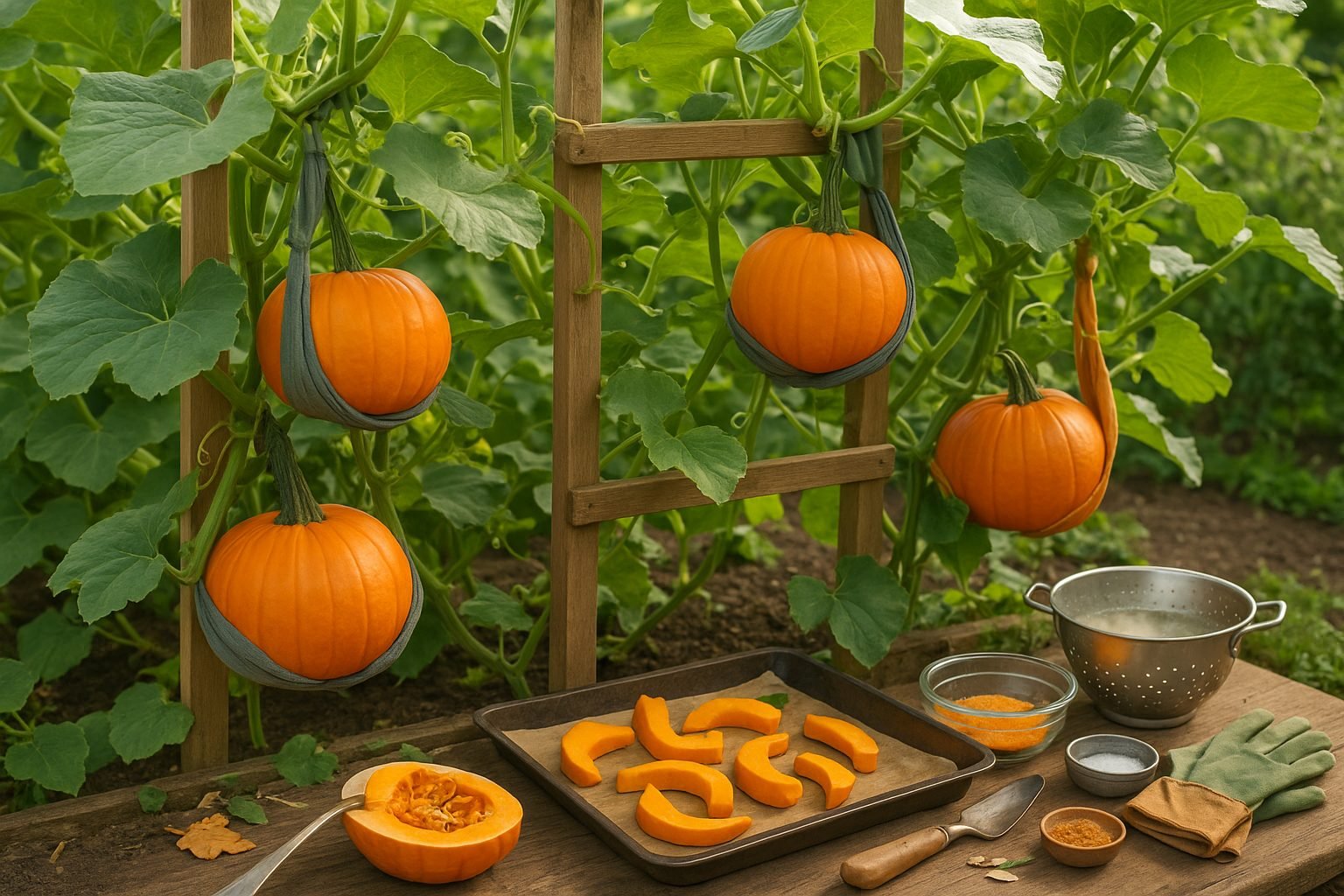
The idea of pumpkin trellis DIY projects is capturing the attention of gardeners everywhere, especially as vertical pumpkin growing continues to gain popularity. Vertical pumpkin growing is all about training pumpkins to climb upward on sturdy structures instead of sprawling across precious ground space. For those with modest-sized gardens or urban balconies, this approach is a real game-changer.
You’ll save space, improve air circulation around your plants, and even reclaim tidy pathways between your crops—no more tripping over endless pumpkin vines! Many gardeners also report healthier plants and better harvests, since pumpkins are lifted off the soil and less prone to pests or rot. Plus, who isn’t wowed by the sight of bright orange pumpkins hanging from a green trellis?
In this post, we’ll walk you through the full process—from choosing compact pumpkin varieties best suited to vertical growth, through clever pumpkin trellis DIY building tips, all the way to tending and harvesting your upright pumpkin patch. If you want big results from a small garden footprint, read on to discover how vertical pumpkin growing can work for you.
Choosing the Right Pumpkin Variety and Trellis
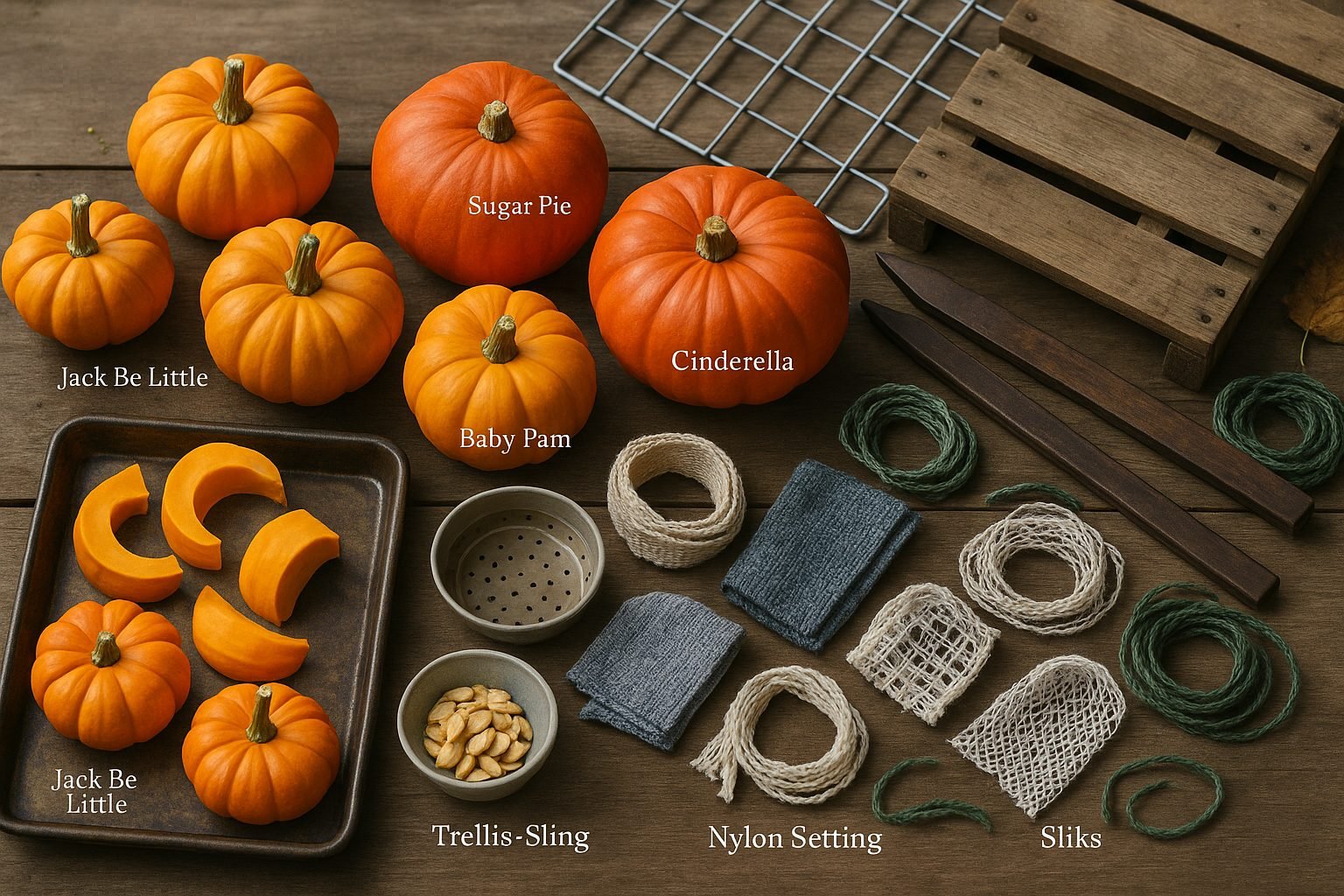
When planning to grow pumpkins vertically, picking the right variety makes all the difference. Small to medium-sized pumpkins are best suited for climbing; look for types like ‘Jack Be Little,’ ‘Baby Pam,’ ‘Sugar Pie,’ or ‘Cinderella’ (Rouge Vif d’Etampes). These compact or semi-bush varieties produce fruit light enough to be safely supported off the ground, making them perfect candidates for a trellis.
The next crucial step is choosing a sturdy support system. Pumpkin vines are vigorous growers, and even smaller fruits can become surprisingly heavy as they mature. For a DIY approach, consider building a trellis from recycled wood pallets, heavy-duty garden stakes, or livestock fencing—just be sure the structure is anchored deeply and reinforced for stability.
Strong netting or even old bedsheets can be fashioned into slings to cradle maturing pumpkins and prevent vines from snapping. If time or tools are limited, many garden centers offer readymade trellises, arbors, and metal grids designed for heavy vining crops—always check the weight rating before purchasing.
Whichever route you choose, ensure your trellis stands at least 5-6 feet tall and 2-3 feet wide to allow ample space for the vines to climb and spread, keeping the fruit off the ground and maximizing your garden’s vertical potential. Remember to periodically check and adjust ties or slings as your pumpkins grow to keep everything secure and healthy.
Soil Preparation and Planting Tips
When growing pumpkins vertically, choose a location that receives at least six to eight hours of direct sunlight each day; pumpkin vines thrive in warmth and bright light. It’s best to plant pumpkins at the base of a sturdy trellis, arbor, or strong fence, ensuring there’s ample vertical space for the vines to climb.
The soil should be well-draining and rich in organic matter, ideally with a slightly acidic to neutral pH between 6.0 and 7.0. Before planting, loosen the soil to a depth of 12–15 inches and mix in compost or well-rotted manure to boost nutrients and improve drainage. For heavy clay or sandy soils, amend with compost and a bit of peat moss to create a crumbly, fertile texture.
When planting seeds, make small mounds about two feet apart along the base of the trellis, spacing these mounds three to four feet from one another to allow airflow and root expansion. Sow two to three seeds per mound, planting them half an inch deep, then thin to the healthiest seedling after sprouting. If transplanting seedlings, dig holes large enough for their root balls and gently plant them at the same depth as they were in their pots.
Consider companion plants like corn, beans, and marigolds, which can deter pests and enhance growth. Avoid planting pumpkins near potatoes, which compete for nutrients, or other squash varieties, as overcrowding can increase disease risk. Rotate crops yearly—never planting pumpkins or other cucurbits in the same soil consecutively—to prevent soil-borne disease buildup and ensure healthy, vigorous vines.
Training Vines and Supporting Developing Pumpkins
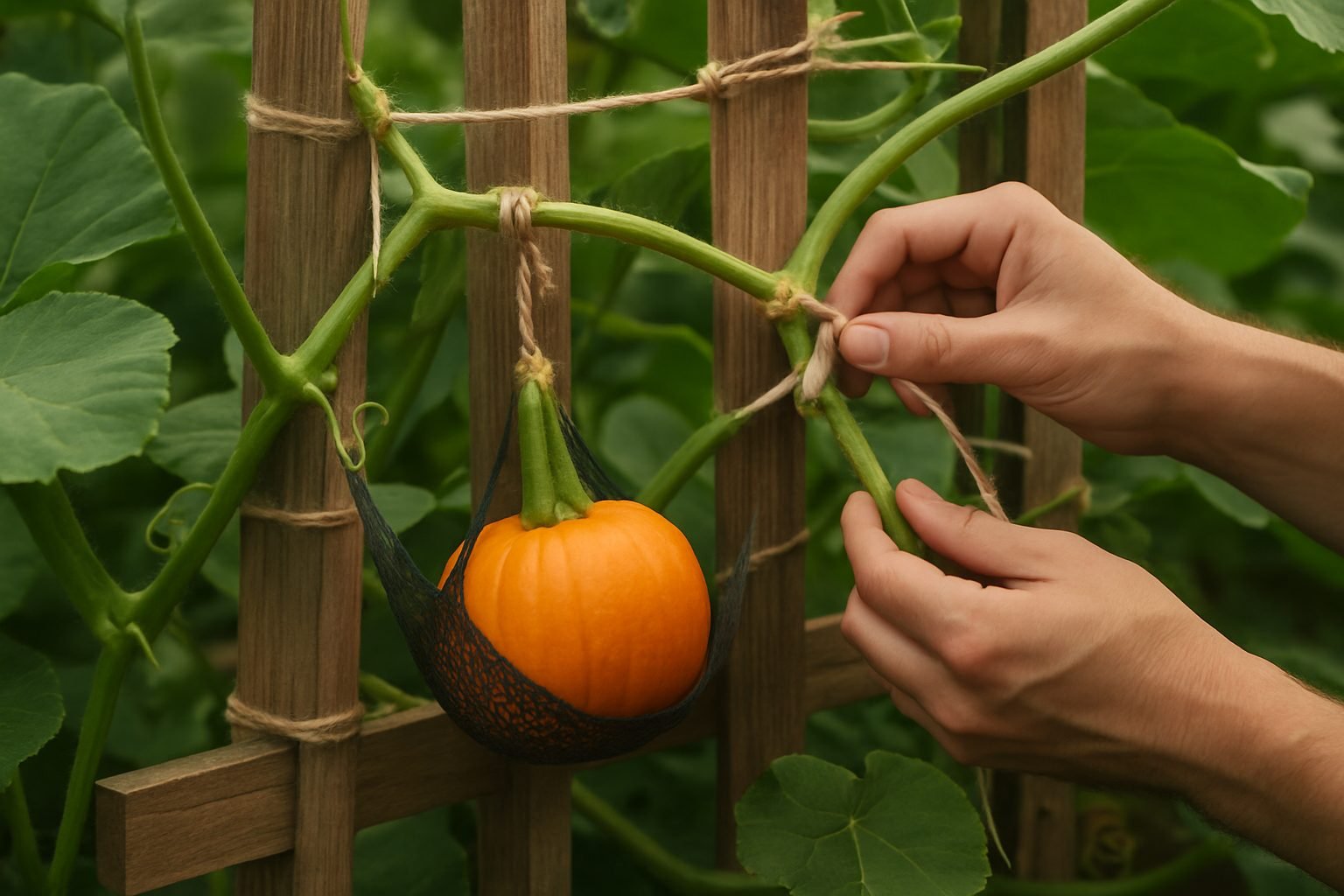
Training pumpkin vines to climb vertically is a smart way to save garden space, but it requires a bit of effort and care. Start by gently guiding young vines toward your support structure—like a sturdy trellis or fence—once they’re about a foot long and have at least a few sets of leaves.
Use soft garden twine, old pantyhose, or strips of cloth to loosely tie the vines to the support, spacing ties every 12–18 inches. The key is to make sure the ties are snug enough to hold the vines but loose enough to allow growth without constriction. Check the ties weekly and adjust as needed.
As pumpkins begin to set fruit, especially larger varieties, create a supportive sling or net beneath each developing pumpkin. Secure these slings to the trellis as soon as the fruit is about the size of a softball. Nylon netting or stretchy fabric works well to cradle the growing weight and reduce stress on the stem, which can easily snap under the load.
For especially heavy or fast-growing pumpkins, double up your sling support and consider pruning excess fruit so the plants can focus energy on a few strong pumpkins. If stems look weak or start to bend, reinforce nearby vines with additional ties or padded supports.
Always monitor for changes after heavy rain or rapid fruit growth, making quick adjustments to prevent damage. With attentive training and early intervention, you can enjoy a successful vertical pumpkin harvest, even in small gardens.
Watering, Fertilizing, and Ongoing Maintenance
Consistent care is crucial when growing pumpkins vertically. Water your pumpkins deeply and evenly, aiming for about 1 to 2 inches per week, preferably in the morning to allow foliage to dry out and reduce the risk of disease. Avoid overwatering, as soggy roots can lead to rot—always check the top inch of soil before adding more water.
Feed your plants every 2-3 weeks with a balanced, slow-release fertilizer. Keep in mind that too much nitrogen can cause lush leaves but fewer pumpkins, so always follow the label instructions.
Regular maintenance helps your crop thrive. Inspect your trellis weekly for stability, and repair any weak spots before the fruit becomes heavy. Prune excess growth to encourage airflow and better fruit development, removing yellowed or diseased leaves promptly to limit the spread of pathogens.
For pest and disease prevention, keep the area around your plants tidy. Use organic insecticidal soap if you spot aphids or squash bugs, and rotate crops each season to avoid soil-borne issues.
Training vines to climb the trellis and using slings for support can also keep fruit off the ground, preventing rot and making it easier to monitor plant health throughout the season.
Harvesting and Final Tips for Success
When your pumpkins reach their mature color—whether orange, white, or another variety—and their skin feels hard to the touch, they’re ready for harvest. Another sign is when the stem connecting the pumpkin to the vine turns brown and begins to shrivel.
For the best results, use a sharp knife or pruners to cut the pumpkin from the vine, leaving several inches of stem attached to help prolong storage life. Handle your pumpkins gently to avoid bruises that can lead to rot.
To boost your vertical pumpkin garden’s success, consider mulching beneath growing fruits to conserve moisture and suppress weeds. You can also use slings made from old t-shirts or netting to support heavy fruits as they ripen on trellises.
With a little care and attention, vertical pumpkin gardening not only saves space but also produces beautiful, healthy fruits—making your garden both productive and visually rewarding.