Introduction
Choosing the right hot pepper pot size is one of the most important decisions you’ll make when growing fiery chilies at home. The right pot can mean the difference between a bountiful harvest of vibrant, spicy fruits and a disappointing season plagued by stunted plants and wilted leaves.
It’s not as simple as grabbing any container from the garage—selecting the ideal hot pepper pot size ensures your plants have ample room for roots to expand, access to nutrients, and proper drainage, all of which are crucial for healthy growth and abundant yields.
Many gardeners—beginners and veterans alike—struggle with this choice. Should you opt for a small pot to save space and money, or go bigger for better roots? What about materials like plastic, clay, or fabric? Does spending more actually make a difference? With the range of choices and price tags out there, it’s easy to feel overwhelmed or second-guess your picks.
In this guide, you’ll find straightforward advice based on gardening expertise, with real-world examples to help you match your hot pepper goals to the right container. We’ll break down sizing charts, weigh the pros and cons of various pots, and share tips to help both your peppers and your budget thrive.
What Size Pot Is Best for Pepper Plants?
Choosing the right pot size is key to growing healthy pepper plants, whether you’re tending bell peppers, hot varieties, or ornamental types.
For bell peppers, aim for pots that are at least 3-5 gallons in size—these larger containers support robust roots, taller plants, and higher yields. Hot peppers, like jalapeños or cayennes, can grow well in slightly smaller pots, around 2-3 gallons, but larger is still generally better if you want maximum harvests.
Ornamental peppers, which tend to stay compact, do fine in smaller pots of about 1-2 gallons; these are perfect for windowsills or decorative arrangements.
Starting seeds requires only small seed trays or 2-inch starter pots to minimize watering issues and encourage quick sprouting. However, as seedlings develop and outgrow their starter homes—usually at the 2–4 true leaf stage—it’s time to move them up to bigger pots.
When transplanting, always spring for the largest practical size you can manage; more soil means more room for roots to spread, which reduces the risk of root-bound plants, helps retain moisture, and ultimately results in bushier growth and bigger yields.
Look for containers with good drainage holes to prevent soggy roots, and opt for lighter-colored pots in hot climates to avoid overheating. If you’re short on space, prioritize depth over width for deeper root development.
Remember: while peppers tolerate some cramping, happier roots always equal happier plants, so don’t be afraid to size up if unsure.
Pot Materials: Pros, Cons, and What to Choose
Choosing the right pot material can make a big difference in your plant’s health and daily care. Here’s a breakdown of popular pot materials and their benefits and drawbacks:
Plastic Pots
Plastic pots are lightweight, affordable, and come in a variety of colors, making them great for beginners or those who like to move plants around. However, they can overheat roots in hot climates and may crack over time under direct sun.
Terracotta or Clay Pots
Terracotta or clay pots offer a classic, earthy look and provide excellent breathability for roots. They are heavy, breakable, and tend to dry out soil quickly, making them better suited for over-waterers or humid climates.
Ceramic Pots
Ceramic pots, often glazed, add style and retain moisture well. Their weight makes them less suitable for frequent moving, and they can be pricey.
Metal Pots
Metal pots have a sleek, modern appearance and are typically very durable. However, they can heat up rapidly in the sun and may rust if not properly coated, so they’re best used indoors or in shaded outdoor spots.
Fabric Grow Bags
Fabric grow bags are a newer option, especially popular for mobile or seasonal gardens. They’re lightweight, foldable for storage, inexpensive, and encourage healthy root pruning. On the downside, they dry out quickly and may require more frequent watering.
Choosing the Right Pot for Your Climate and Needs
For hot, dry climates, glazed ceramic or plastic pots help retain moisture, while terracotta excels in humid areas where evaporation helps avoid soggy roots. Gardeners who like to rearrange or bring plants indoors seasonally may prefer lightweight plastic or fabric pots. Those looking for a long-term, decorative planter might invest in ceramic.
Ultimately, consider your local climate, watering habits, plant needs, and how often you move your plants before settling on the best pot for your garden.
Importance of Drainage and Choosing the Right Planter
Proper drainage is essential for healthy pepper plants because their roots are sensitive to excess moisture. When water cannot escape from a planter efficiently, it leads to soggy soil and root rot, which can quickly kill or weaken your peppers. Conversely, a well-draining pot allows extra water to flow out, preventing roots from sitting in puddles and encouraging healthy oxygen flow.
To check if your planter drains well, fill it with soil and water it thoroughly—if water pools on the surface or drips out very slowly, drainage likely needs improvement. You can boost drainage by mixing materials like perlite, coarse sand, or fine gravel into the potting soil. For planters with insufficient or no drainage holes, consider drilling extra holes at the bottom or sides, as this simple fix goes a long way in keeping roots happy.
The material of your pot also plays a big role:
- Clay and terracotta pots are naturally porous and help wick away moisture.
- Plastic and metal containers tend to retain more water, so they may need less frequent watering but more attention to drainage holes.
Finally, always match your watering habits to your containers—feel the top inch of soil before watering again to avoid overdoing it. Choosing the right planter with adequate drainage and monitoring moisture levels ensures your pepper plants don’t suffer from waterlogged soil, letting them thrive and produce abundant, flavorful fruit.
Repotting Your Pepper Plant: When and How
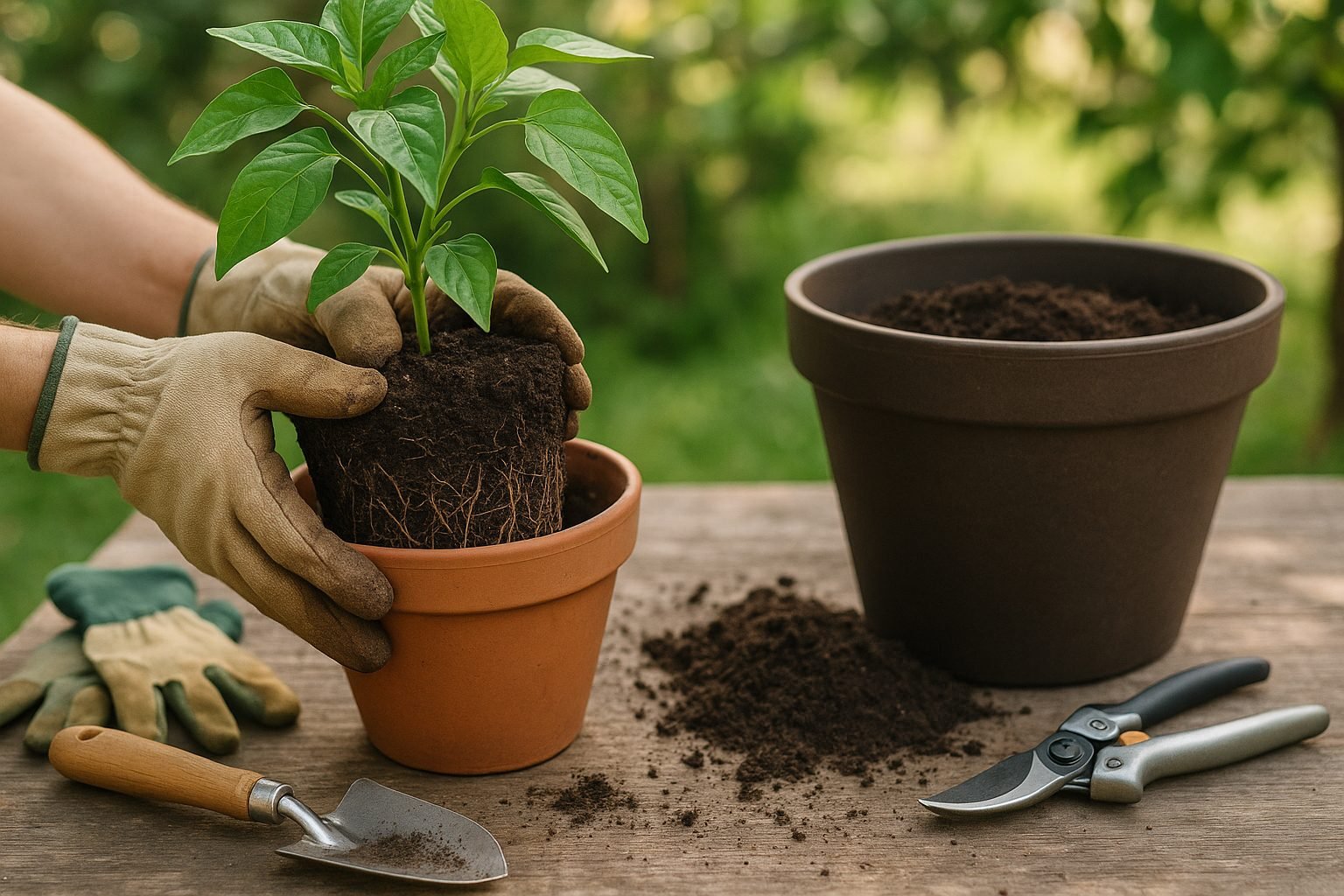
Knowing when to repot your pepper plant can make all the difference for its health and productivity. Look for clear signs like roots circling tightly inside the pot or poking out of drainage holes, soil that dries out incredibly fast, or plants that seem stunted even with proper care. Poor drainage—if water sits on top of the soil or runs straight through—also signals it’s time for a new home.
To repot, start by choosing a container just one or two sizes larger, with good drainage holes. Gently slide your pepper plant from its old pot, supporting the base, and tease apart any tightly wound roots. Remove excess compacted soil and check for any dead or mushy roots, trimming them with sanitized scissors.
Place fresh potting mix—a blend made for vegetables or peppers—at the bottom of the new pot, then set your plant in so it sits at the same soil level as before. Fill in around the plant with more potting soil, pressing lightly to eliminate big air pockets, and water thoroughly until water drains out the bottom.
To minimize transplant shock, repot on a cloudy day or in the evening when it’s cooler, as bright sun can stress the plant further. Keep the repotted pepper in a sheltered spot for a few days, away from harsh sun and wind, and hold off on fertilizing for about a week to let its roots settle.
Watch for drooping or yellowing leaves—this is normal for a short period after repotting, but steady recovery should follow. With some patience and gentle care, your pepper plant will thank you with lush new growth and a happier, roomier root system.
Common Pot Selection Mistakes and How to Avoid Them
One of the most common mistakes gardeners make when growing peppers is choosing the wrong size pot. Using a pot that’s too small leads to cramped roots, stunted growth, and poor fruit production. On the flip side, very large pots can cause soil to retain excess moisture, increasing the risk of root rot—especially if drainage is lacking.
Overcrowding is another frequent error; planting multiple pepper plants in a single pot might seem like a space-saving hack, but it forces plants to compete for light, nutrients, and water, often leaving them underdeveloped and stressed. Using pots without proper drainage holes is equally problematic, as peppers despise “wet feet” and are highly susceptible to fungal diseases if water cannot escape.
Choosing the wrong pot material—such as non-breathable plastic instead of terra cotta—can also impact soil temperature and moisture regulation, further stressing your peppers.
How to Avoid These Mistakes
- Opt for a container that’s at least 3-5 gallons per pepper plant.
- Always check for adequate drainage holes at the bottom of the pot.
- Use breathable materials like clay or fabric grow bags, which help excess water evaporate and keep roots healthier.
- If you notice wilting plants or yellowing leaves, check the bottom of the pot for standing water or matted roots, and consider repotting.
- Resist the urge to crowd several plants together; give each pepper its own roomy home for best results.
By paying attention to these details, you’ll give your pepper plants a strong start and a much better chance to flourish.
Creative Container Ideas and Budget-Friendly Options
When it comes to growing peppers in tight spaces, thinking outside the box with containers can make a big difference, both practically and visually. Upcycled containers—like old buckets, plastic storage bins, or even sturdy grocery bags—are excellent budget-friendly options. Just add drainage holes, and you’re ready to go.
Fabric grow bags are another smart choice; they’re lightweight, promote good root health, and can be tucked onto small balconies or patios with ease. Basic store-bought pots from dollar stores or clearance racks often work well, too, especially if you give them a personal touch.
Try painting pots with weatherproof paint, wrapping them in colorful fabric, or gluing on mosaic tiles or pebbles for easy DIY flair. Hang smaller pots from railings with simple hooks or use tiered plant stands to maximize your growing area vertically. Even a sunny windowsill can support a compact pepper plant in a small decorative pot.
No matter the container, make sure it’s at least 3-5 gallons in size for healthy peppers and situate your mini-garden where it gets six hours of sun each day. With a little creativity, you can craft a lively and affordable pepper garden that fits beautifully into any small space—no backyard required.
Pepper Plant Care Tips for Container Gardens
Caring for pepper plants in containers is rewarding, but it does require some attention to detail. Since containers dry out faster than garden beds, check the soil every day and water when the top inch feels dry. Usually, this means watering every one to two days in hot weather, but always adjust based on rainfall and your home’s microclimate.
Choose a well-draining potting mix, and feed your peppers every two weeks with a balanced, water-soluble fertilizer to support steady growth and fruiting. Peppers love sunlight, so place containers in a spot that gets at least six hours of direct sun daily. If you’re growing indoors or on a shady balcony, consider using a grow light.
Keep an eye out for pests like aphids or spider mites, which are especially attracted to peppers in confined spaces. Rinsing leaves with a strong stream of water or spraying with insecticidal soap can help.
If you notice yellowing leaves, stunted growth, or dropped flowers, troubleshoot by checking for soggy soil (which can cause root rot), overcrowded roots, or inconsistent watering. Regularly inspect plants and containers for signs of disease or stressed roots, and don’t hesitate to repot into a larger container if needed.
As the seasons change, bring your peppers indoors before the first frost or shield them during cold snaps to extend your harvest. Adapt your care routine as light and temperature shift throughout the year, and your container-grown peppers will thrive all season long.
Conclusion
Choosing the right pot for your pepper plants is more important than many gardeners realize—it directly affects root health, growth, and the harvest you’ll eventually enjoy. Whether you opt for a classic terracotta pot, a lightweight plastic container, or a fabric grow bag, matching your pepper’s needs to the right pot leads to stronger plants and more vibrant peppers.
Every garden space is unique, so don’t be afraid to experiment with different materials, sizes, or self-watering options until you find what works best for your conditions. Your observations and adjustments can make a big difference!
If you’re unsure which pot to try or want to share your own experiences, we’d love to hear from you. Drop your questions or success stories in the comments below, or join our community on social media—let’s grow better peppers together!