Introduction
Getting the potato planting depth right can make all the difference between a disappointing harvest and a bumper crop. Planting too shallowly often exposes potatoes to sunlight, leading to green tubers that aren’t safe to eat, while planting too deep can exhaust young shoots before they reach the surface. Many beginners either drop seed potatoes just under the soil or push them so far down that sprouting becomes a struggle—both of which can hurt yields.
In this guide, we’ll break down exactly how deep to plant potatoes for the healthiest plants and best harvests. You’ll learn the science behind potato planting depth, get tips for different soil types, and find real-world advice on preventing common mistakes. Whether you’re using raised beds, rows, or containers, our practical steps will set you up for potato-growing success from planting day through harvesting.
How Deep Should You Plant Potatoes?
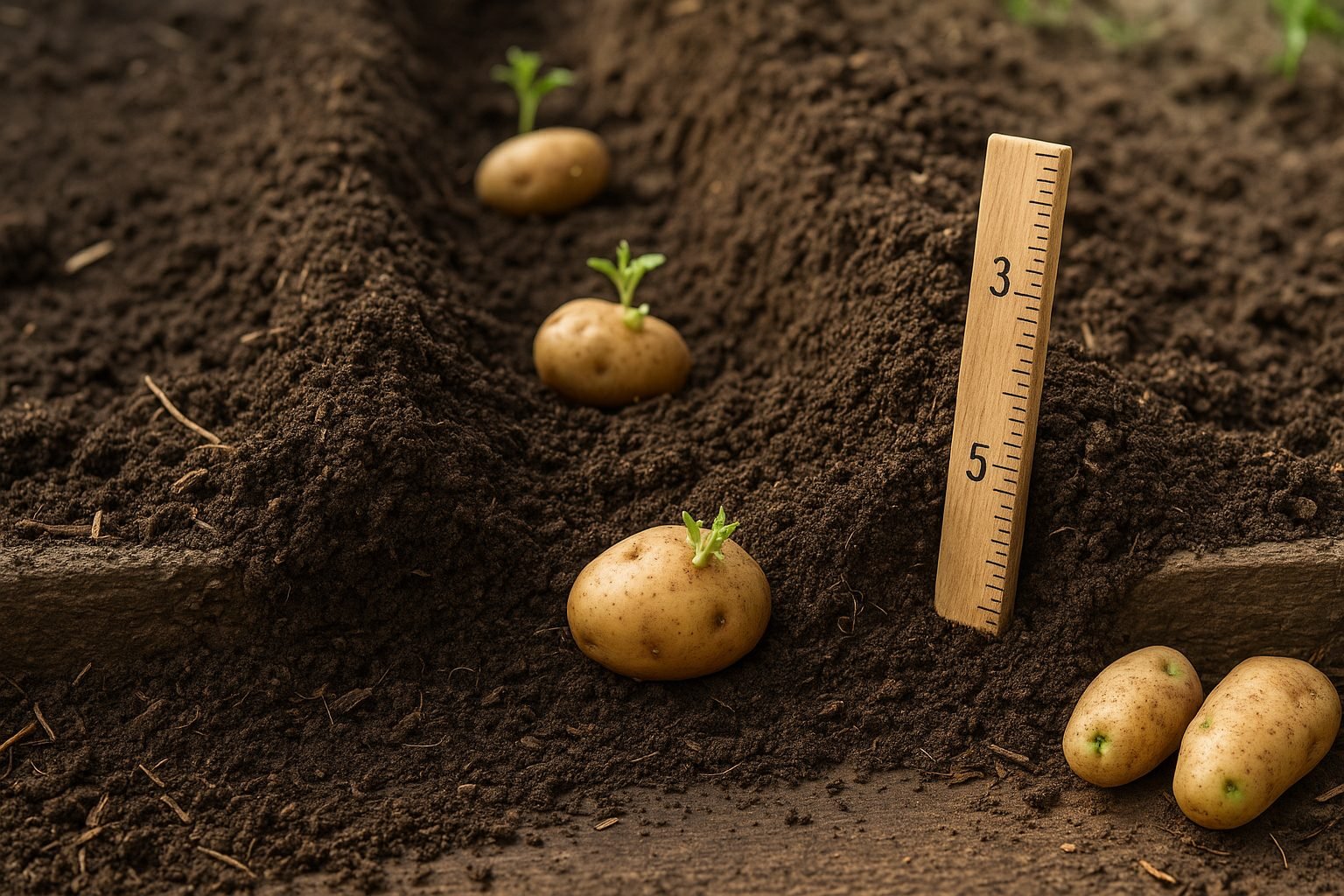
When planting potatoes in typical garden soil, the standard recommendation is to plant seed potatoes about 4 to 5 inches deep. This depth strikes a balance—it’s deep enough to protect developing tubers from sunlight (which causes greening and bitterness) and to anchor the plant, but shallow enough for sprouts to push through easily.
However, this depth isn’t one-size-fits-all. Consider these factors:
- Soil type: If you have heavy clay soil, planting slightly shallower—around 3 to 4 inches—helps prevent waterlogging, which can cause potato seeds to rot. In sandy or loose, well-drained soils, you can safely plant at a depth of 5 or even 6 inches, since tubers won’t suffocate or struggle to emerge.
- Climate: In cooler, northern climates, shallower planting helps the soil warm up faster in spring. In hotter, southern regions, slightly deeper planting can help keep tubers cool.
- Planting method: In raised beds, where the soil warms and drains quickly, a depth of 4 inches works well, allowing for healthy root growth without overheating. For containers, start with just 3 to 4 inches of soil above the seed potato, then add more soil or compost as the plants grow (a technique called “hilling”) to encourage more tuber production up the stem.
Don’t forget: regardless of method, loose, friable soil is best. Compacted, soggy spots are a recipe for poor harvests. So be flexible—adjust depth based on your unique soil and climate, and you’ll set your potato patch up for a successful season.
Planting Techniques: Ground, Raised Beds, and Containers
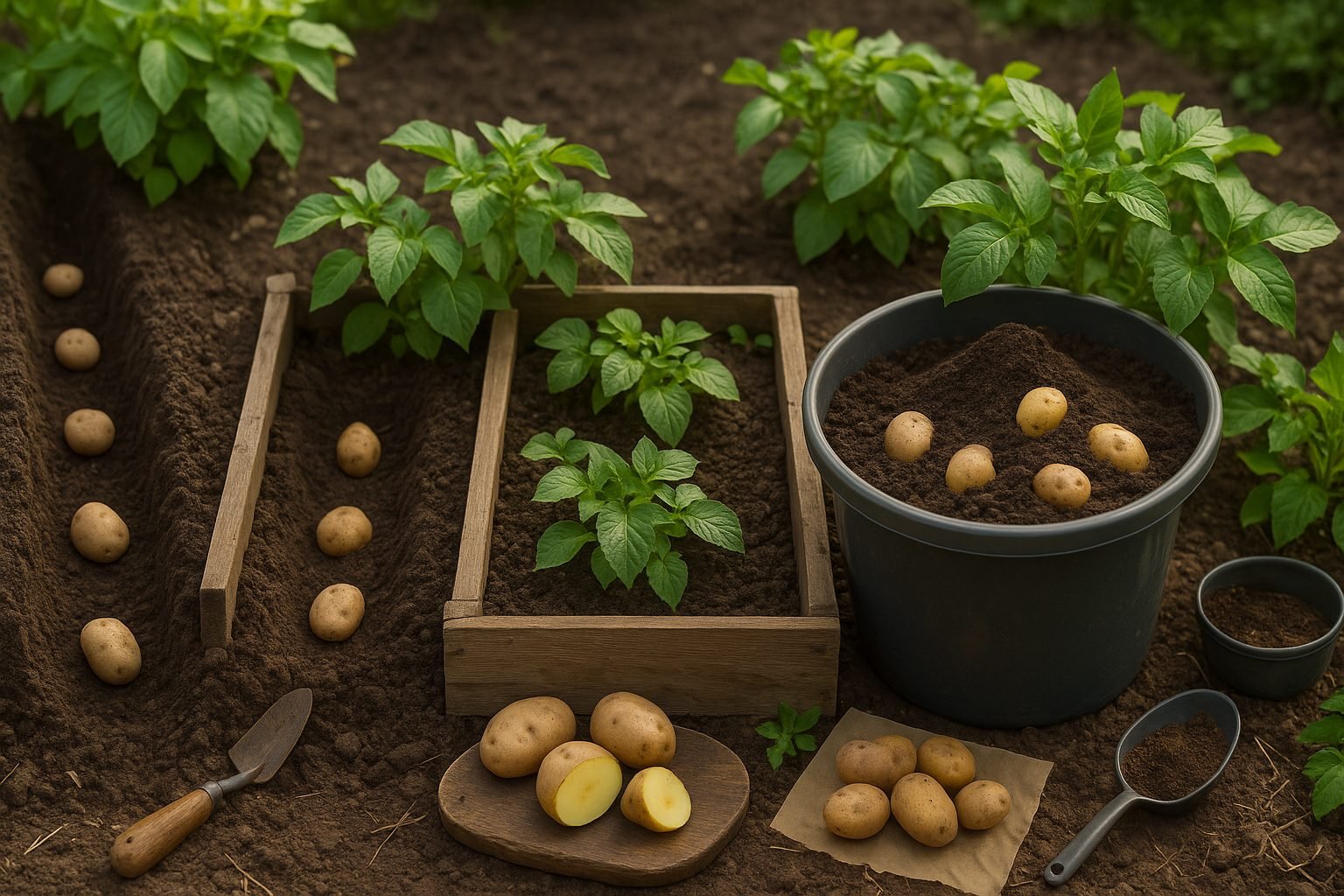
Planting potatoes successfully depends on your available space and soil type.
For traditional in-ground planting, dig trenches about 6 inches deep and space seed potatoes 12 inches apart, then cover with soil. This method allows potatoes to develop plenty of tubers and strong roots.
In raised beds, fill the bed with rich, loose soil and plant seed potatoes about 4-5 inches deep and 10-12 inches apart. As the plants grow, mound soil over the stems. Raised beds warm up faster in spring and provide excellent drainage, but they may dry out quickly in hot weather.
For containers (such as a large plastic tub or grow bag), add 4 inches of soil at the bottom, place seed potatoes with the eyes facing up, and cover with another 3-4 inches of soil. Keep adding soil as stems emerge until the container is full. This method is ideal for patios or small yards, though yields are typically smaller and require frequent watering.
The planting depth varies by method:
- Deeper (5-6 inches) in the ground where roots can spread freely.
- Shallower (4-5 inches) in raised beds for warmth and drainage.
- Start shallow (3-4 inches) in containers to allow for easy layering.
In-ground planting suits those with ample space and who want to feed their potatoes heavily. Raised beds are best for better soil control and fewer weeds. Containers are perfect for beginners or those short on space, though they require more consistent care and typically produce smaller harvests.
Understanding Potato Types & Their Impact on Planting Depth
Potato varieties fall into two main categories: determinate and indeterminate. Knowing which type you’re planting is key to successful growth.
Determinate potatoes, like Yukon Gold and Red Norland, have compact, bushy growth and produce tubers in a single layer just below the seed piece. They require shallower planting—usually about 4 inches deep—with minimal hilling needed, as they don’t spread upward much.
Indeterminate potatoes, on the other hand, such as Russet Burbank and Kennebec, grow with a sprawling root system that can produce tubers at multiple soil depths along their stems. For these, plant the seed potatoes about 6 inches deep and be ready to hill soil or mulch up around the stems as the plants grow. This encourages more tuber production along the length of the buried stem.
For example, gardeners who love hearty baking potatoes often choose Russets and maximize yields by gradually mounding soil up to 12 inches as the plants get taller.
In practice, read your seed potato label or check with your nursery to confirm the type—adjusting depth and hilling accordingly makes a surprisingly big difference, helping you harvest more, healthier potatoes at season’s end.
Should You Plant Potatoes in Straw or Mulch?
Planting potatoes in straw or mulch is a popular alternative to the traditional method of burying seed potatoes deep in soil. Instead of digging trenches, you place seed potatoes directly onto the surface of prepared ground and cover them with a thick layer—about 6 to 8 inches—of clean straw or organic mulch like shredded leaves or grass clippings.
As the potato plants grow, you add more straw to keep developing tubers well-covered and protected from sunlight, which prevents them from turning green and becoming inedible. This method offers several benefits:
- Keeps weeding to a minimum
- Makes harvesting easier since you simply lift the straw to gather potatoes
- Improves drainage, reducing the risk of rot in heavy soils
- The straw breaks down over time, enriching the soil
However, there are some drawbacks to consider. Straw or mulch may not hold moisture as well as soil, so you’ll need to monitor watering closely, especially during dry spells. Slugs and rodents may also find the loose, warm mulch inviting.
To use this method, lay seed potatoes just on top of the soil—don’t bury them—and cover them immediately with straw or mulch, replenishing the layer as needed throughout the growing season.
Tips for Successful Potato Planting & Common Mistakes to Avoid
For successful potato planting, start with certified disease-free seed potatoes and cut them into chunks with at least one or two eyes each. Allow the cut pieces to dry for a day before planting—this helps prevent rot.
When planting, space seed pieces 12 inches apart in rows that are about 2 to 3 feet apart to give plants room to grow. A common mistake is planting potatoes too deep—stick to about 4 inches of soil above the seed piece, as deeper planting can hinder sprouting.
Once plants are about 6 inches tall, hill soil up around the stems, covering the lower leaves. This encourages more tuber growth and prevents sunlight from reaching the potatoes, which turns them green and toxic.
Consistent, deep watering (especially when tubers are forming) is essential, but avoid waterlogged soil to prevent rot.
Harvesting at the right time boosts yields: wait until the plants’ foliage has yellowed and died back, then gently dig up the potatoes with a fork. Avoid damaging the tubers, and let them cure in a cool, dark spot before storing.
By following these steps and staying mindful of common mistakes, you’ll boost your harvest and enjoy homegrown potatoes at their best.
Conclusion: Key Takeaways for Planting Potatoes at the Right Depth
Planting potatoes at the proper depth, usually between 4 to 6 inches, is essential for healthy growth and a bountiful harvest. Planting too shallow can expose potatoes to sunburn, while planting too deep might delay their emergence.
Keep in mind that factors like soil type and local climate can affect the ideal planting depth. It’s a good idea to experiment by planting a few tubers at different depths to find what works best in your garden. Every garden is unique, and your personal experience can make all the difference.
If you have any questions or want to share your own tips, feel free to leave a comment below—we’d love to hear from you!