Introduction
Understanding onion frost tolerance is crucial if you’re aiming to grow robust overwintering onions in your garden. Overwintering onions are varieties planted in the fall that survive through winter’s chill, allowing gardeners to enjoy an earlier harvest and bigger, healthier bulbs by spring. This technique is gaining popularity because it extends the growing season and reduces pest competition, but it does come with its challenges.
Cold weather is the biggest hurdle—knowing exactly how much frost your onions can handle is key, as a surprise cold snap can damage bulbs or stunt growth. On the other hand, unseasonably mild spells may allow pests to linger longer than expected, posing another risk to your crop.
Despite these challenges, the benefits are compelling: early yields mean onions are ready before the summer heat arrives, and slower growth over winter encourages stronger root development, resulting in larger onions. In this blog post, you’ll find practical, step-by-step advice—from choosing the right onion variety and planting at the optimal time, to protecting against frost, managing pests, and harvesting and storing your crop.
Whether you’re a seasoned gardener or trying overwintering onions for the first time, you’ll discover essential tips for success.
Choosing the Right Onion Varieties
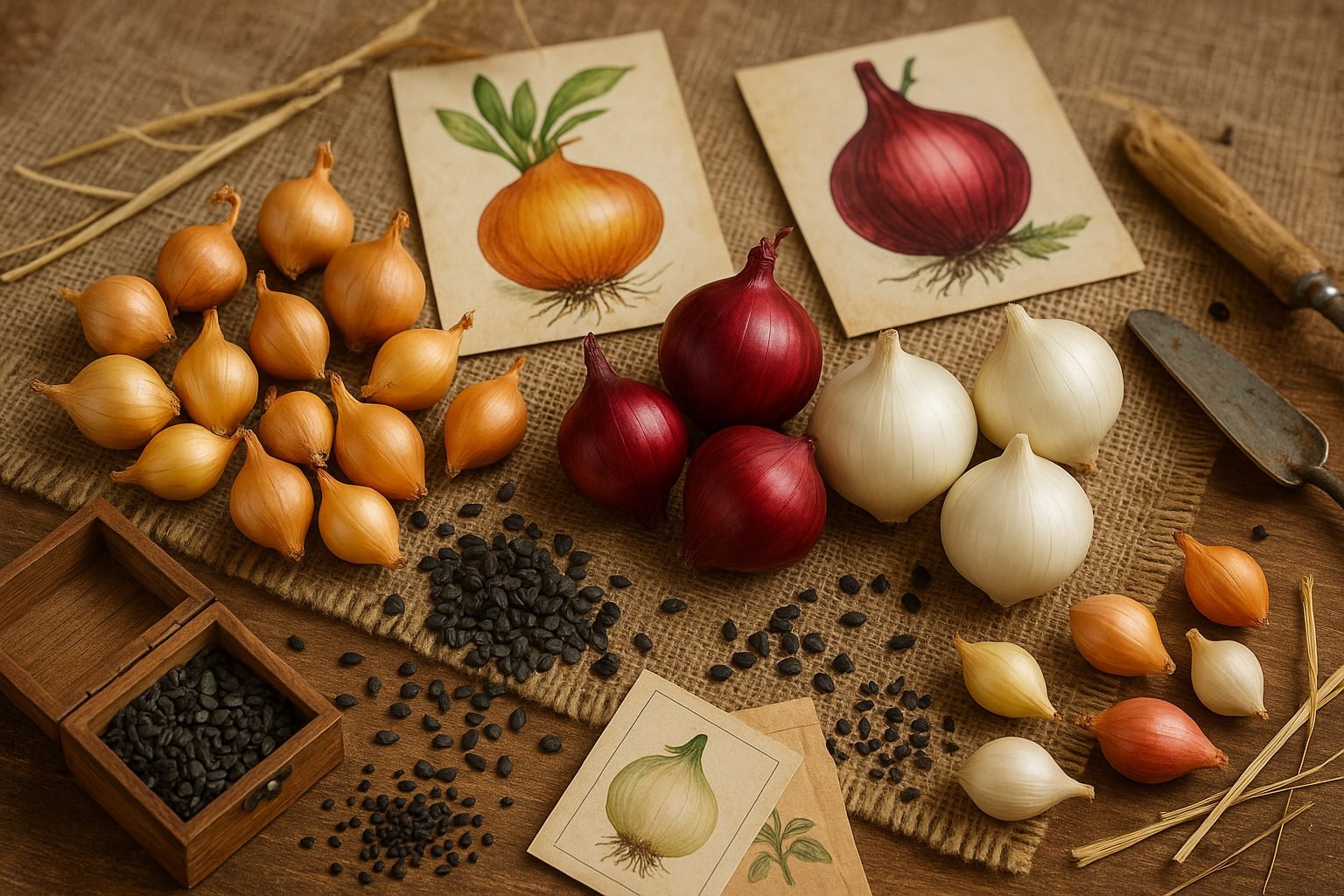
Selecting the right onion variety is key to successful overwintering, especially if you live in areas with cold winters and changing daylight hours. Long-day onions are especially important for northern gardens because they start bulb growth as days get longer in late spring—planting these in fall gives them a head start and ensures a better summer harvest.
Cold-hardy varieties are also essential; they’re bred to withstand freezing temperatures and bounce back after frost. Some proven performers for overwintering include ‘Walla Walla’, ‘Yellow Globe Danvers’, ‘Brunswick’, ‘Siberian’, and ‘Radar’.
When shopping for seeds, always check the packing date—fresh seeds (less than a year old) have higher germination rates, while older seeds may sprout sparsely, risking a thin crop. Variety matters too: some, like ‘Red Baron’, are naturally more vigorous and resilient, improving survival through tough winters.
Think about whether to plant onion seeds or sets as well. Starting from seeds is economical and offers the widest variety selection but requires a longer lead time and careful indoor starting for the best results. Onion sets—small, pre-grown bulbs—are quicker and easier to plant directly in the garden and tend to be more reliable for beginners, though their variety options are more limited and they can occasionally bolt in spring.
For overwintering, sets are great if you want simplicity and a sure stand, while seeds work best if you want unique varieties and have patience for extra care. By mixing these approaches and choosing varieties bred for your climate, you’ll boost your onions’ chances of thriving through the coldest months.
Planting and Sowing Tips
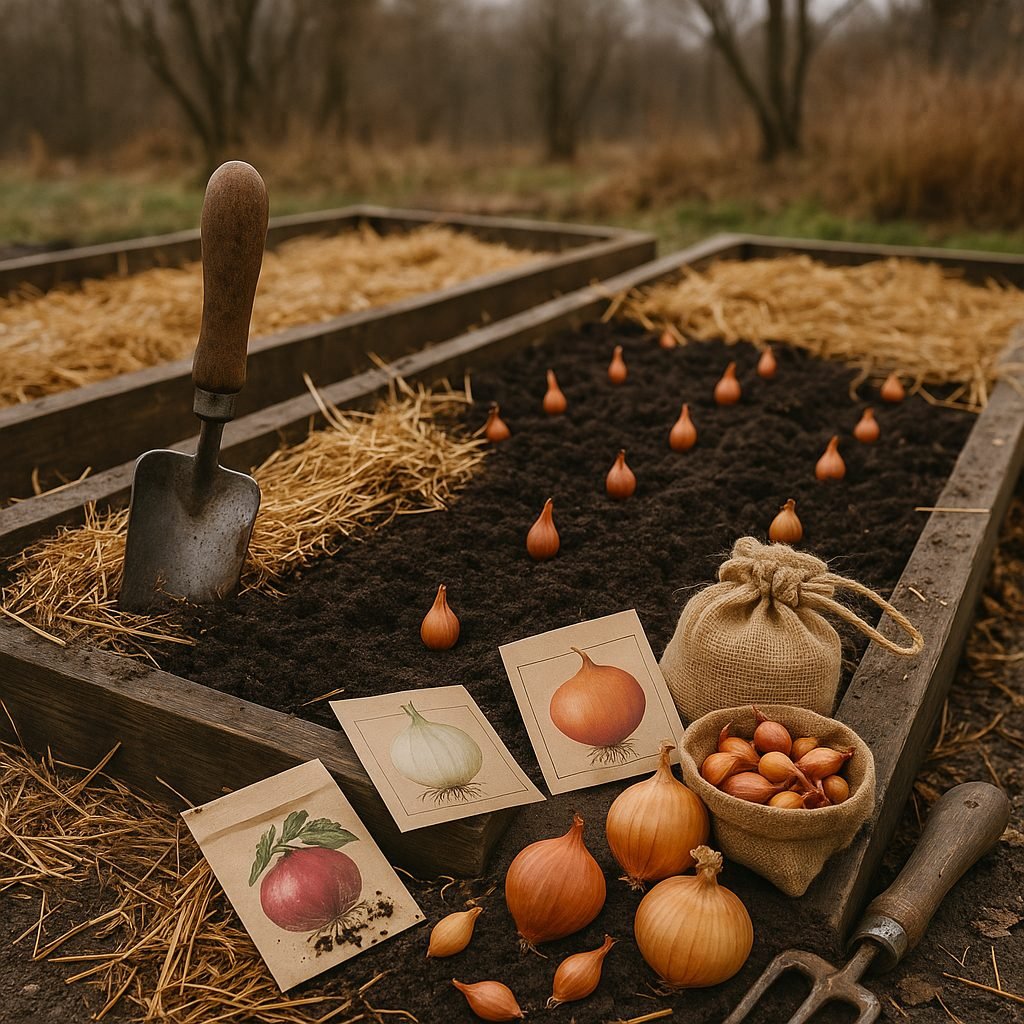
When it comes to planting and sowing winter-hardy crops, timing and preparation are essential for success. Start by checking the optimal sowing time for your region—generally, you should plant seeds or transplant seedlings about four to six weeks before the first expected frost so young plants have time to establish strong roots.
Choose a well-lit location with loose, well-drained soil to prevent waterlogging, which can cause rot in seedlings. Before planting, work compost or well-rotted manure into the top 8-12 inches of soil to boost fertility and improve soil structure—this helps roots penetrate easily and access nutrients.
Pay close attention to spacing; overcrowded plants are more susceptible to disease and may not survive harsh winter weather. For example, space garlic cloves 4-6 inches apart and onion sets at least 6 inches apart, maintaining rows 12-18 inches apart to maximize airflow and reduce fungal problems.
Mulching lightly after planting can help retain moisture and insulate young roots, but avoid piling mulch directly against stems to prevent rot. Water deeply at planting and keep soil moist during early growth, tapering off as temperatures drop to avoid encouraging soft, frost-sensitive tops.
Using row covers or cold frames can offer extra protection and boost early vigor, setting your crops up for a strong winter. Ultimately, thoughtful timing, proper site selection, and careful spacing are keys to ensuring resilient plants that thrive through winter’s challenges.
Cold Protection and Frost Defense
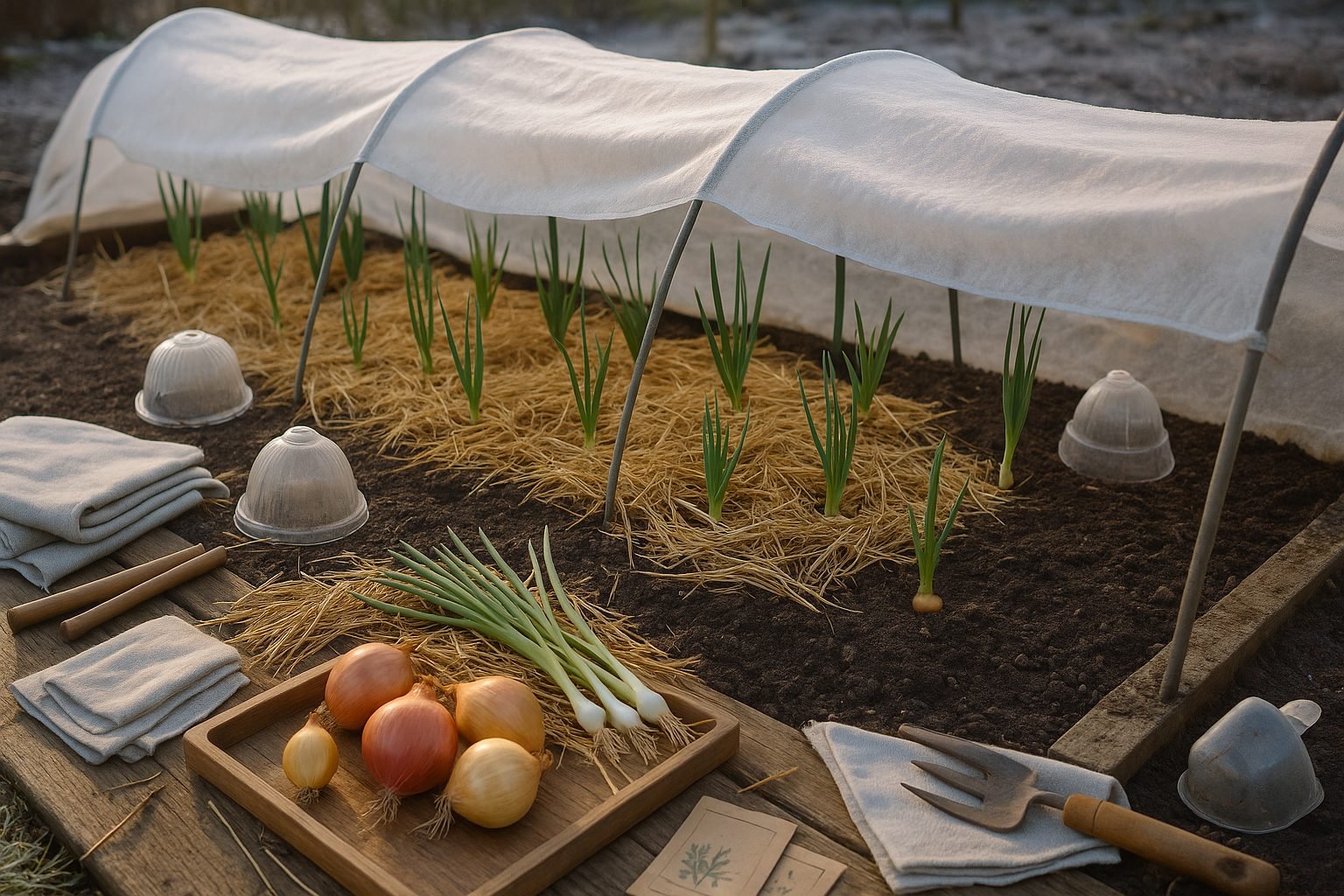
Protecting onions from cold and frost is essential, especially in regions where winters dip below freezing. One of the most effective methods is mulching; apply 2 to 4 inches of straw or shredded leaves around the base of your onions to insulate the soil and keep temperatures more consistent.
For an extra layer of protection during cold snaps, lightweight row covers or frost blankets can be draped directly over garden beds, allowing light and moisture in while fending off damaging chills. If you only have a few onions or those growing in containers, reusable cloches—such as domed plastic covers or even cut-off plastic bottles—can act as mini-greenhouses, trapping warmth around individual plants.
Signs of frost damage include wilted, pale, or mushy foliage and, in severe cases, a soft and discolored bulb. Any affected leaves should be trimmed away with sanitized shears to prevent rot and encourage healthy regrowth as conditions improve. After a frost, water onions in the morning when temperatures are rising to help them recover, but avoid oversaturating—soggy soil can make matters worse.
Hold off on high-nitrogen fertilizers in late fall, as this can encourage tender growth that’s more vulnerable to cold. Instead, opt for a balanced, slow-release fertilizer in early fall to boost root strength heading into winter.
For onions in containers, use frost-proof pots and consider moving them to a sheltered spot, such as an unheated garage or close to the house, during extended cold spells. Elevating containers slightly off the ground with bricks or pot feet can also prevent soil from freezing solid.
Planning ahead with these practical strategies will help ensure your onions survive winter and come back strong for the next growing season.
Care Through the Winter and Early Spring
Caring for overwintered onions during the colder months means focusing on simple yet vital maintenance. In winter, routinely check your onion beds for emerging weeds, which can easily compete with young bulbs for nutrients—simply pulling them by hand every few weeks goes a long way.
Keep an eye out for signs of pests like onion maggots or aphids; even in cooler seasons, a quick visual inspection helps catch problems early before they spread. Moisture management is also crucial: onions dislike soggy soil, so only water if the ground is dry a few inches down, and reduce watering during deep winter when growth naturally slows.
It’s best to cut back on both water and fertilizer through the coldest months—onions rest during this time and don’t need the extra boost. As days grow longer and temperatures start to rise in early spring, you can gradually increase watering and apply a balanced fertilizer, ideally rich in nitrogen, to “kick-start” active growth.
Raking away mulch to let the soil warm up or using floating row covers for extra warmth can also help spur onions back to life sooner. To give your overwintered onions an added edge, consider planting them near carrots or lettuce, which can deter some pests and don’t compete heavily for nutrients.
Practicing crop rotation by moving onions to a new location each year helps break cycles of soil-borne diseases and pest buildup—a simple but effective way to keep your onion crop thriving year after year.
Harvesting, Curing, and Storage
Knowing when to harvest overwintered onions is key to getting the best flavor and longest storage life. Watch for the telltale sign: green tops begin to yellow and flop over naturally, usually in late spring or early summer, about 100–120 days after planting. When most of the tops have fallen and the bulbs feel firm and swollen above the soil, it’s harvest time.
For best results, pick a dry day and gently loosen the soil with a fork or hand trowel—avoid slicing into bulbs, as cuts invite rot. Lift onions out by the base, shake gently to remove excess dirt (don’t wash them!), and lay them in a single layer on a dry surface out of direct sun. Let them cure for two to three weeks, turning occasionally so all sides dry evenly.
The outer skins will turn papery and the necks should feel dry and tight, which means they’re ready for long storage. To store, clip off the dry tops an inch above the bulb and brush off any loose dirt. Keep cured onions in a cool, dry, well-ventilated spot—like a mesh bag hung in a basement or a slatted basket in a pantry.
Never store onions in plastic bags or near potatoes; onions need airflow and emit gases that can speed up spoilage in both vegetables. Check stored onions regularly for soft spots or sprouting, and remove any suspect bulbs to prolong the shelf life of the rest.
With careful harvesting, curing, and storage, your overwintered onions can last well into winter, giving you a homegrown staple for months to come.
Troubleshooting and Common Issues
Growing healthy plants means staying alert to common setbacks like pests, diseases, and environmental stress. Aphids, caterpillars, and snails can quickly damage leaves or stems, so inspect your plants at least twice a week, especially after rain or warm spells.
If you spot pests early, remove them by hand or use organic solutions like neem oil to keep populations in check. Rot is another challenge, often caused by overwatering or poor air circulation. To prevent it, water plants at their base and space them far enough apart to ensure good airflow.
Premature bolting, when plants like lettuce or spinach flower too soon, often results from sudden heat or uneven watering. Shade cloths can help protect sensitive crops during hot weather, while consistent moisture keeps stress levels down.
The key is to adjust your care routines as the season changes or if you notice any unusual growth or discoloration. Keep records of what you see during your checks so you can respond quickly to new problems and fine-tune your approach for future plantings.
Frequent, mindful monitoring helps catch small issues before they become big headaches, leading to healthier, more productive gardens.
Conclusion
Successfully overwintering onions comes down to a few smart steps: choose the right variety suited for your climate, plant in well-draining soil during the right window in fall, and protect the young plants with mulch or row covers as temperatures drop. Regularly check for pests or signs of rot during milder winter spells.
By following these guidelines, you set your onions up for a head start come spring, often leading to earlier harvests and bigger, healthier bulbs than spring-planted crops. Overwintered onions not only save you time but can boost your garden’s overall yield and diversity.
Give these tips a try this season, and don’t forget to share your experiences and favorite onion recipes with fellow gardeners—your insights could inspire others to tackle overwintering onions with confidence!