Introduction
Wondering if you can grow cucumbers from store-bought cucumbers? You’re not alone! There’s something deeply satisfying about harvesting crisp cucumbers straight from your own garden—whether you want them fresh for salads or tangy homemade pickles. Growing your own means you get to choose the varieties that suit your taste: from classic slicing cucumbers perfect for snacking, to smaller, bumpy pickling types ideal for preserving, or even greenhouse cucumbers suited for indoor gardening.
But is it really possible to start your cucumber patch using seeds straight from a grocery store cucumber? In this easy, step-by-step guide designed for absolute beginners, we’ll explore which types of cucumbers lend themselves best to home growing, lay out the process clearly, and share tips to help you avoid common pitfalls. Whether you have a backyard, a balcony, or a sunny windowsill, you’ll discover just how simple and rewarding it is to give cucumber growing a try.
Choosing the Right Cucumber Variety
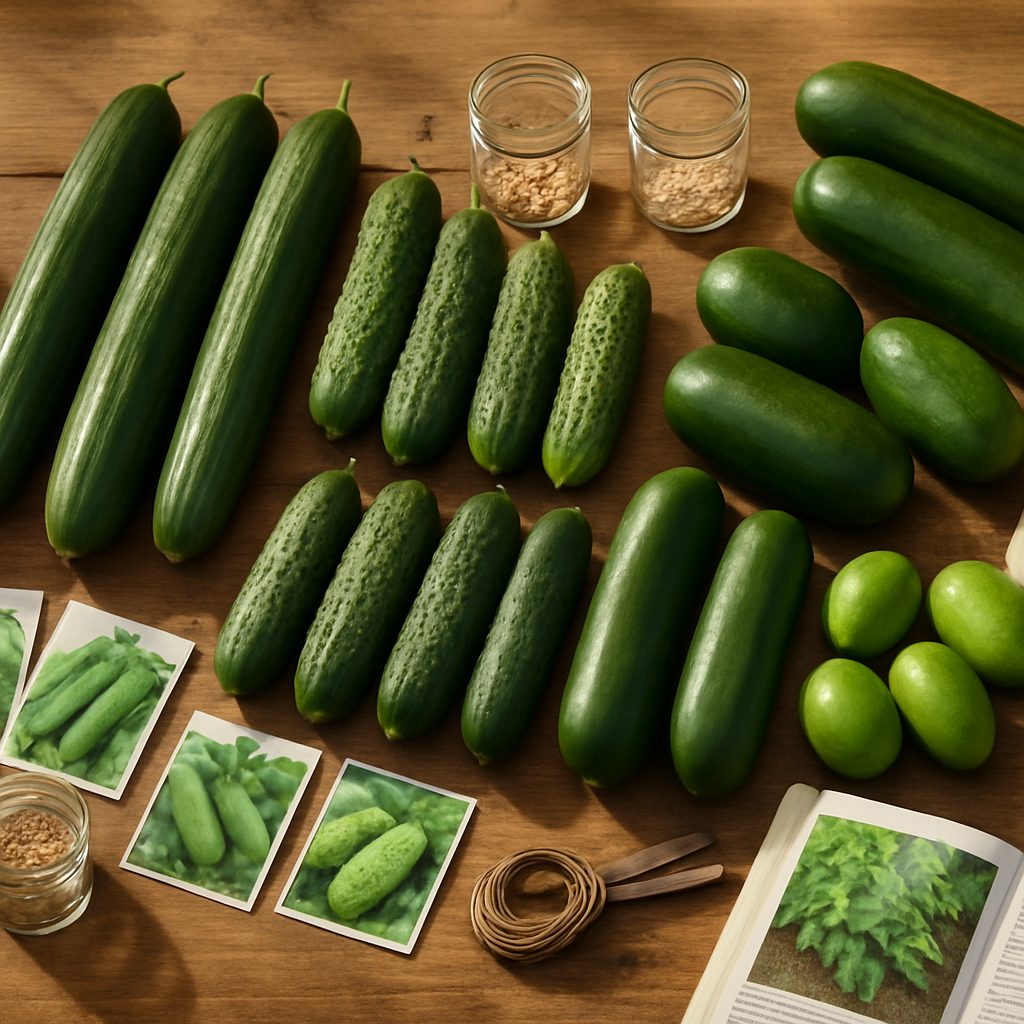
When starting your cucumber-growing journey, picking the right variety is key to a healthy harvest and happy snacking.
Slicing cucumbers are the most common and perfect for salads or sandwiches, thanks to their thick, crisp skin and refreshing crunch. Favorites include ‘Marketmore’ and ‘Straight Eight.’ If you’re into homemade pickles, go for pickling cucumbers, which stay firm in brine and fit easily into jars; ‘Boston Pickling’ and ‘National Pickling’ are reliable picks.
English or greenhouse cucumbers, like ‘Telegraph Improved’ or ‘Diva,’ are longer, thinner, and nearly seedless, offering a sweeter flavor that’s ideal for fresh eating. Greenhouse cucumbers thrive in controlled environments and are bred to resist powdery mildew and other common diseases, while outdoor varieties tend to be hardier against unpredictable weather and generally need less coddling.
For anyone with limited space, bush or compact varieties like ‘Spacemaster’ are great for patios or container gardens. If you’re new to gardening or face hot, humid summers, prioritize disease-resistant cultivars—look for letters like ‘CMV,’ ‘PM,’ or ‘DM’ on seed packets, which stand for resistance to cucumber mosaic virus, powdery mildew, and downy mildew.
Always check your local climate recommendations or chat with nursery staff to match a variety to your growing conditions. With the right choice, even first-timers can look forward to a bountiful, healthy cucumber crop all season long.
Preparing Your Garden or Containers
For healthy cucumber plants, start by making sure your chosen spot—whether a garden bed or container—gets full sunlight, at least six to eight hours a day. The soil should be loose, well-drained, and rich in organic matter, with a slightly acidic to neutral pH between 6.0 and 7.0. Good drainage is essential, as soggy roots can quickly lead to rot and disease.
If you’re planting directly in the ground, work compost or well-rotted manure into the top 6 to 10 inches of soil a couple of weeks before planting. This boosts fertility and improves soil structure, making it easier for young roots to spread out. For containers, pick a large pot (at least 12 inches across) and fill it with a high-quality, peat-free potting mix combined with extra compost.
Container gardening offers flexibility, better weed control, and easier pest management, but containers dry out faster and require more frequent watering and feeding. In-ground gardens allow for deeper root growth and less frequent watering, though soil-borne pests and weeds are more common.
No matter which method you choose, remove rocks and old plant debris before starting. After heavy rain, check your site—if water pools for over an hour, either raise the area or switch to container gardening. Starting with nutrient-rich, well-prepared soil is the best way to encourage vigorous cucumber vines and a bountiful harvest.
Starting from Seed or Seedling
Starting cucumbers from seed can be done either indoors or by direct sowing outside, giving you flexibility depending on your local climate and growing season.
If starting indoors, sow seeds about three to four weeks before your last expected frost date. Use small pots filled with quality seed-starting mix and press seeds about half an inch deep; keep the soil moist but not soggy. To encourage speedy germination, maintain soil temperatures around 70–85°F (21–29°C)—you might use a heating mat if your home is cooler.
For those in warm regions, direct sowing is easy: wait until all danger of frost has passed and the soil feels warm to the touch, ideally above 65°F (18°C). Plant seeds about one inch deep, spaced 12–18 inches apart for bush types or further apart for vining varieties, and keep the soil consistently damp until sprouts appear in 5–10 days.
No matter which method you choose, thin seedlings so the strongest remain. If you started indoors, transplant cucumber seedlings outdoors after all frost risk is truly gone and nighttime temperatures stay above 55°F (13°C). Handle them gently to avoid disturbing the roots, planting at the same depth as in their pots, and water well after transplanting.
For cooler climates, harden off indoor seedlings first by gradually exposing them to outdoor conditions over several days before transplanting. This little bit of patience at planting time sets your cucumber plants up for vigorous, healthy growth all season long.
Planting Techniques and Early Care
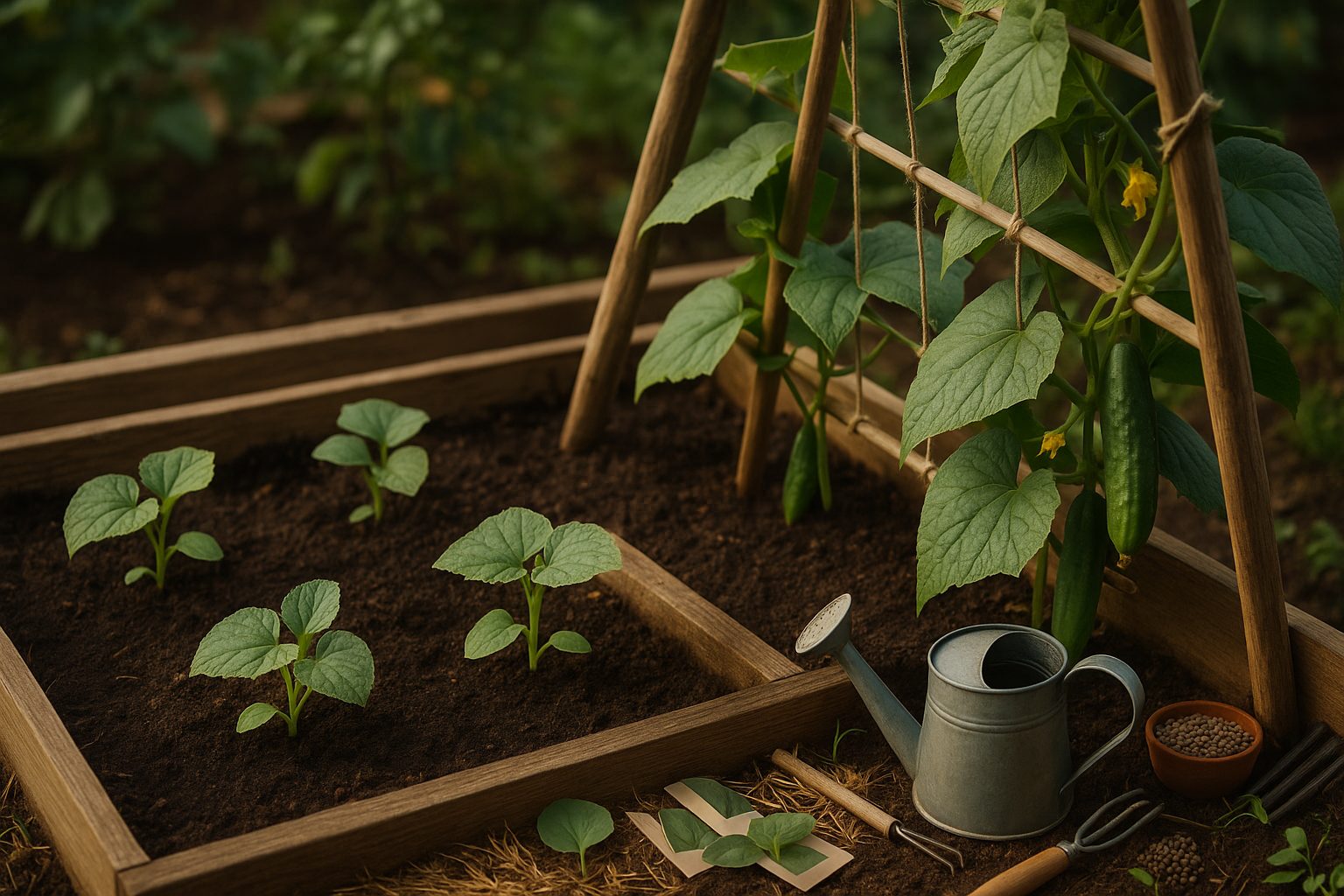
Getting your cucumbers off to a strong start begins with planting them at the right spacing and depth. Whether sowing seeds directly or transplanting seedlings, aim for around 36 to 60 inches between traditional garden rows, or space plants 12 to 18 inches apart if you’re growing vertically on a trellis.
Plant seeds about one inch deep—just enough to keep them moist without causing rot. If you’re using seedlings, plant them at the same depth as their original container. After planting, consistent moisture is key—cucumbers love water but hate soggy soil.
Water them early in the day at the base, keeping the soil evenly moist (not wet) during their critical early growth. Mulching can help retain soil moisture and keep weeds at bay.
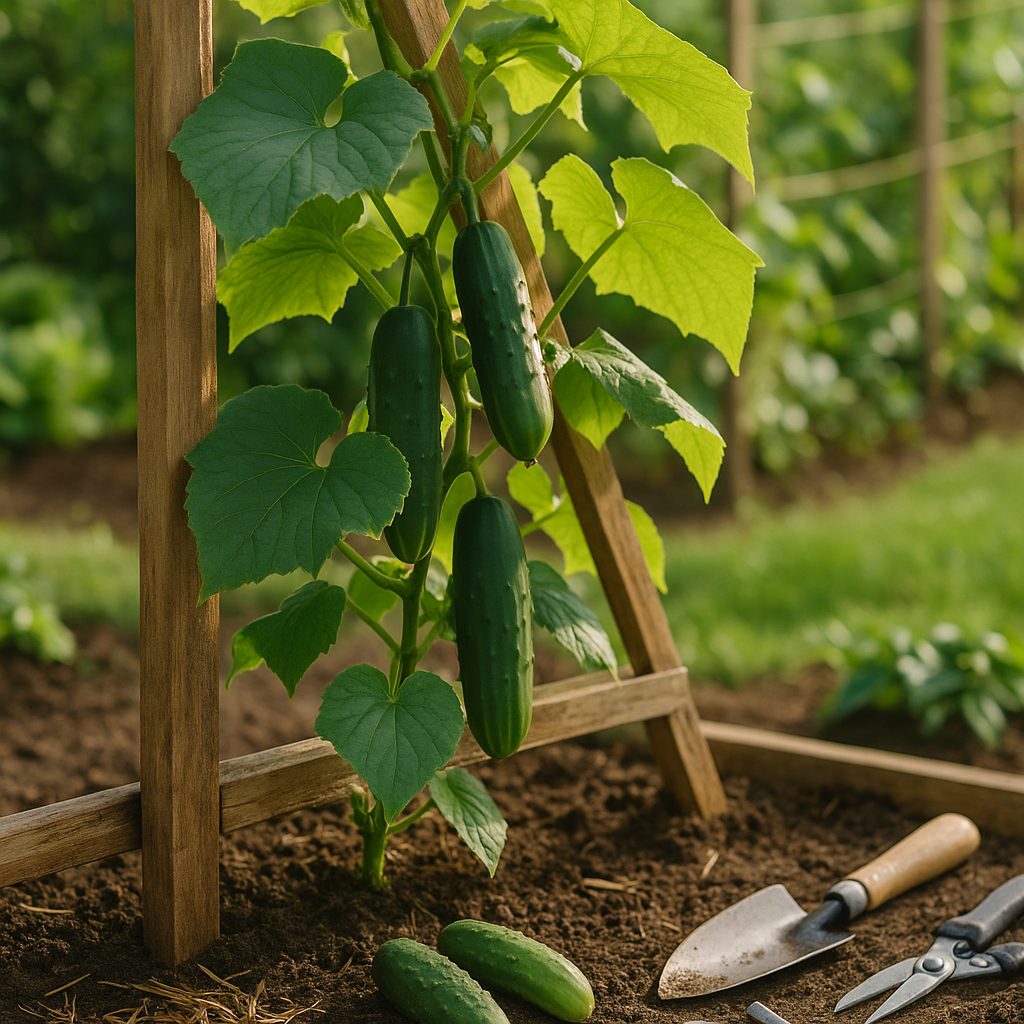
As the plants grow, providing support is important for both productivity and plant health. A sturdy trellis or cage helps cucumbers climb; vertical growth saves garden space and improves airflow, which cuts down on disease.
If growing on the ground is your only option, allow plenty of space to sprawl, but consider gently training vines in a specific direction to improve access and airflow.
Whichever method you choose, supporting your cucumber vines helps prevent fruit rot, keeps cucumbers clean, and makes harvesting much easier—a win-win for both your plants and your harvest.
Ongoing Cucumber Care
To keep your cucumber plants thriving throughout the season, regular care is essential. Start with a balanced fertilizing schedule: apply a natural, slow-release fertilizer or well-rotted compost every 3-4 weeks. During heavy fruiting periods, side-dress with organic options like fish emulsion or liquid seaweed for an extra boost.
Always water cucumbers deeply and consistently, aiming for at least 1 inch per week. However, be careful not to saturate the soil, as soggy roots can lead to rot. Use mulch to retain soil moisture and prevent weeds, and water at the base of the plants early in the day to keep foliage dry and discourage fungal problems.
Watch closely for early signs of trouble—wilting, yellowed leaves, or powdery spots may indicate pests such as aphids and cucumber beetles, or fungal diseases like powdery mildew. Address these issues quickly by hand-picking bugs, ensuring proper plant spacing for airflow, and spraying neem oil or an organic soap solution if needed.
Nutrient deficiencies often show as pale leaves or stunted growth. Topping up with compost or a diluted fish fertilizer can help restore plant health. Proactive steps like rotating crops each year and clearing away old plant debris go a long way toward keeping your cucumbers healthy and productive from first bloom to final harvest.
Harvesting and Saving Seeds
Knowing when cucumbers are ready to harvest is key to getting the best flavor and encouraging more fruit. Look for firm, bright green cucumbers that have reached their ideal size for the variety—typically 6-8 inches for slicing types and 3-5 inches for pickling ones. Avoid letting them turn yellow, as this signals overripeness and slows new growth.
Use sharp scissors or pruners to cut cucumbers from the vine, leaving a small stem attached to prevent damaging the plant. Regular harvesting, every couple of days, helps the plant focus its energy on producing fresh cucumbers.
If you want to save seeds for next season, let a few cucumbers fully mature on the vine until they are large, yellow, and starting to soften. Slice these mature fruits open, scoop out the seeds, and wash them thoroughly in water—fermenting them for a few days can help separate the good seeds from the pulp.
Dry the clean seeds on a paper towel for a week, then store them in a cool, dry place in a labeled envelope. Well-saved seeds can last several years, ensuring a bountiful harvest in seasons to come.
Conclusion and Quick Troubleshooting
Growing healthy, productive cucumber plants comes down to a few key steps: choose a sunny spot, plant in well-draining, fertile soil, water consistently, and provide a trellis for support.
If your cucumbers taste bitter, try watering more regularly and avoid letting the soil dry out between waterings. Misshapen fruits often signal inconsistent watering or poor pollination—plant flowers nearby to attract bees, and check that your plants aren’t overcrowded.
For poor growth, feed plants with a balanced fertilizer and make sure they’re not shaded by larger crops. Mulching the soil can help maintain moisture and reduce stress.
Remember, growing cucumbers is as much about experimenting as following instructions, so don’t be afraid to try new varieties or techniques. Each season teaches something new, so enjoy the process and look forward to harvesting crisp, delicious cucumbers straight from your own garden.